


The Life of Rembrandt van Rijn
Born on 15 July 1606 in Leiden, in the Dutch Republic, Rembrandt van Rijn entered a world of modest means. He was the ninth child born to Harmen Gerritszoon van Rijn and Neeltgen Willemsdochter van Zuijtbrouck. His life was one of immense productivity, spanning many decades of creative output. By the time he died on 4 October 1669, he had left behind a vast legacy that includes about 300 paintings, 300 etchings, and several hundred drawings.
As a painter, printmaker, and draughtsman, he became a central figure of the Dutch Golden Age. His work was not limited to a single medium; he moved between the heavy application of paint and the precise, delicate lines of intaglio printmaking. This technical range allowed his visual ideas to reach far beyond the borders of the Netherlands. His ability to capture human emotion and light became a defining characteristic of his many years of practice.
His surviving works offer a window into a life lived through constant creation. Some of his notable pieces include:
- The Night Watch (1642)
- The Return of the Prodigal Son (1669)
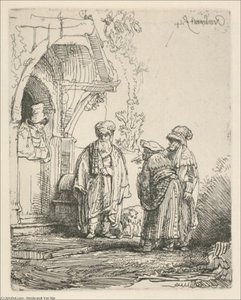
- Isaac and Rebecca (about 1669)
Early Life, Family and Training
Born into a family of modest, industrious means, Rembrandt entered a world shaped by the steady rhythms of trade. His father, Harmen Gerritszoon van Rijn, worked as a miller, while his mother, Neeltgen Willemsdochter van Zuijtbrouck, was the daughter of a baker. This stable upbringing in Leiden provided the foundation for a boy who would eventually command the attention of the Dutch Republic. Before he ever picked up a brush, he attended Latin school, an education that likely sharpened the intellectual depth found in his later compositions.
His formal artistic development began in earnest when he was apprenticed to Jacob van Swanenburg. This three-year period of study provided the technical grounding necessary for a professional career. After completing his apprenticeship, he moved toward the center of the Dutch art world, seeking further instruction in Amsterdam. He spent six months under the guidance of the history painter Pieter Lastman, a period that proved essential in shaping his understanding of complex narrative and human emotion.
Establishing a Career in Leiden and Amsterdam
By 1625, the young artist had moved beyond his apprenticeship and opened a studio in Leiden. He did not work alone; he shared this space with his colleague Jan Lievens. During these years, his output focused on religious and allegorical subjects. He often paid close attention to the fine details of costumes and jewelry in these early works. As his reputation grew, he began to attract his own pupils, including Gerrit Dou and Isaac de Jouderville, which helped establish a professional workshop structure.
A significant shift occurred in 1631 when he moved to Amsterdam. This relocation was a strategic step into the commercial heart of the Dutch Republic. Shortly after his arrival, he became involved with the Amsterdam art dealer Hendrik van Uylenburgh. This connection provided the professional stability and access to high-profile clients necessary to solidify his standing. He soon became a member of the city's guild of painters, a formal recognition of his status within the established artistic community. In this bustling urban environment, he transitioned into a leading portraitist, finding success through a growing network of patrons and the support of the city's merchant class.
Patrons, Workshop and Commissions
Success in the Dutch Golden Age required more than talent; it demanded the right connections. By 1628, Rembrandt had already secured his first recorded buyer, Joan Huydecoper. This early recognition was soon bolstered by the discovery of his talent in 1629 by Constantijn Huygens. Such high-level patronage provided the stability necessary to expand his influence. Prince Frederik Hendrik became a consistent supporter, continuing to purchase his paintings and ensuring the artist's presence in the most influential circles of the time.
As his reputation grew, so did the scale of his operations. He began accepting students in 1627, building a workshop that would become a significant center for artistic production. Among those who studied under his guidance were Gerrit Dou and Isaac de Jouderville. This instructional period allowed him to manage a growing number of commissions while refining the specific techniques that would define his career. His studio was a place of constant activity, where the demands of his patrons met the practical needs of a busy professional practice.
Marriage and Family Life
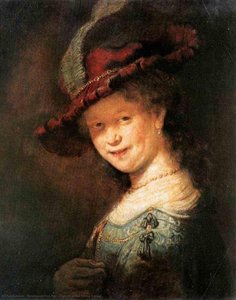
In 1634, Rembrandt’s personal life underwent a significant change when he married Saskia van Uylenburgh on 2 July. Saskia came from a family of standing; her father, Rombertus Uylenburg, held the positions of mayor and justice of the Court of Friesland. Their union brought a sense of stability to his growing life in Amsterdam, and Saskia became a constant presence in his creative world. She appeared frequently as a model in his drawings and etchings, her likeness becoming a recurring element in his visual language.
The couple had a son, Titus van Rijn, who grew up within the busy atmosphere of the artist's studio. Titus was more than a member of the household; he was a frequent subject for his father's studies and eventually took on the responsibility of managing the family's affairs. The bond between father and son was central to the domestic life of the household, particularly as the years passed and the complexities of the artist's professional and financial standing shifted.
Technique and Artistic Style
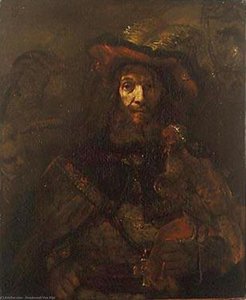
Rembrandt had a way of making light feel like a physical presence in a room. He became a master of chiaroscuro, using the sharp contrast between deep shadows and bright highlights to create a sense of drama and weight. This was not merely a trick of the light; it was a way to guide the eye and suggest the hidden depths of a person's character. He used these shadows to sculpt faces and objects, making them feel tangible and real even in the dimmest settings.
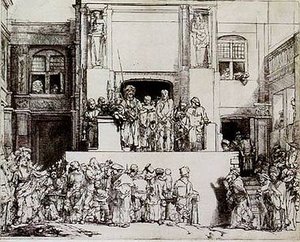
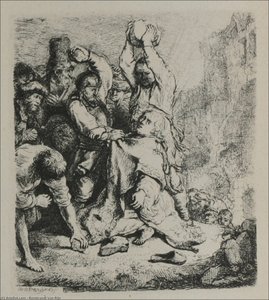
His skill extended far beyond the canvas and into the intricate world of intaglio printmaking. He was a prolific etcher who understood how to translate the heavy, atmospheric qualities of his paintings onto a copper plate. To achieve this, he relied on a precise set of technical methods. He used biting to etch lines into the metal, combined with fluid lines and delicate cross-hatching to build up texture. Through subtle tonalities, he could replicate the soft transitions of light that he achieved with a brush, allowing his visual ideas to reach a much wider audience through his prints.
Key Works and Masterpieces
Rembrandt’s ability to capture human emotion is perhaps most visible in his large-scale compositions. In 1642, he completed The Night Watch, a work that demonstrates his command over light and shadow to create a sense of movement and drama. This period of his life saw him moving toward more complex, crowded scenes that required a deep understanding of how light falls across a group of people.
As he aged, his focus often turned toward the weight of human experience and spiritual themes. The Return of the Prodigal Son, finished in 1669, reflects the profound psychological depth he sought in his later years. Similarly, Isaac and Rebecca, painted about 1669, shows his interest in the quiet, intimate connections between individuals. Even in his earlier, more vigorous works like The Blinding of Samson, there is a clear sense of the tension and narrative power he could pull from a single moment.
- The Anatomy Lesson of Dr. Nicolaes Tulp (1632)
- Self Portrait (1639)
- The Feast of Belshazzar (1635)
Where to See the Works Today
To encounter the physical presence of Rembrandt's hand, one must travel to several major institutions across Europe and North America. His legacy is spread across many collections, with the National Gallery in London holding sixteen of his works. In Paris, the Louvre maintains thirteen pieces, offering a quiet space to observe his use of light. The Mauritshuis in The Hague is another essential stop, housing twelve works that reflect his development.
The reach of his art extends far beyond the Netherlands. In Munich, the Alte Pinakothek holds eleven paintings, while the Metropolitan Museum of Art in New York contains eleven as well. These collections allow us to see how his style evolved from his early years in Leiden to his later, more introspective period. Seeing these works in person reveals the texture of the paint and the depth of the shadows he created.
- The Night Watch (1642)
- The Return of the Prodigal Son (1669)
- Isaac and Rebecca (about 1669)
- The Anatomy Lesson of Dr Nicolaes Tulp (1632)
- The Blinding of Samson
Questions & Answers
Where are Rembrandt van Rijn's artworks organized by color?
The Spectral Index of Rembrandt van Rijn is a page that organizes the artist's artworks by their colors.
What are the birthplace and birth year of Rembrandt van Rijn?
Rembrandt van Rijn was born in Leiden in 1606.
Where are Rembrandt van Rijn's artworks grouped by art movement?
Rembrandt van Rijn's works can be browsed by movement on the artist's All Movements page.







![The Anatomy Lecture Of Dr. Nicolaes Tulp [1632] — Rembrandt Van Rijn](/media/artworks/images-thumb/e5/fc/e5fcb33447eac6b24ab049b22effa1a3.jpg)


