


The Rebellion Against Romance: The Emergence of Realism in 19th-Century France
 Realism (art movement)
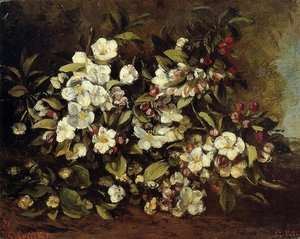
Realism was an artistic movement that emerged in France in the 1840s. Realists rejected Romanticism, which had dominated French literature and art since the early 19th century. The artist Gustave Courbet, the original proponent of Realism, sought to ...
To understand the profound shift that occurred in the mid-19th century, one must first recall the era that preceded it—a period dominated by the sweeping, often dramatic, and highly idealized narratives of Romanticism. For decades, the art world was captivated by the exotic, the supernatural, and the exaggerated emotionalism of scenes set in distant lands or mythical pasts. However, as the 1840s dawned, a quiet but resolute revolution began to stir within the heart of France. This was not a movement of loud proclamations, but rather a profound turning inward toward the tangible, the visible, and the undeniably present. The emergence of Realism was a courageous rejection of the escapism that had long defined the canvas, seeking instead to anchor the human experience in the weight of contemporary reality.
This artistic rebellion was deeply intertwined with the turbulent societal shifts of the time, including the echoes of the 1848 Revolution and the sweeping changes brought about by the Industrial and Commercial Revolutions. As urban immigration and social class tensions reshaped the landscape of Europe, artists felt a growing responsibility to document the world as it truly existed, rather than how poets imagined it to be. They turned their gaze away from the heroic and the divine, focusing instead on the mundane, the ordinary, and even the uncomfortable. It was a movement that demanded we look at the grit beneath the fingernails of the laborer and the quiet dignity of the street dweller, marking the birth of an era where truth became the ultimate aesthetic standard.
The Pursuit of Truth: Unveiling the Raw Honesty of Courbet and Dupré
 Julien Dupré
A Life Rooted in the French Countryside Julien Dupré, born in Paris on March 18, 1851, was an artist whose life and work became inextricably linked to the rural heartland of France. His story is one of unexpected turns, shaped by historical events an...
At the very vanguard of this movement stood Gustave Courbet, a man whose commitment to the "real" was as unyielding as it was provocative. Courbet famously sought to portray typical contemporary people and situations with an accuracy that refused to avoid the unpleasant or the sordden aspects of life. His work acted as a mirror held up to a changing society, capturing the struggles of the working class with a bluntness that scandalized the traditionalists of the Paris Salon. By focusing on unidealized subjects—those previously rejected by the grand traditions of history painting—Courbet stripped away the artifice of the era, proving that there is a profound, albeit heavy, beauty to be found in the honest depiction of toil and existence.
Parallel to this revolutionary spirit, we find the soulful connection to the land embodied in the works of artists like Julien Dupré. While Courbet captured the social friction of the era, Dupré’s life and work became inextricably linked to the rural heartland of France. His journey, shaped by the unexpected closure of a lace shop during the Siege of Paris, led him toward an artistic path that celebrated the French countryside with immense sincerity. Through his meticulous technique, learned from masters like Désiré François Laugée, Dupon imbued his scenes of rural life with a sense of dignity and respect for those who labored on the land. In the hands of these masters, Realism was not merely a style, but a profound way of seeing—a commitment to capturing the very essence of life through its most authentic, unadorned forms.
Academic Mastery: The Rigor and Grace of the European Academies
 The Beauty of Perfection: A Journey Through the Rigor and Radiance of Academic Realism
The Hallowed Halls: Defining the Rigor of Academic Realism Academic art - Wikipedia --- title: Academic art - Wikipedia author: Show Authority Control Databases National Israel Other Internet Encyclopedia url: https://en.wikipedia.org/wiki/Academic_a...
While the Realists were breaking boundaries, the great European academies continued to uphold a standard of excellence that provided the technical foundation for much of Western art. To step into the world of Academic Realism was to enter a sanctuary of profound logic and historical reverence. This was a disciplined, intellectual pursuit where art was treated with the sanctity of a ritual. The prestigious institutions, such as the Académie des Beaux-Arts, established a rigorous framework that demanded mastery over anatomy, light, and composition. For the academic artist, the goal was not merely to express fleeting feelings but to achieve a level of technical perfection that could stand the test of time.
This era of Academicism was characterized by an incredible attention to detail and a reverence for the Old Masters. Artists like Léon Bonnat, whose early years in Madrid allowed him to absorb the techniques of Velázquez and Ribera, exemplified this dedication. The pursuit of perfection through the study of light, texture, and form created works that were both intellectually structured and visually breathtaking. Within these hallowed halls, the hierarchy of genres placed history painting at its pinnacle, yet it was the precision of the brushstroke—the ability to render the sheen of silk or the weathered skin of a scholar—that truly defined the era's greatness. This rigorous discipline ensured that even as styles evolved, the fundamental language of art remained anchored in a profound respect for craftsmanship and order.
Beyond the Surface: Capturing Light, Texture, and Human Dignity
 Lidylle
A Moment Suspended in Time In the quiet, dappled light of an enchanted woodland, William-Adolphe Bouguereau captures a scene of profound intimacy and timeless grace. Lidylle is not merely a painting of two figures; it is a window into a world where t...
The true magic of this period lies in the subtle interplay between the physical world and the human spirit. In the works of Academic Realists, we see an extraordinary ability to manipulate light and texture to evoke deep emotion without resorting to melodrama. Consider the exquisite rendering found in the works of William-Adolphe Bouguereau, whose "Study of a Woman's Head" or his more ethereal landscapes like "Lidylle" demonstrate a mastery of idealized beauty. In these pieces, the boundaries between the human spirit and the natural realm seem to dissolve, as light filters through a canopy or rests upon a porcelain cheek, creating moments suspended in time.
This focus on texture—the tactile quality of oil on canvas—allowed artists to communicate much more than mere visual information. A heavy impasto could suggest the ruggedness of a stonebreaker's task, while a smooth, glazed finish could convey the purity of a subject's grace. Even in the more formal portraiture, such as Alfred E. Cooper’s dignified depiction of Sir Oliver Lodge, we see how layered textures and subtle light can capture the very essence of a person's character. This era taught us that by observing the smallest details—the way light catches an eye or the weight of a fabric—we could touch upon the universal truths of the human condition, finding dignity in every meticulously rendered fold and shadow.
The Enduring Legacy: How Realism Shaped the Path to Impressionism
 History of painting
The history of painting reaches back in time to artifacts and artwork created by pre-historic artists, and spans all cultures. It represents a continuous, though periodically disrupted, tradition from Antiquity. Across cultures, continents, and mille...
As we look back from our modern vantage point, it is impossible not to see the bridge that Realism built toward the luminous world of Impressionism. The very foundations laid by the Realists—the focus on contemporary life, the rejection of the exotic, and the intense study of light and atmosphere—provided the essential groundwork for artists like Monet, Renoir, and Pissarro. While the Impressionists would eventually move toward a more spontaneous and broken brushstroke, their heart remained rooted in the Realist desire to capture the "truth" of a moment. They simply shifted the definition of truth from the structural and social to the sensory and ephemeral.
The legacy of this movement lives on in our continued appreciation for art that feels alive and authentic. The transition from the heavy, grounded truths of Courbet to the light-drenched, fleeting impressions of Monet represents one of the most beautiful evolutions in art history. It is a journey from the earth to the air, from the weight of reality to the lightness of perception. For the true enthusiast, this lineage reminds us that every great innovation is built upon the courage of those who first dared to look at the world exactly as it was, paving the way for the breathtaking brilliance of everything that followed.


