Atelier — Complimentary worldwide shipping — Delivery 2–6 weeks
      Auguste Clésinger, 1814 – 1883

      Auguste Clésinger's 10 Most Famous Paintings

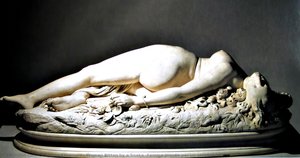
      Woman Bitten by a Snake (Femme piquée par un serpent) (1847) is the painting Auguste Clésinger is best remembered for; it belongs to the Musée d'Orsay, Paris. Woman Bitten by a Snake (Femme piquée par un serpent) (1847) and Woman Bitten by a Snake (1847) complete the trio of best-loved canvases. Our catalogue counts 10 works by Auguste Clésinger. Here are the 10 most famous, with the year, the museum and the story of each canvas.

      Ranked by our popularity score, which combines the searches, visits and orders for each work. Updated November 2026. Each painting on this page can be ordered as an oil reproduction painted by hand on linen canvas, or as a fine art print, made to the size you choose.

      Portrait of Auguste Clésinger
      Auguste Clésinger · 1814 – 1883
      Born · died
      1814 – 1883, Besançon
      Works in our catalogue
      10
      Most famous
      Woman Bitten by a Snake (Femme piquée par un serpent) (1847)
      Most works at
      Musée d'Orsay

      The ten best-loved paintings by Auguste Clésinger

      Woman Bitten by a Snake (Femme piquée par un serpent) (1847) by Auguste Clésinger
      1

      Woman Bitten by a Snake (Femme piquée par un serpent)

      1847 · Marble · Musée d'Orsay, Paris

      In the grand, gilded halls of the 1847 Paris Salon, few works ignited as much fervent debate and whispered scandal as Auguste Clésinger’s Woman Bitten by a Snake (*Femme piquée par un serpent*). This breathtaking marble masterpiece does not merely sit in stillness; it writhes with a visceral, almost cinematic energy that captures the viewer in a moment of sudden, sharp agony and profound ecstasy. The sculpture depicts a nude…

      Woman Bitten by a Snake (Femme piquée par un serpent) (1847) by Auguste Clésinger
      2

      Woman Bitten by a Snake (Femme piquée par un serpent)

      1847 · Marble · Musée d'Orsay, Paris

      In the grand, gilded halls of the 1847 Paris Salon, few works ignited as much fervent debate and whispered scandal as Auguste Clésinger’s Woman Bitten by a Snake. This breathtaking marble masterpiece does not merely sit in stillness; it writhes with a visceral, almost cinematic energy that captures the viewer in a moment of sudden, sharp agony and profound ecstasy. The sculpture depicts a nude woman, her body contorted in…

      Woman Bitten by a Snake (1847) by Auguste Clésinger
      3

      Woman Bitten by a Snake

      1847 · Musée d'Orsay, Paris

      Auguste Clésinger’s 1847 marble sculpture, *Woman Bitten by a Snake*, is far more than a depiction of a dramatic, even unsettling, scene. It’s a potent distillation of Neoclassical ideals colliding with the burgeoning currents of Realism and Romanticism, a work that ignited controversy upon its debut at the Paris Salon and continues to hold an undeniable allure. The sculpture captures a moment of exquisite torment – a reclining nude female…

      Hand-painted oil reproduction from $178 40 × 25 cm Same size as the original $453 180 × 56 cm Order at original size →
      Madame Sabatier (1847) by Auguste Clésinger
      4

      Madame Sabatier

      1847 · Marble · Musée d'Orsay, Paris

      To stand before the likeness of Madame Sabatier is to encounter a moment suspended in time—a breath held between classical grace and quiet introspection. This marble bust, executed by Auguste Clésinger, transcends mere portraiture; it is an embodiment of refined elegance. The subject’s countenance, captured with such meticulous attention, invites the viewer into a world of serene contemplation. One cannot help but feel the weight of history settling upon those…

      Angel of Grief (1850) by Auguste Clésinger
      5

      Angel of Grief

      1850 · Sculpture Bronze · Saint-Sulpice, Paris

      Auguste Clésinger’s Angel of Grief: A Baroque Echo in Marble The sculpture “Angel of Grief,” created by Auguste Clésinger in 1850, stands as a poignant testament to the artist's mastery of Baroque aesthetics translated into Neo-classical form. Commissioned for the tomb of Euterpe, the muse of music, Frédéric Chopin’s beloved wife, this monumental marble piece embodies profound sorrow and spiritual contemplation—themes deeply rooted in the artistic sensibilities of its time.…

      Mounted Herdsmen and Bulls in the Roman Countryside (1860) by Auguste Clésinger
      6

      Mounted Herdsmen and Bulls in the Roman Countryside

      1860 · Oil On Panel · Los Angeles County Museum of Art, Los Angeles

      Mounted Herdsmen and Bulls in the Roman Countryside is an oil on panel painting created by the French artist Auguste Clésinger. The work dates to about 1860. This piece is part of the European Painting collection and is currently held at the Los Angeles County Museum of Art. The format of the work is panoramic, presenting a wide view of the landscape and its subjects.

      Hand-painted oil reproduction from $178 42 × 24 cm
      Leda and the Swan (1864) by Auguste Clésinger
      7

      Leda and the Swan

      1864 · Marble · Musée de Picardie, Амиенс

      The marble captures a moment of profound intimacy and mythological tension. A nude woman lies on her side, her body language suggesting a quiet acceptance of the creature beside her. The swan, rendered with meticulous attention to the texture of feathers, extends its neck over her shoulder to press against her skin. This sculptural group freezes the precise instant of Zeus's transformation, where the divine meets the mortal in a…

      Sitzender Pan (1878) by Auguste Clésinger
      8

      Sitzender Pan

      1878 · Bronze · Germanisches Nationalmuseum, Nuremberg

      The figure sits in a moment of quiet contemplation, a bronze form that seems to hold the weight of ancient legends within its dark patina. This is Pan, the shepherd god of Greek mythology, caught in a stillness that belies his wild nature. He is a creature of dualities, possessing the muscular torso of a man while his lower half transitions into the sturdy, powerful form of a goat. His…

      What Auguste Clésinger painted most

      The four subjects that return most often on these canvases, each with its best-loved example.

      Where Auguste Clésinger's canvases hang

      The 7 museums that hold the most of the paintings on this page.

      Museum City Works by Auguste Clésinger Paintings from this list
      Musée d'Orsay, ParisMusée d'Orsay Paris 4 Woman Bitten by a Snake (Femme piquée par un serpent), Woman Bitten by a Snake (Femme piquée par un serpent), Woman Bitten by a Snake
      Saint-Sulpice, ParisSaint-Sulpice Paris 1 Angel of Grief
      Los Angeles County Museum of Art, Los AngelesLos Angeles County Museum of Art Los Angeles 1 Mounted Herdsmen and Bulls in the Roman Countryside
      Musée de Picardie, АмиенсMusée de Picardie Амиенс 1 Leda and the Swan
      Germanisches Nationalmuseum, NurembergGermanisches Nationalmuseum Nuremberg 1 Sitzender Pan
      Église de la Madeleine, BésonçonÉglise de la Madeleine Bésonçon 1 Entombment
      Museum Celda de Frédéric Chopin y George Sand, ValldemossaMuseum Celda de Frédéric Chopin y George Sand Valldemossa 1 Chopin

      Auguste Clésinger's most famous canvas, decade after decade

      1. 1840s
        Woman Bitten by a Snake (Femme piquée par un serpent) (1847) by Auguste Clésinger
        Ranked 1 of 10

        Woman Bitten by a Snake (Femme piquée par un serpent)

        Age 26 – 35 · Musée d'Orsay

        In the grand, gilded halls of the 1847 Paris Salon, few works ignited as much fervent debate and whispered scandal as Auguste Clésinger’s Woman Bitten by a Snake…

      2. 1850s
        Angel of Grief (1850) by Auguste Clésinger
        Canvas 5 of 10

        Angel of Grief

        Age 36 – 45 · Saint-Sulpice

        Auguste Clésinger’s Angel of Grief: A Baroque Echo in Marble The sculpture “Angel of Grief,” created by Auguste Clésinger in 1850, stands as a poignant testament to the…

      3. 1860s
        Mounted Herdsmen and Bulls in the Roman Countryside (1860) by Auguste Clésinger
        Ranked 6 of 10

        Mounted Herdsmen and Bulls in the Roman Countryside

        Age 46 – 55 · Los Angeles County Museum of Art

        Mounted Herdsmen and Bulls in the Roman Countryside is an oil on panel painting created by the French artist Auguste Clésinger. The work dates to about 1860. This…

      4. 1870s
        Sitzender Pan (1878) by Auguste Clésinger
        Canvas 8 of 10

        Sitzender Pan

        Age 56 – 65 · Germanisches Nationalmuseum

        The figure sits in a moment of quiet contemplation, a bronze form that seems to hold the weight of ancient legends within its dark patina. This is Pan,…

      Auguste Clésinger's canvases, question by question

      Which canvas is Auguste Clésinger most remembered for?Read the answer

      Woman Bitten by a Snake (Femme piquée par un serpent) (1847), Musée d'Orsay, Paris. Woman Bitten by a Snake (Femme piquée par un serpent) (1847) and Woman Bitten by a Snake (1847) follow.

      Woman Bitten by a Snake (Femme piquée par un serpent): how old was Auguste Clésinger when it was painted?Read the answer

      Auguste Clésinger, born in 1814, was 33 years old: Woman Bitten by a Snake (Femme piquée par un serpent) dates from 1847.

      What are Auguste Clésinger's ten most famous canvases?Read the answer

      Woman Bitten by a Snake (Femme piquée par un serpent), Woman Bitten by a Snake (Femme piquée par un serpent), Woman Bitten by a Snake, Madame Sabatier, Angel of Grief, Mounted Herdsmen and Bulls in the Roman Countryside, Leda and the Swan, Sitzender Pan, Entombment and Chopin. Each canvas in the ranking above comes with its year and its museum.

      How many paintings did Auguste Clésinger create?Read the answer

      10 works by Auguste Clésinger are in our catalogue, dated 1847 to 1878.

      Where do Auguste Clésinger's most famous canvases hang today?Read the answer

      Mostly in Musée d'Orsay (Paris), Saint-Sulpice (Paris) and Los Angeles County Museum of Art (Los Angeles); the list above names each museum and its canvases.

      When did Auguste Clésinger paint the most famous canvases?Read the answer

      In 1840s, which gave 4 of the 10 works on this page, Woman Bitten by a Snake (Femme piquée par un serpent) among them.

      Which famous Auguste Clésinger canvas came first, and which came last?Read the answer

      The earliest canvas here is Woman Bitten by a Snake (Femme piquée par un serpent) (1847); the latest is Sitzender Pan (1878).

      Which subjects did Auguste Clésinger paint most?Read the answer

      Sculpture (4) and Classical art (2), across the 10 works on this page.

      Which medium appears most in Auguste Clésinger's paintings?Read the answer

      Marble, used in 4 of the 10 works on this page.

      Which paintings by Auguste Clésinger are held by the Musée d'Orsay?Read the answer

      The Musée d'Orsay, Paris holds 4 of the works on this page, among them Woman Bitten by a Snake (Femme piquée par un serpent), Woman Bitten by a Snake (Femme piquée par un serpent) and Woman Bitten by a Snake.

      Where can I buy a reproduction of a Auguste Clésinger painting?Read the answer

      Yes. Every painting on this page can be ordered from its own page as an oil reproduction painted by hand, or as a fine art print, in the size you choose.

      Meet the painter: Auguste Clésinger

      Auguste Clésinger: Life and Legacy

      Early Life and Training

      • Born: October 22, 1814, in Besançon, France.
      • Auguste Clésinger came from an artistic family; his father, Georges-Philippe Clésinger, was a sculptor who provided Auguste with his initial training.
      • This early exposure instilled in him a foundational understanding of sculptural techniques and aesthetics.

      Artistic Development and Style

      • Clésinger’s artistic style evolved through the 19th century, initially embracing Neoclassical principles but gradually incorporating elements of Realism and Romanticism.
      • He skillfully blended technical precision with emotional intensity in his works.
      • His sculptures often depict dramatic narratives and sensuous figures, showcasing a mastery of anatomy and form.

      Major Works and Achievements

      • Woman Bitten by a Serpent (1847): This sculpture caused a sensation at the Paris Salon due to its dramatic realism and erotic undertones. It was modeled from life casts of Apollonie Sabatier.
      • Madame Sabatier (1847): A marble portrait of his model, Apollonie Sabatier, further establishing Clésinger’s reputation for capturing beauty and sensuality.
      • Chopin's Funerary Monument (1850): Commissioned after the composer Frédéric Chopin’s death, this white marble monument at Père Lachaise Cemetery is a poignant tribute to the musician.
      • Angel of Grief: A deeply moving sculpture embodying Baroque drama and pathos.
      • He also created busts of prominent figures like Rachel Félix and Théophile Gautier, and a statue of Louise of Savoy.

      Influences and Relationships

      • Influenced by: His father, Georges-Philippe Clésinger, provided his initial artistic foundation.
      • Clésinger’s association with Apollonie Sabatier, a salonnière and mistress of several prominent artists including Charles Baudelaire, exposed him to intellectual and artistic circles.
      • His marriage in 1847 to Solange Dudevant, daughter of George Sand, further connected him to literary society.

      Historical Significance and Legacy

      • Clésinger’s work reflects the artistic currents of 19th-century France, bridging Neoclassicism with emerging Realist tendencies.
      • Recognition: He received the Knight's Cross of the Légion d'honneur in 1849 and was promoted to Officer in 1864.
      • His sculptures continue to be admired for their technical skill, emotional depth, and dramatic impact. His works are displayed at prominent museums such as the Musée d’Orsay.
      • Death: He died on January 5, 1883, in Paris, and is buried in Père Lachaise Cemetery.