early life and artistic journey
charles edward conder, a british-born painter, lithographer, and designer, left an indelible mark on the art world. born in tottenham, middlesex, on october 24, 1868, conder's early life was marked by his mother's passing in india when he was just four years old.artistic career in australia
in 1884, at 16, conder moved to sydney, australia, working for his uncle as a land surveyor. however, he soon discovered his true passion lay in drawing the landscape rather than surveying it. by 1886, he had become an artist for the illustrated sydney news, alongside notable artists like albert henry fullwood and frank mahony.the heidelberg school and notable works
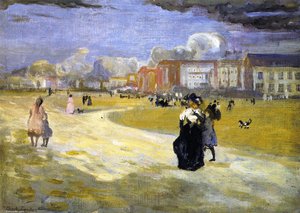
conder's masterpiece, departure of the orient – circular quay (1888), showcased his newfound mastery of form and brushwork. this dockside scene, depicting the bustling harbour at sydney cove, was quickly purchased by the art gallery of new south wales, making it conder's first work to enter a public collection.- a holiday at mentone (1888), a fun-loving painting showcasing men and women relaxing on the beach, is another notable example of conder's work.
- conder's association with g. p. nerli, an itinerant italian painter, significantly influenced his development as an artist.
- his contributions to the 9 by 5 impression exhibition in melbourne, alongside tom roberts and arthur streeton, solidified his position within the heidelberg school movement.
legacy and later life
conder's later years were plagued by poor health, including paralysis and a bout of delirium tremens. despite this, he continued to paint, leaving behind a legacy as a key figure in the heidelberg school. his art was better received in england than in paris, with his portrait being painted by henri de toulouse-lautrec in 1892. view conder's works at the art gallery of new south wales or explore more about the heidelberg school on TopImpressionists's charles edward conder page.- discover more about conder's life and works on wikipedia's charles conder page.
- explore TopImpressionists's collection of conder's paintings, including a holiday at mentone (1888) and departure of the orient – circular quay (1888), on TopImpressionists's website.
conclusion
charles edward conder's impact on australian impressionism is undeniable. his legacy, marked by his captivating paintings and association with the heidelberg school, continues to inspire art enthusiasts worldwide.Questions & Answers
Can I sort Charles Edward Conder's artworks by color?
The Spectral Index page organizes Charles Edward Conder's artworks by color.
Is there an overview of all the subjects Charles Edward Conder painted?
Charles Edward Conder's works can be explored by subject on the artist's Subject Atlas page.
Where are Charles Edward Conder's artworks grouped by keywords?
Charles Edward Conder's works can be explored by keyword on the artist's By Keywords page. Each keyword groups the related artworks.