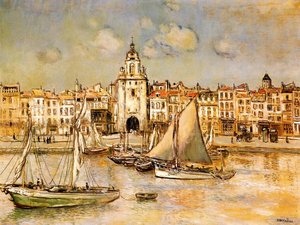
Jean-François Raffaëlli: A Life in Realism
Born on April 20, 1850, in Paris, France, Jean-François Raffaëlli was a pivotal figure bridging Realism and Impressionism. Of Tuscan descent through his paternal grandparents, he carved a unique path as a painter, sculptor, and printmaker, deeply invested in portraying the lives of ordinary people.
Early Life and Training
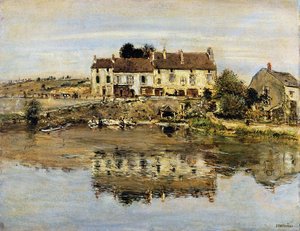
Before dedicating himself to art, Raffaëlli explored interests in music and theatre. He began his painting career in 1870, quickly gaining recognition with an exhibited landscape at the Salon that same year. His formal artistic training was brief but impactful – three months under Jean-Léon Gérôme at the École des Beaux-Arts in Paris. However, he soon diverged from traditional academic styles to forge his own distinctive approach.
Artistic Style and Influences
Raffaëlli’s style is characterized by a profound commitment to realism, which he termed “caractérisme.” This theory emphasized meticulous observation of individuals within their social context. He sought not merely to depict appearances but to capture the essence of human experience. While influenced by Gérôme's technical skill, Raffaëlli found champions in influential critics like J.-K. Huysmans and Edgar Degas, who recognized his unique vision.
Artistic Development & Major Works
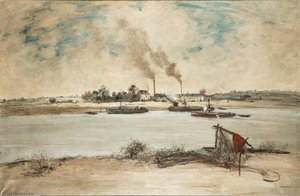
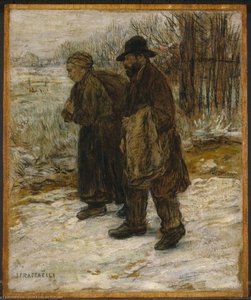
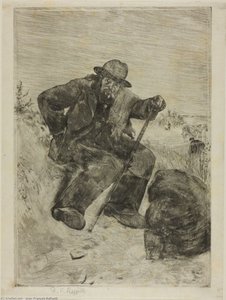
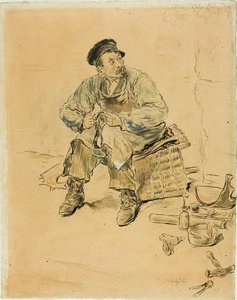
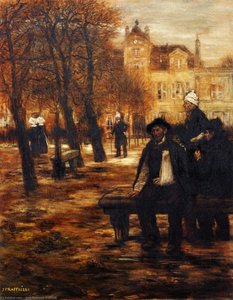
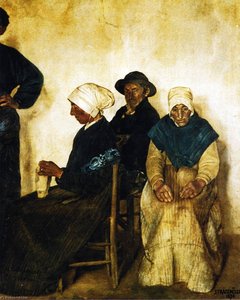
Initially focused on costume pictures, Raffaëlli’s work underwent a significant shift in 1876. He began to depict the lives of peasants, workers, and marginalized individuals – particularly ragpickers – in the suburbs of Paris. This focus reflected his interest in social commentary and the human condition.
- Les buveurs d'absinthe (The Absinthe Drinkers) - 1881: Perhaps his most famous work, originally titled *Les déclassés*, this painting offered a stark portrayal of societal alienation and is now housed in the California Palace of Legion of Honor.
- At the Caster's (1886): This piece exemplifies his focus on everyday life and is part of the collection at the Musée des Beaux-Arts in Lyon.
Exhibitions & Recognition
Raffaëlli participated in the Impressionist exhibitions of 1880 and 1881, invited by Degas despite not being strictly an Impressionist himself. This inclusion sparked debate within the group, as Monet resented the broadening scope of the exhibition. He received the Légion d'honneur in 1889, marking a significant milestone in his career.
Later Life and Legacy
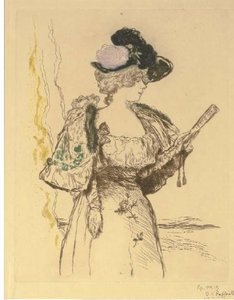
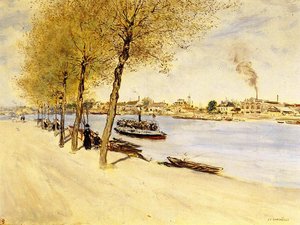
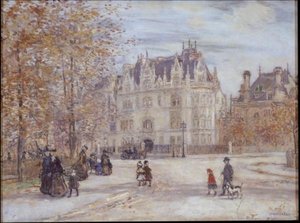
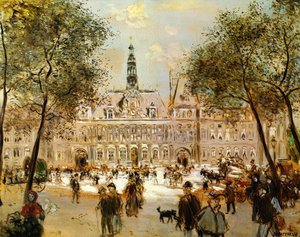
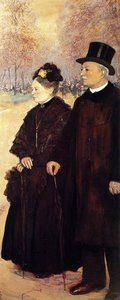
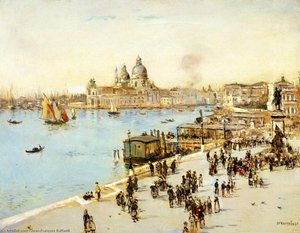
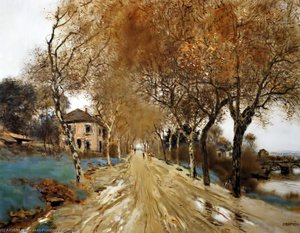
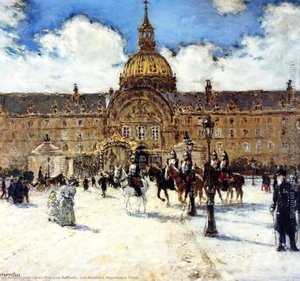
Following his recognition, Raffaëlli shifted his focus to city scenes, continuing to explore themes of urban life and social dynamics. He also experimented with sculpture (though few examples survive today) and color printmaking in his later years. He passed away on February 11, 1924, leaving behind a body of work that continues to resonate for its honest portrayal of Parisian society.
Historical Significance
Jean-François Raffaëlli’s contribution lies in his ability to blend Realist principles with an empathetic understanding of human experience. His “caractérisme” offered a nuanced approach to social observation, influencing subsequent generations of artists interested in depicting the complexities of modern life. He remains a significant figure in 19th-century French art, bridging the gap between academic tradition and the emerging avant-garde.
Questions & Answers
Can I explore Jean-François Raffaelli's works by color spectrum?
The Spectral Index of Jean-François Raffaelli is a page that organizes the artist's artworks by their colors.
How popular are Jean-François Raffaelli's artworks?
The Stats page of Jean-François Raffaelli presents statistics computed from the artist's artworks listed on this website.
Where can I see Jean-François Raffaelli's artworks in chronological order?
The artist's Artwork Timeline page presents Jean-François Raffaelli's works ordered by date, year by year.