A Symphony of Faith and Architectural Innovation
The Basilica di Sant’Antonio in Padua stands as a profound testament to centuries of devotion and an extraordinary convergence of architectural styles—a veritable palimpsest etched onto the landscape of the Veneto region. Founded shortly after the passing of St. Anthony in 1231, its initial conception mirrored the austere ideals of the Franciscan order, manifesting as Santa Maria Mater Domini before swiftly transforming into Italy's most revered pilgrimage site. Today, the Basilica presents a building that defies easy categorization, reflecting a layered history punctuated by Romanesque solidity, Gothic aspiration, and Byzantine mysticism. This unique fusion creates a visual language unlike any other in Europe, where the heavy, grounded nature of its early foundations meets the ethereal, soaring qualities of its later additions.
The architectural journey through the Basilica is one of continuous evolution. The nave bays are punctuated by soaring arches and ribbed vaults that pay deliberate homage to the great cathedrals of France, creating an atmosphere of solemn contemplation and spiritual height. Yet, looking upward, one encounters the magnificent Byzantine-influenced domes that echo the splendor of St. Mark's Basilica in Venice. These domes lend an otherworldly quality to the interior space, symbolizing a bridge between the earthly and the divine. Dominating the exterior landscape is the monumental Equestrian Statue of Gattamelata by Donatello, a masterpiece that captures not only Padua’s civic pride but also embodies the humanist ideals blossoming during the Renaissance, anchoring the sacred site within the broader cultural rebirth of the era.
Masterpieces of Bronze and Fresco
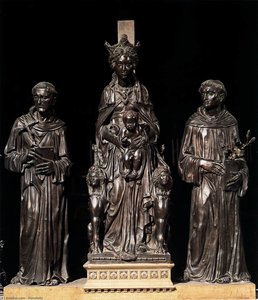
The true soul of the Basilica resides within its intimate chapels, where the artistic treasures of the Renaissance illuminate Padua’s rich cultural heritage. The works of Donatello, one of the most influential sculptors of the fifteenth century, are particularly breathtaking. His bronze Madonna with Child , created for the High Altar in 1448, exemplifies the Early Renaissance style by departing from rigid traditionalism to present a more human, tender connection between mother and infant. Similarly, his bronze relief, the Miracle of the Avaricious Man's Heart , serves as a masterful depiction of faith and divine grace, utilizing anatomical precision and expressive emotion to bring the narrative of Zacchaeus’ miraculous ascension to life.
Beyond the sculptural brilliance, the Basilica offers a profound encounter with the revolutionary use of perspective through the frescoes of Andrea Mantegna. Within the Lunetta—a small chapel overlooking the Piazza del Santo—Mantegna’s work represents a pivotal moment in art history, capturing the essence of humanist thought through meticulous detail and spatial depth. The Chapel of Saint Anthony itself serves as the spiritual heart of the complex, housing the saint's tomb adorned with exquisite marble and bronze work. For the collector or lover of fine art, these works represent more than mere decoration; they are profound intersections where technical mastery meets spiritual transcendence, making the Basilica a destination that continues to inspire awe and serve as a cornerstone of European artistic identity.