

Quick Facts
- Art types: wallart
- Alternate names:
- ʻIolani Palace
- Hale Aliʻi ʻIolani
- Iolani Palace
- ʻIolani Barracks
- Location: Honolulu, United States of America
- Featured artists:
- isobel osbourne strong field
- Charles Pillivuyt
- The Graphic
- More…
- Movements: impressionistic realism
- Works on APS: 3
- Mediums: acrylic on canvas
Exhibited Artists

isobel osbourne strong field
Isobel Osbourne Strong Field (1858-1953) was a writer, artist, and designer known for her literary contributions, design of the Royal Order of the Star of Oceania, and role as a literary assistant to Robert Louis Stevenson. Explore her life and works


Charles Pillivuyt
Discover Charles Pillivuyt, a pioneering French porcelain manufacturer renowned for his innovative craftsmanship, Art Nouveau style, and timeless ceramic masterpieces. Explore his legacy in fine ceramics and art collections.

The Graphic
The Graphic was a British weekly illustrated newspaper founded in 1869 by William Luson Thomas as a rival to *Illustrated London News*. Known for its high artistic standards and social commentary, it covered news, arts, literature, and influential illustrations that captivated audiences across the British Empire. It significantly impacted Victorian art and journalism.

Art Quiz
There is only one correct answer for each question.
Question 1:
What architectural style is ʻIolani Palace primarily known for?
Question 2:
Who reigned during the construction of ʻIolani Palace?
Question 3:
What significant innovation was featured in ʻIolani Palace that distinguished it from other buildings of its time?
Question 4:
What was the primary purpose of ʻIolani Palace after 1893?
Question 5:
What cultural element is prominently represented in ʻIolani Palace's restoration efforts?
Related Articles

Sir William Beechey: Portraiture, Patronage & Shaping Georgian Society
Explore the life & art of Sir William Beechey, a leading British portraitist of the Georgian era. Discover his royal commissions, aristocratic subjects, and lasting influence on 18th-century painting. Learn more at TopImpressionists.

From Portraiture to Power: The Rise of Bespoke Royal-Themed Paintings as Luxury Personalized Gifts
Discover bespoke royal paintings – luxury personalized gifts crafted by skilled artists. Commission a unique heirloom artwork & elevate your space with timeless elegance. Expert art consultation available.
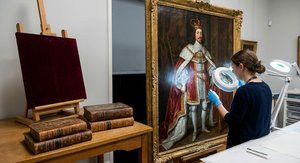
The Majesty of Representation: Exploring Regal Imagery in Art History
Explore the captivating history of royal portraiture with TopImpressionists. Discover the symbolism, artistry, and enduring legacy of regal imagery in art. Expert insights for collectors & enthusiasts.
