

Table of Contents
Quick Facts
- Art types:
- decor
- sculpture
- textile
- wallart
- Works on APS: 38
- Movements:
- baroque
- contemporary realism
- expressionism
- flemish renaissance
- neoclassical revival
- Featured artists:
- Lucio Fontana
- Andrea Brustolon
- reni guido (le guide)
- Arnaldo Pomodoro
- salvatore cardelli
- More…
- Historical periods:
- 19th century
- early modern
- modern
- renaissance
- Mediums:
- acrylic on canvas
- carved
- mosaic
- oil on canvas
- plaster
- Alternate names:
- Palazzo del Quirinale
- Quirinal Palace
- Location: Rome, Italy
Exhibited Artists

Lucio Fontana
Explore the revolutionary art of Lucio Fontana (1899-1968), founder of Spatialism! Discover his iconic slashed canvases & pioneering abstract sculptures that redefined modern art.


Andrea Brustolon
Andrea Brustolon (1662-1732) was a master Italian Baroque sculptor renowned for his lavishly carved wood furnishings & devotional art. Explore his dynamic sculptures, inspired by Bernini, featuring allegorical figures, blackamoor motifs, and intricat

reni guido (le guide)
Discover Guido Reni (Le Guide), a master of Baroque painting! Explore his religious & mythological artworks, influential style, and legacy in Italy. Shop reproductions at TopImpressionists.

Art Quiz
There is only one correct answer for each question.
Question 1:
The Quirinal Palace is currently the official residence of whom?
Question 2:
Originally, the Quirinal Palace was built as a what?
Question 3:
Approximately how many rooms are within the Quirinal Palace?
Question 4:
What is a notable collection housed within the Quirinal Palace?
Question 5:
The 'Quirinale Contemporaneo' project integrates what into the historic palace?
Question 6:
The Courtyard of Honor reflects construction phases spanning decades, showcasing the evolving aesthetic sensibilities of which?
Question 7:
What is one of the most prestigious armed escorts associated with ceremonial events at the Quirinal Palace?
Question 8:
Which architect is known for designing the Loggia delle Benedizioni at the Quirinal Palace?
Question 9:
The tower on top of the palace, known as the torrino, is surmounted by what?
Question 10:
What is the function of the clock on the Quirinal's torrino?
Related Articles

Baroque Drama: Bringing Opulence & Emotion into Contemporary Interiors
Explore the opulent world of Baroque interior design! Discover key elements, modern applications & how to bring dramatic elegance into your home with TopImpressionists.com's authentic reproductions.
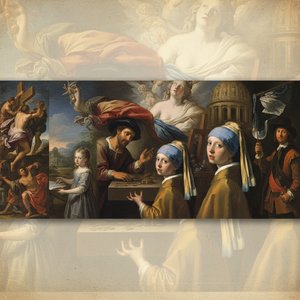
Baroque Masterpieces: 10 Paintings That Defined an Era |
Journey through the drama & grandeur of Baroque art! Explore 10 masterpieces by Caravaggio, Rembrandt, Rubens & more. Discover stunning oil paintings, rich colors & timeless stories. Find museum-quality reproductions at .

The Visceral Stage: Exploring Dramatic Narratives & Emotional Intensity in Baroque Art
Explore the dramatic world of Baroque art! Discover iconic masters like Caravaggio & Rembrandt, their techniques, and the movement's lasting impact. Expert insights for collectors & enthusiasts at TopImpressionists.


