
 Ver en contexto
 Enviar
 Compartir
 Detalles
 Guía
Guía

 Descargar
 Similares
 Radiografía
 Presentación de diapositivas
 Preguntas y respuestas
 Estadísticas
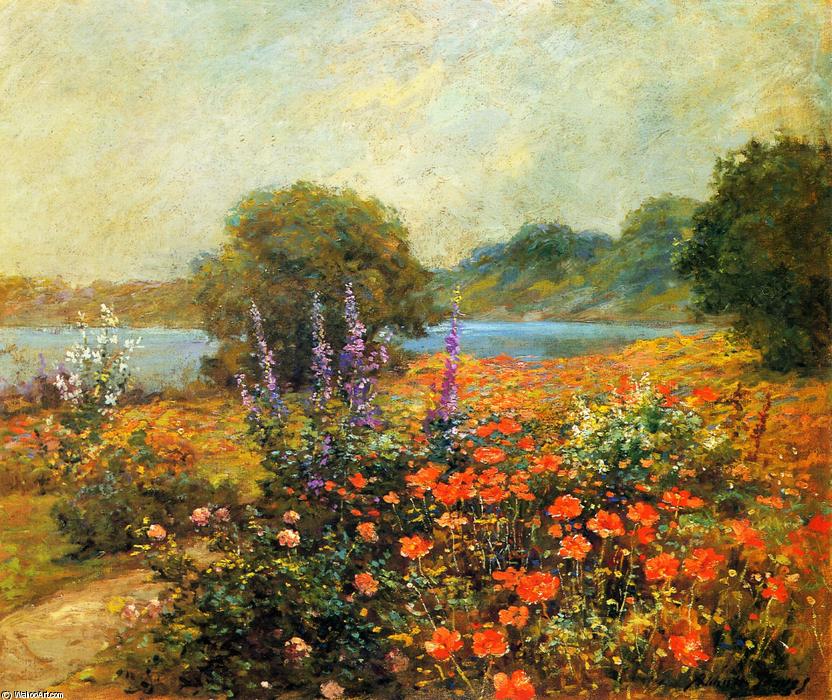
Poppies


The painting depicts a serene landscape featuring a field brimming with vibrant poppies and purple flowers under the watchful gaze of trees. Two birds soar above, completing this idyllic tableau created by Abbott Fuller Graves in 1905.
 Ver más
Un maestro del impresionismo estadounidense conocido por sus vibrantes bodegones florales y escenas de jardines como Near Kennebunkport, Abbott Fuller Graves captura la belleza fugaz de la luz y la naturaleza.
Giclée / Impresión de arte
Impresiones giclée o en lienzo de calidad de museo con producción rápida y opciones de acabado flexibles. ( Comprar pintura hecha a mano Cambiar a imagen digital)




P118B €10

P118H €10

P118W €10

P438Z €10

P508JH €12

P508YH €12

P805H €10

P805Z €10

P919BZ €10

P919G €10

P919XJ €10

P959ZH €10

P968JZ €12

W106C €8

W218G €10

W218JH €8

W218Y €10

W307PJ €10

W316G €10

W316PJ €8

W316Y €10

W398PJ €8

W4111J €10

W500HY €15

W500JH €15

W692G €12

W849H €8

W940BG €15

W953PJ €8




Tamaño estándar
a medida
CM
INCH
Elija entre nuestros tamaños predefinidos que respetan las proporciones originales de la obra.
Loading sizes...

ancho
altura
Introduzca el ancho y el alto que necesite para adaptarse a su marco o pared. Una impresión solo puede recortarse, nunca hacerse más grande que la imagen original, por lo que un tamaño con una forma distinta perderá parte de la obra. Le enviaremos una maqueta digital para su aprobación antes de realizar cualquier impresión. La imagen que se muestra en esta página no refleja el recorte real; solo la maqueta lo hace.
Envío a todo el mundo () en 2 semanas en lugar de las 4/5 semanas estándar. (12 noviembre)

Envío exprés gratuito a todo el mundo

Lienzo de lino de alta calidad

Seguro de envío total

Garantía de reembolso de aranceles aduaneros

Garantía de fidelidad cromática exacta

Política de devolución de 100 días (solo por defectos)

Garantía de devolución del 100% del dinero

Descuento por cantidad
 La opción de vidrio solo está disponible en tamaños inferiores a 110 cm.

Poppies
Giclée / Impresión de arte
Dimensiones de la reproducción
-


Precio total final
€ 63
Georges Seurat: Bridging Science and Beauty
Georges Seurat’s “La Grenouillère” – literally “The Pond” – stands as an emblem of Impressionism's audacious embrace of scientific inquiry. Painted in 1876, this monumental canvas depicts a Parisian café scene brimming with life, yet it’s far from merely capturing a snapshot of everyday existence. Instead, Seurat meticulously constructed his artwork using a revolutionary technique known as Pointillisme, pioneered alongside Paul Signac.
- The Technique: Pointillisme wasn't about blending colors; it was about applying tiny dots of pure pigment onto the canvas surface. These dots, individually colored and strategically positioned, refract light and blend optically in the viewer’s eye—a process meticulously documented by Seurat himself.
- Scientific Foundations: Seurat’s approach drew heavily from Chevreul's Color Theory, which posits that complementary colors stimulate each other, creating vibrancy and enhancing visual perception. He painstakingly calculated the chromatic coordinates of each dot to achieve optimal color harmony.
- Historical Context: Impressionism emerged as a reaction against the academic tradition dominating French art academies. Artists like Seurat sought to liberate painting from rigid conventions, prioritizing subjective experience and capturing fleeting moments of light and atmosphere.
The scene itself is deceptively simple—a café terrace populated by men and women enjoying drinks and conversation. However, beneath the surface lies a profound exploration of color and perception. Seurat’s palette utilizes bold hues – reds, blues, yellows – arranged in discrete patches that shimmer with reflected light. This deliberate fragmentation contributes to an unsettling yet captivating effect; it invites viewers to actively participate in constructing the image.
Symbolism:The pond itself—a recurring motif in Seurat’s oeuvre—represents both physical space and psychological depth. It symbolizes tranquility amidst urban bustle, mirroring the artist's own quest for intellectual clarity and artistic innovation. The figures within the café are rendered with meticulous detail, yet their faces remain largely obscured, emphasizing the importance of emotion and intuition over precise representation.
- Emotional Impact: “La Grenouillère” evokes a sense of immediacy and dynamism—a feeling that captures the vibrant energy of Parisian life. Yet, there’s also an underlying tension created by Seurat's technique; it compels viewers to confront the complexities of visual perception.
“La Grenouillère” remains a cornerstone of Impressionist art history and continues to inspire artists and collectors alike. Its enduring appeal lies not only in its aesthetic beauty but also in its audacious intellectual ambition—a testament to Seurat’s unwavering belief that art could illuminate the mysteries of human consciousness.
Preguntas y respuestas
¿Qué lugar ocupa "Poppies" entre los temas recurrentes de Abbott Fuller Graves?
Entre los temas recurrentes de Abbott Fuller Graves —color science, symbolism, nature beauty, impressionist style, graves legacy— "Poppies" aporta su propio enfoque sobre landscape, flowers, birds, field, poppy, color theory, impressionist painting.
¿Cómo se combinan la técnica y el movimiento en "Poppies"?
"Poppies" está realizada en Acrylic On Canvas, con el estilo Impressionism.
¿Qué tono predominante recorre "Poppies" de Abbott Fuller Graves?
Un tono Ochre to Sepia recorre "Poppies" de Abbott Fuller Graves.
Obras relacionadas


Biografía del artista
Una vida capturada entre la luz y el florecimiento
Abbott Fuller Graves fue un pintor e ilustrador estadounidense cuyo pincel logró capturar la delicada intersección entre la naturaleza y la luz. Nacido en Weymouth, Massachusetts, sus aspiraciones iniciales se inclinaron hacia el mundo estructurado de la arquitectura, lo que lo llevó a asistir al Instituto de Tecnología de Massachusetts. Sin embargo, una profunda vocación hacia la belleza efímera del mundo natural terminó por redirigir su camino. Este viaje lo llevó mucho más allá de las fronancias de Nueva Inglaterra, recorriendo París e Italia para perfeccionar sus habilidades. En los vibrantes centros artísticos de Europa, Graves se sumergió en el estudio de la pintura floral y el trabajo de la figura, absorbiendo las técnicas revolucionarias que más tarde definirían su estilo distintivo.
Durante sus años formativos en París, Graves estudió en la Académie Julian, aprendiendo de maestros como Fernand Cormon, Jean-Paul Laurens y Paul Gervais. Esta rigurosa formación académica le proporcionó una base sólida en el realismo; no obstante, fue la creciente influencia del impresionismo europeo lo que verdaderamente encendió su espíritu creativo. Su estancia en Europa también le permitió compartir residencia con Edmund C. Tarbell, fomentando conexiones dentro de un círculo de artistas que estaban transformando el arte estadounidense. Al regresar a Boston, Graves se convirtió en profesor en la Cowles Art School, trabajando junto a figuras notables como Childe Hassam, una relación que, sin duda, enriqueció su desarrollo artístico mutuo.
El espíritu impresionista de Nueva Inglaterra
A medida que su carrera maduraba, Graves encontró un santuario permanente en la ciudad costera de Kennebunkport, Maine. Fue aquí donde su obra floreció verdaderamente, al comenzar a especializarse en pinturas decorativas de jardines al aire libre y bodegones florales. Su maestría residía en la capacidad de fusionar la luz impresionista con la observación realista. No buscaba simplemente replicar la apariencia de un jardín; su objetivo era capturar cómo la luz del sol se filtraba a través del follaje, proyectando sombras moteadas e iluminando las flores con un resplandor etéreo. El uso de pinceladas gruesas y colores vibrantes le permitió trasladar las texturas de rosas, lirios y paisajes exuberantes al lienzo, creando escenas que se sentían tanto vivas como profundamente serenas.
Su temática a menudo celebraba los ritmos de la vida local y el esplendor del mundo natural. Si bien muchas de sus obras se centraron en la intrincada belleza de jardines exóticos —llegando a veces hasta España y América del Sur—, permaneció profundamente arraigado en el paisaje estadounidense. Sus pinturas presentaban con frecuencia escenas costumbristas de Kennebunkport, retratando a pescadores, granjeros y capitanes de barco, a menudo plasmados con una calidad encantadora y nostálgica que llevó a que su obra fuera ampliamente reproducida en postales y calendarios. Esta capacidad para elevar la vida cotidiana de la costa hacia una sinfonía de color y luz permanece como su legado más perdurable.
Legado artístico y visión arquitectónica
Más allá del lienzo, Graves poseía una visión única para la integración del arte y el espacio habitable. En 1905, aplicó sus sensibilidades arquitectónicas para diseñar la Casa Abbott Graves en Kennebunkport. Esta estructura, notable por ser uno de los raros ejemplos de la arquitectura de la Escuela de la Pradera (Prairie School) en Maine, se erige como un testimonio de su talento polifacético. La casa refleja la misma armonía entre la forma y la naturaleza que caracterizó sus pinturas, mostrando una comprensión sofisticada del diseño y el espacio.
En sus últimos años, Graves transitó entre la energía creativa de la ciudad de Nueva York y la tranquilidad de la costa. Su pertenencia a organizaciones prestigiosas como la National Academy of Design, el Salmagundi Club y los Allied Artists of America consolidó su posición dentro de la comunidad artística estadounidense. A través de su dedicación para capturar la belleza fugaz de un pétalo o la luz cambiante en una orilla costera, Abbott Fuller Graves dejó tras de sí una obra que continúa resonando en aquellos que encuentran poesía en el mundo natural.

Abbott Fuller Graves
1859 - 1936 , Estados Unidos de América
Datos clave
- Artistic Movement Or Style: Realismo e Impresionismo
- Artists Who Influenced This Artist:
- Claude Monet
- Pierre-Auguste Renoir
- Childe Hassam
- Date Of Birth: 1859
- Date Of Death: 1936
- Full Name: Abbott Fuller Graves
- Nationality: Estadounidense
- Notable Artworks:
- Nearing Home
- Eastern Point, Gloucester
- Near Kennebunkport
- Place Of Birth: Weymouth, Estados Unidos de América
Artículos relacionados

Capturing the Mist: The Timeless Beauty of British Landscape Impressionism
Explore the ethereal beauty of British Landscape Impressionism. Discover how masters captured light and mist through plein air techniques, offering a profound connection to the English countryside's timeless, atmospheric soul.