


 Ver en contexto
 Enviar
 Compartir
 Detalles
 Guía
Guía

 Descargar
 Similares
 Radiografía
 Presentación de diapositivas
 Estadísticas
LA CARAVANE


Experience the romantic vastness of Decamps' LA CARAVANE, a masterful Orientalist desert journey evoking solitude with loose brushwork.
 Ver más
"meta_description": "Descubre a Alexandre Decamps, pionero del orientalismo francés. Admira sus vibrantes paisajes, escenas bíblicas y humorísticas. Encuentra obras maestras en TopImpressionists y sumérgete en su legado artístico."
Giclée / Impresión de arte
Impresiones giclée o en lienzo de calidad de museo con producción rápida y opciones de acabado flexibles. ( Comprar pintura hecha a mano Cambiar a imagen digital)




P118B €10

P118H €10

P118W €10

P438Z €10

P508JH €12

P508YH €12

P805H €10

P805Z €10

P919BZ €10

P919G €10

P919XJ €10

P959ZH €10

P968JZ €12

W106C €8

W218G €10

W218JH €8

W218Y €10

W307PJ €10

W316G €10

W316PJ €8

W316Y €10

W398PJ €8

W4111J €10

W500HY €15

W500JH €15

W692G €12

W849H €8

W940BG €15

W953PJ €8




Tamaño estándar
a medida
CM
INCH
Elija entre nuestros tamaños predefinidos que respetan las proporciones originales de la obra.
Loading sizes...

ancho
altura
Introduzca el ancho y el alto que necesite para adaptarse a su marco o pared. Una impresión solo puede recortarse, nunca hacerse más grande que la imagen original, por lo que un tamaño con una forma distinta perderá parte de la obra. Le enviaremos una maqueta digital para su aprobación antes de realizar cualquier impresión. La imagen que se muestra en esta página no refleja el recorte real; solo la maqueta lo hace.
Envío a todo el mundo () en 2 semanas en lugar de las 4/5 semanas estándar. (26 octubre)

Envío exprés gratuito a todo el mundo

Lienzo de lino de alta calidad

Seguro de envío total

Garantía de reembolso de aranceles aduaneros

Garantía de fidelidad cromática exacta

Política de devolución de 100 días (solo por defectos)

Garantía de devolución del 100% del dinero

Descuento por cantidad
 La opción de vidrio solo está disponible en tamaños inferiores a 110 cm.

LA CARAVANE
Giclée / Impresión de arte
Dimensiones de la reproducción
-


Precio total final
€ 61
A Desert Dream Captured in Brushstrokes: Exploring Alexandre Gabriel Decamps’ LA CARAVANE
Alexandre Gabriel Decamps stands apart from his contemporaries as a visionary artist who dared to reimagine the exotic landscapes and narratives of the Orient. Born in Paris in 1803, he wasn't merely documenting distant lands; he sought to infuse them with Romantic fervor—a passion for emotion and imagination that would define his artistic legacy. His distinctive style – characterized by loose brushwork and a masterful manipulation of color – cemented his place as one of the foremost practitioners of Orientalism, an artistic movement that captivated Europe during the Victorian era. Decamps’ ability to transport viewers into realms beyond the familiar solidified his reputation as a storyteller who understood how to evoke profound feelings through visual representation.The Scene Unfolds: Composition and Atmosphere
“LA CARAVANE,” painted circa 1850, immediately draws the eye with its horizontal expanse mirroring the vastness of the desert itself. Decamps skillfully employs compositional techniques that prioritize mood over precise detail. The caravan dominates the central frame, positioned in a deliberate procession from left to right—a visual cue emphasizing movement and progression. A distant fortress punctuates the horizon line, serving as an anchor for the eye and subtly hinting at civilization’s presence against the backdrop of untamed wilderness. Foreground sands are rendered with textured brushstrokes that convey the palpable heat and dryness of the environment. This careful arrangement isn't simply aesthetically pleasing; it actively contributes to the artwork’s overarching feeling of solitude and contemplation.Color Palette and Light: Echoes of Dawn or Dusk
The color palette is deliberately muted, reflecting the subdued hues of sunrise or sunset—a hallmark of Decamps’ approach. Dominating tones are earthy browns and tans, punctuated by delicate washes of pale blue in the sky and subtle orange/pink accents near the horizon. These colors aren't merely descriptive; they imbue the scene with warmth and tranquility. The artist’s masterful use of light – diffused and soft – further enhances this atmosphere, casting gentle shadows that soften contours and deepen perspective. Decamps avoids harsh contrasts, prioritizing subtlety and nuance to capture the ephemeral beauty of the desert landscape.Technique: Impasto and Romantic Vision
Decamps' technique is rooted in the Impressionist movement but imbued with a distinctly Romantic sensibility. He utilizes impasto—thickly applied paint—to create a palpable textural surface that mimics the roughness of sand dunes. This deliberate layering of pigment isn’t merely decorative; it communicates the physicality of the desert environment and reinforces the artwork’s emotional impact. The loose brushstrokes characteristic of Decamps' style are not haphazard but carefully considered, conveying movement and dynamism while simultaneously capturing the atmosphere—a crucial element in Romantic art’s quest to evoke emotion and imagination.Symbolism and Emotional Resonance: Journey and Resilience
“LA CARAVANE” transcends mere depiction; it speaks to deeper themes of human perseverance and exploration. The caravan itself symbolizes arduous journeys undertaken with unwavering determination, mirroring the challenges faced by travelers throughout history. Its presence against the desolate landscape underscores the insignificance of humanity in comparison to the grandeur of nature—a recurring motif within Romantic art that champions individualism and spiritual contemplation. Decamps’ artwork invites viewers to contemplate not only the beauty of the desert but also the enduring spirit of human resilience.A Legacy of Romantic Imagination
Alexandre Gabriel Decamps' “LA CARAVANE” exemplifies the Romantic movement’s fascination with exotic locales and its commitment to conveying emotion through visual storytelling. Its meticulous observation combined with expressive brushwork ensures that this masterpiece continues to inspire collectors and interior designers alike—a testament to Decamps’ enduring artistic vision.Preguntas y respuestas
¿Puedo ver "LA CARAVANE" como una presentación de diapositivas a pantalla completa?
Puede ver "LA CARAVANE" de Alexandre Gabriel Decamps en formato de diapositivas en la página de Galería de imágenes de la obra.
¿Cómo se relaciona el tema de "LA CARAVANE" con la temática habitual de Alexandre Gabriel Decamps?
Entre los temas recurrentes de Alexandre Gabriel Decamps —romantic vision, biblical narrative, exotic landscape, french tradition, decamps style— "LA CARAVANE" aporta su propio enfoque sobre desert landscape, caravans, north africa, dawn light, biblical scene, travel art, romanticism, orientalism.
¿Qué origen nacional sustenta el Orientalism de "LA CARAVANE"?
"LA CARAVANE" vincula el movimiento Orientalism con Francia a través del lugar de nacimiento de su creador.
Biografía del artista
Alexandre Gabriel Decamps (1803-1860): A Pioneer of Orientalist Visions
Alexandre Gabriel Decamps, a name resonating with the vibrant hues of exotic landscapes and the dramatic flair of Romanticism, emerged as a pivotal figure in 19th-century French painting. Born in Paris on March 3, 1803, his artistic journey was one of bold innovation, challenging academic conventions and forging a path toward what would become known as Orientalism. While contemporaries like Delacroix and Ingres also held prominent positions within the French art world, Decamps distinguished himself through an intensely personal style—a blend of meticulous observation, dramatic composition, and a captivating narrative quality that drew viewers into worlds both familiar and utterly foreign. His early recognition as a talented artist foreshadowed a career marked by critical acclaim, culminating in the grand or council medal at the Paris Exhibition of 1855, a testament to his exceptional skill and unique vision. Beyond the canvas, Decamps was a man deeply connected to nature, finding solace and inspiration in the countryside surrounding Paris, where he indulged his passion for animals and field sports—a fondness that would subtly permeate much of his artistic output.Early Life and Artistic Formation
Decamps’s formative years were steeped in Parisian intellectual life, fostering an appreciation for classical ideals alongside a burgeoning fascination with the natural world. His father, Jean-Baptiste Decamps, was a professor of mathematics at École Polytechnique, instilling in Alexandre a disciplined mind and a love for scientific inquiry—a duality that would inform his artistic approach. Despite familial expectations favoring a career in academia, Decamps’s innate talent for painting compelled him to pursue his passion independently, honing his skills through self-study and experimentation. His early works demonstrated an aptitude for capturing atmospheric effects and conveying emotion with remarkable sensitivity, hinting at the stylistic breakthroughs to come.The Influence of Orientalism: Travels and Inspiration
A transformative experience occurred during Decamps’s travels to Egypt in 1831-1832. Unlike many artists of his time who relied on secondhand accounts or idealized depictions, Decamps undertook a meticulous expedition, documenting the landscapes, people, and customs of the Nile Valley with unwavering dedication. This immersive encounter profoundly impacted his artistic sensibilities, fueling his desire to portray Oriental life with unprecedented realism—a departure from prevailing academic conventions that prioritized decorative elegance over psychological depth. The resulting paintings captured not merely what he saw but also the very essence of Egyptian culture, imbued with a palpable sense of atmosphere and emotional resonance.Notable Works: Biblical Narratives and Historical Dramas
Decamps’s artistic output spanned diverse genres, ranging from biblical scenes to historical dramas—each infused with his distinctive stylistic hallmarks. “Joseph Sold by His Brethren,” for example, stands as a masterful illustration of the Old Testament narrative, skillfully grounding it in authentic Egyptian settings while conveying profound psychological insight. Similarly, “The Defeat of the Cimbri” exemplifies Decamps’s ability to handle large-scale compositions with dynamic energy and dramatic flair—capturing the chaos and brutality of battle with unflinching honesty. His meticulous attention to detail and expressive brushwork cemented his reputation as a leading figure in the Barbizon school, influencing generations of painters who sought to emulate his artistic vision.A Legacy of Bold Vision and Artistic Innovation
Alexandre Gabriel Decamps’s contribution to French art history is undeniable—he established Orientalism as a viable aesthetic direction, challenging academic dogma and paving the way for new artistic explorations. His unwavering commitment to realism, combined with his masterful command of composition and color, secured his place among the most influential artists of his era. Recognized by contemporaries like Maxime du Camp as “Christopher Columbus of the Orient,” Decamps’s legacy continues to inspire admiration for his pioneering spirit and enduring artistic achievements. His paintings—particularly “Incendie d'un village italien” and “A Bedouin and a Camel Resting in a Desert”—remain treasured masterpieces, embodying the Romantic ideal of capturing both beauty and truth with uncompromising conviction. They are currently housed in prestigious institutions such as the Musée du Louvre in Paris, ensuring that Decamps’s vision persists across time. Platforms like TopImpressionists.com play an important role in preserving and disseminating his art, offering high-quality reproductions that allow admirers to experience the splendor of his artistic legacy firsthand.
Alexandre Gabriel Decamps
1803 - 1860 , Francia
Datos clave
- Artistic Movement Or Style: Orientalismo
- Artists Or Movements Influenced By This Artist: ['Barbizon School']
- Artists Who Influenced This Artist:
- Delacroix
- Ingres
- Date Of Birth: París, Francia (1803)
- Date Of Death: Fontainebleau, Francia (1860)
- Full Name: Alexandre Gabriel Decamps
- Nationality: Francés
- Notable Artworks:
- José vendido por sus hermanos
- La Defeat de los cimbrios
- El Siglo XIX
- Place Of Birth: París
Artículos relacionados
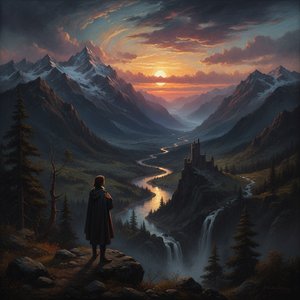
Capturing the Soul: The Emotional Majesty and Sublime Power of Romantic Landscape Painting
Explore the profound emotional depth of Romantic landscape painting. Discover how masters like Turner and Friedrich captured the sublime power of nature through intuition and imagination in this expert art history retrospective.
Explore obras de arte organizadas por temas, estilos y características.


