


 Vista previa
 Compartir
 Compartir
 Ver detalles
 Guía
Guía

 Descargar
 Ver artículos similares
 Radiografía
 Presentación de diapositivas
 Estadísticas
Mujer
 Óleo sobre tabla
- Expresionismo
 1911
1911 750.0 x 785.0 cm
 Kunstmuseum
Experimente la mirada intensa de 'Cabeza de mujer' (1911) de Alexej von Jawlensky. Este retrato expresionista, con sus colores llamativos y forma simplificada, captura una profunda emoción y profundidad espiritual.
 Leer más
Descubre a Alexej von Jawlensky (1864-1941), maestro del Expresionismo. Explora sus icónicas 'Cabezas Místicas', paletas de color audaces y su rol clave en Der Blaue Reiter. ¡Arte ruso en Alemania!
Giclée / Impresión de arte
Impresiones giclée o en lienzo de calidad de museo con producción rápida y opciones de acabado flexibles. ( Encargar reproducción pintada a mano Ver versión en imagen digital)




P118B €10

P118H €10

P118W €10

P438Z €10

P508JH €12

P508YH €12

P805H €10

P805Z €10

P919BZ €10

P919G €10

P919XJ €10

P959ZH €10

P968JZ €12

W106C €8

W218G €10

W218JH €8

W218Y €10

W307PJ €10

W316G €10

W316PJ €8

W316Y €10

W398PJ €8

W4111J €10

W500HY €15

W500JH €15

W692G €12

W849H €8

W940BG €15

W953PJ €8




Estándar
personalizado
CM
INCH
Elija entre nuestros tamaños predefinidos que respetan las proporciones originales de la obra.
Loading sizes...

ancho
altura
Introduzca el ancho y el alto que necesite para adaptarse a su marco o pared. Una impresión solo puede recortarse, nunca hacerse más grande que la imagen original, por lo que un tamaño con una forma distinta perderá parte de la obra. Le enviaremos una maqueta digital para su aprobación antes de realizar cualquier impresión. La imagen que se muestra en esta página no refleja el recorte real; solo la maqueta lo hace.
Envío a todo el mundo () en 2 semanas en lugar de las 4/5 semanas estándar. (24 octubre)

Envío exprés gratuito a todo el mundo

Lienzo de lino de alta calidad

Seguro de envío completo

Garantía de reembolso de impuestos aduaneros

Garantía de fidelidad cromática exacta

Política de devolución de 100 días (solo por defectos)

Garantía de devolución del 100% del dinero

Oferta por volumen
 La opción de vidrio solo está disponible en tamaños inferiores a 110 cm.

Mujer
Giclée / Impresión de arte
Tamaño de la reproducción
-


Precio total
€ 61
El peso de una mirada: ‘Mujer’ de Alexej von Jawlensky
“Mujer”, pintada por Alexej von Jawlensky en 1911, no es simplemente un retrato; es la esencia destilada de una emoción capturada sobre tabla. Surgiendo del fértil terreno del expresionismo temprano, esta obra representa un momento crucial en la evolución artística de Jawlensky: un alejamiento de las preocupaciones puramente paisajísticas hacia una exploración intensamente enfocada en el rostro humano. La pintura exige atención inmediata con su cruda sencillez y su deliberada austeridad. Un fondo amarillo tenue sirve como un escenario neutral para la presencia cautivadora del sujeto, permitiendo que sus rasgos dominen la composición por completo. La técnica de Jawlensky se caracteriza por pinceladas audaces y decididas, aplicadas con una cualidad casi escultórica. Gruesas capas de pintura construyen la forma, creando una sensación de solidez e inmediatez que arrastra al espectador hacia la mirada de la mujer.
El contexto histórico de la obra es fundamental para comprender su poder. Jawlensky estuvo profundamente influenciado por Vincent van Gogh y Paul Gauguin, artistas que defendieron el uso del color como una herramienta expresiva. Sin embargo, Jawlensky llevó este concepto más allá, empleando una paleta restringida —principalmente amarillos, azules y blancos— no para imitar la realidad, sino para transmitir estados internos. Se alejó del realismo académico, abrazando la distorsión y la simplificación para intensificar el impacto emocional. Este periodo coincidió con su estancia en Múnich, un vibrante centro de experimentación artística donde interactuó con el grupo Blaue Reiter, junto a figuras como Kandinsky y Münter. La atmósfera de esta era —marcada por la agitación social y el cuestionamiento filosófico— moldeó sin duda la visión intensamente personal y a menudo melancólica de Jawlensky.
Un rostro como icono: Simbolismo y profundidad espiritual
Más allá de sus elementos formales, “Mujer” está cargada de simbolismo. La mirada directa e inquebrantable de la mujer es el rasgo más fascinante de la pintura. No es una aceptación pasiva de la presencia del espectador; es una interrogación activa, un desafío para confrontar las propias percecciónes y emociones. El ligero levantamiento de sus labios sugiere un sutil desafío, mientras que los rasgos cuidadosamente trazados —particularmente los ojos almendrados— transmiten un profundo sentido de introspección. El propio Jawlensky creía que el rostro humano poseía la clave para desentrañar verdades universales, viéndolo como un microcosmos del cosmos. Esta convicción es poderosamente evidente en sus posteriores “Meditaciones”, donde los rostros se volvieron cada vez más estilizados y dotados de un significado espiritual.
La elección del color refuerza aún más esta dimensión simbólica. El amarillo dominante evoca sentimientos de calidez, pero también insinúa melancolía e introspección, colores a menudo asociados con la memoria y la reflexión. La cinta azul en el cabello, un detalle impactante contra su tono de piel, añade un elemento de misterio y quizás incluso un toque de luto. Es una sutil señal visual que invita a la especulación sobre la historia y la vida interior de la mujer. La sencillez de la composición —una sola figura contra un fondo liso— intensifica la sensación de intimidad y alienta a los espectadores a proyectar sus propias emociones sobre el sujeto.
Maestría y legado
“Mujer” fue ejecutada en óleo sobre tabla, con unas impresionantes dimensiones de 750 x 785 cm. Esta escala subraya la ambición del artista: buscaba crear una imagen monumental que resonara en los espectadores a un nivel visceral. La superficie de la pintura es notablemente texturizada, revelando la fisicidad del pincel de Jawlensky. La aplicación de la pintura varía desde un impasto grueso hasta veladuras delicadas, creando un juego dinámico de luces y sombras. Esta atención al detalle dice mucho sobre la dedicación del artista a su oficio.
Hoy en día, “Mujer” reside en el Kunstmuseum de los Países Bajos, un testimonio de su perdurable mérito artístico. Se erige como un ejemplo poderoso del expresionismo temprano, un movimiento que buscaba capturar la experiencia subjetiva de la realidad a través del color intenso y la expresión emocional. La obra de Jawlensky continúa fascinando tanto a amantes del arte como a coleccionistas, ofreciendo un vistazo al alma de un artista profundamente sensible. Las reproducciones de este cautivador retrato pueden aportar un toque de belleza introspectiva a cualquier espacio, invitando a la contemplación y despertando el diálogo sobre las complejidades de la emoción humana.
Preguntas y respuestas
¿Quién es el autor de "Mujer" y a qué movimiento pertenece?
Detrás de "Mujer" se encuentran Alexej von Jawlensky y el movimiento Expresionismo.
¿Existe una guía para "Mujer" de Alexej von Jawlensky?
La guía de "Mujer" es la página Guía de la obra: una ficha imprimible que muestra la pieza con su pie de foto, línea de crédito y tabla de identidad (artista, fechas, técnica, tamaño original, colección).
¿Cuál es la técnica y la fecha de creación de "Mujer" de Alexej von Jawlensky?
"Mujer" fue realizada en 1911, en Óleo sobre tabla.
Biografía del artista
A Life Painted in Emotion: The Journey of Alexej von Jawlensky
Alexej von Jawlensky, born Alexej Georgewitsch von Jawlensky on March 13, 1864, in the Russian town of Torzhok, embarked on a path that would firmly establish him as a pivotal figure within early twentieth-century Expressionism. His formative years were characterized by frequent relocations, culminating in a settling within Moscow at the age of ten—an experience that likely instilled a sense of displacement and perhaps, a yearning for deeper connection, themes subtly woven into the emotional core of his later artistic explorations. Initially drawn to a military career, Jawlensky’s encounter with the vibrant world of art during the 1880 Moscow World Exposition proved transformative. This exposure ignited within him a passion that would ultimately supersede any sense of duty, leading him down a path dedicated to visual expression.
Early Influences and Artistic Foundations
Jawlensky’s early artistic training was somewhat unconventional. He initially pursued a military career, but his encounter with art during the 1880 Moscow World Exposition sparked an immediate and profound interest. This pivotal experience led him to abandon his military aspirations and dedicate himself to painting. He received some formal instruction at the St. Petersburg Academy of Arts, balancing his artistic pursuits with his military obligations. However, it was his association with Ilya Repin, a prominent Russian realist painter, that proved particularly formative. Repin’s influence instilled in Jawlensky a deep appreciation for realism and observation, while simultaneously encouraging him to explore new avenues of expression. Crucially, he met Marianne von Werefkin during this period—an artist of considerable means who became not only his mentor but also a vital supporter, providing the financial stability necessary for him to fully commit to his artistic endeavors. Their relationship was complex and deeply intertwined with shared creative ambitions.
Munich and the Birth of Expressionism
The move to Munich in 1894 marked a decisive turning point in Jawlensky’s career. He enrolled at Anton Ažbe’s private school, immersing himself in an environment that actively encouraged experimentation and challenged traditional academic approaches. This period witnessed a significant shift in his artistic style as he began to absorb the radical ideas circulating within the European art world. He was profoundly influenced by artists like Ferdinand Hodler, whose use of simplified forms and symbolic imagery resonated deeply with Jawlensky’s own evolving aesthetic sensibilities. Jan Verkade and Paul Sérusier further broadened his horizons, introducing him to the principles of symbolism and synthetism—movements that prioritized subjective experience and emotional resonance over strict representational accuracy. Jawlensky's engagement with groups like the Neue Künstlervereinigung München (NKvM) solidified his commitment to artistic innovation, placing him at the heart of a burgeoning Expressionist movement.
The Mystical Heads: A Journey into Inner Space
Around 1909, Jawlensky embarked on what would become his most iconic series—the “Mystical Heads.” These intensely colored portraits, often depicting faces reduced to essential forms, are not merely representations of individuals but rather explorations of spiritual essence and inner life. The heads possess a haunting quality, their simplified features and vibrant palettes conveying a sense of profound emotion and psychological depth. Works like Schokko with Red Hat (1909) and Portrait of Alexander Sakharoff (1909) exemplify this period, showcasing his mastery of color and composition. These weren’t portraits in the traditional sense; they were attempts to capture something beyond physical likeness—the soul, the inner landscape of the sitter. He distilled faces into geometric shapes, emphasizing the power of color to evoke emotion and spiritual resonance. Throughout the 1910s, Jawlensky continued to refine his style, moving towards an even greater degree of abstraction. His compositions became increasingly geometric, with forms distilled to their most fundamental elements. He developed a formulaic approach, often employing a limited range of colors arranged in carefully balanced configurations.
Exile, Legacy and Lasting Influence
The outbreak of World War I brought upheaval to Jawlensky’s life. Expelled from Germany in 1914 due to his Russian origins, he sought refuge in Switzerland, where he encountered Emmy Scheyer. Scheyer became a devoted champion of his work, tirelessly promoting it in the United States and securing him recognition on an international stage. Despite facing increasing health challenges—including severe arthritis that progressively limited his ability to paint—Jawlensky continued to create until his death in Wiesbaden, Germany, on March 15, 1941. His later works, created under immense physical hardship, are a testament to his unwavering dedication to artistic expression. Today, Alexej von Jawlensky is celebrated as a key figure in the development of Expressionism. His paintings are held in prominent museum collections worldwide, including the Museum Ostwall in Dortmund and the Städtische Galerie im Lenbachhaus in Munich. His exploration of color, form, and spiritual themes continues to resonate with audiences, solidifying his place as one of the most important artists of the early twentieth century. He left behind a body of work that is both visually striking and emotionally profound, offering a glimpse into the inner world of an artist who dared to challenge conventions and embrace the power of subjective expression.

Alexej von Jawlensky
1864 - 1941 , Rusia
Datos clave
- Artistas Que Influyeron:
- Iliá Repin
- Ferdinand Hodler
- Jan Verkade
- Paul Sérusier
- Henri Matisse
- Emil Nolde
- Fecha De Fallecimiento: 15 de marzo de 1941
- Fecha De Nacimiento: 13 de marzo de 1864
- Lugar De Nacimiento: Torzhok, Rusia
- Movimiento Artístico: Expresionismo
- Movimientos Influenciados Por Este Artista:
- Der Blaue Reiter
- Die Blaue Vier
- Nacionalidad: Ruso-Alemán
- Nombre Completo: Alexej von Jawlensky
- Obras Notables:
- Paisaje con Vaca
- Cabeza Mística: Meditación
- Schokko con sombrero rojo
- Retrato de Alexander Sakharoff
- Turbante violeta
Artículos relacionados

Beyond Reality: The Dreamlike Power of Surrealist Expressionism and the Subconscious Mind
Explore the profound depths of Surrealist Expressionism. Discover how masters like Dalí used dream logic and subconscious imagery to redefine reality through emotionally resonant, museum-quality art.

Unmasking Emotion: A Journey Through the Raw Power and Visceral Beauty of German Expressionism
Explore the raw emotional power of German Expressionism. From Kirchner to Die Brücke, discover how artists used distortion and vibrant color to unmask the human psyche. A deep dive into art history for the discerning collector and enthusiast.
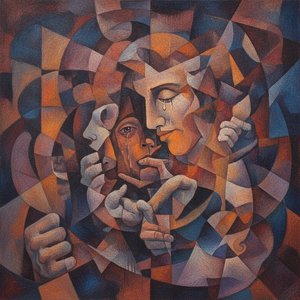
Beyond the Surface: Exploring the Emotional Depth of Cubist Expressionism
Discover the profound emotional resonance within Cubist Expressionism. Explore how fragmented forms and geometric abstraction convey deep human feeling through an expert art-historical lens for the discerning collector.
Explore obras de arte organizadas por temas, estilos y características.


