

 Ver en contexto
 Enviar
 Compartir
 Detalles
 Guía
Guía

 Descargar
 Similares
 Radiografía
 Presentación de diapositivas
 Q&A
Q&A Estadísticas
The Blue Ship

- 44.0 x 56.0 cm


A striking blue ship navigates rough waters in this evocative 1934 masterpiece by self-taught Cornish artist Alfred Wallis, offering a unique maritime vision that invites you to bring the sea home.
 Ver más
Alfred Wallis fue un pintor británico estilo naïvo reconocido por sus encantadoras representaciones de barcos, paisajes costeros y vida cornish. Descubre su perspectiva única y estilo folclórico en este icono del arte moderno inglés.
Giclée / Impresión de arte
Impresiones giclée o en lienzo de calidad de museo con producción rápida y opciones de acabado flexibles. ( Comprar pintura hecha a mano Cambiar a imagen digital)




P118B €10

P118H €10

P118W €10

P438Z €10

P508JH €12

P508YH €12

P805H €10

P805Z €10

P919BZ €10

P919G €10

P919XJ €10

P959ZH €10

P968JZ €12

W106C €8

W218G €10

W218JH €8

W218Y €10

W307PJ €10

W316G €10

W316PJ €8

W316Y €10

W398PJ €8

W4111J €10

W500HY €15

W500JH €15

W692G €12

W849H €8

W940BG €15

W953PJ €8




Tamaño estándar
a medida
CM
INCH
Elija entre nuestros tamaños predefinidos que respetan las proporciones originales de la obra.
Loading sizes...

ancho
altura
Introduzca el ancho y el alto que necesite para adaptarse a su marco o pared. Una impresión solo puede recortarse, nunca hacerse más grande que la imagen original, por lo que un tamaño con una forma distinta perderá parte de la obra. Le enviaremos una maqueta digital para su aprobación antes de realizar cualquier impresión. La imagen que se muestra en esta página no refleja el recorte real; solo la maqueta lo hace.
Envío a todo el mundo () en 2 semanas en lugar de las 4/5 semanas estándar. (31 octubre)

Envío exprés gratuito a todo el mundo

Lienzo de lino de alta calidad

Seguro de envío total

Garantía de reembolso de aranceles aduaneros

Garantía de fidelidad cromática exacta

Política de devolución de 100 días (solo por defectos)

Garantía de devolución del 100% del dinero

Descuento por cantidad
 La opción de vidrio solo está disponible en tamaños inferiores a 110 cm.

The Blue Ship
Giclée / Impresión de arte
Dimensiones de la reproducción
-


Precio total final
€ 61
A Maritime Vision in Azure: The Soul of Alfred Wallis
In the quiet, salt-sprayed corners of Cornwall, where the Atlantic meets the rugged English coastline, there exists a unique visual language born not from academies, but from the rhythmic pulse of the sea itself. The Blue Ship, painted in 1934 by the self-taught master Alfred Wallis, serves as a profound testament to this raw, unmediated connection to the ocean. This piece is far more than a mere depiction of maritime life; it is an evocative window into the mind of a man who spent his life shaping timbers and navigating treacherous waters. The painting captures a singular vessel, dominated by a majestic blue sail that commands the viewer's attention, cutting through the undulating textures of the sea with a sense of purposeful motion.
The composition is masterfully layered to create an illusion of vastness within a modest frame. While the central ship acts as the emotional anchor, Wallis subtly populates the seascape with smaller vessels—one drifting near the upper left, another glimpsed on the right, and a third nestled in the bottom corner. These secondary boats do not merely fill space; they provide a sense of scale and depth, suggesting a bustling maritime world that extends far beyond the edges of the canvas. The interplay between the large, dominant sail and these distant silhouettes creates a rhythmic movement that mimics the ebb and flow of the tides, drawing the eye on a journey across the painted horizon.
The Texture of Memory and Craft
To observe The Blue Ship is to witness the intersection of shipbuilding craftsmanship and primitive modernism. Wallis, having spent decades as a shipbuilder in Devonport, approached his canvas with the same tactile understanding of material that he applied to wood and sail. His technique eschews traditional perspective in favor of a flattened, almost dreamlike space, where color and form take precedence over anatomical accuracy. The heavy application of pigment and the bold, simplified shapes evoke a sense of nostalgia, as if we are viewing a memory filtered through the haze of sea spray and time.
The palette is strikingly focused, centered around the deep, soulful blues that define the ship and its sails. This monochromatic dominance is punctuated by the subtle shifts in the water's surface, creating a hypnotic effect that is both calming and intensely powerful. For collectors and interior designers, this piece offers a sophisticated balance of color and texture. Its ability to anchor a room with its serene yet commanding presence makes it an ideal centerpiece for spaces that seek to evoke tranquility, strength, and a connection to the natural world.
An Eternal Voyage for the Modern Collector
Beyond its aesthetic allure, The Blue Ship carries a profound emotional weight. It embodies the resilience of the human spirit against the vastness of nature—a theme that resonates deeply in contemporary art appreciation. The painting does not strive for photographic realism; instead, it seeks to capture the essence of the voyage. There is a certain loneliness in the blue expanse, yet there is also a sense of profound belonging within the movement of the ships.
For those looking to adorn their homes or galleries with a high-quality reproduction, this work offers an unparalleled opportunity to possess a fragment of maritime history. A hand-painted reproduction of this masterpiece allows the tactile beauty of Wallis's vision to be felt in any setting, bringing the rugged, poetic atmosphere of the Cornish coast into the modern interior. It is an investment in emotion, a tribute to the sea, and a timeless addition to any curated collection of fine art.
Preguntas y respuestas
¿Qué sentimiento transmite "The Blue Ship" de Alfred Wallis dentro de Primitivism?
"The Blue Ship" transmite un tono emocional Nostalgic dentro del movimiento Primitivism.
¿Qué paleta de colores y qué emoción evocan "The Blue Ship"?
En "The Blue Ship", los colores de Neutrals acompañan a un sentimiento Nostalgic.
¿A qué etapa de la trayectoria de Alfred Wallis pertenece "The Blue Ship"?
"The Blue Ship" pertenece al Mature Period de la trayectoria de Alfred Wallis. Esta clasificación vincula la obra con el desarrollo del artista.
Biografía del artista
La visión del marino de Cornualles
Alfred Wallis (1855-1942) se distingue del paisaje artístico tradicional de su época: una figura cuya tranquila sencillez esconde un profundo compromiso con la observación y una dedicación inquebrantable para capturar la esencia de la costa de Cornualles. Nacido en Devonport, Inglaterra, Wallis no poseía formación artística formal; era un artesano autodidacta que trabajó como constructor naval durante gran parte de su vida, moldeando maderas para crear embarcaciones que surcarían las aguas del Atlántico. Esta maestría práctica y directa le inculcó una meticulosa atención al detalle y un conocimiento íntimo de los materiales que más tarde se traduciría en sus evocadoras pinturas. Sus años formativos transcurrieron perfeccionando las habilidades de la construcción naval, un oficio transmitido a través de generaciones de familias cornwallesas, lo que le proporcionó una conexión única y visceral con el mundo marítimo que eventualmente inmortalizaría sobre el lienzo.
No fue sino hasta la década de 1920 cuando la carrera artística de Wallis floreció verdaderamente, tras su traslado al vibrante enclave artístico de St Ives, en Cornualles. Atraído por la energía creativa de esta comunidad —que incluía figuras notables como Ben Burrell y George Nash— comenzó a producir una prolífica serie de obras que representaban barcos, puertos y paisajes bañados por la distintiva luz de Cornualles. Su estética es innegablemente única, caracterizada por perspectivas planas, contornos audaces y una paleta de colores apagados dominada por azules profundos y verdes marinos. La obra de Wallis encarna los principios del arte naïf, un estilo arraigado en la experiencia sensorial directa más que en la teoría académica intelectualizada. Él evitaba las composiciones complejas y las pinceladas elaboradas, priorizando la claridad y un impacto emocional inmediato.
Un legado de memoria marítima
La importancia de la contribución de Wallis al arte reside en su capacidad para transformar los elementos cotidianos de la vida marinera en algo profundamente espiritual y atmosférico. Sus pinturas no son meras representaciones de lugares; están impregnadas de un sentido palpable de movimiento y memoria. A través de obras como Trawler y Boat, se puede sentir el peso del Atlántico y el pulso rítmico de las mareas. Incluso en composiciones más turbulentas como Rough Sea, su estilo expresivo y su pincelada evocadora capturan la fuerza bruta del océano a través del lente de la tradición del arte folclórico. Al rechazar las rígidas convenciones académicas de su tiempo, Wallis logró un nivel de honestidad que resuena en los espectadores que buscan una conexión con las fuerzas elementales de la naturaleza.
Su importancia histórica se consolida por su papel como puente entre la cruda realidad del trabajo marítimo y los movimientos artísticos modernos del siglo XX. Aunque carecía de instrucción formal, su enfoque "primitivo" ofreció una alternativa refrescante a las técnicas sofisticadas de la época, influyendo en nuestra percepción de la relación entre el sujeto y el medio. La obra de su vida sigue siendo un testimonio del poder de la mirada sin entrenamiento, demostrando que la verdadera visión artística surge a menudo de una profunda e íntima relación de toda una vida con el entorno. Hoy en día, su legado continúa inspirando a quienes se sienten atraídos por el encanto de la vida en Cornualles y la belleza eterna del mar.

Alfred Wallis
1855 - 1942 , Reino Unido
Datos clave
- Artistic Movement Or Style: Naive painting
- Artists Or Movements Influenced By This Artist: ['Cornish Art']
- Date Of Birth: August 8, 1855
- Date Of Death: August 29, 1942
- Full Name: Alfred Wallis
- Nationality: British
- Notable Artworks:
- Boat
- Trawler
- Three Masted Ship Near Lighthouse
- Place Of Birth: Devonport, United Kingdom
Artículos relacionados
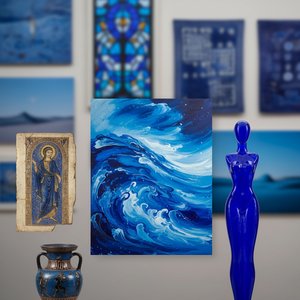
The Allure of Azure: Exploring the Symbolic & Aesthetic Depths of Blue in Art History
Explore the rich history of blue in art! Discover its symbolism, from ancient pigments to modern masterpieces by Kandinsky & Seurat. Uncover the psychological impact and cultural meanings behind this captivating hue.

Las 10 Obras Maestras del Azul Pizarra: Arte, Historia y Decoración
Descubre las 10 pinturas más famosas dominadas por el azul pizarra. Explora la historia, técnica y belleza de Monet, Van Gogh y otros maestros. Encuentra reproducciones de arte exclusivas para decorar tu hogar en .

Envío y Devoluciones
APS ofrece envíos de arte a todo el mundo con un cuidado de grado museo, rastreo completo y una garantía de devolución de dinero de 100 días. Desde el soporte aduanero hasta Priority Production, confíe en un servicio transparente, embalaje seguro y una entrega fiable para coleccionistas, diseñadores y galerías.

Alfred Wallis: Rediscovering the Naïve Visionary of Cornish Life
Discover the captivating world of Alfred Wallis, the self-taught Cornish painter championed by modernists. Explore his unique naive style, maritime scenes & lasting legacy with TopImpressionists.

Las 25 mejores obras de Sir Alfred James Munnings: Maestría y elegancia ecuestre
Explora las 25 obras maestras de Sir Alfred James Munnings y su arte ecuestre. ¡Descubre toda la colección en TopImpressionists.com!
Explore obras de arte organizadas por temas, estilos y características.


