

 Ver en contexto
 Enviar
 Compartir
 Detalles
 Guía
Guía

 Descargar
 Similares
 Radiografía
 Presentación de diapositivas
 Preguntas y respuestas
 Estadísticas
¡Cruel!

- 69.0 x 94.0 cm


Una alegre escena de 1888 de Angelo Dall'Oca Bianca captura un momento encantador. ¡Añada esta pieza de arte italiano a su colección!
 Ver más
Angelo Dall’Oca Bianca (1858-1942) fue un pintor italiano conocido por sus escenas de género realistas de Verona, influenciadas por Favretto y la fotografía. Descubre su arte simbolista y divisionista, incluyendo "Los Amores del Alma" y "Búhos".
Giclée / Impresión de arte
Impresiones giclée o en lienzo de calidad de museo con producción rápida y opciones de acabado flexibles. ( Comprar pintura hecha a mano Cambiar a imagen digital)




P118B €10

P118H €10

P118W €10

P438Z €10

P508JH €12

P508YH €12

P805H €10

P805Z €10

P919BZ €10

P919G €10

P919XJ €10

P959ZH €10

P968JZ €12

W106C €8

W218G €10

W218JH €8

W218Y €10

W307PJ €10

W316G €10

W316PJ €8

W316Y €10

W398PJ €8

W4111J €10

W500HY €15

W500JH €15

W692G €12

W849H €8

W940BG €15

W953PJ €8




Tamaño estándar
a medida
CM
INCH
Elija entre nuestros tamaños predefinidos que respetan las proporciones originales de la obra.
Loading sizes...

ancho
altura
Introduzca el ancho y el alto que necesite para adaptarse a su marco o pared. Una impresión solo puede recortarse, nunca hacerse más grande que la imagen original, por lo que un tamaño con una forma distinta perderá parte de la obra. Le enviaremos una maqueta digital para su aprobación antes de realizar cualquier impresión. La imagen que se muestra en esta página no refleja el recorte real; solo la maqueta lo hace.
Envío a todo el mundo () en 2 semanas en lugar de las 4/5 semanas estándar. (9 noviembre)

Envío exprés gratuito a todo el mundo

Lienzo de lino de alta calidad

Seguro de envío total

Garantía de reembolso de aranceles aduaneros

Garantía de fidelidad cromática exacta

Política de devolución de 100 días (solo por defectos)

Garantía de devolución del 100% del dinero

Descuento por cantidad
 La opción de vidrio solo está disponible en tamaños inferiores a 110 cm.

¡Cruel!
Giclée / Impresión de arte
Dimensiones de la reproducción
-


Precio total final
€ 62
Un momento congelado en el tiempo: El encanto de Angelo Dall'Oca Bianca
En el delicado juego de luces y sombras capturado en "¡Cruel!", nos encontramos ante una clase magistral de la pintura de género de finales del siglo XIX. Creada en 1888 por el estimado virtuoso italiano Angelo Dall'Oca Bianca, esta pieza sirve como una ventana a una era pasada de elegancia e intimidad social. A primera vista, el espectador es atraído hacia una escena tierna, casi cinematográfica, donde dos figuras permanecen una al lado de la otra, con su conexión acentuada por el vibrante destello de un paraguas rojo. La mujer, envuelta en un sofisticado vestido negro, contempla a su compañero con una sonrisa que sugiere un secreto compartido o un momento de alegría silenciosa. Este sentido de profundidad narrativa es lo que hace que la obra de Dall'Oca Bianca sea tan perdurable; él no se limita a pintar figuras, sino que captura el aliento mismo de la interacción humana.
La composición es rica en detalles sutiles que invitan a una contemplación prolongada. Más allá de la pareja central, la presencia de figuras secundarias y paraguas adicionales crea una atmósfera estratificada y bulliciosa, que recuerda a una animada escena callejera en Verona. La inclusión de elementos aparentemente dispares —un reloj situado en la esquina superior y un cuenco anidado cerca del centro— añade un toque de domesticidad y peso temporal a la escena. Estos detalles arraigan la pintura en la realidad mientras añaden una capa de misterio, incitando al observador a reflexionar sobre el paso del tiempo y la naturaleza fugaz de estas emociones capturadas. Para el coleccionista, tal complejidad ofrece un pozo infinito de descubrimientos, convirtiendo cada visualización en una experiencia renovada.
Técnica, influencia y legado artístico
La destreza técnica de Dall'Oca Bianca está profundamente arraigada en su rigurosa formación en la Academia Cignaroli y la Academia de Bellas Artes de Venecia. Su estilo, fuertemente influenciado por el prominente Giacomo Favretto, une un enfoque clásico de la forma con un creciente interés por la estética moderna de la fotografía. Esta fusión única es evidente en la forma en que maneja la luz; existe una claridad fotográfica en los sujetos, pero la pincelada conserva una calidez pictórica que evita que la escena se sienta estática. La capacidad del artista para manipular la textura —desde la pesada tela de un vestido oscuro hasta la cualidad translúcida de un paraguas bajo la lluvia— demuestra un mando sofisticado sobre su medio.
Al rastrear la evolución de su carrera, desde sus primeras escenas de género hasta sus exploraciones posteriores en el Simbolismo y el Divisionismo, "¡Cruel!" se erige como una representación fundamental de su maestría de la luz y la narrativa social. Tanto para diseñadores de interiores como para entusiastas del arte, esta pintura ofrece algo más que belleza estética; proporciona un punto focal de importancia histórica y resonancia emocional. Una reproducción de alta calidad de esta obra trae consigo el prestigio de la Belle Époque italiana, ofreciendo un toque sofisticado a cualquier espacio curado. Es una invitación a rodearse de la calidez de la historia y la elegancia atemporal de un maestro que supo exactamente cómo capturar el corazón de un instante.
Preguntas y respuestas
¿Quién es el autor de "¡Cruel!"?
"¡Cruel!" fue creada por Angelo Dall'Oca Bianca. La información en esta página describe la obra original de Angelo Dall'Oca Bianca.
¿En qué año se creó "¡Cruel!"?
"¡Cruel!" de Angelo Dall'Oca Bianca fue creada en 1888.
¿Dónde y para qué uso se recomienda "¡Cruel!"?
Se recomienda "¡Cruel!" de Angelo Dall'Oca Bianca para Provocador, idealmente en un/a Cafeterías y locales de bebidas. El uso y el espacio juntos ayudan a determinar dónde encaja mejor una reproducción.
Biografía del artista
Early Life and Artistic Beginnings
Angelo Dall’Oca Bianca, born in Verona in 1858, entered the world amidst a backdrop of modest circumstances – a family history rooted in the streets of his hometown rather than grand estates. His early years were marked by a practical necessity for work, a stark contrast to the privileged paths often afforded to aspiring artists. However, even within this challenging environment, a nascent talent for drawing and painting began to emerge, nurtured initially by the sculptor Ugo Zannoni and later guided by the discerning eye of Napoleone Nani, director of the Cignaroli Academy in Verona. This early mentorship proved pivotal, providing him with formal training and laying the foundation for his future artistic endeavors. His initial studies at the academy established a strong grounding in classical techniques, but it was his exposure to Giacomo Favretto, a prominent artist of the time, that truly shaped his stylistic trajectory. Favretto’s influence—characterized by a realistic yet subtly expressive approach—became a cornerstone of Dall'Oca Bianca’s own artistic language.Artistic Style and Influences
Dall’Oca Bianca’s distinctive style emerged as a fascinating synthesis of several influences. While deeply rooted in the realism championed by Favretto, his work also reveals an intriguing engagement with photography. During his sojourn in Rome between 1882 and 1883, he experimented with capturing fleeting moments and observing the nuances of everyday life through the lens of this emerging medium. This photographic sensibility—a keen eye for detail, a focus on composition, and a desire to accurately represent reality—manifested itself in his genre paintings, which often depicted scenes from Verona’s bustling streets and the lives of its inhabitants. His subjects weren't grand historical narratives or mythological allegories; instead, he found beauty and significance in the ordinary – the daily routines of artisans, the interactions within public squares, and the quiet moments of domestic life.Notable Works and Exhibitions
Dall’Oca Bianca’s career was punctuated by a series of significant exhibitions and the creation of several compelling works that cemented his reputation as a skilled and insightful artist. “The Loves of Souls” (1898), presented at both the National Exposition of Turin and the Universal Exposition of Paris, stands as a particularly noteworthy example of his Symbolist leanings. This painting, characterized by its evocative atmosphere and symbolic imagery, demonstrated his willingness to explore complex themes and experiment with innovative techniques. Furthermore, “Owls” (1910-1920), housed in the Galleria d’Arte Moderna Achille Forti, showcases his adherence to the Divisionist movement—a technique emphasizing broken color and fragmented forms to create a shimmering effect. The series "The Masks (The Politics)" (1905) further reveals his interest in social commentary and political themes, offering a subtle critique of human nature through allegorical representation. His participation in the Venice Biennale, culminating in a solo exhibition featuring over eighty works in 1912, marked a high point in his career, solidifying his position within the Italian art scene.Legacy and Historical Significance
Angelo Dall’Oca Bianca's legacy extends beyond his individual artistic achievements. His work offers a valuable glimpse into the social and cultural landscape of Verona during the late 19th and early 20th centuries. His genre paintings, with their intimate portrayal of everyday life, provide a rich record of Veronese customs, traditions, and the lives of its people. Today, his paintings can be found in various collections, including the Galleria d’Arte Moderna Achille Forti and the Palumbo-Fossati collection in Venice, ensuring that his artistic contributions continue to be appreciated and studied. His dedication to capturing the essence of Veronese life, combined with his exploration of Symbolist and Divisionist techniques, establishes him as a significant figure in Italian art history—an artist who skillfully blended realism with symbolism and captured the spirit of his time.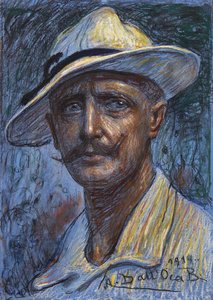
Angelo Dall'Oca Bianca
1858 - 1942 , Italia
Datos clave
- Artistic Movement Or Style:
- Pintura de género
- Simbolismo
- Divisionismo
- Artists Or Movements Influenced By This Artist: ['Favretto']
- Artists Who Influenced This Artist: Giacomo Favretto
- Date Of Birth: 1858, Verona, Italia
- Full Name: Angelo Dall'Oca Bianca
- Nationality: Italiano
- Notable Artworks:
- Las Amores del Alma
- Búhos
- Las Máscaras (La Política)
- Place Of Birth: Verona, Italia
Artículos relacionados

Las 10 Obras Maestras del Negro Carbón: Arte, Historia y Decoración
Descubre 10 obras maestras del arte dominadas por el negro carbón. Explora la historia, técnica y significado de cuadros icónicos de artistas como Rembrandt y Goya. Encuentra reproducciones de museo en .

Las 10 Pinturas Más Famosas Dominadas por el Negro | Arte y Decoración
Descubre las 10 pinturas más impactantes dominadas por el negro. Explora obras maestras de Rembrandt, Goya y Rothko, su historia y significado. Encuentra reproducciones de arte exclusivas para transformar tu hogar en .

Crimson Threads of Narrative: Exploring Symbolism & Representation in Artworks Featuring the Red Dress
Explore the rich symbolism of the red dress in art history! From ancient power displays to iconic portraits like Cézanne’s 'Madame Cezanne', discover the cultural and artistic significance behind this captivating color. Expert analysis & insights.

Las 10 Obras Maestras Dominadas por el Negro Marsella: Arte y Decoración
Descubre las 10 pinturas más famosas dominadas por el negro marsella. Explora la historia, técnica y simbolismo de obras maestras del expresionismo alemán, gótico y arte moderno. Reproducciones de museos en .

Dominando la emoción: Las 25 obras más icónicas de Mark Rothko
Explora las 25 obras maestras de Mark Rothko y el Color Field. Descubre reproducciones de museo en TopImpressionists.com.
Explore obras de arte organizadas por temas, estilos y características.
