

 Ver en contexto
 Enviar
 Compartir
 Detalles
 Guía
Guía

 Descargar
 Similares
 Radiografía
 Presentación de diapositivas
 Preguntas y respuestas
 Estadísticas
Sadhu Kokila

- 25.0 x 33.0 cm


El pintor António Xavier Trindade, maestro del agua fuerte y ojo para el detalle, capturó la esencia de un santo viajero en esta obra maestra que refleja la tradición artística india.
 Ver más
António Xavier Trindade (1870-1935): Pintor de la Escuela de Bombay, reconocido como el 'Rembrandt del Este'. Descubre sus retratos realistas y paisajes que fusionan cultura india con estilos occidentales.
Giclée / Impresión de arte
Impresiones giclée o en lienzo de calidad de museo con producción rápida y opciones de acabado flexibles. ( Comprar pintura hecha a mano Cambiar a imagen digital)




P118B €10

P118H €10

P118W €10

P438Z €10

P508JH €12

P508YH €12

P805H €10

P805Z €10

P919BZ €10

P919G €10

P919XJ €10

P959ZH €10

P968JZ €12

W106C €8

W218G €10

W218JH €8

W218Y €10

W307PJ €10

W316G €10

W316PJ €8

W316Y €10

W398PJ €8

W4111J €10

W500HY €15

W500JH €15

W692G €12

W849H €8

W940BG €15

W953PJ €8




Tamaño estándar
a medida
CM
INCH
Elija entre nuestros tamaños predefinidos que respetan las proporciones originales de la obra.
Loading sizes...

ancho
altura
Introduzca el ancho y el alto que necesite para adaptarse a su marco o pared. Una impresión solo puede recortarse, nunca hacerse más grande que la imagen original, por lo que un tamaño con una forma distinta perderá parte de la obra. Le enviaremos una maqueta digital para su aprobación antes de realizar cualquier impresión. La imagen que se muestra en esta página no refleja el recorte real; solo la maqueta lo hace.
Envío a todo el mundo () en 2 semanas en lugar de las 4/5 semanas estándar. (7 noviembre)

Envío exprés gratuito a todo el mundo

Lienzo de lino de alta calidad

Seguro de envío total

Garantía de reembolso de aranceles aduaneros

Garantía de fidelidad cromática exacta

Política de devolución de 100 días (solo por defectos)

Garantía de devolución del 100% del dinero

Descuento por cantidad
 La opción de vidrio solo está disponible en tamaños inferiores a 110 cm.

Sadhu Kokila
Giclée / Impresión de arte
Dimensiones de la reproducción
-


Precio total final
€ 62
António Xavier Trindade: Un Maestro de la Luz y el Alma Goesa
La figura de António Xavier Trindade permanece como un testimonio silencioso pero poderoso en la historia del arte indio, trascendiendo las limitaciones del tiempo para ofrecer una visión singular de la sensibilidad artística de principios del siglo XX. Más que simplemente un pintor, Trindade fue un puente cultural entre el mundo occidental académico y la profunda tradición espiritual de la India, creando obras maestras que reflejan esta compleja interacción. Su legado sigue inspirando artistas y amantes del arte contemporáneo, cuya mirada se encuentra atraída por la belleza contenida en sus pinturas y la riqueza de su estilo único.- Origen y Formación: Nacido en Sanguem, Goa, en 1870, Trindade pertenecía a una familia católica que le brindó un entorno favorable para desarrollar su talento artístico desde temprana edad. Tras ser impulsado por sus padres, estudió en la Escuela Superior de Arte Jamsetjee Jeejeebhoy de Bombay, donde fue expuesto a las corrientes naturalesistas europeas bajo el influjo del sistema Kensington, estableciendo así una sólida base académica que marcaría el desarrollo de su obra posterior.
- Estilo y Técnica: Trindade cultivó un estilo propio caracterizado por la precisión realista y una profunda comprensión de los principios técnicos del óleo sobre lienzo, aunque también incorporó elementos simbólicos derivados de la tradición artística oriental. Esta combinación innovadora le permitió crear imágenes que capturaban tanto la belleza física como las emociones humanas con una sensibilidad excepcional.
- Temática: Sus pinturas abordaron temas diversos, desde retratos individuales hasta paisajes impresionantes y escenas cotidianas, pero siempre bajo una perspectiva humanista que buscaba transmitir valores morales y espirituales. Particularmente destacadas son sus obras religiosas, donde Trindade exploró la relación entre el hombre y Dios con maestría artística y profunda reflexión filosófica.
- Contexto Histórico: Trindade vivió en un período de transición marcado por el declive del imperio portugués en India y el nacimiento de una nueva nación independiente, lo que influyó en su visión artística como reflejo de los cambios sociales y culturales de la época. Su obra representa un testimonio importante de esa época, ofreciendo una ventana al espíritu creativo de principios del siglo XX en el contexto colonial portugués.
- Legado: Hoy en día, las pinturas de Trindade siguen siendo objeto de estudio y admiración por artistas e historiadores del arte, cuya mirada encuentra inspiración en su estilo único y en la profundidad emocional de sus obras maestras. Su nombre permanece grabado en la historia del arte indio como un ejemplo de excelencia artística y sensibilidad humana que continúa resonando en el siglo XXI.
Preguntas y respuestas
¿Dónde puedo encontrar obras de arte similares a "Sadhu Kokila" de António Xavier Trindade?
La página de Obras similares de "Sadhu Kokila" de António Xavier Trindade muestra obras relacionadas.
¿Qué ambiente aportaría "Sadhu Kokila" a un espacio?
"Sadhu Kokila" de António Xavier Trindade transmite una atmósfera Sereno y se recomienda para un/a Salón principal. El estado de ánimo es la esencia que la obra aporta al espacio que la rodea.
¿Qué edad tenía António Xavier Trindade cuando se creó "Sadhu Kokila"?
António Xavier Trindade creó "Sadhu Kokila" a la edad de 51. El artista nació en 1870 y la obra data de 1921.
Biografía del artista
A Life Etched in Light: The World of António Xavier Trindade
António Xavier Trindade, a name resonating with quiet power within the annals of Indian art history, was more than just a painter; he was a cultural bridge. Born in Sanguem, Goa, in 1870 to Catholic parents, his journey began amidst the lush landscapes and complex colonial tapestry of Portuguese India. This formative environment would indelibly shape his artistic vision, fostering a unique blend of Western academic training with an intrinsic understanding of Indian life and character. Trindade’s early promise led him to the prestigious Sir Jamsetjee Jeejeebhoy School of Art in Bombay, a pivotal institution that exposed him to European naturalism while simultaneously nurturing a growing generation of Indian artists. It was here, within those hallowed halls, that he honed his skills, mastering techniques that would later define his signature style and earn him accolades like the Mayo Silver Medal for artistic merit in 1892—a testament to his burgeoning talent.The Bombay School and a Rising Star
Trindade’s ascent within the Bombay art scene was swift and assured. Appointed as a teacher of drawing and painting at the Sir J.J. School of Art in 1898, he not only contributed to the education of future generations but also solidified his position as a leading figure in the burgeoning Bombay School. He wasn’t merely imparting technical skills; he was shaping a generation of artists who sought to represent Indian life with both authenticity and artistic vision. Later, assuming the role of Superintendent of the Reay Workshop of Art from 1914 to 1926, he further influenced artistic production and pedagogy, fostering an environment where experimentation and innovation flourished. However, it wasn’t merely institutional recognition that marked his success; it was the captivating quality of his work itself. While initially embracing traditional portraiture and landscapes, Trindade gradually developed a style characterized by its realism, sensitivity to light, and an ability to capture the psychological depth of his subjects. He became known for portraying Indian women with a dignity and intimacy rarely seen in colonial-era art, offering glimpses into their lives beyond the confines of societal expectations—a deliberate departure from the often-stereotyped representations prevalent at the time. This earned him the affectionate title “Rembrandt of the East,” acknowledging both his technical mastery and his profound understanding of human emotion.Themes and Techniques: A Synthesis of Worlds
The 1920s witnessed a maturation in Trindade’s artistic expression, marked by an increasing focus on portraits, landscapes, and still lifes. His canvases became windows into the lives of his contemporaries—wealthy patrons, family members, and everyday individuals—each rendered with meticulous detail and a subtle yet powerful emotional resonance. Dolce Far Niente (Flora or Mother Reclining), awarded the Bombay Art Society’s gold medal in 1920, exemplifies this period; it is not merely a depiction of a woman at rest but an exploration of motherhood, serenity, and the quiet beauty of domestic life. The painting captures a moment of profound intimacy, inviting the viewer to share in the subject's peaceful contemplation. Similarly, New Year’s Song (1928) and Hindu Girl (1930), recipients of the Governor’s prize, showcase his ability to capture cultural nuances and individual personalities with remarkable sensitivity. Trindade's technique was rooted in Western academic principles—a mastery of chiaroscuro, precise draftsmanship, and a sophisticated understanding of color theory—but he infused these elements with an Indian sensibility, creating a unique visual language that transcended stylistic boundaries. He wasn’t simply replicating what he had learned; he was transforming it, imbuing it with the spirit of his homeland. His use of light, in particular, became a hallmark of his style, often employed to create a sense of warmth and intimacy within his compositions.Notable Works & Legacy
Trindade’s oeuvre is remarkably diverse, encompassing portraits, landscapes, and genre scenes that offer a rich tapestry of Indian life during the early 20th century. His paintings frequently depict women in everyday settings—preparing food, tending to children, or engaging in leisurely activities—portraying them with respect and dignity. The *Nasik Scenes* series (1920s-30s), a collection of twelve large-scale canvases depicting the diverse communities and religious practices along the Nasik River, stands as a testament to his commitment to documenting Indian cultural heritage. These works are not merely scenic representations; they are carefully constructed narratives that capture the complexity and vibrancy of Indian society. The *Family by Lamplight* (1916) is another significant work, offering a poignant glimpse into the domestic life of a Goan family—a scene imbued with warmth, intimacy, and a subtle sense of melancholy. Trindade’s legacy extends beyond his individual artworks; he played a crucial role in shaping the Bombay School of Art and fostering a generation of Indian artists who embraced both Western techniques and their own cultural identity. He was truly considered by many to be the “Rembrandt of the East,” an epithet that reflects not only his technical skill but also his profound understanding of human nature and his ability to capture the essence of India in his paintings.A Painter’s Passing
Despite facing personal challenges—including declining health and eventual blindness in later life—Trindade continued to paint with unwavering dedication, supported by his daughter Ângela Trindade, herself a talented artist who carried on her father’s legacy. His work gained further recognition with an exhibition at the Festival of the Empire in Wembley, London, in 1934, bringing his art to an international audience. On 16 March 1935, António Xavier Trindade passed away peacefully in his family home in Mahim, Bombay, leaving behind a remarkable artistic legacy that continues to inspire and captivate audiences today. His paintings remain treasured possessions of museums and private collectors alike, serving as enduring reminders of a pivotal moment in Indian art history—a time when artists dared to forge their own identities and celebrate the beauty and complexity of their homeland.
António Xavier Trindade
1870 - 1935 , India
Datos clave
- Artistic Movement Or Style: Escuela de Bombay, Realismo
- Date Of Birth: 1870
- Date Of Death: 1935
- Full Name: António Xavier Trindade
- Nationality: Portugués
- Notable Artworks:
- Dolce Far Niente
- New Year’s Song
- Hindu Girl
- Place Of Birth: Sanquém, India
Artículos relacionados

The Barbizon School: The Soulful Origins of Impressionism's Natural Light and Atmospheric Mastery
Discover the profound influence of the Barbizon School on Impressionism. Explore how these masters captured natural light and atmospheric beauty through plein air painting, paving the way for Monet and Renoir. A journey into the soulful origins of landscape art history.

Capturing the Light: A Journey Through the Soul of American Impressionism and the Hudson River School
Explore the luminous beauty of American Impressionism and the Hudson River School. Discover a curated journey through light, landscape, and history, celebrating the enduring legacy of masters through exquisite, hand-painted oil reproductions for the discerning art lover.
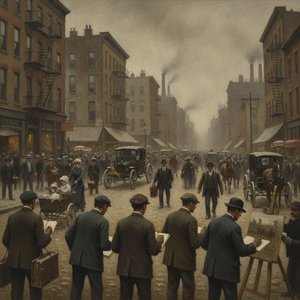
The Ashcan School: Capturing the Raw, Unfiltered Soul of Urban Life through American Realism
Discover the raw beauty of the Ashcan School. Explore how masters like Bellows and Henri captured the gritty, vibrant soul of early 20th-century New York through profound American Realism and evocative urban landscapes.
Explore obras de arte organizadas por temas, estilos y características.


