


 Ver en contexto
 Enviar
 Compartir
 Detalles
 Guía
Guía

 Descargar
 Similares
 Radiografía
 Presentación de diapositivas
 Estadísticas
Couple on the Forest Track
 Oil On Canvas
- WallArt
- Expressionism
 1913
1913- 19th Century
 61.0 x 81.0 cm
 Museo Lehmbruck
Explore August Macke’s ‘Couple on the Forest Track’ – a vibrant Expressionist oil painting capturing mystery & quietude. Discover its layered style, loose brushwork & evocative symbolism.
 Ver más
Descubre August Macke (1887-1914), pintor expresionista alemán. Influenciado por Fauvismo y Orfismo, sus obras vibrantes como 'Mujer con una Chaqueta Verde' capturan la vida moderna.
Giclée / Impresión de arte
Impresiones giclée o en lienzo de calidad de museo con producción rápida y opciones de acabado flexibles. ( Comprar pintura hecha a mano Cambiar a imagen digital)




P118B €10

P118H €10

P118W €10

P438Z €10

P508JH €12

P508YH €12

P805H €10

P805Z €10

P919BZ €10

P919G €10

P919XJ €10

P959ZH €10

P968JZ €12

W106C €8

W218G €10

W218JH €8

W218Y €10

W307PJ €10

W316G €10

W316PJ €8

W316Y €10

W398PJ €8

W4111J €10

W500HY €15

W500JH €15

W692G €12

W849H €8

W940BG €15

W953PJ €8




Tamaño estándar
a medida
CM
INCH
Elija entre nuestros tamaños predefinidos que respetan las proporciones originales de la obra.
Loading sizes...

ancho
altura
Introduzca el ancho y el alto que necesite para adaptarse a su marco o pared. Una impresión solo puede recortarse, nunca hacerse más grande que la imagen original, por lo que un tamaño con una forma distinta perderá parte de la obra. Le enviaremos una maqueta digital para su aprobación antes de realizar cualquier impresión. La imagen que se muestra en esta página no refleja el recorte real; solo la maqueta lo hace.
Envío a todo el mundo () en 2 semanas en lugar de las 4/5 semanas estándar. (25 octubre)

Envío exprés gratuito a todo el mundo

Lienzo de lino de alta calidad

Seguro de envío total

Garantía de reembolso de aranceles aduaneros

Garantía de fidelidad cromática exacta

Política de devolución de 100 días (solo por defectos)

Garantía de devolución del 100% del dinero

Descuento por cantidad
 La opción de vidrio solo está disponible en tamaños inferiores a 110 cm.

Couple on the Forest Track
Giclée / Impresión de arte
Dimensiones de la reproducción
-


Precio total final
€ 61
August Macke’s ‘Couple on the Forest Track’: A Moment of Contemplation in a Tumultuous Era
“Couple on the Forest Track,” painted in 1913 by August Macke, is more than just a depiction of two women amidst a woodland scene; it's a poignant encapsulation of the anxieties and aspirations simmering beneath the surface of early 20th-century Europe. Created during a period of immense social and political upheaval – a mere year before the outbreak of World War I – the painting speaks to a yearning for tranquility, observation, and perhaps even escape, rendered with Macke’s signature expressive brushwork and vibrant color palette. Measuring 61 x 81 cm, this intimate canvas invites viewers into a world where the natural beauty of the forest is intertwined with a subtle sense of unease.
A Symphony of Color and Broken Brushstrokes
Macke’s artistic journey was one defined by a restless pursuit of innovation. Initially influenced by Impressionism and Post-Impressionism, particularly the work of Gauguin and Van Gogh, he quickly developed his own distinctive style – a bold synthesis that would later be recognized as a key element in the burgeoning movement of German Expressionism. “Couple on the Forest Track” exemplifies this approach perfectly. The painting’s technique is characterized by broken color, applied with loose, gestural brushstrokes to build form and atmosphere. This deliberate fragmentation of pigment creates a shimmering effect, particularly noticeable in the dappled light filtering through the trees, contributing significantly to the work's textural richness. The artist skillfully employs pointillistic techniques, layering small dots of color to achieve depth and luminosity – a technique that adds to the painting’s dynamic energy.
Subject and Symbolism: Lost in the Woods
The central figures—two women in striking red hats—are placed towards the right side of the composition, drawing the viewer's eye into the depths of the forest. Their posture suggests a moment of quiet contemplation, perhaps an observation of something beyond the immediate view. The ambiguity surrounding their activity – are they simply enjoying the scenery, or are they engaged in a deeper, more significant encounter? – adds to the painting’s enigmatic quality. The dense, stylized trees themselves become symbolic representations of the unknown, mirroring the uncertainties and anxieties that permeated European society at the time. The forest, traditionally associated with mystery and introspection, becomes a space for both solace and potential danger.
Historical Context and Emotional Resonance
Painted in 1913, “Couple on the Forest Track” is inextricably linked to the historical context of its creation. Germany was experiencing rapid industrialization, social unrest, and a growing sense of nationalistic fervor – all factors that contributed to the volatile atmosphere leading up to World War I. Macke’s work reflects this tension, capturing a fleeting moment of serenity amidst a period of impending doom. The painting's emotional impact is profound; it evokes a feeling of quietude punctuated by an underlying current of unease, mirroring the anxieties felt by many Europeans on the cusp of war. Macke’s use of color and form isn’t merely aesthetic; it’s a deeply expressive response to the world around him.
Material and Technique Details
- Artist: August Macke
- Year: 1913
- Medium: Oil on Canvas
- Size: 61 x 81 cm
- Style: Post-Impressionism, Expressionism (proto)
- Technique: Broken Color, Pointillistic Elements, Loose Brushwork
Preguntas y respuestas
¿De qué manera "Couple on the Forest Track" de Augusto Macke vincula el Expressionism con el país de origen del artista?
"Couple on the Forest Track" vincula el movimiento Expressionism con Alemania a través del lugar de nacimiento de su creador.
¿En qué técnica está ejecutada "Couple on the Forest Track" de Augusto Macke?
Augusto Macke utilizó la técnica de Oil On Canvas para "Couple on the Forest Track". La técnica define la naturaleza material de la obra original.
¿Qué orientación tiene "Couple on the Forest Track" de Augusto Macke?
"Couple on the Forest Track" de Augusto Macke es una composición en Portrait. Se recomienda revisar las proporciones antes de elegir un tamaño de impresión.
Biografía del artista
Primeros años y carrera artística
August Robert Ludwig Macke, un renombrado pintor expresionista alemán, nació el 3 de enero de 1887 en Meschede, Westfalia. Su viaje artístico comenzó en la Kunstakademie Düsseldorf (1904-1906), bajo la tutela de Adolf Maennchen. El estilo de Macke fue moldeado por el impresionismo francés y el postimpresionismo, influenciado posteriormente por el fauvismo.Influencias artísticas y estilo
El encuentro de Macke con Robert Delaunay en París (1912) lo introdujo al cubismo cromático, también conocido como orfismo. Esta influencia se puede apreciar en su pintura tiendas ventanas, una interpretación personal del estilo de Delaunay combinada con la simultaneidad de imágenes encontrada en el futurismo italiano. Macke formó parte del grupo expresionista alemán *Der Blaue Reiter* (El Jinete Azul), junto a Wassily Kandinsky, Franz Marc y Paul Klee. Sus pinturas, como chicas bañándose con el pueblo al fondo (100 x 80 cm, Staatsgalerie Moderner Kunst, Múnich, Alemania), exhiben su estilo único caracterizado por colores vivos y un dibujo audaz.Obras destacadas y legado
- Mujer con una chaqueta verde (1913, Museo Ludwig Colonia, Alemania), una pieza ejemplar del expresionismo.
- Paisaje con vacas y camello (1914, Kunsthaus Zúrich, Suiza), un ejemplo esencial de su estilo.
- Türkisches Café (1914), una obra maestra que muestra su enfoque luminista durante su último período.
Fin trágico e impacto duradero
La vida de Macke se truncó cuando murió el 26 de septiembre de 1914, en el frente en Champagne, Francia. Su última pintura, despedida, captura el estado de ánimo de tristeza que se cernía sobre Europa durante la Primera Guerra Mundial.Contexto Histórico y Evolución Artística
Macke desarrolló su arte en un período de profundos cambios sociales y políticos en Alemania. El auge del expresionismo reflejó una creciente inquietud por la industrialización, la urbanización y la guerra inminente. Su participación en *Der Blaue Reiter* lo conectó con otros artistas que buscaban romper con las convenciones artísticas tradicionales y explorar nuevas formas de expresión. A través de su experimentación con el color, la forma y la composición, Macke contribuyó significativamente al desarrollo del expresionismo alemán y dejó un legado duradero en la historia del arte moderno. Su obra sigue siendo admirada por su vitalidad, originalidad y capacidad para transmitir emociones profundas.
Augusto Macke
1887 - 1914 , Alemania
Datos clave
- Artistas Que Influyeron:
- Robert Delaunay
- Paul Klee
- Franz Marc
- Wassily Kandinsky
- Fecha De Muerte: 26 de septiembre de 1914
- Fecha De Nacimiento: 3 de enero de 1887
- Lugar De Nacimiento: Meschede, Alemania
- Movimiento Artístico: Expresionismo alemán
- Movimientos Influenciados:
- Orfismo
- Fauvismo
- Futurismo italiano
- Nacionalidad: Alemán
- Nombre Completo: August Macke
- Obras Notables:
- Mujer con una chaqueta verde
- Paisaje con vacas y camello
- Chicas bañándose...
- La Tienda de Sombreros
- Türkisches Café
Artículos relacionados
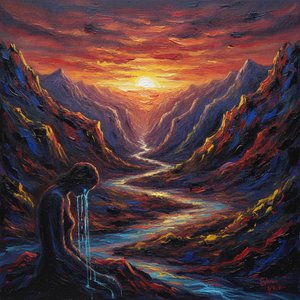
Capturing Emotion: A Journey Through the Soul of Expressionist Landscapes
Explore the profound emotional depth of Expressionist landscapes. Discover how Post-Impressionist masters moved beyond light to capture the soul through vibrant color and form. A curated journey for true art lovers seeking the beauty of expressive mastery.
Explore obras de arte organizadas por temas, estilos y características.


