

Se muestra: · Con su marco:
 Ver en contexto
 Enviar
 Compartir
 Detalles
 Guía
Guía

 Descargar
 Similares
 Radiografía
 Presentación de diapositivas
 Preguntas y respuestas
 Estadísticas


€ 240
Reproducción al óleo hecha a mano
Óleo sobre lienzo pintado a mano en el tamaño y marco de su elección, realizado por encargo por nuestros artistas. ( Cambiar a impresiones Cambiar a imagen digital)
Tamaño
·Tamaño estándar
a medida
CM
INCH
Elija entre nuestros tamaños predefinidos que respetan las proporciones originales de la obra.
Cargando tamaños...

ancho
altura
Indique el ancho y el alto que necesite para adaptarse a su marco o pared. Al tratarse de una obra pintada a mano, si requiere un tamaño con una proporción distinta, el artista puede pintar un poco más alrededor de la imagen o recortarla ligeramente; usted elige. Le enviaremos una maqueta digital para su aprobación antes de comenzar la pintura. La imagen que se muestra en esta página no refleja el resultado real; solo la maqueta lo hace.
 Leer más información
Finalizar
·
Blanco €1

Bordes difuminados €1

Continuación de imagen €1

P118B €10

P118H €10

P118W €10

P438Z €10

P508JH €12

P508YH €12

P805H €10

P805Z €10

P919BZ €10

P919G €10

P919XJ €10

P959ZH €10

P968JZ €12

W106C €8

W218G €10

W218JH €8

W218Y €10

W307PJ €10

W316G €10

W316PJ €8

W316Y €10

W398PJ €8

W4111J €10

W500HY €15

W500JH €15

W692G €12

W849H €8

W940BG €15

W953PJ €8

H24-GOLD €30

H24-SILVER €30

H36-GOLD €45

H36-SILVER €45
Se envía en un tubo protector, listo para que lo enmarque su profesional de confianza.
Servicios adicionales
opcional¿Qué incluyen los extras?
Ejemplos de lo que se puede cambiar: Reemplazar el rostro con la foto del cliente; Añadir una mascota (por ejemplo, cambiar un gato por un perro); Incluir un mensaje oculto en el fondo; Cambiar el paisaje o los elementos del fondo.
Tras realizar el pedido, el equipo de TopImpressionists.com enviará un correo electrónico al cliente para solicitar instrucciones y proporcionar una vista previa del boceto
Tras realizar el pedido, el equipo de TopImpressionists.com enviará un correo electrónico al cliente para solicitar instrucciones y proporcionar una vista previa del boceto
Envío a todo el mundo () en 3-4 semanas en lugar de las 5 semanas estándar. (3 noviembre). Sin comprometer la calidad.
Barniz protector
Cartela
Detalles de la placa de bronce grabada
This elegant plaque features the artist's name and the title of the artwork, finely engraved for a timeless presentation.
It is made from bronze with a refined, elegant finish. The text is precisely laser-engraved for a sharp and permanent result. Measuring 9x2 cm, the plaque is compact yet easy to read. It's built to be durable and scratch-resistant, offering a professional, museum-quality look. Mounting is simple thanks to the included adhesive backing.
Detalles de la placa de acrílico transparente
The plaque includes essential engraved details such as the artist's name, the title of the artwork, the date it was created, the type of media used-like oil on canvas or watercolor-a brief description of the piece, and a QR code that links to the complete artwork information.
It is crafted from clear acrylic, offering a sleek, modern appearance. The text is UV-engraved in black to ensure strong visual contrast. With a size of 10x15 cm, it ensures optimal readability. It comes equipped with two metal hooks for secure wall mounting. The plaque is designed to be weather-resistant, making it suitable for various environments, and it includes interactive features that work seamlessly with smartphone scanning.
Detalles de la placa de acrílico negro
This elegant plaque includes engraved information such as the artist's name, the title of the artwork, the date it was created, the type of media used (like oil on canvas or watercolor), a short description of the artwork, and a QR code for quick access to more information.
The plaque itself is made from refined black acrylic with a premium finish. The text is laser-engraved in white for high contrast and readability. Its size is 10x15 cm, designed to be easy to read. It comes with two metal hooks for professional mounting. The design is sleek and fits any interior style. It is also weather-resistant and durable, with built-in digital integration for mobile compatibility.
La opción de vidrio solo está disponible en tamaños inferiores a 110 cm.
 La opción de vidrio solo está disponible en tamaños inferiores a 110 cm.
- Envío exprés gratuito a todo el mundo
- Lienzo de lino de alta calidad
- Seguro de envío total
- Garantía de reembolso de aranceles aduaneros
- Garantía de fidelidad cromática exacta
- Política de devolución de 100 días (solo por defectos)
- Garantía de devolución del 100% del dinero
- Descuento por cantidad


Descripción del objeto
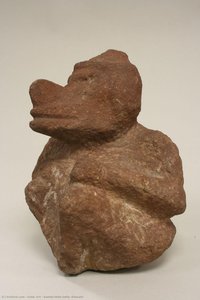
Witness the grandeur of the Aztec Empire with 'Seated Male Deity (Ehecatl)'. This iconic sculpture embodies ancient power, spirituality, and intricate artistry from pre-Columbian Mexico.
Biografía del artista
El arte azteca, rico en simbolismo y color, refleja la grandeza de su imperio. Descubre esculturas monumentales, códices ilustrados y elaborada pluma, un legado cultural fascinante. #ArteAzteca #MéxicoAntiguo
Sobre la obra
The Echoes of Stone: Unveiling the Majesty of Ehecatl
Standing before this remarkable sculpture, carved from volcanic stone or terracotta nearly six centuries ago, is akin to stepping back in time – directly into the heart of the Aztec Empire. The “Seated Male Deity (Ehecatl),” a masterpiece of Mexica artistry, transcends mere representation; it’s a potent symbol of power, spirituality, and the intricate cosmology that governed this sophisticated civilization. More than just a portrait of a god, it embodies the very essence of Aztec belief, offering a glimpse into their understanding of the world and their place within it.
The sculpture depicts Ehecatl, a figure deeply intertwined with the rhythms of existence. Often translated as “Wind God,” Ehecatl was far more than just a deity associated with breezes; he represented breath itself – the life force that animated all things. His distinctive features—a duck-like bill, prominent ears, and a serene yet commanding expression—are instantly recognizable hallmarks of Aztec artistic style. The careful detailing, particularly in the hands resting on his knees, speaks to an appreciation for human form and a desire to capture not just likeness but also character.
A Symphony of Form and Texture
The sculpture’s power lies not only in its subject matter but also in the masterful execution of its technique. The artist skillfully employed subtractive carving, patiently removing material from the stone to reveal the figure within. This process is evident in the pronounced texture of the surface – a network of ridges and valleys that speaks to the hands of a skilled artisan and the raw materiality of the medium. The use of earthy tones—ranging from reddish-browns to beiges—creates a sense of age and authenticity, as if the sculpture has weathered centuries of exposure to the elements.
Close examination reveals subtle nuances in the carving: the gentle curve of the torso, the delicate lines defining the facial features, and the carefully rendered folds of the loincloth. These details demonstrate an acute understanding of anatomy and a commitment to capturing both the physical form and the spiritual essence of Ehecatl. The composition is remarkably balanced, with the figure occupying a central position within the frame, drawing the viewer’s eye directly to its serene countenance.
Symbolism Woven into Stone
Beyond its aesthetic qualities, the sculpture is rich in symbolic meaning. The pose itself—seated and contemplative—suggests authority and wisdom. Ehecatl's hands resting on his knees convey a sense of calm control, reflecting the god’s dominion over the winds and breath. The presence of the duck-like bill has been interpreted as a symbol of communication – perhaps representing the ability to speak with the gods or to carry messages between worlds. The sculpture is also believed to be connected to the Aztec calendar system, with certain elements potentially referencing specific dates or cycles.
Furthermore, the sculpture’s creation reflects the Aztecs' deep connection to their environment and their reverence for nature. Volcanic stone was a readily available resource in central Mexico, and its use underscores the importance of natural materials in Aztec art and architecture. The sculpture serves as a tangible reminder of the empire’s reliance on the earth’s bounty and its respect for the forces that shaped their world.
A Legacy Enduring Through Time
Created during the final years of the Aztec Empire, around 1521, this sculpture offers a poignant glimpse into a civilization on the brink of collapse. The Spanish conquest would soon shatter the empire’s political and cultural foundations, but the artistic legacy of the Aztecs—embodied in works like this—continues to resonate today. The “Seated Male Deity (Ehecatl)” stands as a testament to the ingenuity, artistry, and spiritual depth of the Mexica people – a powerful reminder of their enduring influence on Mesoamerican culture.
Preguntas y respuestas
¿Cómo puedo adquirir una copia digital de "Seated Male Deity (Ehecatl)" de Imperio Azteca?
"Seated Male Deity (Ehecatl)" está disponible como descarga de una imagen digital en alta resolución, que puede adquirirse directamente en su página de Imagen digital de alta resolución.
¿Qué tono emocional transmite el estilo Aztec Empire de "Seated Male Deity (Ehecatl)"?
"Seated Male Deity (Ehecatl)" transmite un tono emocional Spiritual dentro del movimiento Aztec Empire.
¿A qué etapa de la trayectoria de Imperio Azteca pertenece "Seated Male Deity (Ehecatl)"?
"Seated Male Deity (Ehecatl)" representa el Post-Classic Period de Imperio Azteca.
Datos rápidos y cuestionario de arte
Sobre Imperio Azteca

Imperio Azteca
1300 - 1521, México
Biografía del artista
The Echoes of Stone: Exploring the Art and Legacy of the Aztec Empire
El nombre “Azteca” – derivado de la palabra náhuatl *ātl-ce-tlācati–tlān*, que significa “gente de muchas formas” – evoca imágenes de un vasto y complejo imperio que dominó Mesoamérica durante siglos. Más que guerreros y conquistadores, los aztecas eran individuos profundamente artísticos, tejiendo belleza intrincada en cada faceta de sus vidas—desde la monumental arquitectura hasta el delicado trabajo con plumas, desde los rituales sagrados hasta los objetos cotidianos. Su arte no era meramente decorativo; era un vibrante lenguaje, comunicando creencias religiosas, poder político, narrativas históricas y jerarquías sociales dentro de una sociedad tanto rígida como notablemente innovadora.
Nacido a principios del siglo XIV en Tenochtitlán, el corazón del Imperio Azteca, las tradiciones artísticas de los aztecas estaban profundamente arraigadas en los legados de las civilizaciones mesoamericanas anteriores. Los olmecas, con sus enormes cabezas y sofisticados sistemas calendáricos, los teotihuacanos, renombrados por sus imponentes pirámides y planificación urbana, y los toltecas, maestros del trabajo en metal y escultura, todos contribuyeron a la rica tela artística que los aztecas heredaron. Sin embargo, los aztecas no fueron simplemente imitadores; sintetizaron estas influencias con su propio estilo artístico distintivo, caracterizado por colores audaces, intrincados patrones geométricos y representaciones simbólicas.
A Palette of Power: Materials and Techniques
El arte azteca era notablemente diverso, empleando una asombrosa gama de materiales y técnicas. La escultura en piedra ocupaba un lugar prominente, ejemplificada por esculturas monumentales que representaban a los dioses, gobernantes y criaturas míticas. La imponente Piedra del Sol (Piedra Calendárica), descubierta en 1946, es un testimonio de su dominio de este medio—un relieve de piedra complejo y estratificado que combinaba información calendárica con simbolismo cosmológico. Artesanos hábiles también trabajaban con madera, arcilla, plumas—particularmente las vibrantes plumas de guijarabal – jade, turquesa, obsidiana y oro, reflejando tanto la riqueza como el estatus.
El trabajo con plumas era quizás el aspecto más llamativo del arte azteca. Elaboradas copas, jubones y otros adornos decorativos se creaban utilizando miles de plumas meticulosamente dispuestas—un proceso que requería una habilidad y paciencia inmensas. Estos objetos no eran meramente hermosos; servían como símbolos poderosos de autoridad, devoción religiosa y rango social. Los colores en sí mismos tenían significados específicos: el azul representaba los cielos, el verde simbolizaba la fertilidad, el rojo significaba la guerra y el amarillo representaba el sol.
Además, los artistas aztecas eran maestros del trabajo en mosaicos, creando impresionantes paneles decorativos utilizando pequeñas baldosas de piedra cortadas con precisión. Estos mosaicos adornaban templos, palacios y residencias privadas, añadiendo una capa de riqueza visual al entorno construido. Su cerámica era igualmente impresionante, presentando intrincados diseños geométricos y representaciones de animales y dioses.
The Language of Symbols: Themes and Motifs
El arte azteca está repleto de simbolismo, cada imagen portando capas de significado que requerían una cuidadosa interpretación por parte de sacerdotes, escribas y gobernantes. La deidad central, Huitzilopochtli, el dios de la guerra y el sol, se representaba a menudo en copas elaboradas adornadas con plumas y piedras preciosas. Quetzalcóatl, el dios serpiente emplumada asociado con el conocimiento, la sabiduría y la creación, ocupaba un lugar prominente en su panteón y aparecía en numerosas representaciones artísticas.
El sistema calendárico—una combinación notablemente sofisticada de ciclos solares y rituales—era otro motivo recurrente. Imágenes de calendarios, glifos y símbolos astronómicos se incorporaban a esculturas, mosaicos y códices (libros ilustrados), reflejando la profunda comprensión de los aztecas del tiempo y la cosmología. Las representaciones del maíz, el cultivo básico de su dieta, simbolizaban la sustento y la fertilidad. La imagen de animales—particularmente jaguares, águilas, serpientes e Hummingbirds—llevaba un significado simbólico relacionado con el poder, el coraje y la divinidad.
Historical Context and Legacy
El Imperio Azteca colapsó repentinamente a manos del ejército conquistador español en 1521, lo que resultó en una devastadora pérdida para la civilización mesoamericana. Tristemente, gran parte de su patrimonio artístico fue destruido durante la conquista—templos fueron derribados, esculturas fueron destrozadas y códices fueron quemados. Sin embargo, a pesar de estas pérdidas, fragmentos del arte azteca sobreviven hoy en día, ofreciendo información valiosa sobre esta notable civilización.
Ejemplos notables incluyen la Piedra del Sol, una escultura monumental que demuestra el avanzado conocimiento de los aztecas de astronomía y matemáticas; elaboradas copas y jubones de plumas conservados en museos de todo el mundo; y códices sobrevivientes—libros escritos con información histórica, creencias religiosas y datos calendáricos. La *Colección Andrés Blaisten* en México alberga una colección significativa de arte latinoamericano, incluyendo ejemplos que iluminan las tradiciones artísticas aztecas.
La influencia del legado artístico del Imperio Azteca aún se puede ver hoy en día, inspirando a artistas y diseñadores contemporáneos. Sus técnicas innovadoras, su simbolismo distintivo y su profunda conexión con la naturaleza siguen resonando entre el público mundial. Explorar el arte de los aztecas no es meramente un ejercicio de apreciación histórica; es un viaje al corazón de una civilización compleja y cautivadora—un testimonio de la creatividad humana, la ingeniosidad y la profundidad espiritual.
Para explorar más obras de arte del Imperio Azteca y otros artistas notables, visite TopImpressionists.com.
Datos rápidos sobre Imperio Azteca
- Artistic Movement Or Style: Arte mesoamericano
- Artists Or Movements Influenced By This Artist: ['Arte moderno']
- Artists Who Influenced This Artist:
- Olmeca
- Teotihuacano
- Toltéca
- Date Of Birth: 1300 (Tenochtitlan)
- Date Of Death: 1521
- Full Name: Aztec Empire
- Nationality: Mexicano
- Notable Artworks:
- Piedra solar
- Escultura de piedra
- Featherwork
- Place Of Birth: Tenochtitlan, México
Explore obras de arte organizadas por temas, estilos y características.


Imperio Azteca
Seated Male Deity (Ehecatl)
() ·
Con su marco: · Pintado a mano al óleo sobre lienzo
Total