Enviar
 Compartir
 Detalles
 Guía
Guía

 Descargar
 Similares
 Presentación de diapositivas
 Estadísticas
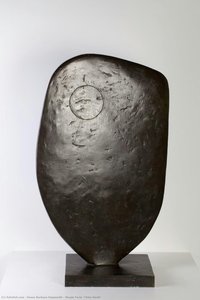
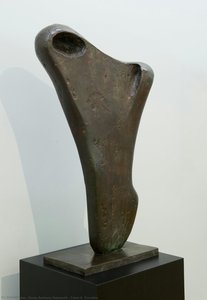
Construcción (Crucifixión)
 Escultura en bronce
- Modern Sculpture
 1966
1966 391.0 x 471.0 cm
 The Hepworth Wakefield
Construcción (Crucifixión) de Barbara Hepworth: Una escultura innovadora en aluminio que refleja la fe cristiana y simboliza movimiento y equilibrio. Descubre esta obra maestra moderna en The Hepworth Wakefield.
 Ver más
Descubre a Barbara Hepworth (1903-1975), pionera de la escultura moderna británica. Explora su legado abstracto y sus obras icónicas en el Hepworth Wakefield.
La obra de arte que se muestra en esta página está protegida por las leyes de propiedad intelectual, lo que significa que no podemos crear ni vender legalmente una reproducción idéntica. Esta protección se hace cumplir en virtud de acuerdos internacionales como el Convenio de Berna y por las leyes nacionales, incluidas aquellas establecidas por el Ley de derechos de autor de los EE. UU. - Título 17.
Este método cumple plenamente con las normativas de derechos de autor, ya que no implica la copia ni la duplicación de la obra protegida. En su lugar, se trata de una reinterpretación creativa: una nueva pintura influenciada por la original, pero que no es idéntica a ella.
Giclée / Impresión de arte
Impresiones giclée o en lienzo de calidad de museo con producción rápida y opciones de acabado flexibles. ( Comprar pintura hecha a mano Cambiar a imagen digital)




































Tamaño estándar
a medida
CM
INCH
Elija entre nuestros tamaños predefinidos que respetan las proporciones originales de la obra.
Loading sizes...

ancho
altura
Introduzca el ancho y el alto que necesite para adaptarse a su marco o pared. Una impresión solo puede recortarse, nunca hacerse más grande que la imagen original, por lo que un tamaño con una forma distinta perderá parte de la obra. Le enviaremos una maqueta digital para su aprobación antes de realizar cualquier impresión. La imagen que se muestra en esta página no refleja el recorte real; solo la maqueta lo hace.
Envío a todo el mundo () en 2 semanas en lugar de las 4/5 semanas estándar. (27 octubre)

Envío exprés gratuito a todo el mundo

Lienzo de lino de alta calidad

Seguro de envío total

Garantía de reembolso de aranceles aduaneros

Garantía de fidelidad cromática exacta

Política de devolución de 100 días (solo por defectos)

Garantía de devolución del 100% del dinero

Descuento por cantidad
 La opción de vidrio solo está disponible en tamaños inferiores a 110 cm.

Construcción (Crucifixión)
Giclée / Impresión de arte
Dimensiones de la reproducción
-


Precio total final
€ 61
Barbara Hepworth: A Sculptural Dialogue with Form, Space & The Human Condition
Dame Barbara Hepworth (1903–1975) stands as an undeniable titan of modernist sculpture, a figure whose pioneering spirit reshaped the landscape of British art and continues to inspire artists globally. Her oeuvre transcends mere representation; instead, Hepworth sought to distill emotion and experience into geometric forms that engage with fundamental concepts of space and materiality—a radical departure from traditional artistic conventions.
Born in Wakefield, Yorkshire, Hepworth’s early life was marked by a profound engagement with the natural world. Influenced by her father's profession as a geologist, she developed an acute sensitivity to geological strata and textures, which would become recurring motifs in her sculptures. This formative experience instilled within her a fascination for exploring how forms interact with each other and with their surroundings—a preoccupation that would define her artistic trajectory.
Hepworth’s formal training at Leeds School of Art and subsequently the Royal College of Art cemented her commitment to abstraction, though she skillfully blended Surrealist influences with geometric precision. Notably, Hepworth co-founded Unit One Art Movement alongside Ben Nicholson, Paul Nash, and others in 1933—a collective endeavor dedicated to uniting Surrealism and Abstraction in British art.
Her breakthrough came with the creation of “Oval Form (Trezion)” in 1937 – a monumental bronze sculpture that embodies Hepworth’s core aesthetic principles. This piece, alongside "Two Forms," exemplifies her masterful manipulation of negative space—a technique she championed as crucial to conveying emotional depth and spiritual contemplation.
Hepworth's artistic vision extended beyond mere sculptural form; it encompassed an exploration of the human condition. Her sculptures grapple with themes of vulnerability, resilience, and connection to nature—reflecting her deeply held Christian faith. The deliberate simplicity of Hepworth’s forms serves as a powerful conduit for conveying profound ideas about existence and spirituality.
Today, Hepworth's legacy resides in the enduring beauty and intellectual rigor of her sculptures. Pieces like “Oval Form” and “Two Forms,” housed at The Hepworth Wakefield and internationally acclaimed museums alike, continue to captivate audiences with their elegant geometry and evocative presence—testaments to Hepworth’s unwavering dedication to pushing artistic boundaries and forging a dialogue between art and human experience.
Preguntas y respuestas
¿Qué paleta de colores se utiliza en "Construcción (Crucifixión)" de Barbara Hepworth?
Los colores de "Construcción (Crucifixión)" conforman una paleta Tonos neutros. Esta clasificación describe las familias de colores dominantes.
¿Con qué otros nombres o alias se conoce a Barbara Hepworth?
Otros nombres registrados para Barbara Hepworth, creador de "Construcción (Crucifixión)", incluyen Dama Barbara Hepworth.
¿Cuál es la técnica y las dimensiones de "Construcción (Crucifixión)" de Barbara Hepworth?
La técnica de "Construcción (Crucifixión)" de Barbara Hepworth es Escultura en bronce y sus dimensiones registradas son 391 x 471 cm.
Biografía del artista
Primeros años y educación
Dame Barbara Hepworth, una reconocida escultora e artista inglesa, nació el 10 de enero de 1903 en Wakefield, Yorkshire. Asistió a la Escuela de Arte de Leeds desde 1920 y posteriormente ganó una beca del condado para estudiar en el Royal College of Art (RCA) en Londres desde 1921 hasta que fue galardonada con el diploma en 1924.Carrera artística
- El trabajo de Dame Barbara Hepworth ejemplifica el modernismo, particularmente la escultura moderna. Fue una de las pocas artistas femeninas en lograr prominencia internacional.
- En 1933, cofundó el movimiento artístico Unit One con Ben Nicholson, Paul Nash y otros, buscando unir el surrealismo y la abstracción en el arte británico.
- El trabajo temprano de Hepworth se caracterizó por la abstracción y su participación con el movimiento artístico parisino, Abstraction-Création.
Obras notables y exposiciones
- Oval Form (Trezion), una escultura de bronce, forma parte de la colección del Museo Kimball de Arte en Fort Worth, Estados Unidos. (ver en TopImpressionists)
- Two Forms, una escultura, se exhibe en The Hepworth Wakefield en Wakefield, Reino Unido. (ver en TopImpressionists)
- Totem, una escultura de mármol, también forma parte de la colección de The Hepworth Wakefield. (ver en TopImpressionists)
Legado y colecciones de museos
Barbara Hepworth's work is widely recognized, with her sculptures and paintings forming part of various museum collections worldwide. The Hepworth Wakefield, named after the artist, houses numerous masterpieces from renowned artists, including Hepworth's own works. (descubra más sobre The Hepworth Wakefield en TopImpressionists)Conclusión
Dame Barbara Hepworth's pioneering work in modern British sculpture has left an indelible mark on the art world. Her legacy continues to inspire artists and art enthusiasts alike, with her works remaining a testament to her innovative spirit and artistic genius. más sobre Barbara Hepworth en Wikipedia
Barbara Hepworth
1903 - 1975 , Reino Unido
Datos clave
- Artistas Influyentes: ['Abstracción-Creación']
- Fecha De Nacimiento: 10 de enero de 1903
- Legado Artístico: Inspiró a artistas y entusiastas.
- Lugar De Nacimiento: Wakefield, Reino Unido
- Movimiento Artístico: Modernismo, Escultura moderna
- Nacionalidad: Británica
- Nombre Completo: Barbara Hepworth
- Nombres Alternativos: Dame Barbara Hepworth
- Obras Notables:
- Oval Form (Trezion)
- Two Forms
- Totem
Artículos relacionados

The Soul of Color: A Journey into the Emotional Resonance of Lyrical Abstraction
Embark on a cultural journey through Lyrical Abstraction. Explore how masters like Kandinsky used color and motion to translate emotion into visual poetry. Discover the profound beauty of abstract expressionism and learn to curate emotional resonance in your own art collection.
Explore obras de arte organizadas por temas, estilos y características.