

Se muestra: · Con su marco:
 Enviar
 Compartir
 Detalles
 Guía
Guía

 Descargar
 Similares
 Presentación de diapositivas
 Preguntas y respuestas
 Estadísticas
- 26.0 x 33.0 cm


€ 240
Reproducción al óleo hecha a mano
Óleo sobre lienzo pintado a mano en el tamaño y marco de su elección, realizado por encargo por nuestros artistas. ( Cambiar a impresiones Cambiar a imagen digital)
Tamaño
·Tamaño estándar
a medida
CM
INCH
Elija entre nuestros tamaños predefinidos que respetan las proporciones originales de la obra.
Cargando tamaños...

ancho
altura
Indique el ancho y el alto que necesite para adaptarse a su marco o pared. Al tratarse de una obra pintada a mano, si requiere un tamaño con una proporción distinta, el artista puede pintar un poco más alrededor de la imagen o recortarla ligeramente; usted elige. Le enviaremos una maqueta digital para su aprobación antes de comenzar la pintura. La imagen que se muestra en esta página no refleja el resultado real; solo la maqueta lo hace.
 Leer más información
Finalizar
·
Blanco €1

Bordes difuminados €1

Continuación de imagen €1

P118B €10

P118H €10

P118W €10

P438Z €10

P508JH €12

P508YH €12

P805H €10

P805Z €10

P919BZ €10

P919G €10

P919XJ €10

P959ZH €10

P968JZ €12

W106C €8

W218G €10

W218JH €8

W218Y €10

W307PJ €10

W316G €10

W316PJ €8

W316Y €10

W398PJ €8

W4111J €10

W500HY €15

W500JH €15

W692G €12

W849H €8

W940BG €15

W953PJ €8

H24-GOLD €30

H24-SILVER €30

H36-GOLD €45

H36-SILVER €45
Se envía en un tubo protector, listo para que lo enmarque su profesional de confianza.
Servicios adicionales
opcional¿Qué incluyen los extras?
Ejemplos de lo que se puede cambiar: Reemplazar el rostro con la foto del cliente; Añadir una mascota (por ejemplo, cambiar un gato por un perro); Incluir un mensaje oculto en el fondo; Cambiar el paisaje o los elementos del fondo.
Tras realizar el pedido, el equipo de TopImpressionists.com enviará un correo electrónico al cliente para solicitar instrucciones y proporcionar una vista previa del boceto
Tras realizar el pedido, el equipo de TopImpressionists.com enviará un correo electrónico al cliente para solicitar instrucciones y proporcionar una vista previa del boceto
Envío a todo el mundo () en 3-4 semanas en lugar de las 5 semanas estándar. (9 noviembre). Sin comprometer la calidad.
Barniz protector
Cartela
Detalles de la placa de bronce grabada
This elegant plaque features the artist's name and the title of the artwork, finely engraved for a timeless presentation.
It is made from bronze with a refined, elegant finish. The text is precisely laser-engraved for a sharp and permanent result. Measuring 9x2 cm, the plaque is compact yet easy to read. It's built to be durable and scratch-resistant, offering a professional, museum-quality look. Mounting is simple thanks to the included adhesive backing.
Detalles de la placa de acrílico transparente
The plaque includes essential engraved details such as the artist's name, the title of the artwork, the date it was created, the type of media used-like oil on canvas or watercolor-a brief description of the piece, and a QR code that links to the complete artwork information.
It is crafted from clear acrylic, offering a sleek, modern appearance. The text is UV-engraved in black to ensure strong visual contrast. With a size of 10x15 cm, it ensures optimal readability. It comes equipped with two metal hooks for secure wall mounting. The plaque is designed to be weather-resistant, making it suitable for various environments, and it includes interactive features that work seamlessly with smartphone scanning.
Detalles de la placa de acrílico negro
This elegant plaque includes engraved information such as the artist's name, the title of the artwork, the date it was created, the type of media used (like oil on canvas or watercolor), a short description of the artwork, and a QR code for quick access to more information.
The plaque itself is made from refined black acrylic with a premium finish. The text is laser-engraved in white for high contrast and readability. Its size is 10x15 cm, designed to be easy to read. It comes with two metal hooks for professional mounting. The design is sleek and fits any interior style. It is also weather-resistant and durable, with built-in digital integration for mobile compatibility.
La opción de vidrio solo está disponible en tamaños inferiores a 110 cm.
 La opción de vidrio solo está disponible en tamaños inferiores a 110 cm.
- Envío exprés gratuito a todo el mundo
- Lienzo de lino de alta calidad
- Seguro de envío total
- Garantía de reembolso de aranceles aduaneros
- Garantía de fidelidad cromática exacta
- Política de devolución de 100 días (solo por defectos)
- Garantía de devolución del 100% del dinero
- Descuento por cantidad


Descripción del objeto
Marvel at Benvenuto Cellini's opulent 'Salt Cellar,' a Renaissance masterpiece of gold, enamel, and intricate symbolism—a testament to artistry & luxury from 1543 Vienna.
Biografía del artista
Benvenuto Cellini (1500-1571): Orfebre y escultor manierista italiano, famoso por 'Perseo' y el exquisito Salero de Cellini. ¡Descubre su arte y vida!
Sobre la obra
A Gilded Echo of Antiquity
Benvenuto Cellini's Salt Cellar, a shimmering testament to the heights of Renaissance goldsmithing, isn’t merely a container for salt; it’s a miniature cosmos, a meticulously crafted allegory brimming with symbolism and technical brilliance. Completed in 1543 for King Francis I of France, this extraordinary object transcends its functional purpose, becoming a profound meditation on the relationship between earth and sea, divinity and humanity. It's a piece that whispers tales of ambition, artistry, and the intoxicating allure of the Italian Renaissance—a world where beauty was paramount and skill elevated to an almost religious pursuit.
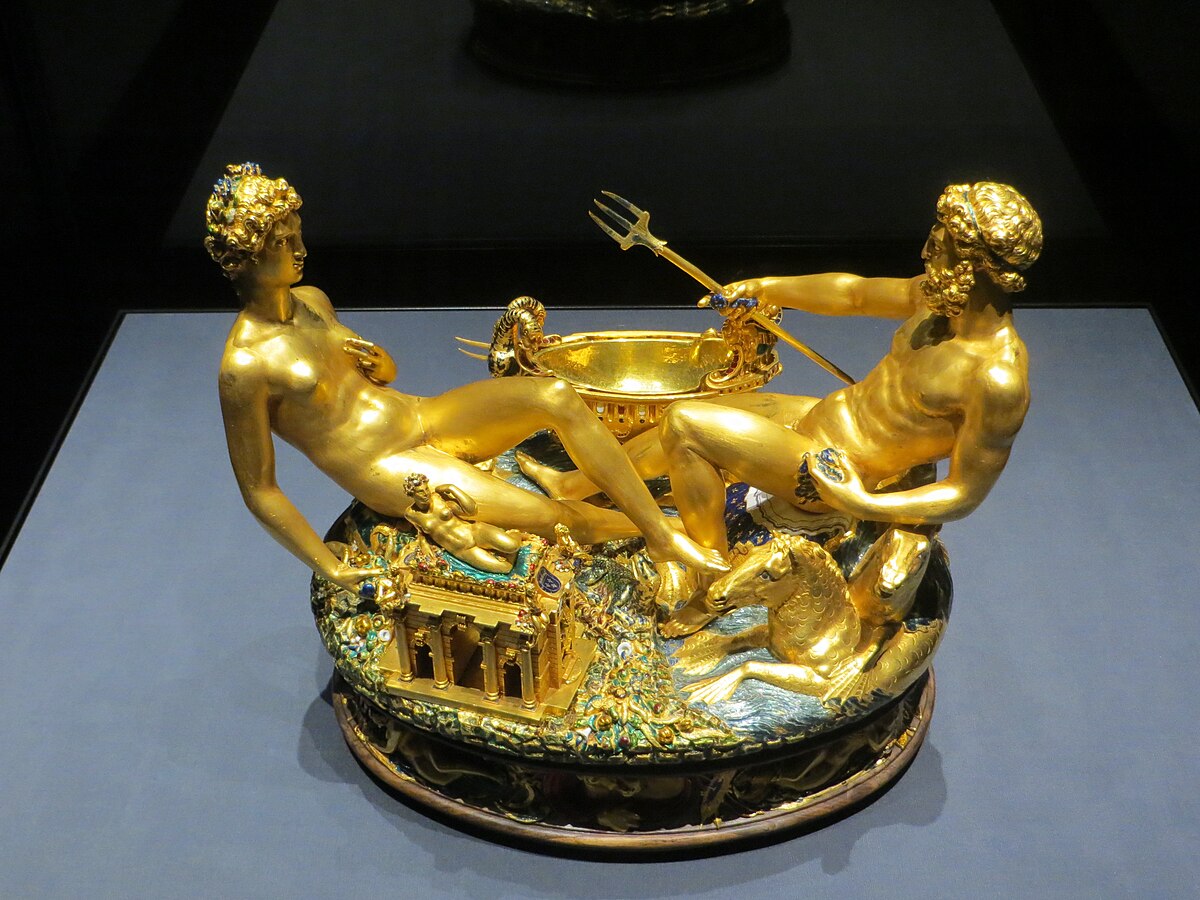
Image of Benvenuto Cellini’s Salt Cellar
The Anatomy of a Masterpiece
Crafted primarily from gold, the Salt Cellar is an astonishing feat of technical mastery. Cellini, renowned for his flamboyant personality and equally impressive skill, eschewed traditional casting methods, instead meticulously hammering the gold into its delicate, flowing form by hand. The base is elegantly fashioned from ebony, providing a striking contrast to the radiant gold, while ivory bearings allow the sculpture to gracefully roll across a banquet table – a deliberate feature designed for display and conversation. But it’s the enameling that truly elevates the piece; intricate scenes depicting figures representing the four seasons and the four winds are painstakingly applied, adding layers of visual complexity and narrative depth. The sheer scale of detail—from the meticulously rendered folds of clothing to the lifelike expressions on the faces of Neptune and Tellus – speaks volumes about Cellini’s dedication and unparalleled skill.
- Material: Gold, Ebony, Ivory, Enamel
- Dimensions: Approximately 10.5 inches (267 mm) tall, 13.1 inches (333 mm) wide
- Technique: Hand-hammered gold, intricate enamel work
A Dialogue with the Divine
The Salt Cellar’s symbolism is as captivating as its aesthetic beauty. At its heart lies a potent allegory of Terra e Mare – Earth and Sea – embodied by the figures of Neptune, god of the ocean, and Tellus, goddess of the earth. These two powerful deities are depicted in an intimate embrace, their legs intertwined, suggesting a harmonious connection between the terrestrial and aquatic realms. The sculpture is further enriched with symbolic details: a small boat carries the salt, representing the flow of commerce and sustenance; a temple dedicated to peppercorns stands alongside Tellus, signifying the pleasures of earthly life. The inclusion of animals—horses, dogs, dolphins—adds another layer of meaning, drawing upon classical iconography and reinforcing the sculpture’s connection to mythology and antiquity.
A Legacy Forged in Ambition
Cellini's autobiography, *Vita*, offers invaluable insight into the creation of this extraordinary piece. He recounts his initial reluctance to accept the commission from Cardinal Ippolito d’Este, dismissing the cardinal’s suggestions with characteristic arrogance and asserting sole credit for the design. The story is rife with anecdotes about Cellini’s daring exploits—including a dramatic escape from bandits while transporting the gold—further cementing his image as a larger-than-life figure of Renaissance Italy. The Salt Cellar, therefore, isn't just an artistic achievement; it’s a reflection of Cellini’s own complex and often contradictory personality – a testament to ambition, skill, and a profound appreciation for beauty. It remains one of the most celebrated examples of Renaissance goldsmithing, captivating viewers with its exquisite detail and enduring symbolism.
Preguntas y respuestas
¿Qué sentimiento y emoción transmite "Salt Cellar" de Benvenuto Cellini?
El estado de ánimo que transmite "Salt Cellar" de Benvenuto Cellini es Elegante, y su tono emocional es Contemplativo.
¿Cuánta luz parecen reflejar los colores de "Salt Cellar"?
"Salt Cellar" de Benvenuto Cellini tiene una luminancia de Sombra suave. La luminancia describe cuánta luz parecen reflejar los colores.
¿Es "Salt Cellar" de Benvenuto Cellini una pintura, un dibujo o un grabado?
"Salt Cellar" es una obra de Escultura.
Datos rápidos y cuestionario de arte
Sobre Benvenuto Cellini

Benvenuto Cellini
1500 - 1571, Italia
Biografía del artista
Benvenuto Cellini: Un Polímata del Renacimiento
- Nacido: Florencia, Italia (1 de noviembre de 1500)
- Fallecido: 13 de febrero de 1571
Benvenuto Cellini fue una figura notable del Renacimiento italiano, reconocido como un consumado orfebre, escultor, dibujante, soldado, músico y escritor. Sus múltiples talentos y su personalidad flamígera se capturan vívidamente en su celebrada autobiografía, considerada una obra literaria significativa junto con sus logros artísticos. Encarna el espíritu del manierismo, un período posterior al Alto Renacimiento caracterizado por un dramatismo y una complejidad estilística.
Vida Temprana y Formación Artística
Nacido en una familia con inclinaciones musicales – su padre era músico y fabricante de instrumentos – Cellini inicialmente mostró promesas en la música. Sin embargo, a los quince años, persiguió apasionadamente una carrera como orfebre, convenciendo a su reacio padre para que lo hiciera aprendiz de Antonio di Sandro (conocido como Marcone). Esto marcó el comienzo de su formación artística formal. Sus primeros años no estuvieron exentos de incidentes; a los dieciséis años, se vio envuelto en una reyerta con compañeros, lo que llevó a su destierro de Florencia y un período trabajando en Siena bajo el orfebre Fracastoro.
Obras Artísticas Principales y Estilo
- Altar de Sal: Esta elaborada obra maestra de plata, encargada por el rey Francisco I de Francia, es posiblemente su trabajo más famoso. Muestra detalles intrincados y figuras dinámicas, ahora ubicada en el Kunsthistorisches Museum de Viena.
- Perseo con la Cabeza de Medusa: Una escultura de bronce que representa a Perseo triunfante sosteniendo la cabeza seccionada de Medusa, esta pieza ejemplifica la maestría de Cellini en la forma y la composición dramática. Es un testimonio de su habilidad para capturar el movimiento y la emoción en metal.
- Medalla de Oro de Leda y el Cisne: Creada para Gonfaloniere Gabriello Cesarino, esta medalla demuestra la capacidad de Cellini para combinar la mitología clásica con una artesanía exquisita.
- Proyecto para un Sello: Un dibujo conservado en el Museo Británico, que muestra sus habilidades de diseño.
El estilo de Cellini se caracteriza por su dinamismo, realismo y atención al detalle. Se inspiró en la antigüedad clásica y las figuras poderosas de Miguel Ángel, pero infundió su trabajo con una sensibilidad manierista distintiva: formas alargadas, poses exageradas y un sentido de teatralidad.
Vida Más Allá del Arte: Soldado, Músico y Autobiógrafo
La vida de Cellini se extendió mucho más allá del taller. Sirvió como soldado durante los asedios, afirmando haber desempeñado un papel crucial en la defensa de Roma contra las fuerzas imperiales. También fue un músico consumado, tocando el cornetín y la flauta en la corte papal. Sin embargo, es su autobiografía lo que verdaderamente lo distingue.
- La Vida de Benvenuto Cellini: Este relato candido y a menudo jactancioso proporciona información invaluable sobre el arte, la cultura y la sociedad del Renacimiento. Es una narrativa convincente llena de anécdotas sobre patrones, rivales y aventuras personales, que ofrece una perspectiva única de la época.
Su autobiografía no es meramente un relato de eventos; es un autorretrato cuidadosamente construido diseñado para mostrar sus talentos y justificar sus acciones. Si bien a veces es poco fiable debido a los propios sesgos de Cellini, sigue siendo una fuente primaria esencial para comprender la vida del Renacimiento.
Legado y Significado Histórico
Benvenuto Cellini murió en Florencia en 1571, dejando atrás un legado como uno de los artistas más importantes del manierismo. Su habilidad técnica, innovación artística y cautivadora autobiografía continúan inspirando a artistas y entusiastas del arte por igual. Representa el ideal renacentista quintessential: un polímata hábil en múltiples disciplinas, impulsado por la ambición y sin miedo a expresar su individualidad. Sus obras son celebradas por su belleza, artesanía y poder dramático, lo que consolida su lugar como una figura clave en la historia del arte occidental.
Datos rápidos sobre Benvenuto Cellini
- Artistas Que Influyeron: ['Miguel Ángel']
- Fecha De Fallecimiento: 13 de febrero de 1571
- Fecha De Nacimiento: 1 de noviembre de 1500
- Lugar De Nacimiento: Florencia, Italia
- Movimiento Artístico: Manierismo
- Nacionalidad: Italiana
- Nombre Completo: Benvenuto Cellini
- Obras Notables:
- Salero de plata
- Perseo con Medusa
- Medalla Leda y el cisne
Explore obras de arte organizadas por temas, estilos y características.


Benvenuto Cellini
Salt Cellar
() ·
Con su marco: · Pintado a mano al óleo sobre lienzo
Total