


 Ver en contexto
 Enviar
 Compartir
 Detalles
 Guía
Guía

 Descargar
 Similares
 Radiografía
 Presentación de diapositivas
 Estadísticas
Músico con laúd
 Acrílico sobre lienzo
- Arte de pared
- Baroque
 1596
1596- Renacimiento
 94.0 x 119.0 cm
 Museo del Hermitage
Una obra maestra barroca de Caravaggio que captura la esencia del amor y la música con una iluminación dramática y observación realista. Descubre su belleza.
 Ver más
Explora a Caravaggio (1571-1610): Maestro barroco del realismo y el tenebrismo. Escenas religiosas dramáticas, intenso claroscuro y un estilo revolucionario que influyó a Rubens y Rembrandt.
Giclée / Impresión de arte
Impresiones giclée o en lienzo de calidad de museo con producción rápida y opciones de acabado flexibles. ( Comprar pintura hecha a mano Cambiar a imagen digital)




P118B €10

P118H €10

P118W €10

P438Z €10

P508JH €12

P508YH €12

P805H €10

P805Z €10

P919BZ €10

P919G €10

P919XJ €10

P959ZH €10

P968JZ €12

W106C €8

W218G €10

W218JH €8

W218Y €10

W307PJ €10

W316G €10

W316PJ €8

W316Y €10

W398PJ €8

W4111J €10

W500HY €15

W500JH €15

W692G €12

W849H €8

W940BG €15

W953PJ €8




Tamaño estándar
a medida
CM
INCH
Elija entre nuestros tamaños predefinidos que respetan las proporciones originales de la obra.
Loading sizes...

ancho
altura
Introduzca el ancho y el alto que necesite para adaptarse a su marco o pared. Una impresión solo puede recortarse, nunca hacerse más grande que la imagen original, por lo que un tamaño con una forma distinta perderá parte de la obra. Le enviaremos una maqueta digital para su aprobación antes de realizar cualquier impresión. La imagen que se muestra en esta página no refleja el recorte real; solo la maqueta lo hace.
Envío a todo el mundo () en 2 semanas en lugar de las 4/5 semanas estándar. (25 octubre)

Envío exprés gratuito a todo el mundo

Lienzo de lino de alta calidad

Seguro de envío total

Garantía de reembolso de aranceles aduaneros

Garantía de fidelidad cromática exacta

Política de devolución de 100 días (solo por defectos)

Garantía de devolución del 100% del dinero

Descuento por cantidad
 La opción de vidrio solo está disponible en tamaños inferiores a 110 cm.

Músico con laúd
Giclée / Impresión de arte
Dimensiones de la reproducción
-


Precio total final
€ 61
Michelangelo Merisi Da Caravaggio: The Lute Player – A Symphony of Light and Emotion
Michelangelo Merisi da Caravaggio, universally known as Caravaggio (1571–1610), stands as one of the most influential figures in Baroque art. His revolutionary approach to painting—characterized by dramatic chiaroscuro, intense realism, and psychological depth—continues to captivate audiences centuries later. This essay delves into the intricacies of “The Lute Player,” examining its artistic merit, historical significance, and enduring legacy.
Background: Caravaggio’s early biographer Giovanni Baglione recounts a tale that encapsulates his artistic vision: he painted for Cardinal Francesco Maria del Monte a young man who played the lute, creating an illusion of life so convincing that it resembled a carafe brimming with water. Reflections from a window mirrored within the water, overlaid with dew glistening on the blossoms—all meticulously rendered—demonstrated Caravaggio’s unparalleled skill in capturing essence through observation.
The Composition: The painting depicts a young woman absorbed in music, her eyes closed as she plays the lute. Positioned centrally, the instrument dominates the scene, its strings visible and contributing to the sense of depth. Two vases flank the woman—one on the upper left corner and another on the lower right—adding visual balance and reinforcing the theme of harmony. Beneath the lute rests a book, suggesting musical notation and furthering the narrative’s contemplative mood.
Symbolism and Elements: Caravaggio imbued his canvases with symbolic richness. The scattered fruits – apples in the lower left and oranges near the top right—represent abundance and prosperity. More profoundly, the luminous interplay of light and shadow—a hallmark of Caravaggio's technique—embodies spiritual contemplation. The artist’s masterful use of chiaroscuro creates a dramatic contrast between illuminated areas and darkened recesses, drawing the viewer’s gaze inward and conveying an emotional intensity rarely achieved in earlier art.
Versions and Exhibitions: Three versions of “The Lute Player” exist—the original residing at Badminton House since 2001, another housed in the Wildenstein Collection, and a third displayed at the Galleria Borghese in Rome during a joint exhibition with the Hermitage Museum in 2020. The meticulous reproductions produced by TopImpressionists.com capture the essence of Caravaggio’s masterpiece, allowing enthusiasts to experience its beauty firsthand.
Artistic Influence: Caravaggio's style profoundly impacted subsequent artists like Diego Velázquez, whose portraits—such as “Head of a Man”—demonstrate the enduring influence of his groundbreaking approach. His innovations extended beyond technique; he challenged conventions regarding representation and psychological portrayal, paving the way for new artistic expressions.
Reproductions and Prints: TopImpressionists.com offers exceptional handmade oil painting reproductions and prints on canvas of Caravaggio’s celebrated artworks, including “The Lute Player.” These reproductions are crafted with unwavering attention to detail, preserving the luminous drama and emotional resonance of Caravaggio's original vision.
Conclusion: “The Lute Player” stands as a testament to Caravaggio’s unparalleled mastery of light and shadow, alongside his profound understanding of human emotion. This painting continues to inspire admiration worldwide, cementing Caravaggio's place among the titans of Baroque art.
Preguntas y respuestas
¿Cómo puedo descargar la imagen de "Músico con laúd" de Caravaggio?
Puede descargar "Músico con laúd" de Caravaggio desde la página de Descargar imagen digital de la obra, como descarga de una imagen digital en alta resolución.
¿Qué color predomina en la composición de "Músico con laúd" de Caravaggio?
El Negro (#0c0909) es el color predominante de "Músico con laúd" de Caravaggio.
¿A qué movimiento y a qué época pertenece "Músico con laúd" de Caravaggio?
"Músico con laúd" de Caravaggio pertenece al movimiento Baroque, dentro de la era Edad Moderna temprana de su creador.
Biografía del artista
Michelangelo Merisi da Caravaggio: Vida y Legado
Primeros Años y Formación (1571-1592)
- Michelangelo Merisi da Caravaggio, comúnmente conocido simplemente como Caravaggio, nació en Milán en 1571.
- Su familia se mudó al pueblo de Caravaggio debido a una devastadora epidemia que asoló Milán.
- Tras la muerte de su padre y abuelo en 1577, su madre crió a sus cinco hijos en relativa pobreza.
- En 1584, comenzó un aprendizaje de cuatro años con Simone Peterzano, un pintor que había sido alumno de Tiziano. Esta formación fundamental le inculcó las técnicas de la pintura renacentista.
Carrera Artística y Estilo (1592-1610)
- La carrera artística de Caravaggio floreció en Roma, donde llegó alrededor de 1592. Inicialmente tuvo dificultades para obtener reconocimiento pero rápidamente se estableció con su estilo innovador.
- Su característica más definitoria fue el uso magistral del claroscuro, el contraste dramático entre la luz y la oscuridad. Esta técnica, a menudo denominada tenebrismo, se convirtió en una marca registrada de la pintura barroca.
- Rechazó las formas idealizadas en favor de representaciones realistas, a menudo utilizando personas comunes como modelos para figuras religiosas.
- Las pinturas de Caravaggio son conocidas por su intensa realidad emocional y narrativas dramáticas.
Obras Clave
- La Profesora de Cartomancia (1594): Una obra temprana que muestra su estilo realista y atención al detalle.
- La Cena en Emaús (1601-1602): Una representación poderosa de la escena bíblica, demostrando su maestría del claroscuro y la intensidad emocional.
- San Francisco de Asís en Ecstasis (1594): Ilustra su capacidad para transmitir experiencia espiritual a través de imágenes realistas.
- La Captura de Cristo (c. 1602): Una composición dramática que destaca la traición y el arresto de Jesús.
- David con la Cabeza de Goliat (c. 1610): Un retrato psicológicamente complejo del héroe bíblico.
Influencias y Desarrollo Artístico
- Caravaggio fue influenciado por las obras de maestros renacentistas como Tiziano, Leonardo da Vinci y Miguel Ángel, que estudió durante su aprendizaje.
- Se alejó del estilo predominante manierista, adoptando un enfoque más directo y naturalista a la pintura.
- Su uso de luz y sombra se inspiró tanto en las tradiciones artísticas como en la iluminación teatral común en Roma en ese momento.
Logros Importantes e Importancia Histórica
- Caravaggio revolucionó la pintura barroca con su realismo dramático, el uso innovador del claroscuro y las composiciones cargadas de emoción.
- Inspiró a una generación de artistas conocidos como los “caravaggistas” o “sombras”, que adoptaron su estilo en toda Europa. Seguidores notables incluyen a Pedro Pablo Rubens, Jusepe de Ribera y Gerrit van Honthorst.
- Su obra desafió las convenciones artísticas y allanó el camino para un enfoque más moderno a la pintura.
- A pesar de una vida personal tumultuosa marcada por la violencia y los problemas legales, el legado artístico de Caravaggio sigue siendo profundo e imborrable.
Vida Tardía y Muerte
- En 1606, Caravaggio huyó de Roma después de matar a un hombre en una pelea. Pasó los siguientes años viajando entre Nápoles, Malta y Sicilia.
- Solicitó el perdón papal pero continuó enfrentándose a desafíos legales y conflictos personales.
- Caravaggio murió en Porto Ercole, Italia, en 1610 bajo circunstancias misteriosas. La causa de su muerte sigue siendo debatida, con teorías que van desde la fiebre hasta el envenenamiento.

Caravaggio
1571 - 1610 , España
Datos clave
- Artistas Influenciados:
- Pedro Pablo Rubens
- Jusepe de Ribera
- Gerrit van Honthorst
- Artistas Que Influyeron:
- Simone Peterzano
- Tiziano
- Leonardo da Vinci
- Miguel Ángel
- Fecha De Muerte: 1610
- Fecha De Nacimiento: 1571
- Lugar De Nacimiento: Milán, España
- Movimiento Artístico: Barroco
- Nacionalidad: Italiana
- Nombre Completo: Michelangelo Merisi da Caravaggio
- Obras Notables:
- La Fortuna Diriente
- Cena en Emmaús
- San Francisco en Éxtasis
- La Toma de Cristo
- David con la cabeza de Goliat
- Cesta de Frutas
- Flagelación de San Pedro
- Écue Homo
Artículos relacionados

Caravaggio's Revolutionary Realism: A Study of Light, Shadow, and the Human Condition
Explore the revolutionary realism of Caravaggio! Discover his mastery of light & shadow (tenebrism), dramatic religious scenes, and lasting influence on Baroque art history. A comprehensive guide for art enthusiasts.

The Dramatic Flourish: Exploring the Baroque Movement's Enduring Legacy in Art History
Explore the dramatic world of Baroque art! Discover iconic artists like Caravaggio & Rubens, defining techniques, and its lasting impact on art history. Expert insights for collectors & enthusiasts at TopImpressionists.

Ilusionismo y Emoción en el Barroco: Una Transformación Dramática del Arte del Siglo XVII
Descubra la intensidad y el dramatismo del arte barroco. Explore Caravaggio, Ribera y Zurbarán, y comprenda cómo la Contrarreforma moldeó una era de pasión y realismo. Análisis experto en TopImpressionists.

The Visceral Stage: Exploring Dramatic Narratives & Emotional Intensity in Baroque Art
Explore the dramatic world of Baroque art! Discover iconic masters like Caravaggio & Rembrandt, their techniques, and the movement's lasting impact. Expert insights for collectors & enthusiasts at TopImpressionists.
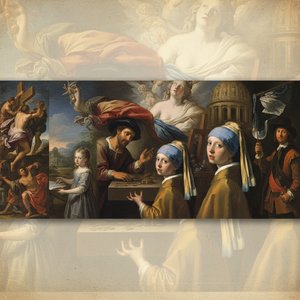
Barroco Sublime: 10 Obras Maestras que Definieron una Época |
Descubre las 10 obras maestras del Barroco que marcaron una época. Caravaggio, Bernini y Velázquez cobran vida en . Reproducciones de arte de calidad museo para decorar tu hogar con elegancia. ¡Explora la colección online!
Explore obras de arte organizadas por temas, estilos y características.


