Ver en contexto
 Enviar
 Compartir
 Detalles
 Guía
Guía

 Descargar
 Similares
 Radiografía
 Presentación de diapositivas
 Preguntas y respuestas
 Estadísticas
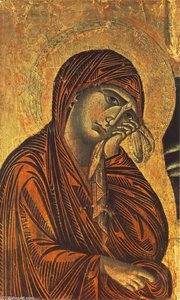
La Virgen Majestuosa

- 101.0 x 118.0 cm


Descubre La Virgen Majestuosa, una obra maestra del Proto Renacimiento de Cimabue (1285). Esta pintura tempera captura la transición del arte bizantino al gótico italiano con detalles impresionantes y simbolismo profundo.
 Ver más
Descubre a Cimabue (c. 1240-1302), un pintor italiano fundamental que conectó los estilos Italo-Bizantino y Renacentista. Explora su realismo innovador, mosaicos emotivos e influencia en artistas como Giotto. ¡Visualiza obras de arte y aprende sobre el movimiento Trecento!
Giclée / Impresión de arte
Impresiones giclée o en lienzo de calidad de museo con producción rápida y opciones de acabado flexibles. ( Comprar pintura hecha a mano Cambiar a imagen digital)




P118B €10

P118H €10

P118W €10

P438Z €10

P508JH €12

P508YH €12

P805H €10

P805Z €10

P919BZ €10

P919G €10

P919XJ €10

P959ZH €10

P968JZ €12

W106C €8

W218G €10

W218JH €8

W218Y €10

W307PJ €10

W316G €10

W316PJ €8

W316Y €10

W398PJ €8

W4111J €10

W500HY €15

W500JH €15

W692G €12

W849H €8

W940BG €15

W953PJ €8




Tamaño estándar
a medida
CM
INCH
Elija entre nuestros tamaños predefinidos que respetan las proporciones originales de la obra.
Loading sizes...

ancho
altura
Introduzca el ancho y el alto que necesite para adaptarse a su marco o pared. Una impresión solo puede recortarse, nunca hacerse más grande que la imagen original, por lo que un tamaño con una forma distinta perderá parte de la obra. Le enviaremos una maqueta digital para su aprobación antes de realizar cualquier impresión. La imagen que se muestra en esta página no refleja el recorte real; solo la maqueta lo hace.
Envío a todo el mundo () en 2 semanas en lugar de las 4/5 semanas estándar. (4 noviembre)

Envío exprés gratuito a todo el mundo

Lienzo de lino de alta calidad

Seguro de envío total

Garantía de reembolso de aranceles aduaneros

Garantía de fidelidad cromática exacta

Política de devolución de 100 días (solo por defectos)

Garantía de devolución del 100% del dinero

Descuento por cantidad
 La opción de vidrio solo está disponible en tamaños inferiores a 110 cm.

La Virgen Majestuosa
Giclée / Impresión de arte
Dimensiones de la reproducción
-


Precio total final
€ 62
The Madonna in Majesty (detail): A Dawn of Renaissance Art
Cenni Di Pepo Or Cenni Di Pepi, known universally as Cimabue, stands at the cusp of artistic transformation—a pivotal figure bridging the solemn grandeur of Byzantine iconography with the nascent humanist spirit that would soon blossom into the Italian Renaissance. His magnum opus, “The Madonna in Majesty,” painted around 1285 and currently residing within the hallowed halls of Florence’s Galleria degli Uffizi, isn't merely a depiction of religious piety; it’s a declaration of intent—a bold step away from tradition toward a more emotionally resonant and intellectually stimulating visual language.
This tempera panel, measuring 101 x 118 cm, embodies the Proto-Renaissance style. Cimabue's genius lay in subtly undermining established conventions without shattering them entirely. Influenced profoundly by Byzantine models—particularly those emanating from Constantinople—he nevertheless dared to introduce innovations that would reverberate throughout subsequent artistic endeavors. The most striking of these was a deliberate shift toward more lifelike figural proportions and a palpable sense of volume, techniques previously unheard of in Florentine art.
- Style: Byzantine Influence – Cimabue skillfully blended Byzantine stylistic elements with emerging Gothic sensibilities, creating a harmonious blend that anticipates the Renaissance’s embrace of naturalism.
- Technique: Tempera Paint – Cimabue utilized tempera paint—a medium known for its luminosity and durability—to achieve breathtaking detail and color vibrancy. The meticulous layering of pigments ensured that every nuance of expression was faithfully reproduced.
The composition itself is a testament to Cimabue’s artistic prowess. Dominating the canvas is Mary, seated upon an elaborately sculpted throne adorned with gold leaf—a deliberate reference to Byzantine imperial iconography. Surrounding her are angels and saints, arranged in a symmetrical configuration that conveys serenity and balance. The careful positioning of these figures reinforces the painting's overarching message of divine grace.
Beyond its aesthetic beauty, “The Madonna in Majesty” is laden with symbolism. The throne represents royal authority and holiness, mirroring Mary’s role as Queen of Heaven. The radiant gold leaf—a hallmark of Byzantine art—symbolizes divine illumination and spiritual transcendence. Furthermore, the serene expressions of Mary and her attendants convey compassion and humility – qualities considered paramount in Christian theology.
Painted during a period marked by burgeoning intellectual curiosity and artistic experimentation, Cimabue’s masterpiece reflects the broader cultural currents shaping Italy at the time. It foreshadows the humanist movement's emphasis on human experience and emotion—a departure from the medieval preoccupation with theological dogma. Studying “The Madonna in Majesty” offers invaluable insight into the genesis of Western art history and serves as an enduring inspiration for artists striving to capture the essence of faith and beauty.
For those seeking a stunning reproduction of this iconic artwork, explore Cimabue: The Madonna in Majesty (Maestà) here and Cimabue: The Madonna in Majesty (detail)here on TopImpressionists.
Preguntas y respuestas
¿De dónde provienen los visitantes de "La Virgen Majestuosa" de Cimabue?
Existe una página de Estadísticas para "La Virgen Majestuosa". En ella se detallan las visitas mensuales de la obra y de otras piezas del artista, con desgloses por país e idioma.
¿Se puede reproducir legalmente "La Virgen Majestuosa" de Cimabue, que se encuentra en Galería de los Uffizi?
La obra original "La Virgen Majestuosa" se encuentra en Galería de los Uffizi y es en el dominio público: sus derechos de autor han expirado.
¿Qué emoción transmite "La Virgen Majestuosa" de Cimabue?
El tono emocional registrado para "La Virgen Majestuosa" de Cimabue es Sereno. Este resume el sentimiento que expresa la obra.
Biografía del artista
rompiendo el estilo italo-bizantino
Cimabue, nacido alrededor de 1240 y fallecido en 1302, fue un influyente pintor y diseñador de mosaicos italiano de Florencia, también conocido como cenni di pepo. Pionero en romper con el estilo italo-bizantino, Cimabue es celebrado por introducir proporciones y sombreado más realistas en su obra, marcando un significativo cambio hacia el realismo en el arte medieval.vida temprana y formación
Se sabe poco sobre la vida temprana de Cimabue. Una fuente que relata su carrera es la Vida de los más excelentes pintores, escultores y arquitectos de Giorgio Vasari, pero su exactitud es incierta. Nació en Florencia y murió en Pisa. Según el historiador del arte Pietro Tosca, la obra más temprana atribuida a Cimabue, la crucifixión en la iglesia de San Domenico en Arezzo, data alrededor de 1270 y muestra una desviación del estilo bizantino.obras notables
* Maestà (originalmente expuesta en la iglesia de San Francesco en Pisa, ahora en el Louvre): Esta obra estableció un estilo que fue seguido posteriormente por numerosos artistas, incluyendo Duccio di Buoninsegna en su Rucellai Madonna (erróneamente atribuida a Cimabue en el pasado). * Flagelación (Colección Frick): Una pintura de taller que quizás sea atribuible a un período ligeramente posterior. * Mosaicos para el Baptisterio de Florencia (ahora en gran parte restaurado): Actualmente en mal estado debido a la oxidación de los colores más brillantes.influencia y legado
El arte de Cimabue jugó un papel crucial en la transición del estilo bizantino a representaciones más realistas en la pintura italiana, y su influencia en artistas posteriores fue profunda. Sus obras, caracterizadas por una combinación de técnicas tradicionales e innovadoras, marcan un importante capítulo en la historia del arte, conectando el período medieval con los estilos renacentistas.- Visite las obras de Cimabue en https://TopImpressionists.com/@/cimabue
- Explore más sobre el movimiento del Trecento en https://TopImpressionists.com/@@/a@d3cpph
- Lea la biografía de Cimabue en Wikipedia en https://en.wikipedia.org/wiki/cimabue

Cimabue
1240 - 1302 , Italia
Datos clave
- Artistas Que Influyeron:
- Arte bizantino
- Dietisalvi di Speme
- Estilo Artístico: Italo-Bizantino, Proto-Renacimiento
- Fecha De Muerte: 1302
- Fecha De Nacimiento: c. 1240
- Influenciado A Artistas: ['Giotto di Bondone']
- Lugar De Nacimiento: Florencia, Italia
- Nacionalidad: Italiana
- Nombre Completo: Giovanni Cimabue
- Obras Notables:
- Maestà
- Crucifijo (Arezzo)
- Flagelación de Cristo
Artículos relacionados

Whispers of the Soul: Discovering the Sacred Beauty and Intricate Devotion of Early Medieval Art
Embark on a soulful journey through Early Medieval art. Explore the sacred beauty of illuminated manuscripts, Byzantine gold leaf, and the profound spiritual symbolism that shaped history. Discover the timeless devotion captured in every intricate detail.

Divine Light & Golden Splendor: A Journey Through the Sacred Grandeur of High Medieval Art
Embark on a soulful journey through High Medieval art. Explore the divine light of Gothic cathedrals, Byzantine splendor, and sacred masterpieces that shaped Western history with our expert-led cultural reflections.
Explore obras de arte organizadas por temas, estilos y características.