

 Ver en contexto
 Enviar
 Compartir
 Detalles
 Guía
Guía

 Descargar
 Similares
 Radiografía
 Presentación de diapositivas
 Preguntas y respuestas
 Estadísticas
Chaqueta


Descubre la exquisita Chaqueta de Balenciaga (1947). Una joya española con pedrería e inspiración majo: una obra maestra escultórica.
 Ver más
Descubre a Cristóbal Balenciaga Eizaguirre, revolucionario diseñador español de alta costura y vanguardia. Explora sus diseños elegantes y su legado artístico.
La obra de arte que se muestra en esta página está protegida por las leyes de propiedad intelectual, lo que significa que no podemos crear ni vender legalmente una reproducción idéntica. Esta protección se hace cumplir en virtud de acuerdos internacionales como el Convenio de Berna y por las leyes nacionales, incluidas aquellas establecidas por el Ley de derechos de autor de los EE. UU. - Título 17.
Este método cumple plenamente con las normativas de derechos de autor, ya que no implica la copia ni la duplicación de la obra protegida. En su lugar, se trata de una reinterpretación creativa: una nueva pintura influenciada por la original, pero que no es idéntica a ella.
Giclée / Impresión de arte
Impresiones giclée o en lienzo de calidad de museo con producción rápida y opciones de acabado flexibles. ( Comprar pintura hecha a mano Cambiar a imagen digital)




P118B €10

P118H €10

P118W €10

P438Z €10

P508JH €12

P508YH €12

P805H €10

P805Z €10

P919BZ €10

P919G €10

P919XJ €10

P959ZH €10

P968JZ €12

W106C €8

W218G €10

W218JH €8

W218Y €10

W307PJ €10

W316G €10

W316PJ €8

W316Y €10

W398PJ €8

W4111J €10

W500HY €15

W500JH €15

W692G €12

W849H €8

W940BG €15

W953PJ €8




Tamaño estándar
a medida
CM
INCH
Elija entre nuestros tamaños predefinidos que respetan las proporciones originales de la obra.
Loading sizes...

ancho
altura
Introduzca el ancho y el alto que necesite para adaptarse a su marco o pared. Una impresión solo puede recortarse, nunca hacerse más grande que la imagen original, por lo que un tamaño con una forma distinta perderá parte de la obra. Le enviaremos una maqueta digital para su aprobación antes de realizar cualquier impresión. La imagen que se muestra en esta página no refleja el recorte real; solo la maqueta lo hace.
Envío a todo el mundo () en 2 semanas en lugar de las 4/5 semanas estándar. (4 noviembre)

Envío exprés gratuito a todo el mundo

Lienzo de lino de alta calidad

Seguro de envío total

Garantía de reembolso de aranceles aduaneros

Garantía de fidelidad cromática exacta

Política de devolución de 100 días (solo por defectos)

Garantía de devolución del 100% del dinero

Descuento por cantidad
 La opción de vidrio solo está disponible en tamaños inferiores a 110 cm.

Chaqueta
Giclée / Impresión de arte
Dimensiones de la reproducción
-


Precio total final
€ 62
Cristóbal Balenciaga: The Architect of Elegance
The Spanish couturier Cristóbal Balenciaga (1895–1972) stands as an undisputed titan amongst the figures who shaped 20th-century fashion. More than just a designer, he was an artist—a sculptor of fabric—whose uncompromising vision redefined elegance and established a legacy that continues to inspire creatives today. His influence transcends eras, demonstrating how meticulous craftsmanship combined with avant-garde experimentation can yield timeless masterpieces. Balenciaga’s approach wasn't merely about dressing; it was about crafting experiences, encapsulating emotion within meticulously constructed silhouettes.- Early Life and Artistic Roots: Born in Getaria, Basque Country, Balenciaga’s formative years were steeped in the traditions of his homeland—a region renowned for its artisanal textiles and sculptural stone carvings. These influences profoundly impacted his aesthetic sensibilities, fostering a deep appreciation for form and texture that would permeate his entire oeuvre. Notably, he studied painting at San Sebastián Art Academy, where he honed his observational skills and developed an understanding of composition and color theory – elements crucial to translating artistic concepts into wearable art.
- The Avant-Garde Embrace: Balenciaga’s breakthrough came during the tumultuous years following World War I, when he embraced the burgeoning avant-garde movement—particularly Surrealism and Cubism—drawing inspiration from artists like Picasso and Matisse. This embrace manifested in bold geometric shapes, unconventional drapery techniques, and a deliberate rejection of ornamentation, signaling a radical departure from prevailing fashion trends.
- Signature Style: Balenciaga’s distinctive style is characterized by its sculptural quality—he treated fabric as if it were clay, shaping it into fluid forms that defied gravity and challenged conventional notions of beauty. His designs prioritized simplicity and restraint, emphasizing the interplay between volume and surface texture. He famously stated, “Fashion isn't about clothes; it’s about sculpting.”
The Jacket: A Testament to Innovation
Balenciaga’s ‘Jacket,’ created in 1930s Paris, exemplifies this sculptural ethos perfectly. It represents a pivotal moment in fashion history—a conscious rejection of the prevailing corset-driven silhouettes of the time and an assertion of female independence through form and drapery. The jacket's design incorporates a square collar, three-quarter sleeves, and meticulous piping and glass-paste beading that create floral motifs – elements reflecting Balenciaga’s fascination with natural forms and his masterful manipulation of embellishments.- Historical Context: Produced during the Great Depression, the jacket embodies a spirit of resilience and understated glamour. It speaks to a desire for elegance amidst economic hardship, prioritizing refined aesthetics over ostentation.
- Technique & Materials: Crafted from silk satin and adorned with delicate lace and beads, the jacket showcases Balenciaga’s unparalleled skill in textile manipulation. The intricate beadwork—inspired by Basque stone carvings—creates mesmerizing patterns that capture light and movement, enhancing the garment's visual impact.
- Symbolism: Beyond its aesthetic beauty, the jacket symbolizes liberation from restrictive corsets—a gesture of defiance against societal expectations and a celebration of feminine grace. The floral motifs evoke notions of springtime renewal and femininity.
Balenciaga’s Influence on Contemporary Design
Cristóbal Balenciaga's legacy extends far beyond his own creations, profoundly impacting subsequent generations of designers. His sculptural approach to fashion continues to inspire artists today who strive for innovation and artistic expression. The meticulous attention to detail—the masterful use of fabric—the exploration of form and texture—these principles remain central to the aesthetic sensibilities of many contemporary creatives. Balenciaga’s unwavering commitment to uncompromising standards serves as a reminder that true artistry lies in elevating craftmanship to an art form itself. “Fashion isn't about clothes; it’s about sculpting.” – Cristóbal BalenciagaPreguntas y respuestas
¿Qué representa "Chaqueta" y qué atmósfera transmite?
"Chaqueta" de Cristóbal Balenciaga Eizaguirre combina alta costura española, chaqueta con pedrería, diseño balenciaga, motivos florales, formas de corazón, estilo torero, detalle escultórico con una atmósfera Elegante.
¿Qué color predomina en "Chaqueta"?
El color que más destaca en "Chaqueta" es el Café intenso (#484c4d). El color dominante resulta muy útil a la hora de combinar una obra de arte con un espacio interior.
¿Con qué otros nombres o alias se conoce a Cristóbal Balenciaga Eizaguirre?
Cristóbal Balenciaga Eizaguirre también es conocido por los nombres Balenciaga, Cristobal Balenciaga.
Biografía del artista
Primeros años y carrera
Cristóbal Balenciaga Eizaguirre, un renombrado diseñador de moda español, nació en 1895 en Getaria, España. Es más conocido por fundar la marca de ropa Balenciaga, que se convirtió en sinónimo de alta costura. La reputación de Balenciaga como un modisto de estándares implacables le valió el título de "el maestro de todos" por Christian Dior y "el único couturier en el verdadero sentido de la palabra" por Coco Chanel.Estilo artístico e influencias
Los diseños de Balenciaga se caracterizaron por su elegancia, simplicidad y atención al detalle. Estuvo influenciado por el movimiento artístico de vanguardia, lo que se refleja en sus audaces e innovadores diseños. Algunos de sus trabajos notables incluyen:- Estudio para 'Canción de canciones IV' (arte naïf / primitivismo), una pintura que muestra su enfoque experimental a la moda.
- Raíces de árbol (50 x 100 cm, postimpresionismo, óleo sobre lienzo), una pieza que demuestra su capacidad para capturar la esencia de la naturaleza.
- Acróbata (surrealismo, óleo sobre lienzo), una pintura que destaca su disposición a superar los límites en el mundo de la moda.
Desarrollo y logros principales
Balenciaga se formó como sastre en Getaria y Madrid antes de establecer sus propios talleres en San Sebastián. Su talento fue reconocido temprano, y rápidamente ganó fama por sus diseños innovadores y su impecable confección. En 1937, se trasladó a París, el centro mundial de la moda, donde fundó su propia casa de alta costura. Balenciaga revolucionó la silueta femenina con sus diseños vanguardistas, desafiando las convenciones tradicionales y estableciendo nuevas tendencias. Sus creaciones, como el abrigo cuadrado, el vestido bebé doll y el abrigó de saco, se convirtieron en iconos de la moda del siglo XX.Significado histórico y legado
Cristóbal Balenciaga es considerado uno de los diseñadores más importantes e influyentes de todos los tiempos. Su visión innovadora y su maestría técnica transformaron la industria de la moda y sentaron las bases para el diseño contemporáneo. Balenciaga fue un pionero en la experimentación con formas, volúmenes y materiales, y su legado continúa inspirando a diseñadores de todo el mundo. Su trabajo se celebra por su atemporalidad, elegancia y sofisticación, y su impacto en la moda es innegable. Cristóbal Balenciaga Eizaguirre permanece como una figura icónica en el mundo de la alta costura.Museos y colecciones
La obra de Balenciaga se puede encontrar en varios museos y colecciones, incluyendo:- Museo de Bellas Artes de Asturias (España), que presenta una diversa colección de arte europeo.
- Colección Andrés Blaisten (México), una colección de arte mexicana que muestra obras de arte latinoamericanas.
- El museo destruido por el incendio (Estados Unidos), un trágico evento en la historia del arte estadounidense.

Cristóbal Balenciaga Eizaguirre
1895 - 1972 , España
Datos clave
- Artistas Que Influyeron:
- Christian Dior
- Coco Chanel
- Estilo Artístico: Alta costura, vanguardia
- Fecha De Fallecimiento: 23 de marzo de 1972
- Fecha De Nacimiento: 21 de enero de 1895
- Influenciado A Artistas: ['Generaciones de diseñadores']
- Lugar De Nacimiento: Getaria, España
- Nacionalidad: Española
- Nombre Completo: Cristóbal Balenciaga Eizaguirre
- Obras Notables:
- Estudio para 'Canción de canciones'
- Raíces de árboles
- Acrobata
Artículos relacionados

Cristóbal Balenciaga: Deconstructing Haute Couture's Architectural Legacy
Explore the revolutionary world of Cristóbal Balenciaga, the 'couturier's couturier'. Discover his architectural designs, lasting influence on haute couture, and guide to collecting rare pieces. A connoisseur’s resource.

Gianfranco Ferré: Deconstructing Haute Couture – A Legacy of Architectural Form
Explore the revolutionary world of Gianfranco Ferré, 'the architect of fashion.' Discover his architectural approach to haute couture, iconic Dior designs, and lasting influence on luxury style. A deep dive for collectors & enthusiasts.

Draped Narratives: Fashion as Symbol & Subject in Historical Art
Explore the fascinating history of fashion as a symbol of power & status in art! Discover masterpieces from Gainsborough to Tissot and learn how clothing shaped societal narratives. Find museum-quality reproductions at TopImpressionists.
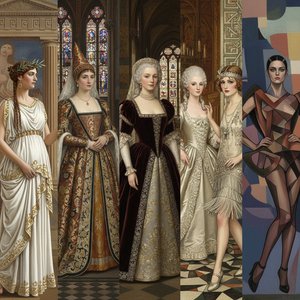
Style Through the Ages: Iconic Artworks That Defined the Evolution of Fashion Design
Explore the breathtaking intersection of fine art and high fashion. Discover how iconic masterpieces from Art Deco to Impressionism have shaped the world of luxury couture and timeless design in this curated visual journey.

Style on Canvas: The Timeless Allure of Fashion Illustration Artworks
Discover the exquisite world of fashion illustration art. From Art Deco elegance to bespoke oil reproductions, explore how timeless sartorial beauty transforms luxury interiors through masterfully crafted canvas works and curated historical masterpieces.
Explore obras de arte organizadas por temas, estilos y características.


