


 Ver en contexto
 Enviar
 Compartir
 Detalles
 Guía
Guía

 Descargar
 Similares
 Radiografía
 Presentación de diapositivas
 Estadísticas
Spitalskirche, Molding


"Spitalskirche, Molding" de Egon Schiele: Estudio expresionista con detalles arquitectónicos y una atmósfera urbana evocadora. Descubre esta obra maestra ahora en WikiArt.org.
 Ver más
Descubre el arte expresionista emocionalmente cargado de Egon Schiele (1890-1918): retratos audaces, temas psicológicos y líneas únicas. Explora reproducciones en TopImpressionists.
Giclée / Impresión de arte
Impresiones giclée o en lienzo de calidad de museo con producción rápida y opciones de acabado flexibles. ( Comprar pintura hecha a mano Cambiar a imagen digital)




P118B €10

P118H €10

P118W €10

P438Z €10

P508JH €12

P508YH €12

P805H €10

P805Z €10

P919BZ €10

P919G €10

P919XJ €10

P959ZH €10

P968JZ €12

W106C €8

W218G €10

W218JH €8

W218Y €10

W307PJ €10

W316G €10

W316PJ €8

W316Y €10

W398PJ €8

W4111J €10

W500HY €15

W500JH €15

W692G €12

W849H €8

W940BG €15

W953PJ €8




Tamaño estándar
a medida
CM
INCH
Elija entre nuestros tamaños predefinidos que respetan las proporciones originales de la obra.
Loading sizes...

ancho
altura
Introduzca el ancho y el alto que necesite para adaptarse a su marco o pared. Una impresión solo puede recortarse, nunca hacerse más grande que la imagen original, por lo que un tamaño con una forma distinta perderá parte de la obra. Le enviaremos una maqueta digital para su aprobación antes de realizar cualquier impresión. La imagen que se muestra en esta página no refleja el recorte real; solo la maqueta lo hace.
Envío a todo el mundo () en 2 semanas en lugar de las 4/5 semanas estándar. (26 octubre)

Envío exprés gratuito a todo el mundo

Lienzo de lino de alta calidad

Seguro de envío total

Garantía de reembolso de aranceles aduaneros

Garantía de fidelidad cromática exacta

Política de devolución de 100 días (solo por defectos)

Garantía de devolución del 100% del dinero

Descuento por cantidad
 La opción de vidrio solo está disponible en tamaños inferiores a 110 cm.

Spitalskirche, Molding
Giclée / Impresión de arte
Dimensiones de la reproducción
-


Precio total final
€ 61
Spitalskirche, Molding: Unveiling Schiele’s Vision of Vienna
“Spitalskirche, Molding,” painted in 1918 by Egon Schiele, stands as a poignant testament to the artist's exploration of human vulnerability and psychological intensity during the turbulent years preceding World War I. This sketch and study—a deceptively simple composition—captures a moment frozen in time within Vienna’s urban landscape, offering a glimpse into Schiele’s distinctive artistic sensibility.
Subject Matter: A Familiar Yet Distorted Perspective
The artwork depicts the Spitalskirche (Hospital Church), a prominent building nestled amongst the streets of Vienna. Unlike idealized depictions of religious spaces, Schiele presents a view that is deliberately skewed—a characteristic technique employed by Expressionist artists to convey emotional truth rather than visual accuracy. The church’s steeple dominates the scene, symbolizing faith and aspiration against the backdrop of an increasingly uncertain world.
Style & Technique: Bold Lines and Anatomical Precision
Schiele's style is undeniably Expressionist, marked by forceful lines that pulsate with energy and convey a palpable sense of unease. He utilizes a technique rooted in observation but transformed through artistic interpretation—a meticulous rendering of anatomical detail combined with expressive distortion. The artist’s hand guides the pencil across the paper, creating textures and contours that heighten the emotional impact of the image.
Historical Context: Vienna at the Precipice
Vienna in 1918 was a city grappling with profound social and political upheaval—the Austro-Hungarian Empire was crumbling under the strain of war, and anxieties about mortality permeated the cultural consciousness. Schiele’s work reflects this atmosphere of apprehension and disillusionment, mirroring the psychological landscape of his time. The sketch serves as a visual record of Vienna's cityscape during a period defined by crisis.
Symbolism: Anatomy and Vulnerability
The depiction of the church itself carries symbolic weight—representing solace and stability amidst chaos. However, Schiele’s masterful use of line and form transcends mere representation; it delves into themes of human fragility and existential questioning. The twisting lines of the steeple and the careful rendering of anatomical detail underscore Schiele's preoccupation with confronting uncomfortable truths about the human condition.
Emotional Impact: A Moment of Quiet Intensity
"Spitalskirche, Molding" resonates with a quiet intensity—a feeling conveyed through Schiele’s masterful control of line and texture. It invites contemplation on themes of faith, mortality, and the complexities of human experience. This artwork exemplifies Schiele's ability to distill profound psychological ideas into deceptively understated visual forms.
Preguntas y respuestas
¿Cómo convergen el movimiento y la época en "Spitalskirche, Molding" de Egon Schiele?
En "Spitalskirche, Molding" de Egon Schiele, el movimiento Expressionism se funde con la era Edad Moderna.
¿Cómo se combinan la técnica y el movimiento en "Spitalskirche, Molding"?
En "Spitalskirche, Molding", la técnica de Acrílico sobre lienzo se funde con el movimiento Expressionism.
¿Es "Spitalskirche, Molding" una obra famosa del Expressionism?
"Spitalskirche, Molding" destaca con un nivel de Reconocido regionalmente entre las obras del Expressionism en el catálogo.
Biografía del artista
Egon Schiele: Vida y Legado
Primeros Años e Influencias
- Nacido el 12 de junio de 1890 en Tulln an der Donau, Baja Austria, Egon Schiele experimentó una infancia moldeada tanto por la inclinación artística como por las dificultades personales.
- Su padre, Adolf Schiele, era jefe de estación, instando en el joven Egon una fascinación por los trenes – un motivo que aparecería sutilmente más tarde en su obra.
- El temprana fallecimiento de su padre a causa de sífilis cuando Schiele tenía 14 años lo impactó profundamente, llevando a su crianza por parte de su tío materno, Leopold Czihaczek.
- Czihaczek brindó apoyo pero también ejerció una influencia controladora, que contribuyó al complejo paisaje emocional reflejado en el arte de Schiele.
Trayectoria Artística y Desarrollo
- La formación artística de Schiele comenzó en la Kunstgewerbeschule (Escuela de Artes y Oficios) en Viena, pero pronto se trasladó a la Akademie der bildenden Künste (Academia de Bellas Artes).
- Pronto se sintió decepcionado con el enfoque conservador de la Academia, encontrándola sofocante para su visión expresiva. Finalmente, abandonó la formación formal.
- Las influencias tempranas incluyeron a Gustav Klimt, una figura destacada en la Sezión Vienesa, cuyo estilo decorativo y exploración del simbolismo resonaron con Schiele. Sin embargo, Schiele pronto desarrolló un estilo distintivamente individual.
- Sus primeras obras a menudo presentaban retratos y autorretratos inquietantes, caracterizados por figuras distorsionadas y una intensa emotividad.
Características y Temas Clave
- El arte de Schiele es reconocido por su honestidad cruda y profundidad psicológica. Exploró sin miedo temas de sexualidad, muerte, ansiedad e aislamiento.
- Su estilo distintivo presenta figuras alargadas, poses contorsionadas y líneas expresivas que transmiten una sensación de vulnerabilidad y tormento emocional.
- Autorretratos constituyen una parte significativa de su obra, ofreciendo atisbos íntimos en su mundo interior.
- También creó numerosos retratos de otros, a menudo representando a las personas con un realismo sin tapujos e insight psicológico.
- La pintura de paisajes jugó un papel en su trabajo, demostrando su dominio de la forma y el color, aunque fue menos central que sus obras figurativas.
Logros Importantes y Reconocimiento
- A pesar de enfrentar censura y desafíos legales (incluyendo una breve prisión por supuestamente corromper a menores con su arte), Schiele ganó reconocimiento en los círculos vanguardistas de Viena.
- Co-fundó el Neues Wiener Kunstgruppe (Nuevo Grupo de Arte Vienés) en 1909, mostrando su obra junto con otros artistas progresistas.
- Obras significativas incluyen Autorretrato con Physalis, Pareja Abraza y Paisaje de Campo (Kreuzberg cerca de Krumau).
- Para el tiempo de su prematura muerte, Schiele se había establecido como una figura destacada en el Expresionismo Austríaco.
Significado Histórico y Legado
- Egon Schiele murió en 1918 durante la pandemia de gripe española a los 28 años, truncando una prometedora carrera.
- Su obra influyó profundamente en las generaciones posteriores de artistas, particularmente aquellos interesados en explorar temas psicológicos y desafiar las normas artísticas convencionales.
- El enfoque audaz de Schiele en la forma y el tema sigue resonando con el público actual, convirtiéndolo en una de las figuras más importantes e influyentes del arte del siglo XX temprano.
- Sus pinturas se conservan ahora en importantes colecciones de museos en todo el mundo, y las reproducciones de su obra están ampliamente disponibles, asegurando que su legado artístico perdure.

Egon Schiele
1890 - 1918 , Croacia
Datos clave
- Artistas Que Influyeron: ['Gustav Klimt']
- Fecha De Muerte: 1918
- Fecha De Nacimiento: 12 de junio de 1890
- Influenciado A Artistas: ['Generaciones posteriores']
- Lugar De Nacimiento: Viena, Croacia
- Movimiento Artístico: Expresionismo
- Nacionalidad: Austriaco
- Nombre Completo: Egon Schiele
- Obras Notables:
- Autorretrato con Physalis
- Pareja Abraza
- Paisaje de Campo (Kreuzberg)
Artículos relacionados

Egon Schiele: Las 25 Obras Maestras que Definen su Genio | TopImpressionists
Descubre las 25 obras maestras de Egon Schiele, el expresionismo austriaco en su máxima expresión. Explora la historia, técnica y emociones detrás de cada pintura. Reproducciones de arte exclusivas en TopImpressionists.com. ¡Explora la colección completa online!

Egon Schiele: Expressionism, Anxiety & the Modern Condition – A Comprehensive Exploration
Explore the emotionally charged world of Egon Schiele (1890-1918). Discover his Expressionist masterpieces, psychological themes, and lasting impact on modern art. A comprehensive guide for collectors & enthusiasts.
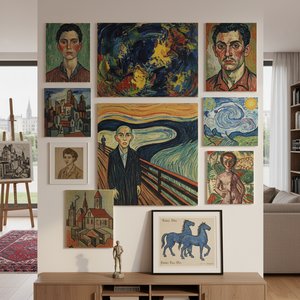
Expresionismo: 10 Obras Maestras que Revolucionaron el Arte |
Descubre las 10 obras maestras del Expresionismo que marcaron un hito en la historia del arte. Explora a Munch, Kirchner y Kandinsky en . Reproducciones de arte de museo para transformar tu hogar.

The Eloquent Line: Exploring the Artistic Significance of Sketches Across Movements and Media
Explore the profound artistic significance of sketches throughout history. From Renaissance masters to modern innovators like Van Gogh & Guston, discover how these foundational works reveal technique, emotion, and vision. Learn more at TopImpressionists.

Expresionismo Pictórico: 10 Obras Maestras que Definieron un Movimiento Revolucionario | TopImpressionists
Descubre las 10 obras maestras del expresionismo que revolucionaron el arte moderno. Explora la historia de Munch, Kirchner, Kandinsky y más. Reproducciones de alta calidad para decorar tu hogar con emoción y estilo en TopImpressionists.com.
Explore obras de arte organizadas por temas, estilos y características.


