


 Vista previa
 Compartir
 Compartir
 Ver detalles
 Guía
Guía

 Descargar
 Ver artículos similares
 Radiografía
 Presentación de diapositivas
 Estadísticas
Feisole


Explore 'Feisole' by Elihu Vedder (1859). A Romantic Italian landscape painting showcasing serene beauty & architectural detail. Discover Symbolist art & Vedder’s evocative style.
 Leer más
Descubre Elihu Vedder (1836-1923), artista simbolista estadounidense famoso por sus ilustraciones del Rubaiyat y paisajes oníricos. ¡Explora su arte visionario!
Giclée / Impresión de arte
Impresiones giclée o en lienzo de calidad de museo con producción rápida y opciones de acabado flexibles. ( Encargar reproducción pintada a mano Ver versión en imagen digital)




P118B €10

P118H €10

P118W €10

P438Z €10

P508JH €12

P508YH €12

P805H €10

P805Z €10

P919BZ €10

P919G €10

P919XJ €10

P959ZH €10

P968JZ €12

W106C €8

W218G €10

W218JH €8

W218Y €10

W307PJ €10

W316G €10

W316PJ €8

W316Y €10

W398PJ €8

W4111J €10

W500HY €15

W500JH €15

W692G €12

W849H €8

W940BG €15

W953PJ €8




Estándar
personalizado
CM
INCH
Elija entre nuestros tamaños predefinidos que respetan las proporciones originales de la obra.
Loading sizes...

ancho
altura
Introduzca el ancho y el alto que necesite para adaptarse a su marco o pared. Una impresión solo puede recortarse, nunca hacerse más grande que la imagen original, por lo que un tamaño con una forma distinta perderá parte de la obra. Le enviaremos una maqueta digital para su aprobación antes de realizar cualquier impresión. La imagen que se muestra en esta página no refleja el recorte real; solo la maqueta lo hace.
Envío a todo el mundo () en 2 semanas en lugar de las 4/5 semanas estándar. (22 octubre)

Envío exprés gratuito a todo el mundo

Lienzo de lino de alta calidad

Seguro de envío completo

Garantía de reembolso de impuestos aduaneros

Garantía de fidelidad cromática exacta

Política de devolución de 100 días (solo por defectos)

Garantía de devolución del 100% del dinero

Oferta por volumen
 La opción de vidrio solo está disponible en tamaños inferiores a 110 cm.

Feisole
Giclée / Impresión de arte
Tamaño de la reproducción
-


Precio total
€ 60
Feisole: A Romantic Echo of Tuscan Tranquility
Elihu Vedder’s “Feisole,” completed in 1859, stands as a testament to the burgeoning Romantic movement's fascination with capturing sublime landscapes and conveying profound emotion. Painted during Vedder’s formative years in Italy—a period deeply influenced by the Florentine Macchiaioli painters—the canvas depicts a serene Tuscan valley bathed in diffused sunlight, offering a glimpse into an idealized vision of rural beauty.
- Subject Matter: The scene portrays a picturesque river valley dotted with olive groves and distant buildings. Vedder meticulously renders the textures of stone walls and arched gateways, emphasizing architectural elements as integral to the overall composition.
- Style & Technique: Characterized by loose brushstrokes—a hallmark of Romanticism—the painting eschews precise detail in favor of conveying atmosphere and emotion. Vedder employs oil paint on canvas with a deliberate layering technique that builds up tonal variations, creating depth and luminosity.
- Historical Context: Created at the cusp of the Victorian era, “Feisole” reflects the broader artistic currents of its time—a reaction against Neoclassical formalism and an embrace of subjective experience. Vedder’s stylistic choices align with the Macchiaioli's commitment to capturing fleeting moments of natural light and color.
- Symbolism: The tranquil landscape embodies ideals of pastoral harmony and spiritual contemplation, mirroring Romantic poets’ yearning for communion with nature. The muted palette—dominated by earthy tones—suggests a contemplative mood and evokes feelings of nostalgia for simpler times.
- Emotional Impact: Viewing “Feisole” inspires a sense of serenity and appreciation for the beauty of the Italian countryside. Vedder's masterful brushwork captures not only visual accuracy but also an intangible quality – a palpable feeling of stillness and peace that resonates with viewers across generations.
The Detroit Institute of Arts acquired this artwork in 1956, demonstrating its enduring significance within American art history. Its provenance traces back to George Riddle and Arunah S. A. Brady, culminating in its current ownership by the Whitcomb family.
Published references include paintings in America (Exh. cat., M.H. de Young Museum), Bulletin of DIA 35,4 (1955-1956), and Vedder’s monograph by Rutherford Soria. Further information on exhibition history can be found at the DIA website.
Credit Line: Elihu Vedder, Fiesole, 1859, oil on canvas. Detroit Institute of Arts, Founders Society Purchase with funds from Mr. and Mrs. James S. Whitcomb, 56.19.
Preguntas y respuestas
¿Qué paleta y qué sentimiento combinan "Feisole"?
La paleta Neutrals de "Feisole" de Elihu Vedder armoniza con su tono emocional Nostalgic. El color es una de las formas en que una obra transmite sentimiento.
¿Qué edad tenía Elihu Vedder cuando creó "Feisole" en 1859?
Elihu Vedder tenía 23 años cuando creó "Feisole" en 1859. La edad se calcula a partir del año de nacimiento del artista, 1836.
¿Dónde puedo descargar "Feisole" de Elihu Vedder?
Puede descargar "Feisole" de Elihu Vedder desde la página de Descargar de la obra, como descarga de una imagen digital en alta resolución.


Biografía del artista
Vida Temprana y Formación Artística
- Nacimiento: 26 de febrero de 1836, Nueva York City, Estados Unidos
- Fallecimiento: 29 de enero de 1923, Roma, Italia
Elihu Vedder nació en una familia con circunstancias únicas – sus padres eran primos. Su vida temprana fue moldeada por diversas experiencias, incluyendo tiempo pasado en Cuba debido a la reubicación de su padre y periodos entre la casa de su abuelo materno en Schenectady y un internado. A pesar de las reservas iniciales de su padre, sus ambiciones artísticas fueron apoyadas por su madre.
- Formación Temprana: Vedder comenzó su formación formal en Nueva York City bajo la tutela de Tompkins H. Matteson.
- Estudios Europeos: Continuó sus estudios en París con François-Édouard Picot y posteriormente en Italia, donde fue profundamente influenciado por el Renacimiento italiano y los pintores Macchiaioli.
- Influencia Italiana: Su tiempo en Italia fomentó una profunda conexión emocional con su compañero pintor Giovanni Costa, lo que llevó a viajes antes de que las limitaciones financieras lo obligaran a regresar a América.
Carrera y Obras Destacadas
La carrera de Vedder abarcó diversas disciplinas artísticas, desde la pintura y la ilustración hasta el diseño de murales y la poesía. Cultivó amistades con figuras prominentes como Walt Whitman y Herman Melville.
- Ilustraciones para El Rubaiyat: Vedder es quizás mejor conocido por sus cincuenta y cinco ilustraciones que acompañan a la traducción de El Rubaiyat de Omar Khayyam (edición de lujo) de Edward FitzGerald. Estas ilustraciones son consideradas obras maestras del arte simbolista.
- Pinturas Visionarias: Pinturas notables incluyen “El Huevo de la Roca”, “El Pescador y el Genio”, y “Guarida de la Serpiente Marina”, que muestran su estilo visionario y temas imaginativos.
- Trabajo de Murales: Decoró el pasillo de la Sala de Lectura en la Biblioteca del Congreso de Washington con murales, un testimonio de su habilidad como artista decorativo.
- Colaboración con Tiffany: Vedder colaboró con Louis Comfort Tiffany, diseñando cristalería, mosaicos y estatuillas para la compañía Tiffany.
Estilo Artístico e Influencias
El estilo artístico de Vedder se caracteriza por su naturaleza visionaria, imágenes románticas y la frecuente incorporación de influencias orientales.
- Simbolismo: Vedder fue una figura clave en el movimiento simbolista, enfatizando la emoción y el individualismo sobre el realismo estricto.
- Prerrafaelitas: Su tiempo en Inglaterra lo expuso a la Hermandad Prerrafaelita, influyendo en su estilo artístico hacia una mayor claridad y detalle.
- Místicos Ingleses e Irlandeses: Fue influenciado por las obras de William Blake y William Butler Yeats, reflejando una fascinación por el misticismo y la espiritualidad.
- Renacimiento Italiano & Macchiaioli: Sus estudios en Italia moldearon su comprensión de la forma, el color y la composición.
Legado y Años Posteriores
Las contribuciones de Vedder al arte estadounidense se extendieron más allá de la pintura. Ayudó a establecer el grupo In Arte Libertas en Italia y dejó atrás una serie de escritos, incluyendo reflexiones autobiográficas y poesía.
- Afiliación: Vedder fue miembro de la Academia Americana de Artes y Letras.
- Actividades Literarias: Publicó The Digressions of V (1910), Miscellaneous Moods in Verse (1914) y Doubt and Other Things (1922).
- Años Posteriores: Vedder pasó sus últimos años principalmente en Italia, continuando creando arte y escribiendo hasta su muerte en Roma en 1923. Su legado perdura a través de sus evocadoras pinturas e ilustraciones que continúan cautivando al público hoy en día.

Elihu Vedder
1836 - 1923 , Estados Unidos de América
Datos clave
- Artistas Que Influyeron:
- François-Édouard Picot
- Giovanni Costa
- William Blake
- William Butler Yeats
- Fecha De Fallecimiento: 29 de enero de 1923
- Fecha De Nacimiento: 26 de febrero de 1836
- Lugar De Nacimiento: Ciudad de Nueva York, EE. UU.
- Movimiento Artístico: Simbolismo, Romanticismo
- Nacionalidad: Estadounidense
- Nombre Completo: Elihu Vedder
- Obras Notables:
- El Huevo de la Roca
- El Pescador y el Genio
- Lair of the Sea Serpent
- Ilustraciones del Rubaiyat
Artículos relacionados

Capturing the Soul: The Emotional Magic and Sublime Grandeur of Romantic Landscape Painting
Explore the profound emotional depth of Romantic landscape painting. Discover how masters like Friedrich and Turner captured the sublime through light, shadow, and nature's power in this expert art history retrospective for discerning collectors.
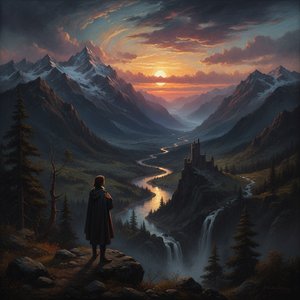
Capturing the Soul: The Emotional Majesty and Sublime Power of Romantic Landscape Painting
Explore the profound emotional depth of Romantic landscape painting. Discover how masters like Turner and Friedrich captured the sublime power of nature through intuition and imagination in this expert art history retrospective.
Explore obras de arte organizadas por temas, estilos y características.


