
Se muestra: · Con su marco:
 Ver en contexto
 Enviar
 Compartir
 Detalles
 Guía
Guía

 Descargar
 Similares
 Radiografía
 Presentación de diapositivas
 Preguntas y respuestas
 Estadísticas
- 142.0 x 210.0 cm


€ 240
Reproducción al óleo hecha a mano
Óleo sobre lienzo pintado a mano en el tamaño y marco de su elección, realizado por encargo por nuestros artistas. ( Cambiar a impresiones Cambiar a imagen digital)
Tamaño
·Tamaño estándar
a medida
CM
INCH
Elija entre nuestros tamaños predefinidos que respetan las proporciones originales de la obra.
Cargando tamaños...

ancho
altura
Indique el ancho y el alto que necesite para adaptarse a su marco o pared. Al tratarse de una obra pintada a mano, si requiere un tamaño con una proporción distinta, el artista puede pintar un poco más alrededor de la imagen o recortarla ligeramente; usted elige. Le enviaremos una maqueta digital para su aprobación antes de comenzar la pintura. La imagen que se muestra en esta página no refleja el resultado real; solo la maqueta lo hace.
 Leer más información
Finalizar
·
Blanco €1

Bordes difuminados €1

Continuación de imagen €1

P118B €10

P118H €10

P118W €10

P438Z €10

P508JH €12

P508YH €12

P805H €10

P805Z €10

P919BZ €10

P919G €10

P919XJ €10

P959ZH €10

P968JZ €12

W106C €8

W218G €10

W218JH €8

W218Y €10

W307PJ €10

W316G €10

W316PJ €8

W316Y €10

W398PJ €8

W4111J €10

W500HY €15

W500JH €15

W692G €12

W849H €8

W940BG €15

W953PJ €8

H24-GOLD €30

H24-SILVER €30

H36-GOLD €45

H36-SILVER €45
Se envía en un tubo protector, listo para que lo enmarque su profesional de confianza.
Servicios adicionales
opcional¿Qué incluyen los extras?
Ejemplos de lo que se puede cambiar: Reemplazar el rostro con la foto del cliente; Añadir una mascota (por ejemplo, cambiar un gato por un perro); Incluir un mensaje oculto en el fondo; Cambiar el paisaje o los elementos del fondo.
Tras realizar el pedido, el equipo de TopImpressionists.com enviará un correo electrónico al cliente para solicitar instrucciones y proporcionar una vista previa del boceto
Tras realizar el pedido, el equipo de TopImpressionists.com enviará un correo electrónico al cliente para solicitar instrucciones y proporcionar una vista previa del boceto
Envío a todo el mundo () en 3-4 semanas en lugar de las 5 semanas estándar. (6 noviembre). Sin comprometer la calidad.
Barniz protector
Cartela
Detalles de la placa de bronce grabada
This elegant plaque features the artist's name and the title of the artwork, finely engraved for a timeless presentation.
It is made from bronze with a refined, elegant finish. The text is precisely laser-engraved for a sharp and permanent result. Measuring 9x2 cm, the plaque is compact yet easy to read. It's built to be durable and scratch-resistant, offering a professional, museum-quality look. Mounting is simple thanks to the included adhesive backing.
Detalles de la placa de acrílico transparente
The plaque includes essential engraved details such as the artist's name, the title of the artwork, the date it was created, the type of media used-like oil on canvas or watercolor-a brief description of the piece, and a QR code that links to the complete artwork information.
It is crafted from clear acrylic, offering a sleek, modern appearance. The text is UV-engraved in black to ensure strong visual contrast. With a size of 10x15 cm, it ensures optimal readability. It comes equipped with two metal hooks for secure wall mounting. The plaque is designed to be weather-resistant, making it suitable for various environments, and it includes interactive features that work seamlessly with smartphone scanning.
Detalles de la placa de acrílico negro
This elegant plaque includes engraved information such as the artist's name, the title of the artwork, the date it was created, the type of media used (like oil on canvas or watercolor), a short description of the artwork, and a QR code for quick access to more information.
The plaque itself is made from refined black acrylic with a premium finish. The text is laser-engraved in white for high contrast and readability. Its size is 10x15 cm, designed to be easy to read. It comes with two metal hooks for professional mounting. The design is sleek and fits any interior style. It is also weather-resistant and durable, with built-in digital integration for mobile compatibility.
La opción de vidrio solo está disponible en tamaños inferiores a 110 cm.
 La opción de vidrio solo está disponible en tamaños inferiores a 110 cm.
- Envío exprés gratuito a todo el mundo
- Lienzo de lino de alta calidad
- Seguro de envío total
- Garantía de reembolso de aranceles aduaneros
- Garantía de fidelidad cromática exacta
- Política de devolución de 100 días (solo por defectos)
- Garantía de devolución del 100% del dinero
- Descuento por cantidad


Descripción del objeto
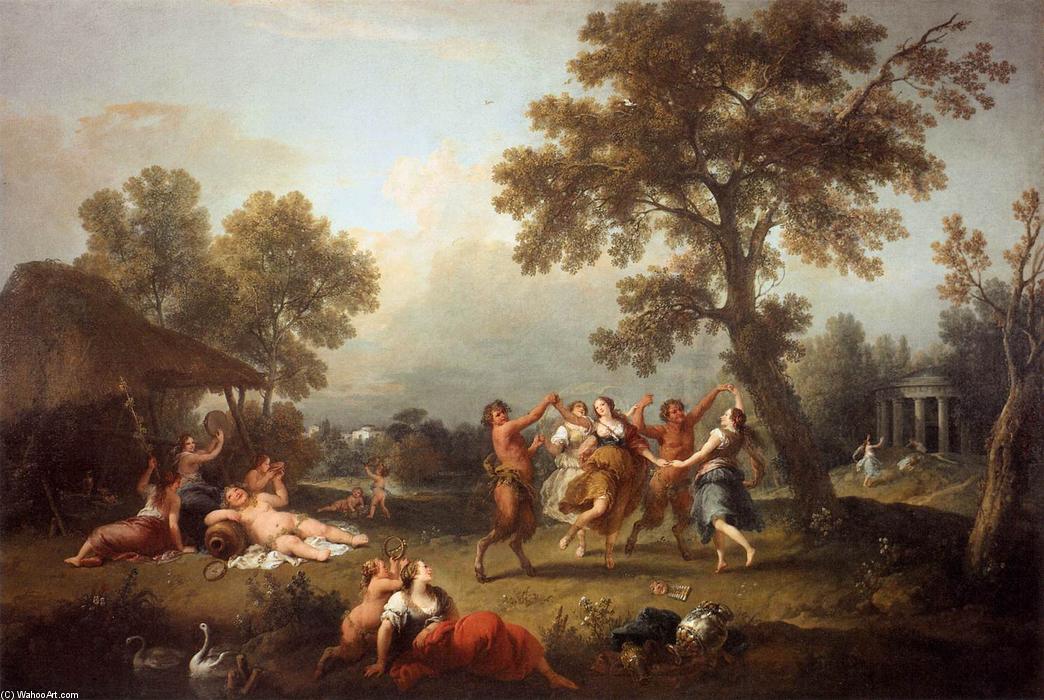
Experience the joyous Rococo elegance of Francesco Zuccarelli’s Bacchanal, a vibrant oil masterpiece capturing an idyllic pastoral celebration that invites you to bring timeless Venetian charm into your private collection.
Biografía del artista
Descubre a Francesco Zuccarelli (1702-1788), maestro italiano del Rococó. Sus paisajes idílicos y escenas arcadianas cautivaron Europa e Inglaterra. ¡Explora su arte!
Sobre la obra
Francesco Zuccarelli’s Bacchanal: A Symphony of Pastoral Elegance
The Bacchanal by Francesco Zuccarelli stands as an emblem of the Rococo artistic movement, capturing not merely a scene but an entire ethos—one steeped in aristocratic indulgence and idealized beauty. Painted circa 1740-50, this oil on canvas masterpiece resides within the Gallerie dell’Accademia in Venice, Italy, offering visitors a glimpse into a period defined by opulent interiors and refined sensibilities. Zuccarelli's skill lies not just in depicting figures engaged in joyous revelry but in crafting an immersive experience that transports the viewer to a realm of pastoral serenity infused with vibrant color and masterful composition.Composition and Style: Balancing Chaos and Harmony
Zuccarelli’s approach distinguishes itself from the more dramatic Baroque tradition, prioritizing balance and grace over theatrical grandeur. The painting depicts a lively bacchanal—a celebration honoring Dionysus, the Greek god of wine and ecstasy—yet it avoids overwhelming visual sensation. A central group of figures dominates the canvas, their postures dynamic yet carefully arranged around a prominent architectural element: a classical structure reminiscent of Roman temples, subtly anchoring the scene in antiquity. The artist employs meticulous detailing to portray each participant’s attire and expression, conveying both physicality and emotion with remarkable precision. Notice how Zuccarelli utilizes light and shadow to sculpt forms, creating depth and enhancing the sense of movement—a hallmark of Rococo aesthetics.Color Palette and Technique: Embracing Pastel Radiance
The color palette is dominated by earthy tones – ochre, umber, Sienna – providing a grounding counterpoint to the splashes of vibrant hues adorning the figures’ clothing. Crimson reds, emerald greens, and sapphire blues punctuate the scene, symbolizing fertility, vitality, and divine inspiration. Zuccarelli's technique showcases exceptional brushwork, layering pigments with subtle gradations to achieve luminous surfaces that shimmer with reflected light. The artist skillfully blends colors on canvas, creating a velvety texture that contributes to the painting’s overall impression of luxurious softness. This meticulous attention to detail underscores Zuccarelli’s dedication to capturing not just what is seen but also how it feels—a testament to the transformative power of art.Historical Context: Venetian Aristocracy and Artistic Patronage
The Bacchanal reflects the cultural landscape of Venice during the mid-18th century, a city ruled by an aristocratic elite deeply invested in artistic patronage. Zuccarelli’s work exemplifies the Rococo style's fascination with idealized landscapes and mythological narratives—themes favored by Venetian noble families eager to express their status and sophistication. The painting aligns perfectly with broader European trends toward decorative art and emotional expression, signaling a shift away from Baroque solemnity towards a celebration of sensual pleasure and imaginative vision.Symbolism: Dionysian Ecstasy and Pastoral Tranquility
Beyond its visual splendor, Bacchanal is laden with symbolic significance. The bacchanalia itself represents the unrestrained pursuit of joy and indulgence—a deliberate rejection of Puritan morality—while simultaneously evoking images of Arcadia, the mythical pastoral paradise inhabited by shepherds and nymphs. The figures’ gestures convey a profound connection to nature and divine inspiration, mirroring the Rococo preoccupation with themes of beauty, harmony, and sensual experience. Zuccarelli's masterful depiction captures not only the outward spectacle of celebration but also its inner resonance—a reminder that art can transcend mere representation to communicate deeper truths about human emotion and spiritual aspiration.Legacy: Rediscovering Zuccarelli’s Vision
Francesco Zuccarelli’s reputation waned in the early 19th century, yet his work has experienced a resurgence of interest in recent decades, displayed prominently in museums worldwide. Bacchanal stands as a cornerstone of Rococo art history—a testament to Zuccarelli's artistic genius and his ability to distill the essence of an era into a single unforgettable image. Its enduring appeal lies in its exquisite beauty, balanced composition, and profound exploration of human emotion, continuing to inspire artists and collectors alike.Preguntas y respuestas
¿Qué tan intensos son los colores en "Bacchanal" de Francesco Zuccarelli?
"Bacchanal" de Francesco Zuccarelli presenta una intensidad de color Balanced.
¿Qué tamaño de impresión de "Bacchanal" de Francesco Zuccarelli se adapta mejor a la habitación recomendada?
La combinación recomendada para "Bacchanal" de Francesco Zuccarelli: una impresión de Large en un/a Living Room.
¿Qué lugar ocupa "Bacchanal" entre los temas recurrentes de Francesco Zuccarelli?
Entre los temas recurrentes de Francesco Zuccarelli —classical ideals, roman mythology, decorative style, venetian tradition, landscape genre— "Bacchanal" aporta su propio enfoque sobre bacchanal, landscape, classical, wine, festive, figures, italy.
Datos rápidos y cuestionario de arte
Sobre Francesco Zuccarelli

Francesco Zuccarelli
1702 - 1788, Italia
Biografía del artista
Francesco Zuccarelli: Vida y Obra de un Maestro del Paisaje
- Nombre Completo: Giacomo Francesco Zuccarelli
- Otros Nombres: Francesco Zuccarelli
- Nacimiento: Pitigliano, Italia (1702)
- Fallecimiento: 1788
Primeros Años y Formación (1702-1732)
- Zuccarelli nació en Pitigliano, una pequeña ciudad en la Toscana. Su padre era un próspero comerciante.
- A temprana edad, se trasladó a Roma donde comenzó su formación artística con Giovanni Maria Morandi y Pietro Nelli, aprendiendo los fundamentos del diseño y absorbiendo las influencias del clasicismo romano.
- Realizó sus primeras obras en Pitigliano entre 1725 y 1727, pintando dos conjuntos de frescos para capillas locales.
- Con el apoyo del coleccionista Francesco Maria Niccolò Gabburri, se dedicó principalmente al grabado en Florencia (1728-1731), creando más de 43 grabados que documentaban los deteriorados frescos de Giovanni da San Giovanni y Andrea del Sarto.
- Durante su estancia en Florencia, comenzó a experimentar con dibujos de paisajes, lo que sentó las bases para su futura especialización. Paolo Anesi fue un mentor clave en el desarrollo de su estilo paisajístico.
Consolidación en Venecia y Éxito Internacional (1732-1768)
- En 1732, se trasladó a Venecia, donde encontró una oportunidad tras la muerte de Marco Ricci.
- Inicialmente pintó obras religiosas y mitológicas, pero gradualmente se centró en el paisaje, inspirándose en Claude Lorrain y la escuela romana.
- Introdujo una paleta más suave y luminosa que los colores típicos venecianos, dando vida a sus paisajes idílicos.
- Ganó rápidamente popularidad y patrocinio de figuras como el mariscal Schulenburg, Joseph Smith (su principal mecenas), y Francesco Algarotti, quien lo recomendó al elector de Sajonia, Augusto III de Polonia.
- En 1735 se casó con Giustina Agata Simonetti.
- Colaboró con otros artistas como Antonio Visentini y Bernardo Bellotto, destacando la creación de una serie de tarjetas del Antiguo Testamento en 1748, que combinaban escenas pintadas con elementos decorativos innovadores.
- Un logro significativo de su primer período veneciano fue una serie de siete lienzos (ahora en el Castillo de Windsor) representando a Rebeca, Jacob y Esaú.
Viajes a Inglaterra y Reconocimiento Académico (1768-1788)
- En 1768, se convirtió en miembro fundador de la Royal Academy of Arts en Londres, lo que marcó un hito importante en su carrera.
- Realizó dos viajes a Inglaterra (1752-1762 y 1765-1771), donde sus paisajes delicados y con toques rococó fueron muy apreciados.
- Tras regresar a Italia, fue elegido presidente de la Academia Veneciana en 1772.
- Aunque su reputación disminuyó en el siglo XIX debido al auge del naturalismo, su obra sigue siendo valorada por su carácter decorativo y su capacidad para evocar atmósferas idealizadas.
Legado e Influencia
- A pesar de la crítica inicial, ha habido un renovado interés en Zuccarelli desde la década de 1990, con estudios que resaltan su importancia dentro del arte italiano y europeo.
- Su influencia se puede apreciar en el desarrollo del paisaje inglés del siglo XVIII, donde sus obras sirvieron de inspiración para artistas como Richard Wilson.
- Zuccarelli es recordado como un maestro del paisajismo rococó, conocido por su habilidad para crear escenas bucólicas y armoniosas que capturan la belleza idealizada de la naturaleza.
Datos rápidos sobre Francesco Zuccarelli
- Artistas Que Influyeron:
- Paolo Anesi
- Claude Lorrain
- Fecha De Fallecimiento: 30 de diciembre de 1788
- Fecha De Nacimiento: 15 de agosto de 1702
- Lugar De Nacimiento: Pitigliano, Italia
- Movimiento Artístico: Rococó y Barroco
- Nacionalidad: Italiano
- Nombre Completo: Francesco Zuccarelli
- Obras Notables:
- Bacchanal
- Paisaje clásico
- Capriccio con San Giorgio Maggiore
Explore obras de arte organizadas por temas, estilos y características.


Francesco Zuccarelli
Bacchanal
() ·
Con su marco: · Pintado a mano al óleo sobre lienzo
Total