

 Ver en contexto
 Enviar
 Compartir
 Detalles
 Guía
Guía

 Descargar
 Similares
 Radiografía
 Presentación de diapositivas
 Preguntas y respuestas
 Estadísticas
deigo


Explora 'deigo' de Frida Kahlo, un retrato conmovedor que muestra su realismo característico y su expresiva pincelada. Un estudio cautivador en azules y marrones apagados, que refleja profundidad y una mirada pensativa.
 Ver más
Explora el arte de Frida Kahlo (1907-1954): autorretratos icónicos, surrealismo y herencia mexicana. Descubre temas de identidad, dolor y su legado feminista.
Giclée / Impresión de arte
Impresiones giclée o en lienzo de calidad de museo con producción rápida y opciones de acabado flexibles. ( Comprar pintura hecha a mano Cambiar a imagen digital)




P118B €10

P118H €10

P118W €10

P438Z €10

P508JH €12

P508YH €12

P805H €10

P805Z €10

P919BZ €10

P919G €10

P919XJ €10

P959ZH €10

P968JZ €12

W106C €8

W218G €10

W218JH €8

W218Y €10

W307PJ €10

W316G €10

W316PJ €8

W316Y €10

W398PJ €8

W4111J €10

W500HY €15

W500JH €15

W692G €12

W849H €8

W940BG €15

W953PJ €8




Tamaño estándar
a medida
CM
INCH
Elija entre nuestros tamaños predefinidos que respetan las proporciones originales de la obra.
Loading sizes...

ancho
altura
Introduzca el ancho y el alto que necesite para adaptarse a su marco o pared. Una impresión solo puede recortarse, nunca hacerse más grande que la imagen original, por lo que un tamaño con una forma distinta perderá parte de la obra. Le enviaremos una maqueta digital para su aprobación antes de realizar cualquier impresión. La imagen que se muestra en esta página no refleja el recorte real; solo la maqueta lo hace.
Envío a todo el mundo () en 2 semanas en lugar de las 4/5 semanas estándar. (8 noviembre)

Envío exprés gratuito a todo el mundo

Lienzo de lino de alta calidad

Seguro de envío total

Garantía de reembolso de aranceles aduaneros

Garantía de fidelidad cromática exacta

Política de devolución de 100 días (solo por defectos)

Garantía de devolución del 100% del dinero

Descuento por cantidad
 La opción de vidrio solo está disponible en tamaños inferiores a 110 cm.

deigo
Giclée / Impresión de arte
Dimensiones de la reproducción
-


Precio total final
€ 62
A Portrait of Intimacy: Exploring Frida Kahlo’s ‘deigo’
Frida Kahlo's *deigo*, created in 1931, transcends mere representation; it embodies the profound emotional landscape of her life and relationship with Diego Rivera. This captivating portrait delves into the complexities of love, pain, and artistic expression—themes central to Kahlo’s oeuvre and powerfully conveyed through her distinctive style. More than just a likeness, *deigo* serves as a psychological study, inviting viewers to contemplate the inner world of its subject and the enduring legacy of Kahlo's artistic vision.Subject & Composition
The artwork presents a close-up head and shoulders portrait, positioning Diego Rivera squarely within the frame’s center. This deliberate compositional choice immediately establishes an intimate connection between the viewer and the sitter—a gaze unwavering, demanding attention—and fostering a sense of profound empathy. Every line and shadow contributes to revealing his character and inner life, mirroring Kahlo's own preoccupation with self-awareness and vulnerability. Knowing that *deigo* depicts Diego Rivera adds layers of meaning for those familiar with Kahlo’s biography, highlighting the dynamic interplay between passion and disillusionment within their marriage.Style & Technique
Kahlo employs a realistic style infused with expressive brushwork—a hallmark of her artistic approach. Bold strokes ripple across the canvas, lending it a palpable texture and conveying immediacy. The technique appears to be oil on canvas, allowing for rich color blending and subtle gradations of tone. Kahlo skillfully utilizes light and shadow to sculpt the facial features, creating depth and volume—a masterful demonstration of chiaroscuro—and emphasizing Diego’s gaze. Lines delineate key elements – eyes, nose, mouth – with precision against a softer background, reinforcing the portrait's formal structure while simultaneously hinting at emotional nuance. This blend of realism and expressive handling places *deigo* firmly within the context of early 20th-century portraiture, yet distinguishes it as undeniably Kahlo’s own artistic voice.Color & Emotional Impact
The color palette is dominated by muted blues and browns—a deliberate choice reflecting the somber mood of the piece. These earthy hues evoke introspection and perhaps melancholy, mirroring Kahlo's personal experiences with illness and loss. The subdued tones don’t detract from Diego’s presence but rather amplify it, drawing attention to his gaze and expression. *The intense stare and slightly furrowed brow suggest thoughtfulness, contemplation, or a hint of underlying sadness*, capturing the emotional core of Kahlo’s artistic endeavor—a desire to portray not just appearance but also inner feeling.Historical Context & Symbolism
Frida Kahlo (1907-1954) was a pivotal figure in Mexican art and a cultural icon whose life was marked by physical suffering and passionate artistic expression. Her work frequently explored themes of identity, the human body, and postcolonialism—issues resonating powerfully with the broader intellectual currents of her time. *deigo*, created during Kahlo’s marriage to Diego Rivera, serves as a visual representation of their tumultuous relationship—a union characterized by both intense love and profound pain. The portrait isn't merely a likeness; it’s a psychological study, delving into unspoken narratives and capturing the complexities of human connection. Kahlo’s recurring use of portraits allowed her to confront her own internal world, and *deigo* extends this exploration to Diego Rivera—a testament to her artistic genius and enduring influence on art history.For Collectors & Designers
*deigo* is more than just an aesthetically pleasing artwork; it's a window into the soul of one of art history’s most compelling figures. A high-quality reproduction would serve as a striking focal point in any interior, adding depth and sophistication to a living space or office. Its muted color palette lends itself well to various design schemes—particularly those favoring earthy tones and contemplative moods—while its emotional resonance invites contemplation and conversation. Consider framing *deigo* in a simple wooden frame to enhance its visual impact and complement its understated elegance.Preguntas y respuestas
¿En qué estancia del hogar quedaría bien una reproducción de "deigo"?
Se recomienda "deigo" de Frida Kahlo para un Salón principal. Esta sugerencia se basa en el tema, los colores y la atmósfera de la obra.
¿A qué estilo pertenece "deigo"?
"deigo" es una obra de Realismo contemporáneo. El movimiento indica la tradición artística a la que pertenece la obra.
¿Cuál es el tono predominante de "deigo" de Frida Kahlo?
"deigo" se inclina hacia un tono Espectro de verdes a violetas.
Biografía del artista
Frida Kahlo: Una Vida de Color, Dolor e Identidad
Primeros Años e Influencias
- Nacida Magdalena Carmen Frieda Kahlo y Calderón el 6 de julio de 1907 en Coyoacán, México.
- Su padre, Guillermo Kahlo, era un fotógrafo alemán-mexicano que fomentó su curiosidad intelectual y sus inclinaciones artísticas.
- A los seis años, contrajo poliomielitis, dejándola con una debilidad permanente y afectando su desarrollo físico.
- Una temprana exposición a la literatura, la filosofía y la naturaleza a través de su padre moldeó su visión del mundo.
- Desarrolló una fuerte conexión con la cultura y la identidad mexicana desde muy joven.
El Accidente Definitorio y los Primeros Pasos Artísticos
- En 1925, a los dieciocho años, Frida estuvo involucrada en un accidente de autobús devastador que causó lesiones graves, incluyendo fracturas de la columna vertebral, el pelvis y la pierna.
- Confinada a la cama durante largos períodos durante su recuperación, comenzó a pintar como una forma de autoexpresión y terapia.
- Su madre le proporcionó un caballete adaptado para usar mientras estaba acostada, permitiéndole continuar pintando.
- Este período marcó el comienzo de su viaje artístico, centrándose fuertemente en los autorretratos debido a sus limitaciones de movilidad.
Matrimonio con Diego Rivera y Desarrollo Artístico
- En 1929, Frida se casó con el renombrado muralista mexicano Diego Rivera. Su relación fue apasionada pero tumultuosa, marcada por la infidelidad y períodos de separación y reconciliación.
- Rivera alentó sus aspiraciones artísticas y le brindó críticas constructivas, ayudándola a desarrollar su estilo único.
- Su obra comenzó a incorporar elementos del arte popular mexicano, el realismo y el surrealismo, creando un lenguaje visual distintivo.
- Exploró temas de identidad, el cuerpo humano, dolor y muerte en sus pinturas.
Características Artísticas Clave y Obras Maestras
- Frida Kahlo es mejor conocida por sus autorretratos, que a menudo representan su sufrimiento físico y emocional con una honestidad sin tapujos.
- Sus pinturas se caracterizan por colores vibrantes, imágenes simbólicas y una mezcla de realismo y fantasía.
- Obras notables incluyen:
- Las Dos Fridas (1939): Una representación poderosa de su doble identidad tras su divorcio de Rivera.
- Autorretrato con Collar de Espinas y Colibrí (1940): Simboliza el dolor, la resiliencia y la conexión entre la vida y la muerte.
- La Columna Rota (1944): Representa su sufrimiento físico y su fuerza perdurable.
- Hospital Henry Ford (1932): Una representación cruda de su aborto espontáneo.
Influencias y Legado
- Frida Kahlo fue influenciada por el arte popular mexicano, las culturas precolombinas, la pintura del Renacimiento europeo y el movimiento Surrealista (aunque se resistió a ser categorizada como Surrealista).
- Su obra ha tenido un impacto profundo en artistas, feministas y comunidades marginadas de todo el mundo.
- Se convirtió en un icono para los Chicanos, representando su patrimonio cultural y sus luchas.
- La vida y el arte de Kahlo continúan inspirando a las personas a abrazar sus identidades, enfrentar la adversidad y expresarse auténticamente.
Significado Histórico
- Frida Kahlo desafió los roles de género tradicionales y las expectativas sociales a través de su arte y su vida personal.
- Trajo la cultura y la identidad mexicana al primer plano del escenario artístico internacional.
- Su representación sin tapujos del dolor y el sufrimiento resonó con audiencias en todo el mundo, convirtiéndola en un símbolo de resiliencia y fortaleza.
- Hoy en día, es celebrada como una de las artistas más importantes del siglo XX, cuyo trabajo sigue cautivando e inspirando a generaciones.

Frida Kahlo
1907 - 1954 , México
Datos clave
- Artistas Que Influyeron:
- Diego Rivera
- Arte Popular Mexicano
- Fecha De Nacimiento: 6 de julio de 1907
- Influencia En Artistas:
- Chicanos
- Feministas
- Lugar De Nacimiento: Coyoacán, México
- Movimiento Artístico: Surrealismo, Arte Popular
- Nacionalidad: Mexicana
- Nombre Completo: Frida Kahlo
- Obras Notables:
- Las Dos Fridas
- Autorretrato con collar de espinas
- La Columna Rota
- Hospital Henry Ford
- Mi Vestido Cuelga Allí
Artículos relacionados

Unveiling Frida Kahlo: A Journey Through Her Most Iconic Masterpieces and the Soul of Mexican Surrealism
Embark on a profound journey through Frida Kahlo's most iconic masterpieces. Discover the deep symbolism, Mexican heritage, and resilient spirit behind her legendary works in this expert art-historical exploration designed for true art enthusiasts.

Las 10 Obras Maestras del Azul Pizarra: Arte, Historia y Decoración
Descubre las 10 pinturas más famosas dominadas por el azul pizarra. Explora la historia, técnica y belleza de Monet, Van Gogh y otros maestros. Encuentra reproducciones de arte exclusivas para decorar tu hogar en .

Frida Kahlo: A Life Painted – Surrealism, Identity & Autobiographical Narrative
Explore the life & art of Frida Kahlo – a journey through surrealism, identity, pain, and resilience. Discover her autobiographical masterpieces & lasting feminist legacy with TopImpressionists.

Serene Blue Backgrounds: Discover Soulful Art to Transform Your Space with Timeless Elegance
Transform your home with soulful blue art. From serene Monet impressions to modern textured sculptures, discover curated masterpieces designed to inspire calm. Explore expert art consultations and bespoke hand-painted reproductions to create your personal sanctuary.
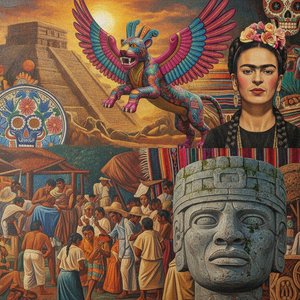
Vibrant Visions: A Definitive Guide to the Masterpieces of Mexican Art History
Explore the profound legacy of Mexican art history, from the monumental murals of 'The Big Three' to the intimate surrealism of Frida Kahlo. A scholarly guide for art lovers seeking deep historical context and the beauty of masterwork reproductions.
Explore obras de arte organizadas por temas, estilos y características.


