


 Vista previa
 Compartir
 Compartir
 Ver detalles
 Guía
Guía

 Descargar
 Ver artículos similares
 Radiografía
 Presentación de diapositivas
 Estadísticas
Three Top Sergeants


George Luks's 'Three Top Sergeants' (1925) captures camaraderie among musicians in a dynamic, realist style reflecting the Ashcan School. A vibrant depiction of urban life and musical passion.
 Leer más
Descubre la cruda realidad de George Luks (1867-1933), figura clave del Ashcan School. Explora sus vibrantes pinturas urbanas, capturando la energía y las luchas de EEUU a principios del siglo XX.
Giclée / Impresión de arte
Impresiones giclée o en lienzo de calidad de museo con producción rápida y opciones de acabado flexibles. ( Encargar reproducción pintada a mano Ver versión en imagen digital)




P118B €10

P118H €10

P118W €10

P438Z €10

P508JH €12

P508YH €12

P805H €10

P805Z €10

P919BZ €10

P919G €10

P919XJ €10

P959ZH €10

P968JZ €12

W106C €8

W218G €10

W218JH €8

W218Y €10

W307PJ €10

W316G €10

W316PJ €8

W316Y €10

W398PJ €8

W4111J €10

W500HY €15

W500JH €15

W692G €12

W849H €8

W940BG €15

W953PJ €8




Estándar
personalizado
CM
INCH
Elija entre nuestros tamaños predefinidos que respetan las proporciones originales de la obra.
Loading sizes...

ancho
altura
Introduzca el ancho y el alto que necesite para adaptarse a su marco o pared. Una impresión solo puede recortarse, nunca hacerse más grande que la imagen original, por lo que un tamaño con una forma distinta perderá parte de la obra. Le enviaremos una maqueta digital para su aprobación antes de realizar cualquier impresión. La imagen que se muestra en esta página no refleja el recorte real; solo la maqueta lo hace.
Envío a todo el mundo () en 2 semanas en lugar de las 4/5 semanas estándar. (22 octubre)

Envío exprés gratuito a todo el mundo

Lienzo de lino de alta calidad

Seguro de envío completo

Garantía de reembolso de impuestos aduaneros

Garantía de fidelidad cromática exacta

Política de devolución de 100 días (solo por defectos)

Garantía de devolución del 100% del dinero

Oferta por volumen
 La opción de vidrio solo está disponible en tamaños inferiores a 110 cm.

Three Top Sergeants
Giclée / Impresión de arte
Tamaño de la reproducción
-


Precio total
€ 61
A Snapshot of Urban Grit: George Benjamin Luks’s “Three Top Sergeants”
George Benjamin Luks's "Three Top Sergeants," painted in 1925, isn’t merely a depiction of three men playing musical instruments; it’s a vibrant distillation of early 20th-century American life—a raw, honest portrayal of camaraderie and the shared pursuit of joy amidst the often-grim realities of urban existence. The painting immediately draws the eye with its dynamic composition and bold use of color, a hallmark of Luks's distinctive style within the Ashcan School movement. It’s a scene brimming with energy, capturing a fleeting moment of connection against a backdrop of shadowed intimacy.
Luks, born in Williamsport, Pennsylvania, to Polish and German immigrant parents, brought a deeply rooted empathy for the working class to his art. His early life, shaped by witnessing poverty and hardship, instilled within him an acute awareness of human resilience and the importance of community. This background profoundly influenced his artistic vision, leading him to eschew idealized representations in favor of gritty realism that exposed the complexities and struggles of everyday people. His time as a vaudeville performer further honed his observational skills and understanding of human behavior – elements he expertly translated onto canvas.
The Ashcan School and Luks’s Distinctive Style
“Three Top Sergeants” firmly places itself within the context of the Ashcan School, an American art movement that emerged in New York City around the turn of the 20th century. Rejecting the academic traditions of the time, Ashcan artists sought to depict contemporary urban life with unflinching honesty and a rejection of romanticized notions. Luks’s work is characterized by its loose brushwork, vibrant color palette, and focus on ordinary subjects—street musicians, dockworkers, and immigrants—often rendered in dynamic poses and engaging compositions. He deliberately avoided polished surfaces, opting for a more immediate and visceral impact.
Notice the artist's masterful use of light and shadow. The scene is bathed in a muted, almost theatrical darkness, drawing attention to the figures illuminated by the warm glow emanating from their instruments. This strategic lighting not only creates visual interest but also subtly suggests a sense of intimacy and shared experience—a private moment of connection within the bustling city.
A Symphony of Instruments and Human Connection
The composition itself is meticulously crafted to convey a feeling of lively interaction. The three men – one playing a pipe organ, another a guitar, and the third a violin – are clustered closely together, their faces animated with concentration and enjoyment. Each instrument contributes to the overall musical narrative, while simultaneously symbolizing different facets of human expression. The pipe organ represents authority and tradition, the guitar embodies spontaneity and passion, and the violin evokes elegance and refinement.
The painting’s title, “Three Top Sergeants,” hints at a deeper layer of meaning. Sergeants were often associated with military precision and order, yet here they are relaxed, unbuttoned, and engaged in a shared activity—a deliberate subversion of expectations that underscores Luks's broader critique of societal norms. It’s a subtle commentary on the potential for harmony and connection to exist even within seemingly rigid structures.
Symbolism and Emotional Resonance
Beyond its immediate depiction, “Three Top Sergeants” resonates with themes of community, shared passion, and the enduring power of human connection. The act of playing music together transcends social barriers and creates a space for mutual understanding and appreciation. The painting’s raw energy and emotional intensity invite viewers to contemplate their own experiences of belonging and the importance of finding joy amidst adversity.
Reproductions of this powerful work offer a remarkable opportunity to bring Luks's evocative vision into any setting, adding a touch of urban grit and soulful warmth. It’s a testament to the artist’s ability to capture the essence of human experience with both honesty and grace—a timeless reminder that even in the midst of chaos, moments of connection can illuminate our lives.
Preguntas y respuestas
¿Cuál es el formato de "Three Top Sergeants"?
"Three Top Sergeants" de George Benjamin Luks es una composición en Landscape. Se recomienda revisar las proporciones antes de elegir un tamaño de impresión.
¿Está "Three Top Sergeants" disponible como una impresión de bellas artes?
"Three Top Sergeants" está disponible como una impresión de bellas artes sobre lienzo de algodón o papel de lienzo de archivo. Los pedidos se realizan en su página Impresión de bellas artes, en el tamaño de su elección.
¿Puedo ver "Three Top Sergeants" como una presentación de diapositivas a pantalla completa?
El diaporama de "Three Top Sergeants" puede verse en la página Presentación de diapositivas de la obra.
Obras relacionadas


Biografía del artista
Una vida de expresión vigorosa
George Benjamin Luks, un artista y ilustrador realista estadounidense, dejó una huella indeleble en el mundo del arte con sus pinturas de género sobre temas urbanos, ejemplificando la Escuela Ashcan del arte americano. Nacido en Williamsport, Pensilvania, hijo de inmigrantes centroeuropeos, la vida de Luks fue un testimonio del crisol americano.Primeros años e influencias
Luks comenzó su carrera en el vodevil, actuando con su hermano menor a principios de la década de 1880. Sin embargo, pronto se dedicó a perseguir una carrera como artista. Sus breves estudios en la Academia de Bellas Artes de Pensilvania y sus viajes posteriores a Europa, donde asistió a varias escuelas de arte, sentaron las bases para su futuro éxito.Estilo artístico y obras notables
El estilo artístico de Luks se caracterizó por pinceladas vigorosas y un enfoque en capturar la esencia de la vida urbana. Algunas de sus obras más destacadas incluyen:- El taxista (óleo), un testimonio de su capacidad para capturar los aspectos mundanos pero vibrantes de la vida en la ciudad.
- Niño sulky (óleo), que muestra su habilidad para retratar la figura humana con profundidad y emoción.
- Pueblo minero de carbón (acuarela), un reflejo de su vida temprana cerca de pueblos mineros de carbón, que influyó en su elección de temas.
Legado e influencia
Como parte de "The Eight", Luks jugó un papel fundamental en la configuración del modernismo americano. Su influencia puede verse en las obras de artistas posteriores que buscaron capturar la experiencia urbana. Para obtener más información sobre las contribuciones de Luks al arte estadounidense, visite la colección de TopImpressionists.Desarrollo y significado histórico
El realismo social de Luks, particularmente su representación sin adornos de la vida urbana en Nueva York a principios del siglo XX, lo convirtió en una figura clave de la Escuela Ashcan. A diferencia de los artistas que idealizaban el paisaje o se centraban en temas históricos, Luks eligió representar las calles bulliciosas, los trabajadores y los barrios marginales de la ciudad. Su trabajo no solo documentó la realidad social de su tiempo, sino que también desafió las convenciones artísticas al rechazar la estética académica tradicional. Su enfoque directo y honesto sentó las bases para movimientos artísticos posteriores como el realismo americano y el arte socialmente comprometido. Luks contribuyó a legitimar la representación de temas urbanos y cotidianos en el arte, abriendo camino a una nueva generación de artistas que buscaban reflejar la complejidad y la diversidad de la experiencia estadounidense moderna.
George Benjamin Luks
1867 - 1933 , Estados Unidos de América
Datos clave
- Artistas Influenciados Por Este Artista: ['Artistas posteriores urbanos']
- Estilo Artístico: Pinceladas vigorosas, vida urbana
- Lugar De Nacimiento: Williamsport, EE. UU.
- Movimiento Artístico: Realismo americano, Ashcan School
- Nacionalidad: Estadounidense
- Nombre Completo: George Benjamin Luks
- Obras Notables:
- The Cabby
- Sulky Boy
- Coal Mining Town
Artículos relacionados

Capturing the Grey Light: A Journey Through the Soulful Atmosphere of the Hague School
Explore the evocative beauty of the Hague School. Discover how Dutch masters captured the soulful 'grey light' through atmospheric realism and tonalism, paving the way for Impressionism. A deep dive into the misty landscapes and emotional depth of this legendary art movement.
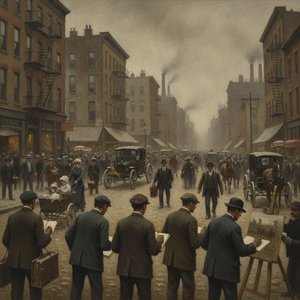
The Ashcan School: Capturing the Raw, Unfiltered Soul of Urban Life through American Realism
Discover the raw beauty of the Ashcan School. Explore how masters like Bellows and Henri captured the gritty, vibrant soul of early 20th-century New York through profound American Realism and evocative urban landscapes.
Explore obras de arte organizadas por temas, estilos y características.


