

 Ver en contexto
 Enviar
 Compartir
 Detalles
 Guía
Guía

 Descargar
 Similares
 Radiografía
 Presentación de diapositivas
 Preguntas y respuestas
 Estadísticas
Há-tchoo-túc-knee, Snapping Turtle, a Half-breed

- 73.0 x 60.0 cm


George Catlin's "Há-tchoo-túc-knee" captures a Native American man with striking detail and cultural significance. Explore this powerful portrait from 1834, showcasing Catlin’s pioneering work documenting Indigenous life.
 Ver más
Descubre a George Catlin (1796-1872), pionero pintor estadounidense conocido por sus retratos y representaciones de la vida nativa americana en la frontera. ¡Explora su arte cautivador!
Giclée / Impresión de arte
Impresiones giclée o en lienzo de calidad de museo con producción rápida y opciones de acabado flexibles. ( Comprar pintura hecha a mano Cambiar a imagen digital)




P118B €10

P118H €10

P118W €10

P438Z €10

P508JH €12

P508YH €12

P805H €10

P805Z €10

P919BZ €10

P919G €10

P919XJ €10

P959ZH €10

P968JZ €12

W106C €8

W218G €10

W218JH €8

W218Y €10

W307PJ €10

W316G €10

W316PJ €8

W316Y €10

W398PJ €8

W4111J €10

W500HY €15

W500JH €15

W692G €12

W849H €8

W940BG €15

W953PJ €8




Tamaño estándar
a medida
CM
INCH
Elija entre nuestros tamaños predefinidos que respetan las proporciones originales de la obra.
Loading sizes...

ancho
altura
Introduzca el ancho y el alto que necesite para adaptarse a su marco o pared. Una impresión solo puede recortarse, nunca hacerse más grande que la imagen original, por lo que un tamaño con una forma distinta perderá parte de la obra. Le enviaremos una maqueta digital para su aprobación antes de realizar cualquier impresión. La imagen que se muestra en esta página no refleja el recorte real; solo la maqueta lo hace.
Envío a todo el mundo () en 2 semanas en lugar de las 4/5 semanas estándar. (5 noviembre)

Envío exprés gratuito a todo el mundo

Lienzo de lino de alta calidad

Seguro de envío total

Garantía de reembolso de aranceles aduaneros

Garantía de fidelidad cromática exacta

Política de devolución de 100 días (solo por defectos)

Garantía de devolución del 100% del dinero

Descuento por cantidad
 La opción de vidrio solo está disponible en tamaños inferiores a 110 cm.

Há-tchoo-túc-knee, Snapping Turtle, a Half-breed
Giclée / Impresión de arte
Dimensiones de la reproducción
-


Precio total final
€ 62
The Visionary’s Gaze: George Catlin and the Soul of the Plains
George Catlin's “Há-tchoo-túc-knee, Snapping Turtle, a Half-breed,” painted in 1834, isn’t merely a portrait; it’s a carefully constructed window into a vanishing world. This arresting image transcends the simple depiction of an individual, becoming instead a poignant meditation on identity, cultural exchange, and the encroaching tide of Western expansion. Catlin, driven by a deep empathy for Native American tribes facing relentless displacement, embarked on a radical artistic project: to capture their essence not through romanticized stereotypes, but with unflinching honesty and profound respect. The painting’s power lies in its ability to convey both the subject's inherent dignity and the complex circumstances of his existence as a ‘half-breed,’ caught between two worlds.

A Man of Two Worlds: Symbolism and Portraiture
The subject himself is immediately compelling – a man radiating quiet strength and contemplative awareness. His posture, seated with folded arms, suggests both dignity and a certain weariness, hinting at the burdens carried by someone navigating a world that doesn’t fully accept him. The vibrant blue jacket, adorned with intricate red designs, speaks to his status and perhaps a connection to tribal traditions – a visual assertion of belonging within a complex social landscape. The feathered headdress, a potent symbol of leadership and spiritual authority, elevates the figure beyond a simple portrait; it's a declaration of heritage. The snapping turtle itself, rendered with remarkable detail, is not just an animal subject but a powerful emblem of the American West – a resilient creature embodying the spirit of survival in a harsh environment.
Catlin’s technique is characterized by his signature “border painting” style. He deliberately left unpainted areas around the figure, creating a sense of depth and drawing attention to the subject's form. This technique, coupled with his use of bold colors and expressive brushstrokes, imbues the portrait with a dynamic energy that belies its stillness. The muted background serves as a deliberate framing device, emphasizing the individual’s presence and directing the viewer’s gaze directly upon him.
Historical Context: A Bridge Between Cultures
“Há-tchoo-túc-knee, Snapping Turtle, a Half-breed” was created during a pivotal moment in American history – the era of westward expansion and the systematic displacement of Native American tribes. Catlin’s work represents a crucial attempt to document these cultures before they were irrevocably lost. He wasn't simply an observer; he actively sought to understand and portray the lives, customs, and beliefs of the people he encountered. His travels through the Plains territories provided him with unparalleled access to indigenous communities, allowing him to capture their essence in a way that few artists had previously attempted. The painting reflects the complex realities of this period – the blending of cultures, the tensions between tradition and modernity, and the tragic consequences of colonization.
A Legacy of Representation: Reproduction and Artistic Impact
Today, “Há-tchoo-túc-knee, Snapping Turtle, a Half-breed” stands as a testament to Catlin’s artistic vision and his commitment to preserving the stories of Native American tribes. TopImpressionists offers meticulously crafted hand-painted reproductions that faithfully capture the painting's original detail and emotional resonance. These reproductions provide an opportunity to bring this powerful work into your home or office, serving not only as a beautiful piece of art but also as a reminder of a complex and often overlooked chapter in American history. The reproduction allows you to appreciate Catlin’s masterful use of color, composition, and symbolism, while simultaneously honoring the legacy of the subject he so powerfully depicted.
Preguntas y respuestas
¿Qué estado de ánimo y emoción se entrelazan en "Há-tchoo-túc-knee, Snapping Turtle, a Half-breed"?
En "Há-tchoo-túc-knee, Snapping Turtle, a Half-breed", un ambiente Serenidad acompaña a una emoción Contemplativo.
¿Es "Há-tchoo-túc-knee, Snapping Turtle, a Half-breed" de George Catlin una obra de tonos claros u oscuros?
"Há-tchoo-túc-knee, Snapping Turtle, a Half-breed" de George Catlin presenta un nivel de brillo de sombra, con una luminancia de Sombra suave.
¿Puedo ver "Há-tchoo-túc-knee, Snapping Turtle, a Half-breed" como una presentación de diapositivas a pantalla completa?
Disponible una presentación de diapositivas: la página Galería de imágenes de "Há-tchoo-túc-knee, Snapping Turtle, a Half-breed" de George Catlin.
Biografía del artista
Primeros Años y Carrera
- Nacimiento: 26 de julio de 1796, Wilkes-Barre, Condado de Luzerne, Pensilvania
- Fallecimiento: 23 de diciembre de 1872
- La fascinación de Catlin por los nativos americanos fue despertada por las historias de su madre sobre la frontera occidental y su captura por una tribu.
- Sus primeros trabajos incluyeron grabados de sitios a lo largo de la ruta del Canal de Erie en el estado de Nueva York, publicados en el memorándum de Cadwallader D. Colden.
Contribuciones Artísticas & Estilo
- El enfoque principal de Catlin se convirtió en documentar la vida y la cultura nativa americana a través de la pintura.
- Realizó cinco expediciones al oeste americano durante la década de 1830, observando meticulosamente y registrando sus experiencias.
- Obras Notables:
- Juego de Pelota de los Choctaw – Muestra atención al detalle y captura de la cultura nativa americana.
- Mó-sho-la-túb-bee, Él que Apaga y Mata, Jefe de la Tribu – Demuestra habilidad en el retrato y dedicación a preservar el patrimonio.
- Una Mujer Seminola – Destaca su capacidad para capturar belleza y dignidad.
- Estilo: El estilo de Catlin se caracteriza por el realismo, los colores vibrantes y un deseo de representar con precisión las costumbres y tradiciones nativas americanas. A menudo incluía fondos detallados y paisajes para proporcionar contexto a sus sujetos.
Logros Mayores & La Galería India
- Catlin creó una extensa colección de más de 500 pinturas que representan varias tribus y aspectos de sus vidas.
- Compiló estas obras en lo que se conoció como la "Galería India", un registro visual completo de la cultura nativa americana.
- La Galería India fue exhibida en Londres, París y Berlín, obteniendo reconocimiento internacional para el trabajo de Catlin.
- Sus publicaciones, incluyendo Manners, Customs, and Condition of the North American Indians (1841) y Last Rambles Amongst the Indians of the Rocky Mountains and the Andes (1868), solidificaron aún más su reputación como una autoridad sobre la cultura nativa americana.
Vida Posterior & Significado Histórico
- Catlin pasó sus últimos años intentando vender su Galería India al gobierno de los Estados Unidos, enfrentándose a rechazos iniciales.
- Recreó más de 400 pinturas en una "colección de cartones".
- A pesar de los desafíos, el trabajo de Catlin ha tenido un impacto duradero en la forma en que se representan a los nativos americanos en el arte y la cultura popular.
- Significado Histórico: La documentación meticulosa de Catlin proporciona valiosas perspectivas sobre las vidas de las tribus nativas americanas antes de cambios culturales significativos debido a la expansión hacia el oeste. Su trabajo se considera un importante registro histórico, así como un logro artístico.
Influencias & Información Adicional

George Catlin
1796 - 1872 , Estados Unidos de América
Datos clave
- Fecha De Fallecimiento: 23 de diciembre de 1872
- Fecha De Nacimiento: 26 de julio de 1796
- Lugar De Nacimiento: Wilkes-Barre, EE. UU.
- Movimiento Artístico: Pintura de frontera
- Nacionalidad: Estadounidense
- Nombre Completo: George Catlin
- Obras Notables:
- Juego de pelota de los Choctaw
- Mó-sho-la-túb-bee, Jefe
- Una mujer seminola
- Praderas ardientes
- Little Wolf, Guerrero famoso
Artículos relacionados

Henry Farny: Romantic Visions of the American West & Indigenous Life
Explore the evocative paintings of Henry Farny, renowned for his romantic realism & depictions of Native American life in the 19th-century West. Discover his legacy and key artworks at TopImpressionists.
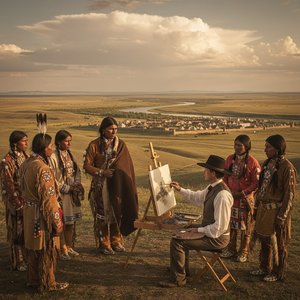
George Catlin: Witnessing & Representing Indigenous Life on the American Frontier
Explore the captivating art of George Catlin, renowned for his vivid portraits & landscapes documenting Native American life on the frontier. Discover a vanishing world through stunning paintings and historical context.

Georges Seurat: Las 25 Obras Maestras del Pionero Puntillista | TopImpressionists
Descubre las 25 obras maestras de Georges Seurat, el innovador del puntillismo. Explora su técnica única, colores vibrantes y legado artístico en TopImpressionists.com. Reproducciones de arte de museo para tu hogar.

Maestría Cubista: Las 25 mejores obras de Georges Braque
Explora las 25 obras maestras de Georges Braque y el cubismo. Encuentra reproducciones de museo en TopImpressionists.com.

Charles Bird King: Capturing Native American Dignity Through Portraiture & Cultural Exchange
Explore the captivating portraits of Charles Bird King, renowned for his depictions of Native American leaders. Discover the historical context, artistic techniques, and collecting value of these significant 19th-century artworks.
Explore obras de arte organizadas por temas, estilos y características.


