


 Ver en contexto
 Enviar
 Compartir
 Detalles
 Guía
Guía

 Descargar
 Similares
 Radiografía
 Presentación de diapositivas
 Estadísticas
Cliff Dwellers


Explore George Bellows’ ‘Cliff Dwellers’ & ‘Emma in the Purple Dress.’ Captivating urban scenes by Ashcan School artist, showcasing dynamic city life in oil on canvas.
 Ver más
Descubre George Bellows (1882-1925), realista estadounidense clave. Explora su estilo Ashcan, pinceladas audaces y vibrantes escenas de NYC en TopImpressionists.
Giclée / Impresión de arte
Impresiones giclée o en lienzo de calidad de museo con producción rápida y opciones de acabado flexibles. ( Comprar pintura hecha a mano Cambiar a imagen digital)




P118B €10

P118H €10

P118W €10

P438Z €10

P508JH €12

P508YH €12

P805H €10

P805Z €10

P919BZ €10

P919G €10

P919XJ €10

P959ZH €10

P968JZ €12

W106C €8

W218G €10

W218JH €8

W218Y €10

W307PJ €10

W316G €10

W316PJ €8

W316Y €10

W398PJ €8

W4111J €10

W500HY €15

W500JH €15

W692G €12

W849H €8

W940BG €15

W953PJ €8




Tamaño estándar
a medida
CM
INCH
Elija entre nuestros tamaños predefinidos que respetan las proporciones originales de la obra.
Loading sizes...

ancho
altura
Introduzca el ancho y el alto que necesite para adaptarse a su marco o pared. Una impresión solo puede recortarse, nunca hacerse más grande que la imagen original, por lo que un tamaño con una forma distinta perderá parte de la obra. Le enviaremos una maqueta digital para su aprobación antes de realizar cualquier impresión. La imagen que se muestra en esta página no refleja el recorte real; solo la maqueta lo hace.
Envío a todo el mundo () en 2 semanas en lugar de las 4/5 semanas estándar. (26 octubre)

Envío exprés gratuito a todo el mundo

Lienzo de lino de alta calidad

Seguro de envío total

Garantía de reembolso de aranceles aduaneros

Garantía de fidelidad cromática exacta

Política de devolución de 100 días (solo por defectos)

Garantía de devolución del 100% del dinero

Descuento por cantidad
 La opción de vidrio solo está disponible en tamaños inferiores a 110 cm.

Cliff Dwellers
Giclée / Impresión de arte
Dimensiones de la reproducción
-


Precio total final
€ 61
A Window into Early 20th Century Urban Life
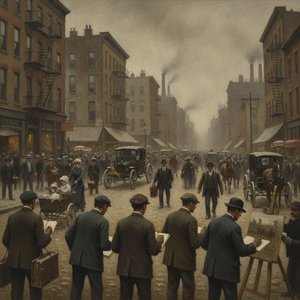
George Wesley Bellows’ *Cliff Dwellers* (1913) is a powerful and evocative depiction of city life in the early 20th century, capturing a moment frozen in time amidst the bustling energy of an unnamed metropolis. Far from a romanticized view, Bellows presents a raw and honest portrayal of urban existence – a teeming landscape of humanity packed into dense surroundings. The painting isn’t about grand monuments or picturesque scenes; it's about *people*—their daily routines, their interactions, and the sheer density of modern life. This focus aligns Bellows firmly with the Ashcan School, a group dedicated to realistically portraying all aspects of American life, including its less glamorous corners.Dynamic Composition & Painterly Technique
The composition is deliberately dynamic, almost overwhelming in its energy. Bellows employs a high vantage point, looking down upon the street scene, which intensifies the feeling of being immersed within the crowd. Figures are tightly packed, creating a sense of claustrophobia and movement. His brushwork is loose and expressive, characteristic of his style – thick impasto builds texture and emphasizes the physicality of the paint itself. The dramatic interplay of light and shadow isn’t merely descriptive; it sculpts forms and directs the viewer's eye through the chaotic scene. Notice how Bellows doesn’t shy away from depicting the grit and grime of the city, adding to the painting’s authenticity. This technique is reminiscent of Impressionism but infused with a distinctly American realism.Symbolism & Historical Context
The title *Cliff Dwellers* itself is significant. It evokes images of ancient civilizations building homes into rock faces – a metaphor for how city dwellers were, in a sense, “stacked” upon one another in increasingly tall buildings. The fire escape, prominently featured near the center, becomes a symbol of both necessity and confinement within this urban environment. Painted during a period of rapid industrialization and immigration, *Cliff Dwellers* reflects the social changes transforming American cities. It’s a visual document of an era marked by both opportunity and hardship, capturing the anxieties and excitement of modern life. The painting isn't simply a depiction; it is a commentary on the human condition within the burgeoning urban landscape.Emotional Resonance & Lasting Appeal
Despite its realistic portrayal, *Cliff Dwellers* evokes a complex range of emotions. There’s a sense of anonymity and isolation amidst the crowd, yet also a feeling of shared experience and community. The painting doesn't offer easy answers or judgments; it simply presents a slice of life, inviting viewers to contemplate their own relationship to the urban environment. Its enduring appeal lies in its ability to resonate with contemporary audiences, as themes of urbanization, social connection, and the challenges of modern living remain relevant today. For collectors and interior designers, *Cliff Dwellers* offers a bold statement piece – a visually striking work that sparks conversation and adds depth to any space.Preguntas y respuestas
¿Qué edad tenía George Wesley Bellows cuando se creó "Cliff Dwellers"?
George Wesley Bellows tenía 31 años cuando creó "Cliff Dwellers" en 1913. La edad se calcula a partir del año de nacimiento del artista, 1882.
¿Puedo examinar "Cliff Dwellers" con más detalle?
La página Radiografía de "Cliff Dwellers" de George Wesley Bellows es un visor interactivo que permite explorar once capas ópticas de la obra, incluyendo una vista de estilo radiografía.
¿Cómo se relaciona el tema de "Cliff Dwellers" con la temática habitual de George Wesley Bellows?
Los temas recurrentes de George Wesley Bellows incluyen robert henri's realism, impressionist techniques, american urban life", social inequality, urban american experience, "ashcan, early nyc depictions; "Cliff Dwellers" se centra en urban landscape, city street scene, american art”, “crowded city”, "early 20th century", "social commentary", realist painting”.
Biografía del artista
Primeros años y educación
George Wesley Bellows, una figura destacada en el arte americano, nació el 12 o 19 de agosto de 1882 en Columbus, Ohio. Era hijo único de George Bellows y Anna Wilhelmina Smith Bellows. Su infancia temprana estuvo marcada por su inclinación hacia el arte, como lo demuestran sus dibujos incluso antes de comenzar la escuela primaria.Trayectoria artística
La trayectoria artística de Bellows comenzó con ilustración comercial y finalmente lo llevó a dedicarse a la pintura. Se matriculó en la Universidad Estatal de Ohio (1901-1904), donde jugó para los equipos de béisbol y baloncesto, consolidando aún más su destreza atlética. Sin embargo, su verdadera pasión residía en el arte, lo que lo impulsó a mudarse a Nueva York en 1904 para estudiar bajo la tutela de Robert Henri.- George Wesley Bellows se asoció con "The Eight" y la Escuela Ashcan, abogando por la representación de la sociedad americana contemporánea.
- En 1906, estableció un estudio en el número 1947 de Broadway Street, marcando el comienzo de su prolífica carrera.
- Su primera exposición notable en 1908 presentó estudios urbanos, que, aunque algunos críticos los consideraron pintados de manera tosca, también se encontraron audazmente atrevidos e innovadores.
Obras notables y contribuciones
Obras clave:- Central Park (Club de la Facultad de la Universidad Estatal de Ohio, Estados Unidos, óleo sobre lienzo) - un testimonio de su habilidad para capturar la vida urbana.
- Los alemanes llegan (1918) - una serie de litografías y pinturas que representaban gráficamente las atrocidades cometidas por Alemania durante su invasión de Bélgica.
- El Museo de Arte Moderno (Nueva York, Reino Unido) - aunque no presenta exclusivamente sus obras, representa el contexto más amplio del arte moderno en el que Bellows prosperó.
- La Biblioteca Pública de Nueva York - aunque no es específicamente conocida por albergar sus obras, sus colecciones y programas de arte reflejan la vibrante escena artística que influyó en su carrera.
Influencias y desarrollo artístico
Bellows fue profundamente influenciado por Robert Henri, quien lo animó a pintar los sujetos cotidianos de la vida urbana. Esta influencia se evidencia en las obras tempranas de Bellows, que capturan con realismo y vitalidad la vida de los barrios bajos de Nueva York. Además, estudió a los maestros europeos, buscando inspiración en sus obras durante visitas a museos. Su estilo evolucionó desde un realismo crudo hacia una mayor expresividad y dinamismo, incorporando elementos del impresionismo y el modernismo. Experimentó con diversas técnicas, incluyendo la pintura al óleo, el dibujo a lápiz y la litografía, desarrollando un lenguaje visual único que combinaba precisión técnica con una poderosa carga emocional.Legado e importancia histórica
George Wesley Bellows falleció el 8 de enero de 1925, pero su legado como "el artista americano más aclamado de su generación" (según el Museo de Arte de Columbus) perdura. Sus audaces representaciones de la vida urbana en Nueva York continúan inspirando e influyendo al arte contemporáneo. Su capacidad para capturar la energía y el dinamismo de la ciudad, así como su compromiso con la representación honesta de la realidad social, lo convierten en una figura clave del realismo americano y un precursor del arte moderno.- Vea más obras de George Wesley Bellows en TopImpressionists.com
- Explore la colección del Museo de Arte Moderno (Nueva York, Reino Unido) en TopImpressionists.com
- Aprenda más sobre las colecciones y programas de arte de la Biblioteca Pública de Nueva York en TopImpressionists.com
Referencias

George Wesley Bellows
1882 - 1925 , Estados Unidos de América
Datos clave
- Artistas Que Influyeron: ['Robert Henri']
- Fecha De Muerte: 8 de enero de 1925
- Fecha De Nacimiento: 12 o 19 de agosto de 1882
- Lugar De Nacimiento: Columbus, Estados Unidos
- Movimiento Artístico: Ashcan School, Realismo americano
- Nacionalidad: Estadounidense
- Nombre Completo: George Wesley Bellows
- Obras Notables:
- Central Park
- The Germans Arrive
- Margarita
Artículos relacionados

The Soul of Impressionism: Why Oil on Canvas Captures Eternal Light and Timeless Emotion
Discover the enchanting alchemy of Impressionism. Explore how the mastery of oil on canvas, through glazing and impasto, captures eternal light and emotion. Perfect for lovers of Monet and Van Gogh seeking the profound depth of hand-painted fine art.
The Ashcan School: Capturing the Raw, Unfiltered Soul of Urban Life through American Realism
Discover the raw beauty of the Ashcan School. Explore how masters like Bellows and Henri captured the gritty, vibrant soul of early 20th-century New York through profound American Realism and evocative urban landscapes.

The Unvarnished Truth: A Cultural Journey Through the Soul of American Realism
Explore the profound beauty of American Realism. From the Ashcan School's urban grit to intimate portraits, discover how artists captured the authentic soul of a nation through unvarnished truth and masterful observation.
Explore obras de arte organizadas por temas, estilos y características.


