Atelier — Envío gratuito a todo el mundo — Plazo de entrega: 2–6 semanas
Lista de deseos Carrito
PreviewPreview Comprar impresión Comprar impresiónComprar imagen en alta resolución Comprar imagen en alta resolución EnviarEnviar
DetallesDetalles Añadir a favoritos Añadir a favoritos DescargarDescargar SimilaresSimilares RadiografíaRadiografía Presentación de diapositivasPresentación de diapositivas

The marble table

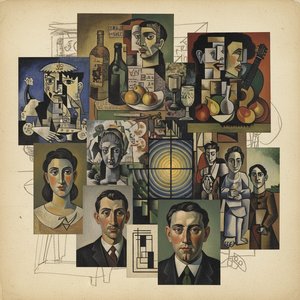
Georges Braque’s ‘The Marble Table’ presents a captivating Cubist scene of a dining table laden with fruit and objects, reflecting the artist's innovative approach to form and space. Explore this iconic work and bring home a unique piece of art history.

Explore la vida y el arte de Georges Braque (1882-1963), una figura clave en la pintura del siglo XX. Pionero del Cubismo junto a Picasso, conocido por el Fauvismo, el collage y formas geométricas innovadoras. Descubre su legado en TopImpressionists!

Reproducción al óleo hecha a mano

Óleo sobre lienzo pintado a mano en el tamaño y marco de su elección, realizado por encargo por nuestros artistas.

P118B $10
P118H $10
P118W $10
P438Z $10
P508JH $12
P508YH $12
P805H $10
P805Z $10
P919BZ $10
P919G $10
P919XJ $10
P959ZH $10
P968JZ $12
W106C $8
W218G $10
W218JH $8
W218Y $10
W307PJ $10
W316G $10
W316PJ $8
W316Y $10
W398PJ $8
W4111J $10
W500HY $15
W500JH $15
W692G $12
W849H $8
W940BG $15
W953PJ $8

Standard
custom
CM
INCH

Elija entre nuestros tamaños predefinidos que respetan las proporciones originales de la obra.

ancho
altura

Puede ingresar sus propias dimensiones para adaptarse a un marco o espacio específico. Si el tamaño seleccionado no coincide con las proporciones de la imagen original, recortaremos la obra o extenderemos la pintura con elementos adicionales pintados a mano. Se le enviará una maqueta digital para su aprobación antes de comenzar la producción.
Tenga en cuenta que la vista previa en pantalla no refleja el recorte o la extensión reales. Solo la maqueta mostrará con precisión la composición final.
Si bien existen tamaños personalizados, recomendamos seleccionar una dimensión de la lista predefinida para preservar las proporciones originales.

Ejemplos de lo que se puede personalizar: Reemplace el rostro con una foto del cliente; Agregue una mascota (por ejemplo, cambie un gato por un perro); Incluya un mensaje oculto en el fondo; Cambie el paisaje o los elementos del fondo.
Tras realizar el pedido, el equipo de TopImpressionists.com enviará un correo electrónico al cliente para solicitar instrucciones y proporcionarle una vista previa del boceto.

Entrega mundial () en 3-4 semanas en lugar de las 5 semanas estándar. (23 julio). Sin compromisos con la calidad.

why_choose_icon
Envío exprés gratuito a todo el mundo
why_choose_icon
Lienzo de lino de alta calidad
why_choose_icon
Seguro de envío total
why_choose_icon
Garantía de reembolso de impuestos aduaneros
why_choose_icon
Garantía de fidelidad de color
why_choose_icon
Política de devolución de 60 días (solo por defectos)
why_choose_icon
Garantía de devolución del 100% del dinero
why_choose_icon
Descuento por pedido múltiple

Precio total

-

reproduction

The marble table

Técnica de reproducción

Tamaño de la reproducción

-

Precio total final

-

Datos clave

  • Artist: Georges Braque
  • Artistic style: Analytical Cubism
  • Movement: Cubism
  • Notable elements: Fragmented forms, still life
  • Title: The Marble Table
  • Location: Private Collection
  • Medium: Oil on canvas

Descripción de la obra

Georges Braque’s ‘The Marble Table’: A Cubist Still Life of Domesticity

Georges Braque's “The Marble Table,” painted around 1910, is more than just a depiction of a dining table; it’s a pivotal moment in the birth of Cubism. This deceptively simple scene – a bowl of fruit, bottles, cups, and a chair arranged around a marble surface – embodies the radical shift Braque and Pablo Picasso were initiating within the art world. The painting isn't concerned with representing reality as we perceive it through a single viewpoint; instead, it dissects the object into fragmented geometric forms, presenting multiple perspectives simultaneously. This technique, born from a desire to capture not just appearance but also the underlying structure of objects, profoundly impacted subsequent artistic movements.

  • Subject Matter: The painting’s subject is remarkably ordinary – a domestic scene centered around a meal. However, Braque elevates this commonplace setting through his innovative approach to representation.
  • Cubist Technique: The fractured planes and overlapping forms are hallmarks of Cubism's early phase. Notice how the table itself is broken down into angular shapes, and the fruit appears simultaneously whole and dissected.
  • Color Palette: Braque employs a muted color palette – browns, ochres, and grays – characteristic of his exploration of tone and form during this period. This restrained use of color further emphasizes the geometric elements.

Historical Context and the Rise of Cubism

“The Marble Table” was created during a period of intense artistic experimentation in Paris at the turn of the 20th century. Braque, along with Picasso, was deeply influenced by Paul Cézanne’s emphasis on geometric forms and his exploration of multiple viewpoints. Cézanne's work provided a crucial theoretical framework for Cubism, encouraging artists to move beyond traditional illusionistic representation. The painting reflects the broader intellectual currents of the time – a fascination with science, technology, and the breakdown of established norms. It was a reaction against the representational conventions of Impressionism and Post-Impressionism, signaling a fundamental change in how artists perceived and depicted the world.

  • Influence of Cézanne: Braque’s use of geometric forms directly echoes Cézanne's explorations of volume and space.
  • Early Cubism: This work is considered an early example of Analytical Cubism, characterized by its monochromatic palette and fragmented representation.
  • Parisian Artistic Circle: The painting was created within a vibrant artistic community in Paris, fostering collaboration and intellectual exchange among artists like Braque, Picasso, Juan Gris, and Fernand Léger.

Symbolic Layers and Emotional Resonance

While seemingly straightforward, “The Marble Table” invites contemplation about the nature of perception and representation. The arrangement of objects – the fruit, the bottles – suggests a moment of quiet domesticity, perhaps a shared meal or conversation. However, Braque deliberately disrupts this sense of tranquility through his fractured perspective, forcing the viewer to actively engage with the image and reconstruct its meaning. The marble table itself, a symbol of permanence and stability, is ironically destabilized by the artist’s intervention. The painting evokes a feeling of quiet contemplation, inviting viewers to consider the complexities of everyday life and the challenges of representing reality through art.

  • Domesticity as Theme: The scene's focus on domestic objects reflects a broader interest in portraying modern life within the burgeoning field of Modern Art.
  • Disruption of Perspective: Braque’s fragmentation of space challenges traditional notions of depth and perspective, inviting viewers to question their own perceptions.
  • Emotional Impact: Despite its intellectual rigor, the painting possesses a subtle emotional resonance, capturing a fleeting moment of human connection within a fragmented world.

A Master Reproduction – Bringing Braque Home

TopImpressionists offers meticulously crafted hand-painted reproductions of “The Marble Table,” ensuring that you own a faithful and exquisite representation of this seminal work. Our skilled artisans employ traditional techniques, replicating Braque’s innovative approach with exceptional detail and accuracy. Whether for your art collection, interior design project, or as a thoughtful gift, a TopImpressionists reproduction allows you to experience the power and beauty of this iconic Cubist masterpiece firsthand.


Biografía del artista

**vida temprana y formación**

georges braque, un destacado pintor francés, collageador, dibujante, grabador y escultor, nació el 13 de mayo de 1882 en Argelo, Val-d'Oise. Creció en Le Havre y inicialmente se formó para ser pintor de casas y decorador, como su padre y abuelo. Sin embargo, las inclinaciones artísticas de Braque lo llevaron a estudiar pintura en la École des Beaux-Arts en Le Havre de 1897 a 1899.

**evolución artística y fauvismo**

En 1902, después de completar su aprendizaje con un decorador en París, Braque asistió a la Academia Humbert hasta 1904. Este período marcó su introducción al fauvismo, un estilo caracterizado por colores vibrantes y respuestas emocionales. Influenciado por las obras de henri matisse y andré derain, Braque adoptó un enfoque fauvista, como se ve en su pintura the patience (fauvismo, óleo sobre lienzo).

**contribución al cubismo**

La colaboración de Braque con pablo picasso desde 1908 hasta 1912 llevó al desarrollo del cubismo. Sus obras cubistas analíticas, como georges braque: the patience y pablo picasso: clarinet(cubismo analítico, óleo sobre lienzo), se consideran hitos en la historia del arte.

**legado y obras notables**

* Houses at l'Estaque: un testimonio del uso innovador de la geometría y la perspectiva simultánea de Braque. * The Patience(fauvismo, óleo sobre lienzo): demuestra el estilo fauvista de Braque. * Clarinet(cubismo analítico, óleo sobre lienzo): una obra cubista colaborativa con Picasso.

**museos y colecciones**

* Musée d'Orsay: presenta una extensa colección de arte impresionista y postimpresionista, incluyendo obras de Braque. * Musée de l'Orangerie: exhibe una amplia gama de obras de arte, incluyendo las de Braque y otros artistas notables. **Georges Braque's estilo innovador y su colaboración con Pablo Picasso continúan inspirando a artistas y entusiastas del arte.**
Georges Braque

Georges Braque

1882 - 1963 , Francia

Datos clave

  • Artistas Influenciados Por Este Artista: ['Pablo Picasso']
  • Artistas Que Influyeron:
    • Henri Matisse
    • André Derain
    • Paul Cézanne
  • Fecha De Muerte: 31 de agosto de 1963
  • Fecha De Nacimiento: 13 de mayo de 1882
  • Lugar De Nacimiento: Argenteuil, Francia
  • Movimiento Artístico: Cubismo, Fauvismo
  • Nacionalidad: Francés
  • Nombre Completo: Georges Braque
  • Obras Notables:
    • Casas en L'Estaque
    • La paciencia (Fauvismo)
    • Violin y Paleta
    • Mandola
Explore obras de arte organizadas por temas, estilos y características.
© TopImpressionists.com — Todos los derechos reservados  ·  100% Pintado a mano · Satisfacción garantizada · Envío gratuito a todo el mundo
VISA MASTERCARD