Vista previa
 Compartir
 Compartir
 Ver detalles
 Guía
Guía

 Descargar
 Ver artículos similares
 Radiografía
 Presentación de diapositivas
 Estadísticas
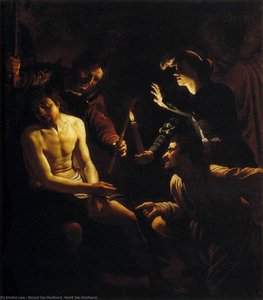
Saint Sebastian
 Acrylic On Canvas
- WallArt
- Baroque
 1623
1623 101.0 x 117.0 cm
 Galería Nacional
Experience the dramatic chiaroscuro of Gerard van Honthorst's 'Saint Sebastian'! This masterpiece captures the saint’s suffering with intense realism and masterful light, a cornerstone of Dutch Baroque art.
 Leer más
Descubre a Gerard van Honthorst (1590-1656), maestro del Siglo de Oro Neerlandés y figura clave del caravaggismo en Utrecht. Retratos, escenas bíblicas e influencia barroca.
Reproducción al óleo hecha a mano
Óleo sobre lienzo pintado a mano en el tamaño y marco de su elección, realizado por encargo por nuestros artistas. ( Cambiar a formato impreso Ver versión en imagen digital)




P118B €10

P118H €10

P118W €10

P438Z €10

P508JH €12

P508YH €12

P805H €10

P805Z €10

P919BZ €10

P919G €10

P919XJ €10

P959ZH €10

P968JZ €12

W106C €8

W218G €10

W218JH €8

W218Y €10

W307PJ €10

W316G €10

W316PJ €8

W316Y €10

W398PJ €8

W4111J €10

W500HY €15

W500JH €15

W692G €12

W849H €8

W940BG €15

W953PJ €8




Estándar
personalizado
CM
INCH
Elija entre nuestros tamaños predefinidos que respetan las proporciones originales de la obra.
Loading sizes...

ancho
altura
Escriba el ancho y el alto que necesite para adaptarse a su marco o a su pared. Al ser una obra pintada a mano, para un tamaño con una forma distinta, el artista puede pintar un poco más alrededor de la imagen o recortar un poco; usted elige. Le enviaremos una maqueta digital para su aprobación antes de comenzar la pintura. La imagen que se muestra en esta página no refleja el resultado real; solo la maqueta lo hace.
Ejemplos de lo que se puede personalizar: Reemplace el rostro con una foto del cliente; Agregue una mascota (por ejemplo, cambie un gato por un perro); Incluya un mensaje oculto en el fondo; Cambie el paisaje o los elementos del fondo.
Tras realizar el pedido, el equipo de TopImpressionists.com enviará un correo electrónico al cliente para solicitar instrucciones y proporcionarle una vista previa del boceto.
Tras realizar el pedido, el equipo de TopImpressionists.com enviará un correo electrónico al cliente para solicitar instrucciones y proporcionarle una vista previa del boceto.
Envío a todo el mundo () en 3-4 semanas en lugar de las 5 semanas estándar. (16 octubre). Sin comprometer la calidad.

Envío exprés gratuito a todo el mundo

Lienzo de lino de alta calidad

Seguro de envío completo

Garantía de reembolso de impuestos aduaneros

Garantía de fidelidad cromática exacta

Política de devolución de 100 días (solo por defectos)

Garantía de devolución del 100% del dinero

Oferta por volumen
 La opción de vidrio solo está disponible en tamaños inferiores a 110 cm.

Saint Sebastian
Técnica de reproducción
Tamaño de la reproducción
-


Precio total
€ 234
The Drama of Light and Shadow: Gerard van Honthorst’s Saint Sebastian
Gerard van Honthorst's 1623 depiction of Saint Sebastian is not merely a religious painting; it’s a masterclass in dramatic illumination, a testament to the artist’s profound understanding of light and shadow – a technique he famously adopted from the revolutionary Caravaggio. This arresting image transcends its biblical subject matter, becoming a study in human suffering, resilience, and the potent interplay between darkness and hope. The painting immediately commands attention with its stark contrasts, pulling the viewer into a scene of agonizing beauty, where every arrow wound is rendered with meticulous detail and imbued with an almost palpable sense of pain.
Honthorst’s Utrecht workshop produced numerous works influenced by Caravaggio's *tenebrism*, but this Saint Sebastian stands apart. Unlike earlier depictions that often focused on the saint’s idealized martyrdom, Honthorst presents a profoundly vulnerable figure. The composition is deliberately unbalanced; Sebastian, stripped of his armor and draped in simple robes, lies prone amidst a dark, undefined landscape. His body, pierced by a multitude of arrows – some still protruding, others embedded deep within his flesh – dominates the foreground, drawing our eye to the raw physicality of his ordeal. The artist doesn’t shy away from depicting the gruesome reality of Sebastian's suffering; the wounds are not softened or romanticized, but presented with unflinching honesty.
A Roman Masterpiece Rooted in Caravaggio’s Legacy
Honthorst’s journey to Rome in his youth proved transformative. He was deeply moved by Caravaggio’s radical approach to painting – the dramatic use of light and shadow, the intense realism, and the emotional depth conveyed through seemingly simple scenes. This encounter fundamentally shaped Honthorst's artistic style, leading him to prioritize creating a sense of theatricality and psychological intensity in his work. The influence is immediately apparent here; the deep shadows enveloping much of the scene create an atmosphere of suspense and foreboding, while strategically placed highlights accentuate Sebastian’s wounds and draw attention to his agonizing expression.
The painting's historical context is equally important. Sebastian was a Roman centurion martyred for his Christian faith during the reign of Diocletian. The story resonated deeply with the populace, particularly during periods of plague and unrest, and became associated with protection against disease. Honthorst’s depiction aligns perfectly with this contemporary belief; Sebastian's suffering becomes a symbol of endurance in the face of adversity, offering solace and hope to those enduring hardship. The presence of Irene, depicted tending to his wounds in later versions of the story (though not explicitly present here), further reinforces this theme of healing and divine intervention.
Symbolism and Emotional Resonance
Beyond its narrative content, Saint Sebastian is rich in symbolic meaning. The arrows themselves represent the physical and spiritual wounds inflicted upon the faithful by persecution. The stark contrast between light and shadow symbolizes the struggle between good and evil, hope and despair. Sebastian’s posture – his arms outstretched, his head bowed – conveys a profound sense of vulnerability and resignation, yet also hints at an underlying strength and unwavering faith. The artist masterfully captures the complex interplay of emotions—pain, suffering, acceptance, and ultimately, spiritual fortitude.
The painting's enduring power lies in its ability to evoke a visceral emotional response. It’s not simply a depiction of a historical event; it’s an exploration of human experience – the pain of loss, the resilience of the spirit, and the eternal struggle between darkness and light. Gerard van Honthorst’s Saint Sebastian remains a compelling testament to the artist's skill and his profound understanding of the human condition, offering viewers a timeless meditation on faith, suffering, and redemption.
Preguntas y respuestas
¿Cuál es la fecha de creación de "Saint Sebastian" de Gerard van Honthorst?
La creación de "Saint Sebastian" de Gerard van Honthorst data de 1623.
¿Se encuentra "Saint Sebastian" de Gerard van Honthorst en el país de origen del artista?
No; la obra se encuentra en el extranjero. Gerard van Honthorst nació en Países Bajos, y el original de "Saint Sebastian" se encuentra en un museo de United Kingdom.
¿De qué trata "Saint Sebastian" y qué atmósfera transmite?
"Saint Sebastian" de Gerard van Honthorst representa martyrdom, suffering, arrows, sebastian, irene, darkness, baroque, con un ambiente Dramatic. El tema y la atmósfera describen juntos la obra.
Biografía del artista
Primeros años y formación
Gerrit van Honthorst, un destacado pintor del Siglo de Oro neerlandés, nació el 4 de noviembre de 1590 en Utrecht, Países Bajos. Era hijo de un pintor decorativo y inicialmente se formó bajo la tutela de su padre. Posteriormente, continuó su educación artística con Abraham Bloemaert.Carrera e influencias
La carrera temprana de Van Honthorst incluyó una visita a Roma, donde fue fuertemente influenciado por el estilo de Caravaggio. Esta influencia es evidente en sus obras posteriores, particularmente en su uso de escenas iluminadas artificialmente, lo que le valió el apodo de "Gherardo delle Notti" o "Gerard de las noches". Tras su regreso a los Países Bajos, Van Honthorst se convirtió en un retratista líder.Patronazgo y encargos notables
El trabajo de Van Honthorst tuvo una gran demanda, con notables patronos que incluyen a Vincenzo Giustiniani, quien lo encargó para pintar "Cristo ante el sumo sacerdote", ahora alojado en la National Gallery de Londres. También trabajó para Cosimo II de' Medici, Gran Duque de Toscana, y fue un favorito entre la República Neerlandesa y en el extranjero.Legado y vida posterior
En 1620, Van Honthorst regresó a Utrecht, donde construyó una considerable reputación. Para 1623, el año de su matrimonio, se había convertido en presidente del gremio de San Lucas en Utrecht. Su éxito llevó a recomendaciones por parte de Sir Dudley Carleton para el Conde de Arundel y Lord Dorchester.Obras clave y colaboraciones
- "La toma de Cristo", una obra colaborativa inicialmente atribuida a Van Honthorst, ahora reconocida como obra de otro artista.
- "Cristo ante el sumo sacerdote", encargado por Vincenzo Giustiniani, muestra la habilidad de Van Honthorst para capturar escenas iluminadas artificialmente.
- Colaboraciones con otros artistas, como Peter Paul Rubens, demuestran su influencia en el estilo barroco flamenco.
Movimiento artístico y estilo
Van Honthorst formó parte del movimiento de los utrecht caravaggisti, caracterizado por su uso de una iluminación dramática y una profundidad emocional intensa. Su obra refleja la influencia del barroco italiano, al mismo tiempo que contribuye al desarrollo del Siglo de Oro neerlandés.
Gerard van Honthorst
1590 - 1656 , Países Bajos
Datos clave
- Artistas Influenciados:
- Rembrandt van Rijn
- Georges de la Tour
- Artistas Que Influyeron:
- Caravaggio
- Abraham Bloemaert
- Fecha De Nacimiento: 4 de noviembre de 1590
- Lugar De Nacimiento: Utrecht, Países Bajos
- Movimiento Artístico: Caravaggismo Utrechtano
- Nacionalidad: Neerlandés
- Nombre Completo: Gerard van Honthorst
- Obras Notables:
- Cristo ante el sumo sacerdote
- La toma de Cristo
- Escenas nocturnas iluminadas
Artículos relacionados

Sir Anthony van Dyck: Courtly Portraiture & the Shaping of Baroque Identity
Explore the life & legacy of Sir Anthony van Dyck, the leading court painter of his era. Discover his innovative portraiture, Baroque masterpieces, and investment potential for discerning collectors. Learn more at TopImpressionists.
Gerard van Honthorst: Illuminating the Dutch Golden Age with Caravaggism & Courtly Grace
Explore the captivating world of Gerard van Honthorst, a Dutch Golden Age master renowned for his dramatic chiaroscuro & courtly portraits. Discover his life, art, and lasting influence on Baroque painting.

Barroco Sublime: 10 Obras Maestras que Definieron una Época |
Descubre las 10 obras maestras del Barroco que marcaron una época. Caravaggio, Bernini y Velázquez cobran vida en . Reproducciones de arte de calidad museo para decorar tu hogar con elegancia. ¡Explora la colección online!

The Dramatic Flourish: Exploring the Baroque Movement's Enduring Legacy in Art History
Explore the dramatic world of Baroque art! Discover iconic artists like Caravaggio & Rubens, defining techniques, and its lasting impact on art history. Expert insights for collectors & enthusiasts at TopImpressionists.

Rembrandt van Rijn: Las 25 Obras Maestras que Definen un Genio | Arte, Historia y Decoración
Descubre las 25 obras maestras de Rembrandt van Rijn, el genio del barroco holandés. Explora su historia, técnica y simbolismo en retratos icónicos como 'La Ronda Nocturna'. Encuentra reproducciones de arte exclusivas para decorar tu hogar con TopImpressionists.com.
Explore obras de arte organizadas por temas, estilos y características.