Ver en contexto
 Enviar
 Compartir
 Detalles
 Guía
Guía

 Descargar
 Similares
 Radiografía
 Presentación de diapositivas
 Estadísticas
La Venus Dormida
 Óleo sobre lienzo
- Arte de pared
- High Renaissance
 1510
1510 109.0 x 175.0 cm
 Galería de Pinturas Antiguas
Descubre 'La Venus Dormida' de Giorgione, un icono del Renacimiento. Su belleza serena y la maestría en el uso de la luz te cautivarán. Reproducción a mano pintada con detalle.
 Ver más
Descubra a Giorgione (1477/8-1510), un pintor veneciano clave de la Alta Renacimiento. Explore sus obras líricas y enigmáticas que enfatizan el color y la atmósfera, como 'La Tormenta' y 'Concierto Pastoral'. Fundador de la Escuela Veneciana, influyendo a Titian y más allá.
Giclée / Impresión de arte
Impresiones giclée o en lienzo de calidad de museo con producción rápida y opciones de acabado flexibles. ( Comprar pintura hecha a mano Cambiar a imagen digital)




P118B €10

P118H €10

P118W €10

P438Z €10

P508JH €12

P508YH €12

P805H €10

P805Z €10

P919BZ €10

P919G €10

P919XJ €10

P959ZH €10

P968JZ €12

W106C €8

W218G €10

W218JH €8

W218Y €10

W307PJ €10

W316G €10

W316PJ €8

W316Y €10

W398PJ €8

W4111J €10

W500HY €15

W500JH €15

W692G €12

W849H €8

W940BG €15

W953PJ €8




Tamaño estándar
a medida
CM
INCH
Elija entre nuestros tamaños predefinidos que respetan las proporciones originales de la obra.
Loading sizes...

ancho
altura
Introduzca el ancho y el alto que necesite para adaptarse a su marco o pared. Una impresión solo puede recortarse, nunca hacerse más grande que la imagen original, por lo que un tamaño con una forma distinta perderá parte de la obra. Le enviaremos una maqueta digital para su aprobación antes de realizar cualquier impresión. La imagen que se muestra en esta página no refleja el recorte real; solo la maqueta lo hace.
Envío a todo el mundo () en 2 semanas en lugar de las 4/5 semanas estándar. (27 octubre)

Envío exprés gratuito a todo el mundo

Lienzo de lino de alta calidad

Seguro de envío total

Garantía de reembolso de aranceles aduaneros

Garantía de fidelidad cromática exacta

Política de devolución de 100 días (solo por defectos)

Garantía de devolución del 100% del dinero

Descuento por cantidad
 La opción de vidrio solo está disponible en tamaños inferiores a 110 cm.

La Venus Dormida
Giclée / Impresión de arte
Dimensiones de la reproducción
-


Precio total final
€ 61
El Sueño de Venus: Un Reflejo de Belleza y Misterio en la Alta Renacimiento
“The Sleeping Venus” by Giorgione, painted in 1510, is not merely a depiction of a nude figure; it’s an immersion into the very heart of Venetian Renaissance aesthetics. This masterpiece, currently residing within the Gemäldegalerie Alte Meister in Dresden, Germany, transcends simple representation, offering instead a profound meditation on beauty, sensuality, and the elusive nature of artistic creation itself. Giorgione, a figure shrouded in biographical mystery – his life tragically cut short at just thirty-two or thirty-three – left behind an astonishingly small body of work, yet each piece pulsates with a unique intensity that continues to captivate viewers centuries later. The painting’s power lies not in precise anatomical detail, but in the masterful orchestration of light, color, and atmosphere, creating an experience far richer than a straightforward portrait.
La Composición y la Técnica: Un Equilibrio Delicado
The scene unfolds with remarkable serenity. Venus lies on her side, partially draped by a crimson cloth, her head resting gently upon her left hand – an exquisite gesture of repose and vulnerability. The landscape behind her is not merely a backdrop; it’s an integral part of the composition, subtly guiding the viewer's eye and contributing to the overall mood. Giorgione’s brushwork is remarkably loose, almost impressionistic for its time, prioritizing the *essence* of the subject over meticulous detail. This technique, characteristic of his style, allows light to dance across the canvas, creating a luminous quality that seems to emanate from within the painting itself. Notice how he employs sfumato – a blurring effect achieved through layers of translucent paint – particularly around Venus’s form, softening edges and lending an ethereal quality to her skin. The use of oil on canvas allowed for incredible depth and richness in color, something that would have been difficult to achieve with tempera.
Simbolismo y Contexto Histórico: Venecia en el Corazón del Renacimiento
To understand “The Sleeping Venus,” it’s crucial to consider the cultural context in which it was created. Venice, during the early 16th century, was a vibrant hub of artistic and intellectual ferment – a city deeply influenced by classical antiquity yet simultaneously embracing new humanist ideals. The painting reflects this duality perfectly. Venus, of course, is an enduring symbol of beauty, love, and fertility, rooted in Roman mythology. However, Giorgione’s treatment transcends mere mythological representation; he imbues the figure with a palpable sense of human vulnerability and quiet contemplation. The landscape, reminiscent of the Venetian countryside, evokes a feeling of pastoral tranquility – a deliberate contrast to the often turbulent realities of urban life. It's believed that Giorgione was influenced by the works of Leonardo da Vinci and Raphael, absorbing their innovative techniques while forging his own distinct style.
El Impacto Emocional: Un Misterio Persistente
“The Sleeping Venus” is not a painting that shouts for attention; its power lies in its subtle invitation to contemplation. The ambiguity surrounding Giorgione’s life – his identity, his artistic intentions – only adds to the painting's mystique. Some scholars suggest it may have been commissioned by a wealthy Venetian merchant as a wedding gift, while others believe it was created for a private collector. Regardless of its origins, the painting continues to evoke a profound sense of serenity and wonder. It’s a testament to Giorgione’s ability to capture not just the outward appearance of his subjects but also their inner essence – a feat that has secured “The Sleeping Venus” its place as one of the most beloved and enduring works of the High Renaissance.
At TopImpressionists.com, we offer meticulously crafted hand-painted reproductions of "The Sleeping Venus," allowing you to bring this iconic masterpiece into your home or studio with unparalleled fidelity and beauty. Each reproduction is created by skilled artists using traditional techniques, ensuring that you receive a work of art that truly captures the spirit and emotion of Giorgione’s original.
Preguntas y respuestas
¿Cuál es el color predominante en "La Venus Dormida" de Giorgione?
El color que más destaca en "La Venus Dormida" es el Café espresso (#583e25). El color dominante resulta muy útil a la hora de combinar una obra de arte con un espacio interior.
¿Cuál es la luminancia de "La Venus Dormida" de Giorgione?
La luminancia registrada para "La Venus Dormida" de Giorgione es Sombra suave.
¿Permite los derechos de autor de "La Venus Dormida" de Giorgione realizar reproducciones?
"La Venus Dormida" de Giorgione, conservada en Galería de Pinturas Antiguas, es en el dominio público: sus derechos de autor han expirado. Este estado determina si se pueden realizar reproducciones de la imagen.
Biografía del artista
una breve pero brillante carrera en la alta renacimiento
giorgione (1477/78 o 1473/74 – 1510), un ilustre pintor de la alta renacimiento perteneciente a la escuela veneciana, dejó una marca indeleble en el mundo del arte a pesar de su breve carrera y sus trabajos confirmados limitados. Sus pinturas son alabadas por sus cualidades líricas y enigmáticas, con solo unos pocos que se atribuyen definitivamente a él.contribución al estilo pictórico veneciano
La contribución de Giorgione, junto con el legendario Tiziano, sentó las bases del estilo pictórico veneciano, caracterizado por su énfasis en el color y la atmósfera en lugar del enfoque basado en líneas del arte florentino. Este enfoque innovador allanó el camino para futuras generaciones de artistas.obras notables y su significado
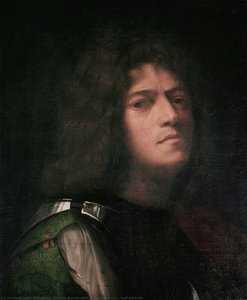
- retrato de un caballero veneciano (76 x 64 cm, alta renacimiento, óleo sobre lienzo): una obra maestra que muestra la habilidad de Giorgione para capturar la esencia de sus sujetos.
- Concierto pastoril (fête champêtre) (110 x 138 cm, musée du louvre, París, Francia, alta renacimiento, óleo sobre lienzo): demuestra la capacidad de Giorgione para evocar emociones a través de su trabajo.
- Judit (1504) (óleo sobre lienzo, transferido de panel, 144 x 68 cm, el Hermitage, San Petersburgo): una pintura temprana del artista, inicialmente atribuida a Rafael, que muestra el crecimiento y la experimentación de Giorgione.
legado e influencia
Giorgione sigue siendo una figura enigmática en la historia del arte, con su vida y obras envueltas en misterio, lo que aumenta el atractivo y la profundidad de su legado artístico. Su influencia se puede ver en las obras de artistas posteriores, quienes construyeron sobre los cimientos que él sentó en la escuela veneciana. explore more of giorgione's works on TopImpressionists: * giorgione (giorgio barbarelli da castelfranco) * retrato de un caballero veneciano * Concierto pastoril (fête champêtre) discover the venetian painting art movement on TopImpressionists: * el movimiento artístico de la pintura veneciana
Giorgione
1477 - 1510 , Italia
Datos clave
- Artistas Influenciados: ['Tiziano']
- Artistas Que Influyeron:
- Giovanni Bellini
- Antonello da Messina
- Leonardo da Vinci
- Estilo Artístico: Alto Renacimiento Veneciano
- Fecha De Nacimiento: c. 1477/1478
- Lugar De Nacimiento: Castel Franco Veneto, Italia
- Nacionalidad: Italiana
- Nombre Completo: Giorgione (Giorgio Barbarelli)
- Obras Notables:
- La Tempestad
- Concierto Pastoral
- Venus Durmiente
- Judit
- Retrato de un caballero
Artículos relacionados

La Luz Dorada de la Innovación: Explorando el Renacimiento Veneciano (1430–1580)
Descubra la riqueza y el esplendor del Renacimiento veneciano con TopImpressionists. Explore las obras maestras de Tiziano, Giorgione y Tintoretto. Análisis experto, historia detallada e información para coleccionistas.

Giorgione: Enigma and Innovation in Early Venetian Renaissance Painting
Explore the enigmatic world of Giorgione, a pivotal figure in the Venetian Renaissance. Discover his innovative techniques, iconic paintings like 'The Tempest', and lasting influence on art history. Learn more at TopImpressionists.

Las 10 Obras Maestras del Renacimiento Superior: Arte, Historia y Decoración
Descubre las 10 obras maestras del Renacimiento Superior: Leonardo, Miguel Ángel, Rafael y Botticelli. Explora su historia, técnica y significado. Reproducciones de arte en alta calidad para decorar tu hogar con elegancia. ¡Encuentra tu obra favorita en !

Venetian Renaissance: The Golden Age of Color, Light, and Luminous Artistry
Embark on a journey through the Venetian Renaissance. Discover how masters like Giorgione and Titian revolutionized art through luminous color and light. Explore the profound legacy of the Venetian School and its enduring influence on the world of fine art.

Jacopo Tintoretto: Las 25 Obras Maestras del Genio Veneciano | Arte y Decoración en TopImpressionists
Descubre las 25 obras maestras de Jacopo Tintoretto, el genio veneciano del Renacimiento. Explora su arte dramático, composiciones innovadoras y paleta vibrante. Reproducciones de alta calidad en TopImpressionists.com para transformar tu hogar.
Explore obras de arte organizadas por temas, estilos y características.