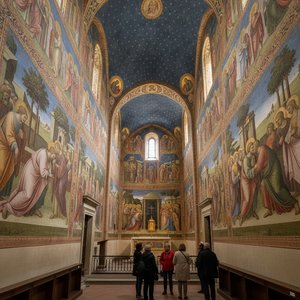
A Glimpse of Divinity: Giotto’s St. Paul
Giotto di Bondone's “St. Paul,” created around 1300, is not merely a depiction of an Apostle; it’s a profound exploration of faith and the nascent humanism that would come to define the Renaissance. This fresco fragment, originally part of a larger cycle adorning the Basilica of Saint Francis in Assisi, offers a captivating encounter with one of Christianity's most pivotal figures. What immediately strikes the viewer is not simply the representation of St. Paul, but the startlingly direct gaze – an invitation to communion that transcends centuries. Giotto doesn’t present us with a distant saint enshrined in ethereal glory; he presents a man, imbued with spiritual authority yet palpably human.
Breaking from Byzantine Tradition
To fully appreciate “St. Paul,” one must understand the artistic landscape of its time. The 13th century was still largely dominated by the Byzantine style – characterized by flattened figures, gold backgrounds, and a focus on symbolic representation over naturalistic depiction. Giotto, however, was at the vanguard of a revolution. While retaining elements like the iconic halo signifying holiness and the rich blue backdrop hinting at the divine realm, he infused his work with an unprecedented sense of volume and emotional depth. Notice how Giotto uses subtle shading to model St. Paul’s face, giving it weight and presence. The delicate rendering of features—the lines around the eyes, the slight parting of the lips—suggest a thoughtful interior life. This was a radical departure from the stylized rigidity of Byzantine art, marking a crucial step towards the realism that would define Renaissance painting.
Symbolism and Spiritual Resonance
The composition itself is carefully considered. The inclusion of smaller figures flanking St. Paul – often interpreted as angels or attendant saints – emphasizes his importance while simultaneously grounding him within a celestial hierarchy. The gold accents, though reminiscent of Byzantine tradition, are used more sparingly and strategically, drawing attention to key elements like the halo and subtly illuminating St. Paul’s face. The very essence of St. Paul’s story—his dramatic conversion on the road to Damascus and his subsequent tireless evangelism—is captured in this single, arresting image. He embodies both strength and humility, a testament to the transformative power of faith. It is important to remember that St. Paul was not one of the original apostles who knew Jesus during his lifetime; he became a pivotal figure *after* the crucifixion, spreading the message to Gentiles across the Roman world.
A Proto-Renaissance Masterpiece for Modern Spaces
Owning a reproduction of Giotto’s “St. Paul” is not simply acquiring a beautiful image; it’s inviting a piece of art history into your home. The painting’s restrained palette and dignified composition make it surprisingly versatile, lending itself well to both traditional and contemporary interiors. Imagine this work gracing a study, a library, or even a dining room – its presence would undoubtedly spark conversation and inspire contemplation. The emotional resonance of the piece—the sense of quiet strength and unwavering faith—can bring a profound sense of peace and serenity to any space. A TopImpressionists reproduction allows you to experience the power of Giotto’s vision firsthand, connecting with a legacy that continues to shape our understanding of art and spirituality.
- Artist: Giotto di Bondone (1267-1337)
- Birth Place: Florence
- Style: Proto Renaissance
- Medium: Fresco
- Location: Basilica of Saint Francis, Assisi
This fresco fragment exemplifies Giotto’s groundbreaking approach to art. Departing from the symbolic conventions of Byzantine painting, he prioritized anatomical accuracy and emotional expression—a pivotal shift toward the humanist ideals that would characterize the Renaissance.
The luminous blue background serves as a backdrop for St. Paul's figure, highlighting his solemn countenance and conveying a sense of spiritual grandeur. Giotto’s masterful use of shading creates depth and volume, bringing St. Paul to life with remarkable realism.



 Vista previa
 Cambiar a pintura hecha a mano
 Compartir
 Compartir
 Ver detalles

 Descargar
 Ver similares
 Radiografía
 Presentación de diapositivas


 Leer más






































 La opción de vidrio solo está disponible en tamaños inferiores a 110 cm.