


 Vista previa
 Compartir
 Compartir
 Ver detalles
 Guía
Guía

 Descargar
 Ver artículos similares
 Radiografía
 Presentación de diapositivas
 Estadísticas
Winter Landscape


Experience the serene solitude of De Nittis' Impressionistic Winter Landscape from c.1880, capturing muted tones and snowy stillness; discover this masterpiece today.
 Leer más
Giuseppe De Nittis: Pintor italiano que fusionó el arte académico con la libertad impresionista, destacando por escenas rurales y paisajes volcánicos. Un artista esencial del siglo XIX reconocido por su innovación técnica y belleza estética.
Giclée / Impresión de arte
Impresiones giclée o en lienzo de calidad de museo con producción rápida y opciones de acabado flexibles. ( Encargar reproducción pintada a mano Ver versión en imagen digital)




P118B €10

P118H €10

P118W €10

P438Z €10

P508JH €12

P508YH €12

P805H €10

P805Z €10

P919BZ €10

P919G €10

P919XJ €10

P959ZH €10

P968JZ €12

W106C €8

W218G €10

W218JH €8

W218Y €10

W307PJ €10

W316G €10

W316PJ €8

W316Y €10

W398PJ €8

W4111J €10

W500HY €15

W500JH €15

W692G €12

W849H €8

W940BG €15

W953PJ €8




Estándar
personalizado
CM
INCH
Elija entre nuestros tamaños predefinidos que respetan las proporciones originales de la obra.
Loading sizes...

ancho
altura
Introduzca el ancho y el alto que necesite para adaptarse a su marco o pared. Una impresión solo puede recortarse, nunca hacerse más grande que la imagen original, por lo que un tamaño con una forma distinta perderá parte de la obra. Le enviaremos una maqueta digital para su aprobación antes de realizar cualquier impresión. La imagen que se muestra en esta página no refleja el recorte real; solo la maqueta lo hace.
Envío a todo el mundo () en 2 semanas en lugar de las 4/5 semanas estándar. (24 octubre)

Envío exprés gratuito a todo el mundo

Lienzo de lino de alta calidad

Seguro de envío completo

Garantía de reembolso de impuestos aduaneros

Garantía de fidelidad cromática exacta

Política de devolución de 100 días (solo por defectos)

Garantía de devolución del 100% del dinero

Oferta por volumen
 La opción de vidrio solo está disponible en tamaños inferiores a 110 cm.

Winter Landscape
Giclée / Impresión de arte
Tamaño de la reproducción
-


Precio total
€ 61
Winter Landscape with Skaters
Giuseppe De Nittis’ “Winter Landscape,” painted circa 1880, stands as a testament to the enduring fascination of Impressionism with capturing fleeting moments of natural beauty and conveying profound emotional resonance. This artwork embodies the spirit of its time—a period marked by significant artistic experimentation and a desire to move beyond academic conventions toward a more subjective representation of experience.
Subject Matter & Composition: The scene depicts a serene winter landscape dominated by snow-covered terrain, punctuated by buildings and a prominent train track receding into the distance. A solitary figure walks along a snowy field towards the right side of the frame, creating a focal point that draws the viewer’s eye and invites contemplation. De Nittis skillfully employs horizontal lines—evident in the wall and the train tracks—to establish a sense of stillness and stability, while organic shapes—the undulating snowdrifts and textured trees—introduce dynamism and visual interest.
Style & Technique: “Winter Landscape” exemplifies Impressionistic tendencies through its loose brushwork and emphasis on atmospheric perspective. De Nittis eschews meticulous detail in favor of capturing the overall mood and sensation of the winter day, prioritizing color and texture over precise representation. The painting utilizes oil paint on canvas—a medium known for its ability to achieve rich hues and luminous effects—and employs layering techniques to build up depth and create a palpable sense of surface materiality.
Color Palette & Lighting: The artwork’s palette is muted yet harmonious, dominated by whites, grays, browns, and subtle oranges/reds. Snow covers much of the landscape, establishing a predominantly white and gray tonal scheme that reflects the subdued light conditions characteristic of winter mornings. Warm hues—found in the buildings—provide visual contrast against the cool tones of the snow and trees, enhancing the painting’s expressive power.
Symbolic Significance & Emotional Impact: Beyond its aesthetic qualities, “Winter Landscape” carries symbolic weight, evoking feelings of solitude, contemplation, and perhaps even melancholy. The lone figure traversing the snowy field serves as a poignant reminder of human vulnerability against the vastness of nature—a motif that resonates deeply with viewers seeking solace or inspiration.
Historical Context: De Nittis’ work aligns itself with the broader artistic currents of the late 19th century, particularly the influence of Impressionism. Artists like Monet and Renoir were actively exploring new ways to depict light and color—challenging traditional academic standards—and prioritizing emotional expression over idealized realism. “Winter Landscape” embodies this spirit of innovation, securing its place as a cornerstone of Italian Impressionist art.
Further Research: For more detailed information on Giuseppe De Nittis and his artistic legacy, consult Wikipedia (https://en.wikipedia.org/wiki/Giuseppe_De_Nittis) and explore reproductions of “Winter Landscape” at the Tokyo National Museum (/media/artworks/images/thumbnails/5e/e5/5ee5f2e533434462a492d5e13cde511f.jpg).
Preguntas y respuestas
¿Puedo ver una vista previa de "Winter Landscape" de Giuseppe De Nittis antes de realizar el pedido?
Para previsualizar una reproducción de "Winter Landscape" de Giuseppe De Nittis, abra la página de Vista previa de la obra.
¿Qué técnica se utilizó para "Winter Landscape" de Giuseppe De Nittis?
La técnica de "Winter Landscape" de Giuseppe De Nittis es Oil On Canvas. Las reproducciones pretenden recrear la apariencia de esta técnica.
¿Dónde puedo comprar una lámina de "Winter Landscape" de Giuseppe De Nittis?
Para obtener una impresión de "Winter Landscape" de Giuseppe De Nittis, simplemente pídala en su página de Impresión de bellas artes: una impresión de bellas artes sobre lienzo de algodón o papel de lienzo de archivo.
Biografía del artista
Giuseppe De Nittis: Bridging Salon Art and Impressionism
Giuseppe De Nittis (February 25, 1846 – August 21, 1884) was one of the most important Italian painters of the 19th century, whose work merges the styles of Salon art and Impressionism. Born in Barletta, Apulia, Italy, he initially studied under Giovanni Battista Calò before being expelled from the Instituto di Belle Arti in Naples for insubordination. This early rejection fueled his determination to forge a path independent of academic conventions—a stance that would define his artistic trajectory.- Early Life and Formation: De Nittis’s upbringing instilled in him a rebellious spirit, evident in his refusal to adhere to the rigid doctrines of the Academy. His father, Raffaele, was a vocal critic of the Bourbon monarchy, shaping Giuseppe's worldview and fostering a commitment to intellectual freedom.
- The Macchiaioli Influence: De Nittis’s encounter with Telemaco Signorini and other Macchiaioli artists proved pivotal. This movement championed direct observation of nature—a radical departure from academic painting—and profoundly impacted De Nittis's artistic approach, prioritizing tonal harmonies and capturing fleeting moments of light.
- Parisian Years: Moving to Paris in 1867 marked a crucial turning point. He established connections with fellow artists like Ernest Meissonier and Jean-Léon Gérôme, immersing himself in the vibrant Parisian art scene. His contract with Adolphe Goupil necessitated producing commercially viable genre paintings—a challenge he embraced while simultaneously exploring Impressionistic techniques.
- Notable Achievements: De Nittis achieved considerable acclaim during the Exposition Universelle of 1878, securing a gold medal and receiving the Légion d’honneur for his artistic contributions. His painting *Che freddo!* (It's So Cold!) captivated audiences at the Salon in 1874, cementing his reputation as an Impressionist innovator.
- Legacy: De Nittis’s influence extended beyond his own lifetime. His distinctive pastel style—characterized by luminous colors and delicate textures—inspired subsequent generations of artists. Furthermore, his unwavering dedication to capturing the essence of natural light and color continues to resonate within the broader artistic canon.
Artistic Style and Technique
De Nittis’s distinctive style was characterized by a masterful blend of Salon art traditions and Impressionist principles. He prioritized tonal harmonies—a technique championed by Signorini and other Macchiaioli—creating paintings that conveyed atmospheric depth and emotional resonance. However, unlike many of his contemporaries, De Nittis embraced plein air painting with fervor, meticulously observing the subtleties of light and color as they shifted across landscapes and portraits. His use of pastel was particularly noteworthy; he elevated this medium to new heights, achieving unparalleled luminosity and expressive power.Major Works
De Nittis produced a prolific oeuvre encompassing landscapes, genre scenes, and portraiture—each infused with his signature aesthetic vision. Among his most celebrated paintings are *Races at Auteuil* (1881), capturing the dynamism of equestrian sport; *Portrait of Madame de Florian* by Giovanni Boldini, showcasing De Nittis’s skill in portraying human emotion; *Paesaggio con bovi* (1855), a serene depiction of pastoral life; and *Vesuvius*, where he skillfully rendered the imposing volcano's majesty. His pastel portraits—including those of Edgar Degas and Gustave Moreau—demonstrate his mastery of tonal modulation and textural nuance.Influence and Recognition
Giuseppe De Nittis’s artistic legacy endured beyond his lifetime, influencing subsequent generations of painters who admired his innovative approach to Impressionism and Macchiaioli aesthetics. His unwavering commitment to capturing the beauty of nature—combined with his technical virtuosity—established him as a cornerstone of Italian art history. Today, his paintings reside in prominent museums worldwide—including the Musée d’Orsay in Paris, the British Museum in London, and the Metropolitan Museum of Art in New York—testament to the enduring power of his artistic vision.
Giuseppe De Nittis
1846 - 1884 , Italia
Datos clave
- Artistic Movement Or Style: Impresionismo y Macchiaioli
- Artists Or Movements Influenced By This Artist: ['Macchiaioli']
- Artists Who Influenced This Artist:
- Giovanni Battista Calò
- Telemaco Signorini
- Date Of Birth: 25 febrero 1846
- Date Of Death: 21 agosto 1884
- Full Name: Giuseppe De Nittis
- Nationality: Italian
- Notable Artworks:
- Races at Auteuil
- Che freddo!
- Paisaggio con bovi
- Place Of Birth: Barletta, Italia
Artículos relacionados

The Beauty of Impermanence: Capturing Decay through Impressionist Eyes
Explore the profound beauty of impermanence through Impressionist and Post-Impressionist eyes. Discover how masters like Monet and Van Gogh captured fleeting light and the poetic essence of nature's transitions in our deep dive into art history and emotional landscapes.

Capturing the Soul: The Most Emotionally Moving Impressionist and Post-Impressionist Masterpieces
Discover the profound emotional depth of Impressionist and Post-Impressionist masterpieces. Explore how legends like Monet, Van Gogh, and Gauguin captured light and soul through evocative landscapes and vibrant brushwork for a timeless connection to art history.

The Timeless Charm of Oil on Board: Reimagining Texture and Light through the Impressionist Lens
Discover the profound intimacy of oil on panel. Explore how Impressionist masters used rigid supports to capture light, texture, and impasto depth through exquisite, handmade oil reproductions for discerning collectors.

Beyond the Light: Capturing Raw Emotion and Subjective Vision in Post-Impressionist Landscapes
Explore the profound emotional depth of Post-Impressionist landscapes. Discover how masters like Van Gogh moved beyond light to capture raw human feeling through vibrant color and expressive texture in this expert art history retrospective.
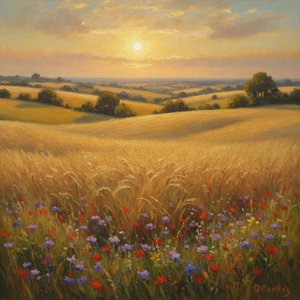
Golden Fields & Sun-Drenched Meadows: Capturing the Soul of Impressionist Landscapes
Immerse yourself in the luminous world of Impressionist landscapes. Discover how masters like Monet and Gauguin captured ephemeral light through plein air painting, and learn to bring the soul of sun-drenched meadows into your home with exquisite, hand-painted oil reproductions.
Explore obras de arte organizadas por temas, estilos y características.


