


 Vista previa
 Compartir
 Compartir
 Ver detalles
 Guía
Guía

 Descargar
 Ver artículos similares
 Radiografía
 Presentación de diapositivas
 Estadísticas
Holy Trinity


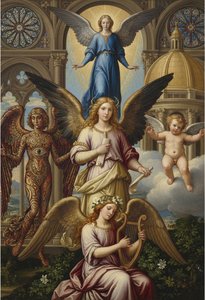
A celestial vision of the Holy Trinity unfolds through God, Jesus, and the Holy Spirit amidst angelic hosts in this 1620 Flemish Baroque masterpiece by Hendrik van Balen I, inviting you to bring divine grace into your home.
 Leer más
Hendrick van Balen I (1575-1632) fue un pintor barroco flamenco reconocido por sus cautivadoras escenas mitológicas y alegóricas, y como influyente maestro de Anthony van Dyck.
Giclée / Impresión de arte
Impresiones giclée o en lienzo de calidad de museo con producción rápida y opciones de acabado flexibles. ( Encargar reproducción pintada a mano Ver versión en imagen digital)




P118B €10

P118H €10

P118W €10

P438Z €10

P508JH €12

P508YH €12

P805H €10

P805Z €10

P919BZ €10

P919G €10

P919XJ €10

P959ZH €10

P968JZ €12

W106C €8

W218G €10

W218JH €8

W218Y €10

W307PJ €10

W316G €10

W316PJ €8

W316Y €10

W398PJ €8

W4111J €10

W500HY €15

W500JH €15

W692G €12

W849H €8

W940BG €15

W953PJ €8




Estándar
personalizado
CM
INCH
Elija entre nuestros tamaños predefinidos que respetan las proporciones originales de la obra.
Loading sizes...

ancho
altura
Introduzca el ancho y el alto que necesite para adaptarse a su marco o pared. Una impresión solo puede recortarse, nunca hacerse más grande que la imagen original, por lo que un tamaño con una forma distinta perderá parte de la obra. Le enviaremos una maqueta digital para su aprobación antes de realizar cualquier impresión. La imagen que se muestra en esta página no refleja el recorte real; solo la maqueta lo hace.
Envío a todo el mundo () en 2 semanas en lugar de las 4/5 semanas estándar. (22 octubre)

Envío exprés gratuito a todo el mundo

Lienzo de lino de alta calidad

Seguro de envío completo

Garantía de reembolso de impuestos aduaneros

Garantía de fidelidad cromática exacta

Política de devolución de 100 días (solo por defectos)

Garantía de devolución del 100% del dinero

Oferta por volumen
 La opción de vidrio solo está disponible en tamaños inferiores a 110 cm.

Holy Trinity
Giclée / Impresión de arte
Tamaño de la reproducción
-


Precio total
€ 61
A Celestial Vision in Baroque Splendor
In the vast, swirling expanse of the seventeenth-century Flemish sky, few images command the soul with as much reverence as Hendrik van Balen I’s Holy Trinity. Painted around 1620, this masterpiece serves as a profound window into the spiritual heights of the Baroque era. The composition unfolds within a breathtaking celestial realm, where the boundaries between the earthly and the divine dissolve amidst billowing, luminous clouds. At the heart of this cosmic drama sits the Holy Trinity: God the Father, Jesus Christ, and the Holy Spirit, arranged in a triad of divine unity. The scene is not merely a religious depiction but a choreographed movement of light and grace, where the figures emerge from the heavens to offer a glimpse of eternal peace to the viewer below.
The artistry of van Balen I shines through his meticulous command of detail and his ability to weave complex allegorical layers into a single, cohesive vision. As a master who influenced even the great Anthony van Dyck, van Balen brings a sophisticated elegance to the piece. Surrounding the central figures is a host of celestial attendants—angels whose presence adds both movement and weight to the composition. Some angels are depicted with the solemnity of guardians, wielding swords and shields, while others drift with a weightless grace. A solitary bird soars above the assembly, acting as a subtle yet powerful symbol of the Holy Spirit’s descent, bridging the gap between the high heavens and the natural world visible in the distant, verdant trees.
Symbolism and the Mastery of Light
Every element within this painting is imbued with deep theological significance, designed to guide the observer toward contemplation. The arrangement of the Father, Son, and Spirit creates a triangular stability that reflects the concept of divine perfection. The interplay of light and shadow—a hallmark of the Baroque style—serves to sculpt the figures out of the ether, giving them a tangible, almost sculptural presence despite their heavenly nature. This technique, known as chiaroscuro, directs the eye toward the central mystery of the Trinity, ensuring that the viewer’s gaze is constantly drawn back to the source of light and life.
For the discerning collector or interior designer, this artwork offers more than just historical value; it provides a profound emotional anchor for any space. The painting’s palette, rich with the soft tones of a breaking dawn and the deep, earthy greens of the background landscape, creates an atmosphere of serene majesty. Whether placed in a grand library, a formal dining hall, or a quiet sanctuary, a high-quality reproduction of this work brings a sense of timelessness and spiritual depth. It is a piece that invites long periods of study, rewarding the viewer with new discoveries of texture, light, and meaning with every glance, making it an incomparable centerpiece for those who appreciate the intersection of fine art and profound devotion.
Preguntas y respuestas
¿Cuál es la identidad cromática de "Holy Trinity" de Hendrik van Balen I?
"Holy Trinity" de Hendrik van Balen I utiliza una paleta de Earthy, con el Espresso (#402c20) como color dominante.
¿En qué año y bajo qué movimiento se realizó "Holy Trinity"?
"Holy Trinity" fue realizada en 1620, dentro del movimiento Baroque.
¿Dónde se puede ver "Holy Trinity" de Hendrik van Balen I actualmente?
Puede ver la obra original "Holy Trinity" en el Iglesia de San Jacobo, Antwerp, Belgium.
Biografía del artista
Un Maestro de la Fábula y la Miniatura: El Mundo de Hendrick van Balen I
Hendrick van Balen I, un nombre que quizás no resuene con la misma inmediatez que el de sus contemporáneos Rubens o Van Dyck, ocupa sin embargo una posición crucial en el vibrante panorama artístico del siglo XVII antuerpiense. Nacido alrededor de 1575 en el seno de una próspera familia mercantil, van Balen se benefició de una educación que fomentó tanto la curiosidad intelectual como la inclinación artística. Esta afortunada combinación le permitió seguir una formación rigurosa, inicialmente bajo la tutela de Adam van Noort –un pintor imbuido de la tradición manierista– y posiblemente también con Maerten de Vos. Estas primeras influencias sentaron las bases para una carrera definida por el meticuloso detalle, la elegante composición y una predilección por los temas mitológicos y alegóricos. La estabilidad económica de su familia le brindó oportunidades que iban más allá de la mera habilidad técnica; cultivó aptitudes lingüísticas que resultarían valiosas en sus viajes y colaboraciones. Van Balen no era simplemente un artesano, sino un humanista erudito inmerso en las narrativas clásicas que alimentaron gran parte del arte barroco.De Retablos a Visiones Íntimas
El camino artístico de van Balen comenzó con obras religiosas de mayor formato, retablos que reflejaban el poderoso estilo romanista heredado de su maestro, Adam van Noort. Estas primeras piezas demuestran un sólido dominio de la anatomía y una composición dramática, pero fue en el ámbito de las pequeñas pinturas de gabinete donde verdaderamente encontró su voz. Alrededor de 1595, emprendió un peregrinaje artístico a Italia –un viaje no definitivamente documentado, pero evidenciado por su posterior membresía en el Gremio de Romanistas a su regreso a Amberes–. Esta estancia lo expuso al floreciente estilo barroco y a las obras de artistas como Annibale Carracci y Palma Giovane, influyendo en un cambio hacia paletas de colores más refinadas y arreglos figurativos más elegantes. Se convirtió en maestro dentro del Gremio de San Lucas de Amberes en 1592-93, ascendiendo en sus filas para convertirse en decano en múltiples ocasiones –un testimonio de su posición dentro de la comunidad artística–. Su taller floreció, convirtiéndose en un centro para aspirantes a pintores, siendo Anthony van Dyck el más notable de sus alumnos, quien recibió una formación crucial bajo la tutela de van Balen.Un Espíritu Colaborativo y la Pintura de Guirnaldas
Van Balen no era un artista que trabajara en aislamiento. La colaboración fue fundamental para su práctica, especialmente con Jan Brueghel el Viejo, maestro de la pintura de bodegones. Juntos, fueron pioneros en el género de las pinturas de guirnaldas –una innovación flamenca única que combinaba imágenes devocionales o mitológicas rodeadas de exuberantes arreglos florales–. Estas obras no eran meramente decorativas; estaban imbuidas de un significado simbólico, reflejando el fervor religioso y la sofisticación artística de la corte de los Habsburgo. La comisión del cardenal Federico Borromeo para una pintura de guirnaldas alrededor de 1607-1608 es un logro fundamental en este género –un testimonio de su habilidad combinada y espíritu innovador–. La meticulosa representación de flores y frutos por parte de Brueghel proporcionó un marco vibrante para las figuras elegantes de van Balen, creando una armoniosa síntesis de naturalismo e idealismo. Además de Brueghel, colaboró con frecuencia con otros artistas como Joos de Momper, Abraham Govaerts y Frans Snyders, demostrando su adaptabilidad y disposición a adoptar diversas perspectivas artísticas.Legado e Influencia Duradera
La influencia de Hendrick van Balen I se extendió mucho más allá de los límites de su taller. Su énfasis en la técnica refinada, la composición elegante y el tema mitológico resonó con una generación de artistas flamencos. Anthony van Dyck, quizás su alumno más célebre, absorbió gran parte del enfoque de su maestro sobre la pintura de figuras y los principios compositivos. Las pinturas de gabinete de van Balen –a menudo ejecutadas sobre soportes de cobre– se convirtieron en objetos muy codiciados por los coleccionistas, apreciados por su escala íntima y exquisito detalle. Si bien es posible que no haya alcanzado el mismo nivel de fama generalizada que Rubens o Van Dyck, van Balen desempeñó un papel vital en la revitalización de la pintura flamenca a principios del siglo XVII. Puenteó la brecha entre el manierismo y el barroco, forjando un estilo distintivo que combinaba ideales clásicos con el realismo flamenco. Su legado perdura a través de sus obras supervivientes –testimonios de un maestro artesano que dio vida al mito y la alegoría con una gracia y un arte incomparables–. Su contribución no reside en grandes proclamaciones, sino en la perfección silenciosa de mundos en miniatura.
Hendrik van Balen I
1575 - 1632 , Bélgica
Datos clave
- Artistas Influenciados:
- Anthony van Dyck
- Frans Snyders
- Artistas Que Influyeron:
- Adam van Noort
- Maerten de Vos
- Fecha De Fallecimiento: 1632
- Fecha De Nacimiento: c. 1573-1575
- Lugar De Nacimiento: Amberes, Bélgica
- Movimiento Artístico: Barroco
- Nacionalidad: Flamenco
- Nombre Completo: Hendrick van Balen I
- Obras Notables:
- Golpe a la roca
- Procesión Baco
- Descanso en la huida…
Artículos relacionados
Divine Beauty: A Curated Guide to the Celestial Majesty of Angelic Figures in Art History
Explore the profound beauty of angelic figures in art history. From Renaissance masterpieces to celestial symbolism, our expert guide offers a sophisticated journey through the divine imagery of the Old Masters for discerning collectors and art enthusiasts.

Celestial Messengers: Angels in Painting – A Historical & Artistic Exploration
Explore the captivating history of angels in painting! Discover symbolism, iconic Renaissance & Byzantine masterpieces, and renowned artists. Expert insights for art lovers & collectors at TopImpressionists.

Mastering Drama and Light: A Definitive Guide to the Flemish Baroque Art Movement
Explore the dramatic brilliance of the Flemish Baroque movement. Discover how masters like Peter Paul Rubens utilized chiaroscuro and dynamic composition to redefine art history through light, shadow, and unparalleled emotion.

Drama Barroca: Llevando la Grandeza y la Emoción a los Interiores Contemporáneos
Descubre cómo el drama y la grandeza del arte barroco pueden transformar tus interiores. Guía experta, inspiración y reproducciones de alta calidad en .

Celestial Messengers: A Comprehensive Exploration of Angelic Representation in Art History
Explore the captivating history of angels in art! Discover symbolism, iconic Renaissance masterpieces & renowned artists. Expert insights for art lovers & collectors at TopImpressionists.