

Se muestra: · Con su marco:
 Ver en contexto
 Enviar
 Compartir
 Detalles
 Guía
Guía

 Descargar
 Similares
 Radiografía
 Presentación de diapositivas
 Preguntas y respuestas
 Estadísticas
- 108.0 x 39.0 cm


€ 240
Reproducción al óleo hecha a mano
Óleo sobre lienzo pintado a mano en el tamaño y marco de su elección, realizado por encargo por nuestros artistas. ( Cambiar a impresiones Cambiar a imagen digital)
Tamaño
·Tamaño estándar
a medida
CM
INCH
Elija entre nuestros tamaños predefinidos que respetan las proporciones originales de la obra.
Cargando tamaños...

ancho
altura
Indique el ancho y el alto que necesite para adaptarse a su marco o pared. Al tratarse de una obra pintada a mano, si requiere un tamaño con una proporción distinta, el artista puede pintar un poco más alrededor de la imagen o recortarla ligeramente; usted elige. Le enviaremos una maqueta digital para su aprobación antes de comenzar la pintura. La imagen que se muestra en esta página no refleja el resultado real; solo la maqueta lo hace.
 Leer más información
Finalizar
·
Blanco €1

Bordes difuminados €1

Continuación de imagen €1

P118B €10

P118H €10

P118W €10

P438Z €10

P508JH €12

P508YH €12

P805H €10

P805Z €10

P919BZ €10

P919G €10

P919XJ €10

P959ZH €10

P968JZ €12

W106C €8

W218G €10

W218JH €8

W218Y €10

W307PJ €10

W316G €10

W316PJ €8

W316Y €10

W398PJ €8

W4111J €10

W500HY €15

W500JH €15

W692G €12

W849H €8

W940BG €15

W953PJ €8

H24-GOLD €30

H24-SILVER €30

H36-GOLD €45

H36-SILVER €45
Se envía en un tubo protector, listo para que lo enmarque su profesional de confianza.
Servicios adicionales
opcional¿Qué incluyen los extras?
Ejemplos de lo que se puede cambiar: Reemplazar el rostro con la foto del cliente; Añadir una mascota (por ejemplo, cambiar un gato por un perro); Incluir un mensaje oculto en el fondo; Cambiar el paisaje o los elementos del fondo.
Tras realizar el pedido, el equipo de TopImpressionists.com enviará un correo electrónico al cliente para solicitar instrucciones y proporcionar una vista previa del boceto
Tras realizar el pedido, el equipo de TopImpressionists.com enviará un correo electrónico al cliente para solicitar instrucciones y proporcionar una vista previa del boceto
Envío a todo el mundo () en 3-4 semanas en lugar de las 5 semanas estándar. (9 noviembre). Sin comprometer la calidad.
Barniz protector
Cartela
Detalles de la placa de bronce grabada
This elegant plaque features the artist's name and the title of the artwork, finely engraved for a timeless presentation.
It is made from bronze with a refined, elegant finish. The text is precisely laser-engraved for a sharp and permanent result. Measuring 9x2 cm, the plaque is compact yet easy to read. It's built to be durable and scratch-resistant, offering a professional, museum-quality look. Mounting is simple thanks to the included adhesive backing.
Detalles de la placa de acrílico transparente
The plaque includes essential engraved details such as the artist's name, the title of the artwork, the date it was created, the type of media used-like oil on canvas or watercolor-a brief description of the piece, and a QR code that links to the complete artwork information.
It is crafted from clear acrylic, offering a sleek, modern appearance. The text is UV-engraved in black to ensure strong visual contrast. With a size of 10x15 cm, it ensures optimal readability. It comes equipped with two metal hooks for secure wall mounting. The plaque is designed to be weather-resistant, making it suitable for various environments, and it includes interactive features that work seamlessly with smartphone scanning.
Detalles de la placa de acrílico negro
This elegant plaque includes engraved information such as the artist's name, the title of the artwork, the date it was created, the type of media used (like oil on canvas or watercolor), a short description of the artwork, and a QR code for quick access to more information.
The plaque itself is made from refined black acrylic with a premium finish. The text is laser-engraved in white for high contrast and readability. Its size is 10x15 cm, designed to be easy to read. It comes with two metal hooks for professional mounting. The design is sleek and fits any interior style. It is also weather-resistant and durable, with built-in digital integration for mobile compatibility.
La opción de vidrio solo está disponible en tamaños inferiores a 110 cm.
 La opción de vidrio solo está disponible en tamaños inferiores a 110 cm.
- Envío exprés gratuito a todo el mundo
- Lienzo de lino de alta calidad
- Seguro de envío total
- Garantía de reembolso de aranceles aduaneros
- Garantía de fidelidad cromática exacta
- Política de devolución de 100 días (solo por defectos)
- Garantía de devolución del 100% del dinero
- Descuento por cantidad


Descripción del objeto
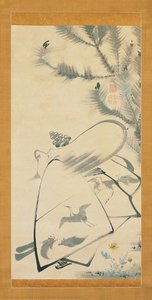
Experience the serene elegance of these two cranes in a snowy landscape by Edo period master Itō Jakuchū, a breathtaking example of Japanese ink wash painting that invites you to bring tranquility into your home.
Biografía del artista
Descubre a Ito Jakuchu (1716-1800), pintor japonés pionero del período Edo. Famoso por sus vibrantes representaciones de aves y flores, revolucionó el arte japonés con su estilo único y experimental.
Sobre la obra
A Serene Encounter in the Snow
In the quietude of a winter landscape, two cranes stand as silent sentinels amidst a soft, dusting of snow. This exquisite work by the Edo-period master Itō Jakuchū captures a moment of profound stillness, inviting the viewer into a world where nature and spirit converge. The composition is elegantly elongated, drawing the eye upward along the slender, graceful necks of the birds, which seem to reach toward an unseen horizon. There is a rhythmic simplicity to the scene; the heavy, textured snowdrift at the base provides a grounded, earthy foundation that contrasts beautifully with the ethereal, almost weightless quality of the cranes' presence. It is a painting that does not merely depict a scene but evokes an atmosphere of deep, meditative peace.
The artistry of Jakuchū is revealed through his masterful command of the sumi-e tradition, blended with a unique, individualistic flair that set him apart from his contemporaries. Using ink and pigment on what was likely silk or fine paper, the artist employs a delicate range of tonal variations to breathe life into the subjects. The brushwork is both fluid and intentional; subtle, sweeping strokes define the contours of the birds' plumage, while more diffused, watery applications of ink create the soft, powdery texture of the snow. This technique allows for a sense of organic movement within a static moment, as if a light breeze might stir the feathers or disturb the frozen landscape at any second.
Symbolism and the Spirit of Japan
Beyond its visual elegance, this artwork is steeped in the rich symbolic language of Japanese culture. The crane, a central figure in East Asian iconography, is far more than a mere biological subject; it is a potent symbol of longevity, fidelity, and good fortune. By placing these two birds together within a desolate yet beautiful landscape, Jakuchū evokes themes of harmony and enduring companionship. The muted, earthy palette—dominated by shades of beige, grey, and soft brown—complements this spiritual depth, avoiding the distraction of vibrant color to focus instead on the essential essence of the subjects. A singular touch of red from the artist’s seal serves as a poignant reminder of the human hand behind the divine natural observation.
For the discerning collector or interior designer, this piece offers a timeless sophistication that transcends eras. Its understated elegance makes it an ideal centerpiece for spaces designed for contemplation, such as a library, a minimalist study, or a serene wellness retreat. The artwork’s ability to command attention through subtlety rather than spectacle ensures it remains a focal point of quiet strength. Whether viewed as a historical masterpiece of the Kyoto school or as a contemporary element of Zen-inspired decor, Two Cranes continues to resonate with anyone who finds beauty in the delicate balance between the ephemeral and the eternal.
Preguntas y respuestas
¿Qué edad tenía Itō Jakuchū cuando se creó "Two Cranes"?
Itō Jakuchū tenía 79 años cuando creó "Two Cranes" en 1795. La edad se calcula a partir del año de nacimiento del artista, 1716.
¿Se puede visualizar "Two Cranes" con una vista previa en realidad aumentada?
"Two Cranes" cuenta con una vista previa en realidad aumentada: la página de Vista previa en RA de la obra permite visualizarla en su propio espacio mediante un dispositivo compatible.
¿Cómo puedo ver "Two Cranes" de Itō Jakuchū en formato de presentación?
Puede ver el diaporama de "Two Cranes" en la página Galería de imágenes de la obra.
Datos rápidos y cuestionario de arte
Sobre Itō Jakuchū

Itō Jakuchū
1716 - 1800, Japón
Biografía del artista
Vida Temprana y Antecedentes
- Nombre: Ito Jakuchu (伊藤 若冲)
- Otros Nombres: Ninguno
- Origen: TopImpressionists, originalmente de Kioto, Japón
- Nacimiento: 2 de marzo de 1716, en Kioto, Japón
- Fallecimiento: 27 de octubre de 1800 (a los 84 años)
- Antecedentes Familiares: Ito Jakuchu era el hijo mayor de Ito Genzaemon, un comerciante de verduras en el distrito del mercado Nishiki del centro de Kioto. Esto sugiere una infancia relativamente cómoda dentro de un entorno comercial.
- Inclinación Artística Temprana: Demostró talento para la pintura desde la infancia.
Estilo Artístico y Obras Principales
- Estilo Distintivo: Ito Jakuchu es reconocido por su mezcla única de temas japoneses tradicionales con perspectivas experimentales y elementos estilísticos modernos. Su estilo realista ganó una popularidad significativa junto a Maruyama Okyo.
- Temas Recurrentes: Muchas de sus pinturas presentan temas tradicionalmente japoneses, particularmente gallinas y otras aves. También exploró temas relacionados con el budismo zen.
- Obras Notables:
- Cinco Cien Arhats: Una obra significativa que muestra su habilidad artística.
- Hanshan y Shide (Japonés: Kanzan y Jittoku): Demuestra su capacidad para capturar la cultura japonesa.
- Cangrejos y Peonías: Otro ejemplo de su estilo característico.
- Enredadera de Frijoles: Una obra maestra sumi-e que representa la naturaleza y la filosofía zen, destacando detalles intrincados y belleza serena.
- Dos Grullas: Ejemplifica aún más su destreza artística.
- Pino Viejo: Una obra maestra que muestra su característico estilo de pincelada (101 x 40 cm, seda).
- Doshoku Sai-e: Es particularmente famoso por sus meticulosas representaciones policromadas de aves y flores.
Influencias y Desarrollo Artístico
- Ideales Budistas Zen: La obra de Jakuchu estuvo profundamente influenciada por los principios budistas zen, reflejando un enfoque contemplativo del arte.
- Sociedad Comercial de Kioto: Su conciencia de su papel dentro de la sociedad cada vez más comercial de Kioto también moldeó su perspectiva artística.
- Posible Mentoría: Se dice que estudió bajo Ōoka Shunboku, un artista de la escuela Kano con sede en Osaka conocido por sus pinturas de aves y flores.
- "Linaje de Excéntricos": El libro de Nobuo Tsuji *Kisō no Keifu* (Linaje de Excéntricos) impactó significativamente la comprensión del lugar de Jakuchu en la historia del arte, destacándolo como una figura clave dentro de este movimiento que rompió con la tradición.
Significado Histórico y Legado
- Revolucionó la Historia del Arte Japonés: *Kisō no Keifu* de Tsuji popularizó la pintura del período Edo, estableciendo a Ito Jakuchu como su figura más destacada.
- Influencia en Ukiyo-e: Su asociación con el movimiento artístico Ukiyo-e solidificó aún más su influencia en el arte japonés.
- Visión Artística Única: La voluntad de Jakuchu para experimentar y desafiar las convenciones lo convirtió en un pionero en la pintura japonesa, dejando un legado duradero para los artistas futuros.
- Biografía de Daiten Kenjo: Una biografía escrita por el monje zen Daiten Kenjo en 1766 proporciona información valiosa sobre la filosofía artística de Jakuchu, señalando su aversión a pintar figuras humanas y destacando su enfoque en aves y flores.
Datos rápidos sobre Itō Jakuchū
- Artistas Influenciados: ['Maruyama Ōkyo']
- Artistas Que Influyeron: ['Ōoka Shunboku']
- Fecha De Fallecimiento: 27 de octubre de 1800
- Fecha De Nacimiento: 2 de marzo de 1716
- Lugar De Nacimiento: Kyoto, Japón
- Movimiento Artístico: Ukiyo-e, Zen Budismo
- Nacionalidad: Japonés
- Nombre Completo: Ito Jakuchu
- Obras Notables:
- Cinco Cien Arhats
- Hanshan y Shide
- Cangrejos y Peonías
- Vino de Frijol
- Dos Grullas
- Pino Viejo
Explore obras de arte organizadas por temas, estilos y características.



Itō Jakuchū
Two Cranes
() ·
Con su marco: · Pintado a mano al óleo sobre lienzo
Total