


 Vista previa
 Compartir
 Compartir
 Ver detalles
 Guía
Guía

 Descargar
 Ver artículos similares
 Radiografía
 Presentación de diapositivas
 Estadísticas
Walton Reach
 Óleo sobre tabla
- Romanticismo
 1805
1805- Siglo XIX
 73.0 x 36.0 cm
 Tate Britain
Explore la evocadora obra de J.M.W. Turner, Walton Reach (1805), que captura la belleza atmosférica y la tranquilidad del río Támesis durante el Romanticismo. Descubra detalles sobre composición, paleta y técnica.
 Leer más
Descubre a J.M.W. Turner (1775-1851), pionero del Romanticismo. Paisajes expresivos, mares turbulentos e influencia en el Impresionismo. ¡Admira sus obras maestras!
Reproducción al óleo hecha a mano
Óleo sobre lienzo pintado a mano en el tamaño y marco de su elección, realizado por encargo por nuestros artistas. ( Cambiar a formato impreso Ver versión en imagen digital)




P118B €10

P118H €10

P118W €10

P438Z €10

P508JH €12

P508YH €12

P805H €10

P805Z €10

P919BZ €10

P919G €10

P919XJ €10

P959ZH €10

P968JZ €12

W106C €8

W218G €10

W218JH €8

W218Y €10

W307PJ €10

W316G €10

W316PJ €8

W316Y €10

W398PJ €8

W4111J €10

W500HY €15

W500JH €15

W692G €12

W849H €8

W940BG €15

W953PJ €8




Estándar
personalizado
CM
INCH
Elija entre nuestros tamaños predefinidos que respetan las proporciones originales de la obra.
Loading sizes...

ancho
altura
Escriba el ancho y el alto que necesite para adaptarse a su marco o a su pared. Al ser una obra pintada a mano, para un tamaño con una forma distinta, el artista puede pintar un poco más alrededor de la imagen o recortar un poco; usted elige. Le enviaremos una maqueta digital para su aprobación antes de comenzar la pintura. La imagen que se muestra en esta página no refleja el resultado real; solo la maqueta lo hace.
Ejemplos de lo que se puede personalizar: Reemplace el rostro con una foto del cliente; Agregue una mascota (por ejemplo, cambie un gato por un perro); Incluya un mensaje oculto en el fondo; Cambie el paisaje o los elementos del fondo.
Tras realizar el pedido, el equipo de TopImpressionists.com enviará un correo electrónico al cliente para solicitar instrucciones y proporcionarle una vista previa del boceto.
Tras realizar el pedido, el equipo de TopImpressionists.com enviará un correo electrónico al cliente para solicitar instrucciones y proporcionarle una vista previa del boceto.
Envío a todo el mundo () en 3-4 semanas en lugar de las 5 semanas estándar. (23 octubre). Sin comprometer la calidad.

Envío exprés gratuito a todo el mundo

Lienzo de lino de alta calidad

Seguro de envío completo

Garantía de reembolso de impuestos aduaneros

Garantía de fidelidad cromática exacta

Política de devolución de 100 días (solo por defectos)

Garantía de devolución del 100% del dinero

Oferta por volumen
 La opción de vidrio solo está disponible en tamaños inferiores a 110 cm.

Walton Reach
Técnica de reproducción
Tamaño de la reproducción
-


Precio total
€ 236
El abrazo luminoso de la naturaleza: Walton Reach
Contemplar "Walton Reach" de J.M.W. Turner es adentrarse directamente en el aliento de la Inglaterra de principios del siglo XIX, donde el poder sublime de la naturaleza se encontraba con el espíritu floreciente de la libertad artística. Esta obra maestra de 1805 captura mucho más que una simple vista fluvial; encapsula un momento suspendido en el tiempo, una comunión silenciosa entre el hombre y la vasta e indiferente belleza del paisaje. Turner, siempre un devoto estudioso de la luz, ha plasmado esta escena no con líneas rígidas, sino con una atmósfera casi palpable, invitando al espectador a respirar el aire húmedo y a escuchar el suave lamer del agua contra la orilla invisible.
Un estudio de luz atmosférica y color
La composición en sí es un ejercicio magistral de expansión horizontal. El río domina el primer plano, con su superficie actuando como un espejo líquido que captura los tonos apagados del cielo superior. Se puede observar cómo Turner evita la definición nítida; en su lugar, el follaje a lo largo de las riberas se disuelve en masas de color, donde los marrones terrosos se mezclan con azules suaves y verdes brumosos. Esta técnica, característica de su estilo en desarrollo en plein air, desdibuja los bordes duros de la realidad, sugiriendo en lugar de afirmar. La paleta es maravillosamente contenida, dominada por esos hermosos tonos tenues que evocan un día nublado pero luminoso. Es un poema visual escrito al óleo, donde el juego entre los grises fríos del cielo y los ocres cálidos de los árboles distantes crea una profunda sensación de profundidad.
Técnica: La espontaneidad de la pincelada
Lo que eleva esta pieza más allá de un mero registro topográfico es el manejo revolucionario de la pintura por parte de Turner. Trabajando con óleos, quizás incluso sobre un panel de madera como sugiere su escala íntima, su técnica es maravillosamente suelta y espontánea. Casi se puede rastrear la energía de su mano: las pinceladas visibles que superponen color sobre color para construir textura, particularmente donde las nubes se arremolinan o los árboles distantes se agrupan. Esta inmediatez dice mucho; sugiere que el artista no estaba simplemente pintando a partir de un boceto, sino capturando la cualidad fugaz y efímera de la luz mientras golpeaba el agua en ese preciso instante. Es arte nacido de la observación directa y una ejecución apasionada.
Simbolismo y resonancia emocional
Para el coleccionista o el admirador que busca algo más que una simple decoración, "Walton Reach" ofrece un profundo anclaje emocional. El tema —una escena fluvial tranquila— ha simbolizado durante mucho tiempo el paso, la continuidad y el flujo implacable de la vida misma. Sin embargo, Turner impregna esta tranquilidad con un sentido de contemplación. Existe un sentimiento subyacente de paz sublime; la grandeza de la naturaleza empequeñece las preocupaciones humanas, provocando un momento silencioso de introspección. La obra apela al anhelo romántico de escape, de encontrar un lugar donde el ruido de la civilización se desvanece en el suave murmullo del agua y el viento.
Llevando la vista al hogar
Reproducir esta obra permite llevar esa cualidad específica de luz difusa y serenidad pastoral a cualquier espacio interior. Ya sea colocada sobre una consola o integrada en un entorno de galería, su narrativa cromática, tenue pero rica, complementa tanto la elegancia tradicional como el minimalismo moderno. Es una obra de arte que no busca llamar la atención a gritos, sino que invita al espectador a detenerse, a respirar profundamente y a sentir la majestuosidad silenciosa de una escena fluvial capturada en su momento más perfecto y fugaz.
Preguntas y respuestas
¿Qué atmósfera aportaría "Walton Reach" a un espacio?
"Walton Reach" de J.M.W. Turner tiene una atmósfera Calma y se recomienda para un/a Salón principal. El estado de ánimo es lo que la obra aporta al espacio que la rodea.
¿Qué técnica se utilizó para "Walton Reach" de J.M.W. Turner?
"Walton Reach" está ejecutada en Óleo sobre tabla.
¿Dónde se recomienda exhibir el formato Panorámico de "Walton Reach"?
Con su formato Panorámico, se sugiere una reproducción de "Walton Reach" para un Salón principal.
Biografía del artista
A Life Painted in Light: The World of J.M.W. Turner
Joseph Mallord William Turner, known to the world as J.M.W. Turner, was more than just a painter; he was a visionary who redefined landscape art and paved the way for modern abstraction. Born in Maiden Lane, Covent Garden, London, in 1775, his beginnings were humble – the son of a barber and wig maker. Yet, even as a child, a remarkable talent blossomed within him. By age fourteen, he was enrolled at the Royal Academy, exhibiting his first work just a year later. This early promise wasn’t merely technical skill; it hinted at an innate understanding of light, color, and atmosphere that would become the hallmarks of his extraordinary career. He supplemented his artistic education with practical experience as an architectural draftsman, honing his perspective and compositional abilities – skills that would prove invaluable in rendering both detailed topographical views and vast, emotive landscapes. Turner’s early life was marked by a dedication to his craft, fueled by a natural aptitude and a relentless pursuit of artistic excellence.The Romantic Tempest: Style and Influences
Turner emerged during the height of the Romantic era, but he wasn’t simply a follower of its conventions. He absorbed influences from various sources – the Dutch masters like Claude Lorrain and Aelbert Cuyp for their luminous landscapes, and artists such as Richard Wilson for his poetic approach to nature. However, Turner didn’t merely imitate; he synthesized these influences into something entirely new. His work is characterized by an expressive use of color, often employing bold contrasts and vibrant hues to convey emotion and atmosphere. He was fascinated by the power and drama of nature – turbulent seascapes, fiery sunsets, and swirling storms became recurring motifs in his paintings. He wasn’t interested in simply depicting what he saw; he sought to capture the *feeling* of a place, the sublime awe inspired by the natural world. This pursuit led him to experiment with increasingly loose brushwork, dissolving forms into washes of color and light – techniques that would anticipate the Impressionist movement decades later. From 1840, his work gained significant recognition thanks to the championing of John Ruskin, who elevated landscape painting to a new level of critical acclaim.A Prolific Legacy: The Scope of Turner’s Output
The sheer volume of Turner’s artistic output is astonishing. He created over 550 oil paintings, nearly 2,000 watercolors, and an astounding 30,000 works on paper. This prolificacy wasn’t simply a matter of quantity; it reflected his tireless exploration of different subjects, techniques, and styles. His paintings range from detailed topographical views of British landscapes to dramatic historical scenes and evocative maritime paintings. He was equally adept at capturing the tranquility of a pastoral scene and the terrifying power of a raging storm. Works like “Fort Vimieux” exemplify his mastery of depicting atmospheric effects – the swirling clouds, the crashing waves, and the intense light all contribute to a sense of drama and sublime beauty. Similarly, "Scene in the Campagna" showcases his ability to capture the warmth and serenity of the Italian countryside with delicate brushwork and luminous colors. Beyond painting, Turner was also a skilled printmaker, further disseminating his artistic vision through engravings and lithographs.Eccentricity and Remembrance: The Man Behind the Masterpieces
Turner’s personal life was as complex and enigmatic as his art. He remained intensely private and reclusive, often shunning social gatherings and preferring the solitude of his studio or the open road. He fathered two daughters, Evelina and Georgiana, with Sarah Danby, the wife of a fellow artist, but maintained a distant relationship with them. His later years were marked by increasing eccentricity and declining health. After his father’s death in 1829, he became increasingly morose and withdrawn, living in squalor and neglecting his appearance. He adopted the pseudonym “Mr. Booth” to avoid recognition and even rowed his boat into the Thames during a census to remain untraceable. Despite his eccentricities, or perhaps because of them, Turner remains one of Britain’s most beloved artists. His final years were spent in Chelsea where he passed away on December 19, 1851, at the age of 76. In a fitting tribute to his enduring legacy, he is buried in St Paul's Cathedral, London. His work continues to inspire artists and captivate audiences worldwide, ensuring that the light of J.M.W. Turner will continue to shine for generations to come. ## Notable Achievements: A Pioneer of Landscape Painting Turner’s contribution to art history is undeniable. He revolutionized landscape painting by prioritizing expressive color and atmospheric effects over accurate representation. His canvases convey emotion and sensation as much as they depict visual reality, establishing him as a forerunner of Impressionism and influencing countless artists who followed. ## Influences: Masters of Light and Color Turner’s artistic vision was shaped by the works of Dutch masters like Claude Lorrain and Aelbert Cuyp, whose luminous landscapes instilled in him a fascination for capturing the beauty of natural light. He also drew inspiration from Richard Wilson, whose poetic approach to nature encouraged him to explore themes of sublime grandeur and spiritual contemplation. ## Legacy: An Enduring Influence on Art Turner’s legacy extends far beyond his own lifetime. His groundbreaking techniques and emotive style continue to inspire artists today, cementing his place as one of the most important figures in British art history.
J.M.W. Turner
1775 - 1851 , Reino Unido
Datos clave
- Estilo Artístico: Romanticismo
- Fecha De Fallecimiento: 19 de diciembre de 1851
- Fecha De Nacimiento: 23 de abril de 1775
- Lugar De Nacimiento: Londres, Reino Unido
- Nacionalidad: Británico
- Nombre Completo: J.M.W. Turner
- Obras Notables:
- Lluvia, Vapor y Velocidad
- La Batalla del Temeraire
- La Quema de las Casas del Parlamento
- Castillo de Carisbrook
Artículos relacionados

Capturing the Soul: The Emotional Magic and Sublime Grandeur of Romantic Landscape Painting
Explore the profound emotional depth of Romantic landscape painting. Discover how masters like Friedrich and Turner captured the sublime through light, shadow, and nature's power in this expert art history retrospective for discerning collectors.

Capturing the Light: A Journey Through the Soul of American Impressionism and the Hudson River School
Explore the luminous beauty of American Impressionism and the Hudson River School. Discover a curated journey through light, landscape, and history, celebrating the enduring legacy of masters through exquisite, hand-painted oil reproductions for the discerning art lover.

The Soul of Impressionism: Why Oil on Canvas Captures Eternal Light and Timeless Emotion
Discover the enchanting alchemy of Impressionism. Explore how the mastery of oil on canvas, through glazing and impasto, captures eternal light and emotion. Perfect for lovers of Monet and Van Gogh seeking the profound depth of hand-painted fine art.
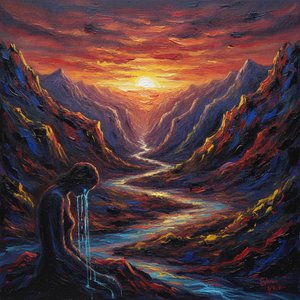
Capturing Emotion: A Journey Through the Soul of Expressionist Landscapes
Explore the profound emotional depth of Expressionist landscapes. Discover how Post-Impressionist masters moved beyond light to capture the soul through vibrant color and form. A curated journey for true art lovers seeking the beauty of expressive mastery.
Explore obras de arte organizadas por temas, estilos y características.


