

 Ver en contexto
 Enviar
 Compartir
 Detalles
 Guía
Guía

 Descargar
 Similares
 Radiografía
 Presentación de diapositivas
 Preguntas y respuestas
 Estadísticas
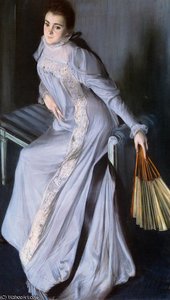
Mischief

- 127.0 x 114.0 cm


Discover "Mischief" by Jacques-Émile Blanche – a captivating 1901 oil painting of Parisian society. Explore its chiaroscuro, elegant style & rich textures. #impressionism #art
 Ver más
¿Conocías a Jacques Émile Blanche? Este pintor francés destacó por retratos elegantes de la sociedad parisina y londinense, capturando la personalidad con pinceladas libres e influenciado por Manet y Whistler. ¡Descubre su obra maestra!
Giclée / Impresión de arte
Impresiones giclée o en lienzo de calidad de museo con producción rápida y opciones de acabado flexibles. ( Comprar pintura hecha a mano Cambiar a imagen digital)




P118B €10

P118H €10

P118W €10

P438Z €10

P508JH €12

P508YH €12

P805H €10

P805Z €10

P919BZ €10

P919G €10

P919XJ €10

P959ZH €10

P968JZ €12

W106C €8

W218G €10

W218JH €8

W218Y €10

W307PJ €10

W316G €10

W316PJ €8

W316Y €10

W398PJ €8

W4111J €10

W500HY €15

W500JH €15

W692G €12

W849H €8

W940BG €15

W953PJ €8




Tamaño estándar
a medida
CM
INCH
Elija entre nuestros tamaños predefinidos que respetan las proporciones originales de la obra.
Loading sizes...

ancho
altura
Introduzca el ancho y el alto que necesite para adaptarse a su marco o pared. Una impresión solo puede recortarse, nunca hacerse más grande que la imagen original, por lo que un tamaño con una forma distinta perderá parte de la obra. Le enviaremos una maqueta digital para su aprobación antes de realizar cualquier impresión. La imagen que se muestra en esta página no refleja el recorte real; solo la maqueta lo hace.
Envío a todo el mundo () en 2 semanas en lugar de las 4/5 semanas estándar. (7 noviembre)

Envío exprés gratuito a todo el mundo

Lienzo de lino de alta calidad

Seguro de envío total

Garantía de reembolso de aranceles aduaneros

Garantía de fidelidad cromática exacta

Política de devolución de 100 días (solo por defectos)

Garantía de devolución del 100% del dinero

Descuento por cantidad
 La opción de vidrio solo está disponible en tamaños inferiores a 110 cm.

Mischief
Giclée / Impresión de arte
Dimensiones de la reproducción
-


Precio total final
€ 62
A Glimpse into Parisian Society – Jacques-Émile Blanche’s “Mischief”
Jacques-Émile Blanche's "Mischief," painted in 1901, is more than just a portrait; it’s a carefully constructed tableau vivant capturing the essence of Belle Époque Paris. The painting immediately draws the eye with its dramatic chiaroscuro – a masterful manipulation of light and shadow that plunges the scene into an intimate, almost secretive atmosphere. Blanche, a key figure in the Impressionist movement yet deeply influenced by earlier artistic traditions, particularly the elegance of 18th-century English portraiture, has created a work brimming with quiet observation and subtle psychological depth.
The composition centers around two figures: a seated woman and a man standing behind her. Their postures suggest an easy familiarity, perhaps even playful banter, yet there’s also a palpable sense of contained energy. The details are meticulously rendered – the folds of the woman's dress, the texture of the fabric, the subtle expressions on their faces – all contribute to a remarkably realistic portrayal of human interaction. The muted color palette, dominated by deep browns, rich reds, and hints of yellow, reinforces the painting’s somber mood while simultaneously highlighting key elements within the scene.
A Masterclass in Impressionistic Technique
Blanche's technique is a fascinating blend of observation and artistic license. He employs loose brushstrokes, characteristic of Impressionism, to capture the fleeting effects of light and atmosphere. However, these are not haphazard; they’re carefully considered choices that build up layers of color and texture, creating a remarkably tactile surface. Notice particularly the impasto – the thick application of paint – in areas like the woman's dress and the man's jacket, adding depth and visual interest. The artist skillfully utilizes glazing techniques, applying thin washes of translucent color over dried underlayers to achieve luminous effects and subtle shifts in tone.
The flattened perspective, a common feature of 19th-century painting, contributes to the intimate feel of the scene. Rather than striving for strict realism, Blanche prioritizes representation – capturing the *impression* of space and form. This stylistic choice allows him to focus on conveying mood and emotion, creating a sense of immediacy that draws the viewer into the moment depicted.
Symbolism and Context: A Portrait of Parisian Life
"Mischief" is deeply rooted in its historical context – the vibrant yet often decadent world of Belle Époque Paris. The painting reflects the social dynamics of the time, capturing a private conversation within a refined domestic setting. The figures themselves represent a microcosm of Parisian society: an educated woman and her companion, likely a gentleman of means, engaged in a relaxed exchange. Blanche’s frequent depictions of this social stratum offer a rare glimpse into the lives of those who shaped the cultural landscape of the era.
The title itself is intriguing. It suggests a playful transgression, a hint of mischief or rebellion within the confines of polite society. While the painting doesn't depict overt scandal, it subtly hints at an underlying current of unrest and unconventionality – a characteristic often associated with the artistic circles of Paris during this period.
A Timeless Appeal: Reproduction and Beyond
Jacques-Émile Blanche’s “Mischief” remains a captivating work of art, offering viewers a poignant glimpse into the social and cultural fabric of Belle Époque Paris. Reproductions of this painting capture its atmospheric depth and nuanced details, allowing it to be enjoyed by a wider audience. Whether displayed in a private residence or a public gallery, "Mischief" continues to resonate with its evocative portrayal of human connection and the subtle complexities of Parisian life.
Consider commissioning a high-quality reproduction – a tangible reminder of Blanche’s artistic vision and a beautiful addition to any collection. It's a piece that invites contemplation, sparking curiosity about the lives and times it depicts.
Preguntas y respuestas
¿Cuál es el color predominante en "Mischief" de Jacques-Émile Blanche?
El Black (#19120d) es el color predominante de "Mischief" de Jacques-Émile Blanche.
¿De qué manera el estilo de "Mischief" se relaciona con la época de su creador?
"Mischief" pertenece al movimiento Impressionism, y su creador trabajó en la época Siglo XIX.
¿Es "Mischief" una obra famosa del Impressionism?
"Mischief" de Jacques-Émile Blanche se clasifica como Recognized y pertenece al movimiento Impressionism.
Obras relacionadas




Biografía del artista
Early Life and Training
Jacques Émile Blanche (1861–1942) was born in Paris on January 1, 1861, France. He descended from a family of successful physicians and grew up in the affluent Parisian neighborhood of Passy, surrounded by prominent families and celebrated artists. His father, Émile Blanche, a distinguished pathologist, nurtured his son’s artistic inclinations, fostering an environment rich in intellectual stimulation. As a young boy, Blanche encountered many notable writers and painters—including Jules Michelet, Charles Renouvier, Hector Berlioz, Camille Corot, Louis Français—who profoundly shaped his worldview and artistic sensibilities. Notably, he met Edouard Manet early on, whose influence would permeate Blanche’s oeuvre throughout his life.Artistic Career
Blanche pursued painting largely independently, honing his craft through observation and experimentation rather than formal instruction. Despite lacking a structured academic background, he cultivated an exceptional talent for capturing the essence of his subjects—primarily portraits—with remarkable sensitivity and precision. He began exhibiting his work at the Salon in 1882, establishing a prolific artistic career marked by consistent engagement with the Parisian art scene. His distinctive style—characterized by loose brushwork and subdued coloration—was heavily influenced by Impressionism and English painters like Thomas Gainsborough and John Singer Sargent, reflecting a fascination for both classical elegance and modern innovation. Blanche’s meticulous attention to detail and his ability to convey psychological depth cemented his reputation as one of the foremost portraitists of his era.Influences and Style
Blanche's artistic vision was decisively shaped by Edouard Manet and James McNeill Whistler, whom he admired greatly. Like these artists, Blanche sought to depict reality truthfully, employing bold brushstrokes and expressive color palettes to convey the inner lives of his subjects. His portraits—such as “Portrait of Marcel Proust”—are renowned for their nuanced portrayal of character and intellectual curiosity.Notable Works and Exhibitions
Blanche’s artistic legacy extends beyond individual paintings; he played a crucial role in establishing Dieppe as an internationally recognized art colony, attracting artists from across Europe who sought inspiration in its coastal landscapes and vibrant cultural atmosphere. His magnum opus—the monumental group portrait of Norwegian landscape painter Frits Thaulow and his family—remains a testament to his artistic prowess and enduring fascination with capturing the complexities of human relationships. Blanche’s paintings are housed in prestigious museums worldwide, including the Musée des Beaux-Arts de Rouen and Tate Gallery London, ensuring that his work continues to inspire admiration and scholarly study for generations to come.
Jacques-Émile Blanche
1861 - 1942 , Francia
Datos clave
- Artistic Movement Or Style: Impressionism
- Artists Who Influenced This Artist:
- Edouard Manet
- James McNeill Whistler
- Date Of Birth: January 1, 1861
- Date Of Death: September 30, 1942
- Full Name: Jacques Émile Blanche
- Nationality: French
- Notable Artworks:
- The Kreutzer Sonata
- Portrait of Marcel Proust
- Place Of Birth: Paris, France
Artículos relacionados

Luz y materia: la profundidad del relieve en el óleo sobre tabla impresionista
Descubre la maestría del óleo sobre tabla y el relieve del impasto. Explora la profundidad de la luz en cada trazo.

Luz y Textura Eterna: El Poder del Óleo sobre Lienzo en el Impresionismo
Descubre la maestría del óleo y el impasto en el impresionismo. Explora la textura y luz de los grandes maestros ahora.

The Timeless Beauty of Oil on Panel: Capturing Light and Texture through the Impressionist Lens
Discover the exquisite depth of oil on panel. Explore how Impressionist masters captured light and texture through tactile brushwork, and learn how to bring these museum-quality, hand-painted masterpieces into your home with expert curation.

De Momentos Fugaces a Obras Eternas: El Arte de Crear tu Propio Legado Impresionista con Maestría y Alma
Descubre el arte de transformar momentos en legados eternos. Especialistas en reproducciones impresionistas hechas a mano con óleo sobre lienzo. Creamos retratos personalizados y réplicas maestras que aportan luz, textura y elegancia atemporal a tu hogar. Calidad de museo garantizada.

Capturing the Soul: The Ethereal Magic and Timeless Technique of Impressionist Portraiture
Discover the ethereal beauty of Impressionist portraiture. Explore how masters like Monet and Renoir captured light and soul through brushwork, and learn how to bring this timeless magic into your home with exquisite, hand-painted oil reproductions from TopImpressionists.com.
Explore obras de arte organizadas por temas, estilos y características.


