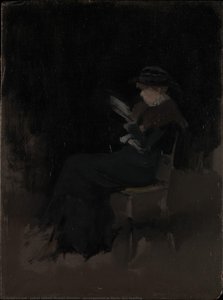
Vista previa
 Compartir
 Compartir
 Ver detalles
 Guía
Guía

 Descargar
 Ver artículos similares
 Radiografía
 Presentación de diapositivas
 Estadísticas
Eagle Wharf

Whistler’s artistic rebellion began early, fueled by his father's railroad engineering career and exposure to varied environments. He was a gifted draftsman and possessed an unwavering determination to forge a profession as an artist.
 Leer más
Explora a James Abbott McNeill Whistler (1834-1903): artista estadounidense del Tonalismo y el Esteticismo. Descubre 'La madre de Whistler', nocturnos, retratos y su filosofía 'el arte por el arte mismo'.
Giclée / Impresión de arte
Impresiones giclée o en lienzo de calidad de museo con producción rápida y opciones de acabado flexibles. ( Encargar reproducción pintada a mano Ver versión en imagen digital)




P118B €10

P118H €10

P118W €10

P438Z €10

P508JH €12

P508YH €12

P805H €10

P805Z €10

P919BZ €10

P919G €10

P919XJ €10

P959ZH €10

P968JZ €12

W106C €8

W218G €10

W218JH €8

W218Y €10

W307PJ €10

W316G €10

W316PJ €8

W316Y €10

W398PJ €8

W4111J €10

W500HY €15

W500JH €15

W692G €12

W849H €8

W940BG €15

W953PJ €8




Estándar
personalizado
CM
INCH
Elija entre nuestros tamaños predefinidos que respetan las proporciones originales de la obra.
Loading sizes...

ancho
altura
Introduzca el ancho y el alto que necesite para adaptarse a su marco o pared. Una impresión solo puede recortarse, nunca hacerse más grande que la imagen original, por lo que un tamaño con una forma distinta perderá parte de la obra. Le enviaremos una maqueta digital para su aprobación antes de realizar cualquier impresión. La imagen que se muestra en esta página no refleja el recorte real; solo la maqueta lo hace.
Envío a todo el mundo () en 2 semanas en lugar de las 4/5 semanas estándar. (23 octubre)

Envío exprés gratuito a todo el mundo

Lienzo de lino de alta calidad

Seguro de envío completo

Garantía de reembolso de impuestos aduaneros

Garantía de fidelidad cromática exacta

Política de devolución de 100 días (solo por defectos)

Garantía de devolución del 100% del dinero

Oferta por volumen
 La opción de vidrio solo está disponible en tamaños inferiores a 110 cm.

Eagle Wharf
Giclée / Impresión de arte
Tamaño de la reproducción
-


Precio total
€ 61
James Abbott McNeill Whistler: A Pioneer of Aestheticism
James Abbott McNeill Whistler (1834–1903) stands as an emblem of artistic rebellion against Victorian convention—a painter who championed “art for art’s sake” during a period obsessed with didactic narratives. His formative years, marked by frequent relocations due to his father's railroad engineering career, instilled within him a profound adaptability and exposure to diverse environments. This restless spirit fueled his burgeoning passion for art, propelling him across the Atlantic into the vibrant heart of European avant-garde movements. Whistler’s artistic journey began with an innate talent for drawing—a skill nurtured by encouragement from his brother-in-law Sir William Allan—and solidified through rigorous training at the Imperial Academy of Arts in St. Petersburg. It was here that he honed his observational skills and developed a distinctive approach to capturing visual experience, rejecting sentimentalism in favor of pure tonal harmony as expressed in his celebrated nocturnes.The Thames Set: Exploring Light and Atmosphere
Whistler’s most enduring legacy resides in “A Series of Sixteen Etchings of Scenes on the Thames and Other Subjects,” commonly known as The Thames Set (1871). This ambitious project represents a pivotal moment in Whistler's artistic career, marking his decisive embrace of tonalism—a technique prioritizing subtle gradations of color to convey mood and atmosphere rather than detailed representation. Unlike Impressionists who sought to capture fleeting moments of light, Whistler aimed for a more contemplative engagement with the subject matter, believing that “art should be regarded as an independent pursuit.” The etching depicts a tranquil harbor scene at Eagle Wharf, capturing the diffused glow of twilight over the water—a masterful demonstration of Whistler’s ability to distill complex visual sensations into simplified forms.Eagle Wharf: Composition and Symbolism
The composition of Eagle Wharf is deceptively simple yet profoundly deliberate. Whistler meticulously arranges elements within the frame to create a harmonious balance between light and shadow, mirroring the principles of musical orchestration. The boats are positioned strategically—some prominent in the foreground, others receding into the distance—drawing the viewer’s eye across the canvas. A solitary dog adds an element of domestic tranquility to the scene, subtly reinforcing Whistler's fascination with capturing everyday life without resorting to moralizing commentary. Beyond its aesthetic beauty, Eagle Wharf embodies Whistler’s philosophical stance: it is not merely a depiction of a place but an exploration of sensory experience itself—a testament to “art for art’s sake.”Whistlerian Influence and Legacy
James Abbott McNeill Whistler's unwavering commitment to artistic autonomy profoundly impacted the course of modern art. He challenged prevailing aesthetic norms, advocating for a rejection of narrative storytelling in favor of pure visual expression. His influence extended beyond painting, inspiring writers and composers alike to prioritize form over content—a legacy that continues to resonate within contemporary artistic discourse. Whistler’s “Whistler's Mother,” arguably his most iconic portrait, exemplifies this ethos—a deceptively understated depiction of motherhood imbued with an emotional depth that transcends mere visual representation. It remains a beloved image, frequently reproduced and parodied, cementing Whistler’s place as one of the foremost figures in the history of aestheticism.Preguntas y respuestas
¿Qué representa "Eagle Wharf" de James Abbott McNeill Whistler?
Los temas de "Eagle Wharf" son harbor scene, boats, dog, tranquility, nocturne, whistler, impressionism.
¿Qué configuración de impresión se sugiere para "Eagle Wharf" de James Abbott McNeill Whistler?
Para "Eagle Wharf", la configuración de impresión recomendada es un tamaño de Large y una orientación Landscape.
¿Cuánta luz parecen reflejar los colores de "Eagle Wharf"?
"Eagle Wharf" de James Abbott McNeill Whistler tiene una luminancia de Luminous. La luminancia describe cuánta luz parecen reflejar los colores.
Biografía del artista
James Abbott McNeill Whistler: Una Vida en el Arte
Primeros Años e Influencias
- Nacido el 14 de julio de 1834 en Lowell, Massachusetts, la vida temprana de James Abbott McNeill Whistler fue moldeada por la carrera de su padre como ingeniero ferroviario.
- Las frecuentes mudanzas le inculcaron adaptabilidad y exposición a diversos entornos.
- Asistió brevemente a la Academia Militar de los Estados Unidos en West Point, pero descubrió que no se adecuaba a sus inclinaciones artísticas.
- Un puesto posterior con la Encuesta Costera y Geodésica de EE. UU retrasó, pero no extinguió, su búsqueda del arte.
- Sus años formativos estuvieron marcados por un temprano interés en el dibujo y un deseo de convertirse en artista profesional.
Desarrollo Artístico y Comienzos Parisinos
- Whistler se mudó a París en 1855, un momento crucial en su viaje artístico.
- Estudió bajo la tutela de Sébastien Bouré, perfeccionando sus habilidades en pintura al óleo, acuarela y grabado.
- Las primeras obras reflejaban influencias de los pintores realistas franceses y la Escuela de Barbizon.
- Whistler rápidamente desarrolló un estilo distintivo caracterizado por armonías tonales y efectos atmosféricos.
Temas Clave y Estilo Artístico
- Whistler defendió el concepto de “arte por el arte mismo”, rechazando las narrativas didácticas o moralizadoras en favor de consideraciones estéticas.
- Su obra a menudo se centraba en capturar sutiles matices de luz, color y atmósfera.
- Con frecuencia empleaba paletas limitadas y pinceladas delicadas para crear estados de ánimo evocadores.
- Nocturnos, pinturas atmosféricas de escenas crepusculares, se convirtieron en un elemento distintivo de su obra.
- Los retratos también eran centrales en su práctica, a menudo enfatizando los arreglos formales y las relaciones tonales sobre la semejanza estricta.
Obras Notables y Logros Importantes
- El Herrero (1861): Una cautivadora representación de un taller de herrero que muestra el dominio de Whistler de la luz y la sombra.
- Retrato de Charles Lang Freer (1873): Demuestra su habilidad para capturar la esencia de sus sujetos a través de sutiles variaciones tonales.
- Brown and Gold: The Gold Girl—Connie Gilchrist (1876-77): Un ejemplo quintessential del Tonalismo, que presenta un uso innovador del color y la composición.
- Arrangement in Grey and Black No. 1 (Whistler’s Mother) (1871): Tal vez su obra más famosa, una imagen icónica de la maternidad victoriana y un testimonio de su enfoque formalista.
- Nocturne in Black and Gold – The Falling Rocket (1875): Una pintura controvertida que provocó una demanda por difamación contra el crítico de arte John Ruskin, destacando la defensa de Whistler del arte autónomo.
Influencias y Legado
- Whistler fue influenciado por las estampas japonesas (ukiyo-e), que informaron sus principios compositivos y su énfasis en los patrones decorativos.
- También admiró la obra de pintores españoles como Velázquez, particularmente su dominio de los valores tonales.
- Su defensa del “arte por el arte mismo” tuvo un impacto profundo en el movimiento estético en Inglaterra y América.
- La influencia de Whistler se extendió a las generaciones posteriores de artistas que adoptaron enfoques formalistas y exploraron el potencial expresivo del color y la composición.
- Dejó una marca indeleble en el arte estadounidense, desafiando las nociones convencionales sobre el propósito artístico y allanando el camino al modernismo.
Significado Histórico
- La carrera de Whistler coincidió con un período de importantes cambios sociales y culturales tanto en Europa como en América.
- Su obra desafió las sensibilidades victorianas y contribuyó a un cambio más amplio hacia el esteticismo y el individualismo.
- La demanda por difamación contra Ruskin elevó el perfil de Whistler e impulsó importantes debates sobre la naturaleza del arte crítico y la libertad artística.
- Sigue siendo una figura clave en la historia del arte estadounidense, celebrada por su estilo innovador, rigor intelectual y compromiso inquebrantable con los principios artísticos.

James Abbott McNeill Whistler
1834 - 1903 , Estados Unidos de América
Datos clave
- Artistas Influenciados: ['Movimiento Estético']
- Artistas Que Influyeron:
- Sebastián Bouré
- Velázquez
- Fecha De Muerte: 1903
- Fecha De Nacimiento: 14 de julio de 1834
- Lugar De Nacimiento: Lowell, Estados Unidos
- Movimiento Artístico: Tonalismo, Esteticismo
- Nacionalidad: Estadounidense
- Nombre Completo: James Abbott McNeill Whistler
- Obras Notables:
- The Forge
- Retrato de Charles Lang Freer
- Brown and Gold
- La madre de Whistler
- Nocturno en Negro y Oro
Artículos relacionados

Las 10 Grabados Legendarios que Revolucionaron el Arte | TopImpressionists
Descubre los 10 grabados legendarios que transformaron la historia del arte. Explora las obras maestras de Rembrandt, Goya y Dürer. Encuentra reproducciones de alta calidad e inspírate para decorar tu hogar con arte clásico en TopImpressionists.com.

The Intricate World of Etching: A Historical Survey of Technique, Aesthetic Evolution, and Enduring Artistic Impact
Explore the rich history of etching, from its origins to modern practice. Discover techniques, key artists like Rembrandt, and insights for collectors. A comprehensive guide by TopImpressionists.

El Aguafuerte: Un Recorrido Histórico por su Técnica, Cualidades Estéticas y Significado Duradero
Descubre la fascinante historia y técnica del aguafuerte. Explora su evolución artística, los maestros que lo dominaron y sus cualidades estéticas únicas. Guía experta para amantes del arte.

James Abbott McNeill Whistler: Las 25 Obras Maestras del Maestro del Arte y la Atmósfera | TopImpressionists
Descubre las 25 obras maestras de James Abbott McNeill Whistler, el maestro del impresionismo y la armonía en arte. Explora retratos icónicos, nocturnos evocadores y su innovadora paleta de colores. Reproducciones de arte exclusivas en TopImpressionists.com.

Alfred Munnings: Las 25 Obras Maestras del Pintor de Caballos | TopImpressionists
Descubre las 25 obras maestras de Alfred Munnings, el pintor británico de caballos por excelencia. Explora su impresionismo inglés, escenas campestres y técnica única. Encuentra reproducciones de arte de alta calidad en TopImpressionists.com.
Explore obras de arte organizadas por temas, estilos y características.