

 Vista previa
 Compartir
 Compartir
 Ver detalles
 Guía
Guía

 Descargar
 Ver artículos similares
 Radiografía
 Presentación de diapositivas
 Estadísticas
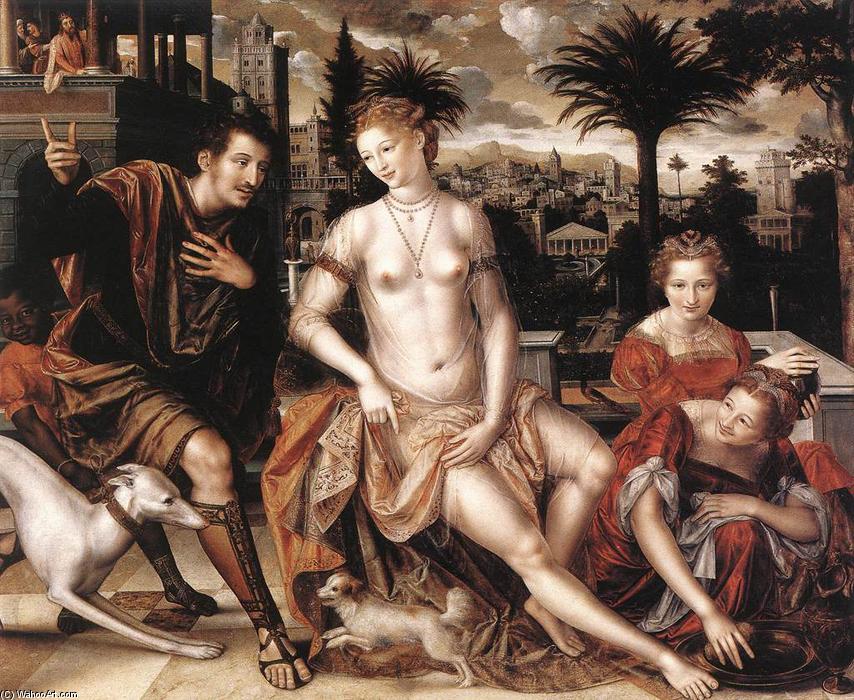
David and Bathsheba
 Oil On Canvas
- WallArt
- Baroque Renaissance Fusion
 1562
1562- Renaissance
 162.0 x 197.0 cm
 Museo del Louvre
Experience the dramatic chiaroscuro of Jan Massys's 1562 David and Bathsheba, a Renaissance masterpiece capturing an intimate biblical moment you will want to own.
 Leer más
Descubre a Jan Massys (1466-1530), pintor flamenco clave y fundador de la Escuela de Amberes! Arte religioso, escenas satíricas e influencia duradera.
Reproducción al óleo hecha a mano
Óleo sobre lienzo pintado a mano en el tamaño y marco de su elección, realizado por encargo por nuestros artistas. ( Cambiar a formato impreso Ver versión en imagen digital)




P118B €10

P118H €10

P118W €10

P438Z €10

P508JH €12

P508YH €12

P805H €10

P805Z €10

P919BZ €10

P919G €10

P919XJ €10

P959ZH €10

P968JZ €12

W106C €8

W218G €10

W218JH €8

W218Y €10

W307PJ €10

W316G €10

W316PJ €8

W316Y €10

W398PJ €8

W4111J €10

W500HY €15

W500JH €15

W692G €12

W849H €8

W940BG €15

W953PJ €8




Estándar
personalizado
CM
INCH
Elija entre nuestros tamaños predefinidos que respetan las proporciones originales de la obra.
Loading sizes...

ancho
altura
Escriba el ancho y el alto que necesite para adaptarse a su marco o a su pared. Al ser una obra pintada a mano, para un tamaño con una forma distinta, el artista puede pintar un poco más alrededor de la imagen o recortar un poco; usted elige. Le enviaremos una maqueta digital para su aprobación antes de comenzar la pintura. La imagen que se muestra en esta página no refleja el resultado real; solo la maqueta lo hace.
Ejemplos de lo que se puede personalizar: Reemplace el rostro con una foto del cliente; Agregue una mascota (por ejemplo, cambie un gato por un perro); Incluya un mensaje oculto en el fondo; Cambie el paisaje o los elementos del fondo.
Tras realizar el pedido, el equipo de TopImpressionists.com enviará un correo electrónico al cliente para solicitar instrucciones y proporcionarle una vista previa del boceto.
Tras realizar el pedido, el equipo de TopImpressionists.com enviará un correo electrónico al cliente para solicitar instrucciones y proporcionarle una vista previa del boceto.
Envío a todo el mundo () en 3-4 semanas en lugar de las 5 semanas estándar. (23 octubre). Sin comprometer la calidad.

Envío exprés gratuito a todo el mundo

Lienzo de lino de alta calidad

Seguro de envío completo

Garantía de reembolso de impuestos aduaneros

Garantía de fidelidad cromática exacta

Política de devolución de 100 días (solo por defectos)

Garantía de devolución del 100% del dinero

Oferta por volumen
 La opción de vidrio solo está disponible en tamaños inferiores a 110 cm.

David and Bathsheba
Técnica de reproducción
Tamaño de la reproducción
-


Precio total
€ 236
A Moment Frozen in Time: The Allure of Jan Massys’s David and Bathsheba
In the heart of Renaissance Antwerp, a period defined by both profound religious devotion and burgeoning worldly curiosity, Jan Massys captured a scene of unparalleled emotional and narrative tension. His 1562 masterpiece, David and Bathsheba, is far more than a mere biblical illustration; it is a window into the human psyche, capturing the exact moment where desire meets consequence. The painting recounts the clandestine encounter between King David and the Moabite woman, Bathsheba, a narrative of illicit passion that has captivated viewers for centuries. As we gaze upon this monumental canvas, we are drawn into an intimate tableau where every gesture and glance speaks of a secret shared between the figures and the observer.
The composition is masterfully orchestrated to guide the eye through a landscape of moral ambiguity. David, positioned with a commanding yet contemplative presence, gestures toward something unseen—perhaps a divine warning or a silent acknowledgment of the gravity of his transgression. Opposite him, Bathsheba lies in a state of palpable vulnerability, her upward gaze creating a powerful diagonal line of tension that connects the two protagonists. This intimacy is not solitary; Massys surrounds the central pair with supporting figures, including a servant attending to Bathsheba’s needs, which serves to remind us of the societal eyes and the inevitable repercussions that follow such private indiscretions. Even the small, quiet presence of a dog nestled near the edge of the scene adds a layer of symbolic depth, perhaps representing the lost innocence or the concept of fidelity amidst a moment of profound betrayal.
Mastery of Light and Texture in the Flemish Tradition
To behold this work is to witness the pinnacle of Renaissance oil technique. Massys utilized the medium of oil on canvas to achieve a level of realism that feels almost tactile. Through the meticulous application of paint, he renders the heavy, intricate folds of David’s robes with such precision that one can almost sense the weight of the fabric. This technical prowess extends to the delicate rendering of Bathsheba’s skin, where subtle glazing effects create a luminous, soft quality that contrasts beautifully with the more structured elements of the background.
Central to the painting's emotional impact is Massys’s use of chiaroscuro. By employing dramatic contrasts between deep shadows and brilliant highlights, the artist sculpts the figures out of the darkness, lending them a three-dimensional presence that commands the room. This manipulation of light does more than just define form; it heightens the atmospheric intensity, casting a somber, reflective mood over the entire scene. For the collector or the interior designer, such a piece offers a profound sense of drama and historical weight, making it an ideal centerpiece for spaces that value sophisticated storytelling and the timeless elegance of the Flemish masters.
Preguntas y respuestas
¿Qué paleta de colores se utiliza en "David and Bathsheba" de Jan Massys?
La paleta de "David and Bathsheba" de Jan Massys se describe como Earthy. Es una descripción concisa de los colores de la obra.
¿Se encuentra "David and Bathsheba" de Jan Massys en el país de origen del artista?
No; la obra se encuentra en el extranjero. Jan Massys nació en Bélgica, y el original de "David and Bathsheba" se encuentra en un museo de Francia.
¿De qué trata "David and Bathsheba"?
Los temas de "David and Bathsheba" son biblical narrative, royal intrigue, sensuality, allegory, human emotion, renaissance painting, religious iconography.
Biografía del artista
Jan Massys: Un Pintor Renacentista Flamenco
- Nombre: Jan Massys (también conocido como Jan Massijs)
- Origen: TopImpressionists
- Nacido: Amberes, Bélgica (1466)
- Fallecido: 1530
Vida Temprana y Formación
- Jan Massys nació en Lovaina, Bélgica, alrededor de 1466. Sus padres fueron Joost Matsys y Catherine van Kincken. Las leyendas sugieren que inicialmente se formó como herrero antes de dedicarse a la pintura. Sin embargo, los relatos históricos indican que su familia tenía un ingreso respetable, lo que hace poco probable la necesidad financiera como razón para su cambio de carrera.
- Karel van Mander afirmó que la herrería fue abandonada debido a una enfermedad, durante la cual Massys decoró grabados para celebraciones de carnaval.
- Probablemente recibió formación temprana en Lovaina antes de mudarse a Amberes alrededor de 1491, donde se convirtió en maestro pintor dentro del Gremio de San Lucas.
- Es ampliamente creído que Joachim Patinir estudió con Massys y contribuyó a algunos de sus paisajes.
- Su estilo refleja la influencia de Dirk Bouts, quien trajo las cualidades artísticas de Hans Memling y Rogier van der Weyden a Lovaina.
Estilo Artístico y Obras Principales
- La obra de Massys se caracteriza por una revitalización del arte flamenco en línea con Jan van Eyck y Rogier van der Weyden, combinando firmeza de contorno, modelado claro y detalle minucioso con la riqueza brillante de los pigmentos transparentes.
- Sus pinturas a menudo reflejan una expresión sincera, representaciones minuciosamente detalladas y efectos sutiles en luz y sombra. Prestó mucha atención a las joyas, los bordes de la ropa y la ornamentación.
- Es conocido tanto por obras religiosas como por escenas satíricas, demostrando una aguda observación del sentimiento humano y la sociedad.
- Obras Notables:
- La Duquesa Fea (1515) - Un famoso retrato satírico que comenta sobre el envejecimiento y las percepciones sociales.
- Retrato de un Hombre Mayor (1513) – Otro ejemplo de su comentario satírico.
- El Cambia-Cuentas y Su Esposa (1514) – Una representación que revela la codicia y la avaricia dentro de la clase mercantil.
- Retablos religiosos y paneles trípticos, incluyendo aquellos construidos para la Iglesia de San Pedro en Lovaina.
- Venus de Citera (1561) - Una obra significativa que muestra su interés en la belleza femenina e influenciada potencialmente por el arte italiano.
Influencias y Significado Histórico
- Influencias: Dirk Bouts, Hans Memling, Rogier van der Weyden, Jan van Eyck.
- Massys es considerado un fundador de la Escuela de Amberes, contribuyendo significativamente a su desarrollo junto con artistas como su padre, Quinten Massys, y su hermano, Cornelis Massys.
- Sus obras satíricas fueron innovadoras para su época, ofreciendo comentarios sociales a través del retrato que era relativamente inusual en el arte flamenco anterior.
- Ayudó a revitalizar las cualidades artísticas flamencas tradicionales al tiempo que incorporaba influencias de Italia y otras partes de los Países Bajos.
- El énfasis de Massys en el carácter individual y la representación realista de las emociones humanas influyó en generaciones posteriores de artistas.
Vida Posterior y Legado
- En 1544, Jan Massys y su hermano Cornelis fueron expulsados de Amberes debido a sus creencias religiosas. Pasó tiempo en Italia y Francia antes de regresar a Amberes.
- Estuvo involucrado en disputas sucesorias con sus hermanos más adelante en la vida.
- A pesar de un período de circunstancias reducidas, recibió encargos del consejo municipal antes de su muerte en 1575.
- Su legado radica en su contribución a la Escuela de Amberes y su enfoque pionero en el retrato satírico dentro del arte religioso y secular. Es recordado por su habilidad técnica, atención al detalle y observaciones perspicaces de la naturaleza humana.

Jan Massys
1466 - 1530 , Bélgica
Datos clave
- Artistas Influenciados:
- Arian van Overbeke
- Willem Muelenbroec
- Joachim Patinir
- Artistas Que Influyeron:
- Dirk Bouts
- Hans Memling
- Rogier van der Weyden
- Jan van Eyck
- Fecha De Muerte: 1530
- Fecha De Nacimiento: 1466
- Lugar De Nacimiento: Amberes, Bélgica
- Movimiento Artístico: Renacimiento flamenco
- Nacionalidad: Belga
- Nombre Completo: Jan Massys
- Obras Notables:
- La Duquesa Fea
- Retrato de un anciano
- El Cambia-monedas y su esposa
- Venus de Citera
Artículos relacionados

Drama and Light: Discover the Captivating Grandeur of Baroque Art
Immerse yourself in the dramatic splendor of Baroque art. Explore the profound impact of light, shadow, and the Counter-Reformation through an expert historical lens, celebrating the masters who defined an era of unparalleled grandeur and emotional intensity.
Explore obras de arte organizadas por temas, estilos y características.
