Ver en contexto
 Enviar
 Compartir
 Detalles
 Guía
Guía

 Descargar
 Similares
 Radiografía
 Presentación de diapositivas
 Preguntas y respuestas
 Estadísticas
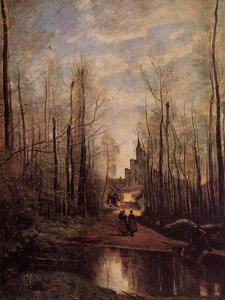
A Rising Path


Discover "A Rising Path" by Jean-Baptiste Corot (1845). This Impressionistic landscape painting captures serene rural beauty with loose brushstrokes & atmospheric light. A timeless piece for art lovers.
 Ver más
Descubre Jean-Baptiste-Camille Corot (1796-1875), pintor francés clave que fusiona Neoclasicismo e Impresionismo. Explora paisajes serenos, retratos realistas y su legado artístico.
Giclée / Impresión de arte
Impresiones giclée o en lienzo de calidad de museo con producción rápida y opciones de acabado flexibles. ( Comprar pintura hecha a mano Cambiar a imagen digital)




P118B €10

P118H €10

P118W €10

P438Z €10

P508JH €12

P508YH €12

P805H €10

P805Z €10

P919BZ €10

P919G €10

P919XJ €10

P959ZH €10

P968JZ €12

W106C €8

W218G €10

W218JH €8

W218Y €10

W307PJ €10

W316G €10

W316PJ €8

W316Y €10

W398PJ €8

W4111J €10

W500HY €15

W500JH €15

W692G €12

W849H €8

W940BG €15

W953PJ €8




Tamaño estándar
a medida
CM
INCH
Elija entre nuestros tamaños predefinidos que respetan las proporciones originales de la obra.
Loading sizes...

ancho
altura
Introduzca el ancho y el alto que necesite para adaptarse a su marco o pared. Una impresión solo puede recortarse, nunca hacerse más grande que la imagen original, por lo que un tamaño con una forma distinta perderá parte de la obra. Le enviaremos una maqueta digital para su aprobación antes de realizar cualquier impresión. La imagen que se muestra en esta página no refleja el recorte real; solo la maqueta lo hace.
Envío a todo el mundo () en 2 semanas en lugar de las 4/5 semanas estándar. (4 noviembre)

Envío exprés gratuito a todo el mundo

Lienzo de lino de alta calidad

Seguro de envío total

Garantía de reembolso de aranceles aduaneros

Garantía de fidelidad cromática exacta

Política de devolución de 100 días (solo por defectos)

Garantía de devolución del 100% del dinero

Descuento por cantidad
 La opción de vidrio solo está disponible en tamaños inferiores a 110 cm.

A Rising Path
Giclée / Impresión de arte
Dimensiones de la reproducción
-


Precio total final
€ 62
A Symphony of Light and Rural Grace: "A Rising Path" by Jean-Baptiste-Camille Corot
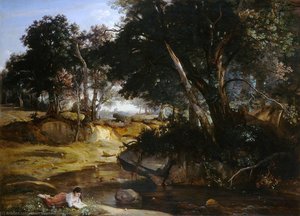
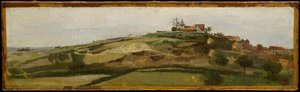
Jean-Baptiste-Camille Corot’s “A Rising Path” is more than just a depiction of a rural landscape; it's an immersion into the very soul of 19th-century French painting. Completed in 1845, this work embodies Corot’s profound dedication to capturing fleeting moments of natural beauty – a philosophy that would profoundly influence generations of artists to come. The scene unfolds with a quiet dignity: rolling hills draped in verdant hues, punctuated by the warm ochre of a sandy path leading the eye into the distance, and a sky painted with the softest blues and whites. It’s a landscape imbued with a sense of tranquility, inviting contemplation and a deep connection to the natural world.
Impressionistic Technique: Layering Light and Texture
Corot's mastery lies in his masterful application of technique. The painting is built upon layers of oil paint, meticulously applied with short, broken brushstrokes – a hallmark of the Impressionist movement, though predating its formal emergence. These strokes aren’t blended to create smooth transitions; instead, they retain their individual character, resulting in a rich, textured surface that seems to vibrate with light. Notice how the artist has used thick impasto in areas like the sandy path and the darker foreground, creating a tactile quality that draws you into the scene. The loose brushwork isn’t haphazard; it's deliberately employed to capture the ephemeral qualities of light – the way it dances across the hillsides, the subtle shifts in color as shadows lengthen, and the hazy atmosphere characteristic of rural landscapes. This technique wasn’t simply about representation; it was about conveying an *experience* of being present within that landscape.
Historical Context: Corot and the Rise of Plein Air Painting
“A Rising Path” emerged during a pivotal moment in art history. Prior to the mid-19th century, most landscape painters worked from studio studies, meticulously copying classical models or relying on sketches made *en plein air* (outdoors). Corot, however, championed the idea of directly observing and painting nature – a revolutionary concept at the time. He was part of a movement that sought to break away from academic conventions and embrace a more subjective approach to art. His work, alongside those of artists like Théodore Rousseau and François Millet, helped establish the foundation for Impressionism, paving the way for artists like Monet and Renoir to explore light and color in unprecedented ways. The painting’s date – 1845 – places it squarely within this period of artistic experimentation and a growing appreciation for the beauty of the natural world.
Symbolic Resonance: The Path as a Journey
Beyond its technical brilliance, “A Rising Path” possesses a subtle symbolic depth. The prominent sandy path isn’t merely a compositional element; it represents a journey – both literal and metaphorical. It invites the viewer to contemplate their own place within the landscape, suggesting themes of exploration, discovery, and perhaps even spiritual seeking. The gentle slope of the path leads the eye upwards, symbolizing aspiration and progress. The overall composition evokes a sense of peace and serenity, reinforcing the timeless appeal of Corot’s landscapes – scenes that resonate with our innate desire for connection to nature and a quiet escape from the complexities of modern life.
A Timeless Masterpiece: Reproduction Possibilities
Reproductions of “A Rising Path” offer an exceptional opportunity to bring this iconic work into your home or office. High-quality hand-painted reproductions meticulously recreate Corot’s technique and color palette, ensuring that you experience the full emotional impact of the original. These reproductions are not simply prints; they are works of art in their own right, capturing the essence of Corot's vision and offering a lasting tribute to one of France’s greatest landscape painters.
Preguntas y respuestas
¿Cuál es la luminancia de "A Rising Path" de Jean-Baptiste-Camille Corot?
La luminancia registrada para "A Rising Path" de Jean-Baptiste-Camille Corot es Gentle Luminance.
¿Qué orientación tiene "A Rising Path" de Jean-Baptiste-Camille Corot?
"A Rising Path" de Jean-Baptiste-Camille Corot es una composición en Panoramic. Se recomienda revisar las proporciones antes de elegir un tamaño de impresión.
¿Es "A Rising Path" de Jean-Baptiste-Camille Corot de dominio público y por qué?
"A Rising Path" de Jean-Baptiste-Camille Corot es de en el dominio público: sus derechos de autor han expirado. Los términos de derechos de autor se calculan a partir del fallecimiento del artista, y Jean-Baptiste-Camille Corot murió en 1875.
Obras relacionadas


Biografía del artista
Vida Temprana y Formación
Jean-Baptiste-Camille Corot, un renombrado pintor francés de paisajes y retratos, nació el 16 de julio de 1796 en París. Su familia, perteneciente a la burguesía, le proporcionó un entorno propicio para explorar sus inclinaciones artísticas. Inicialmente, los intereses de Corot se dirigieron hacia otros campos, pero finalmente descubrió su pasión por la pintura alrededor de 1821. Esto marcó el comienzo de su prolífica carrera, que más tarde influiría en el desarrollo del impresionismo.Trayectoria Artística y Obras Notables
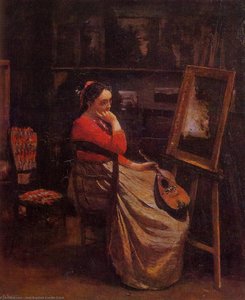
La trayectoria artística de Corot se caracteriza por una mezcla de tradición neoclásica e innovaciones al aire libre (plein air). Algunas de sus obras notables incluyen:- El Reposo (óleo sobre lienzo, circa 1860s), una pieza cautivadora que muestra la maestría de Corot para capturar la esencia de la serenidad.
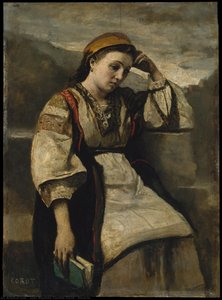
- Lectura Interrumpida (realismo, óleo, circa 1850s), un ejemplo conmovedor de la capacidad de Corot para retratar la vida cotidiana con profundidad y emoción.
- Agostina (realismo, óleo, circa 1860s), un impresionante retrato que ejemplifica la habilidad de Corot para capturar la esencia de sus sujetos.
Influencias y Desarrollo Artístico
Corot fue influenciado por artistas como Gaspard Davidovich Poussin y Claude Lorrain, maestros del paisaje clásico francés. Sin embargo, su propio desarrollo artístico lo llevó a alejarse de las composiciones rígidas y formales del neoclasicismo para abrazar una aproximación más libre e intuitiva al paisaje. Su adopción de la pintura plein air fue revolucionaria en su época, permitiéndole capturar directamente las condiciones atmosféricas cambiantes y la luz natural. También se le considera un precursor del impresionismo debido a su enfoque en la atmósfera, el color y la pincelada suelta.Logros e Importancia Histórica
La vasta producción de Corot ha tenido un impacto duradero en el desarrollo de la pintura de paisajes. Su innovador enfoque, combinando técnicas tradicionales con innovaciones al aire libre, allanó el camino para futuras generaciones de artistas. Aunque no fue reconocido ampliamente durante su vida, su obra ganó una mayor apreciación póstumamente y ahora se le considera una figura clave en la historia del arte francés. Corot influyó directamente a muchos artistas impresionistas como Monet, Renoir y Pissarro, quienes admiraban su capacidad para capturar la atmósfera y la luz natural. Descubra más sobre las pinturas de Jean-Baptiste-Camille Corot en TopImpressionists.com: https://TopImpressionists.com/@/jean-baptiste-camille-corot Aprenda más sobre el Musée Courbet en Wikipedia: https://en.wikipedia.org/wiki/mus%c3%a9e_courbet_(ornans,_france)
Jean-Baptiste-Camille Corot
1796 - 1875 , Francia
Datos clave
- Estilo Artístico: Neoclasicismo y Plein Air
- Influencia En Artistas: ['Impresionismo']
- Lugar De Nacimiento: París, Francia
- Nacimiento: 16 de julio de 1796
- Nacionalidad: Francesa
- Nombre Completo: Jean-Baptiste-Camille Corot
- Obras Notables:
- El Reposo
- Lectura interrumpida
- Agostina
Artículos relacionados

Luz y materia: la profundidad del relieve en el óleo sobre tabla impresionista
Descubre la maestría del óleo sobre tabla y el relieve del impasto. Explora la profundidad de la luz en cada trazo.
Capturing Emotion: A Journey Through the Soul of Expressionist Landscapes
Explore the profound emotional depth of Expressionist landscapes. Discover how Post-Impressionist masters moved beyond light to capture the soul through vibrant color and form. A curated journey for true art lovers seeking the beauty of expressive mastery.

Beyond the Light: Capturing Raw Emotion and Subjective Vision in Post-Impressionist Landscapes
Explore the profound emotional depth of Post-Impressionist landscapes. Discover how masters like Van Gogh moved beyond light to capture raw human feeling through vibrant color and expressive texture in this expert art history retrospective.
Explore obras de arte organizadas por temas, estilos y características.