Vista previa
 Compartir
 Compartir
 Ver detalles
 Guía
Guía

 Descargar
 Ver artículos similares
 Radiografía
 Presentación de diapositivas
 Estadísticas
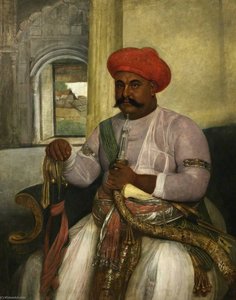
David Garrick
 Oil On Canvas
- WallArt
- Baroque Rococo Fusion
 1763
1763- Early Modern
 75.0 x 63.0 cm
 El Museo Ashmolean de Arte y Arqueología
Admire Johann Zoffany's iconic portrait of David Garrick alongside Eva Maria Veigel, capturing the theatrical spirit of Georgian England at The Ashmolean Museum.
 Leer más
¡Descubre las obras maestras del siglo XVIII de Johann Zoffany! Reconocido por sus 'composiciones de conversación', que combinan la precisión alemana con el estilo italiano. Explora retratos, pinturas históricas y mucho más – disponible en TopImpressionists.
Giclée / Impresión de arte
Impresiones giclée o en lienzo de calidad de museo con producción rápida y opciones de acabado flexibles. ( Encargar reproducción pintada a mano Ver versión en imagen digital)




P118B €10

P118H €10

P118W €10

P438Z €10

P508JH €12

P508YH €12

P805H €10

P805Z €10

P919BZ €10

P919G €10

P919XJ €10

P959ZH €10

P968JZ €12

W106C €8

W218G €10

W218JH €8

W218Y €10

W307PJ €10

W316G €10

W316PJ €8

W316Y €10

W398PJ €8

W4111J €10

W500HY €15

W500JH €15

W692G €12

W849H €8

W940BG €15

W953PJ €8




Estándar
personalizado
CM
INCH
Elija entre nuestros tamaños predefinidos que respetan las proporciones originales de la obra.
Loading sizes...

ancho
altura
Introduzca el ancho y el alto que necesite para adaptarse a su marco o pared. Una impresión solo puede recortarse, nunca hacerse más grande que la imagen original, por lo que un tamaño con una forma distinta perderá parte de la obra. Le enviaremos una maqueta digital para su aprobación antes de realizar cualquier impresión. La imagen que se muestra en esta página no refleja el recorte real; solo la maqueta lo hace.
Envío a todo el mundo () en 2 semanas en lugar de las 4/5 semanas estándar. (25 octubre)

Envío exprés gratuito a todo el mundo

Lienzo de lino de alta calidad

Seguro de envío completo

Garantía de reembolso de impuestos aduaneros

Garantía de fidelidad cromática exacta

Política de devolución de 100 días (solo por defectos)

Garantía de devolución del 100% del dinero

Oferta por volumen
 La opción de vidrio solo está disponible en tamaños inferiores a 110 cm.

David Garrick
Giclée / Impresión de arte
Tamaño de la reproducción
-


Precio total
€ 61
A Theatrical Soul Captured in Oil
In the quiet halls of The Ashmolean Museum of Art and Archaeology, there exists a portrait that does more than merely record a likeness; it breathes with the very essence of the eighteenth-century stage. Johann Zoffany’s 1763 masterpiece, David Garrick, is an evocative window into the heart of Enlightenment England. At first glance, we encounter the commanding presence of Garrick, the most celebrated actor of his era, rendered with a profound sense of dignity and intellectual depth. Zoffny does not present us with a mere performer in costume, but with a man whose very existence was intertwined with the dramatic arts. The composition is intimate yet grand, focusing on Garrick from the chest up against a somber, dark background that pushes his luminous features toward the viewer, demanding an immediate and visceral connection.
The technique employed by Zoffany is nothing short of masterful, showcasing the meticulous precision characteristic of the finest oil-on-canvas works of the period. Through subtle tonal gradations and a sophisticated command of light, the artist breathes life into the textures of the subject's attire—the crisp white collar contrasting sharply against the deep black of his formal coat. This interplay of light and shadow, or chiaroscuro, serves to sculpt Garrick’s face, highlighting a contemplative gaze that seems to look beyond the frame, perhaps lost in thought regarding a recent performance or a future script. For the discerning collector or interior designer, this painting offers a profound sense of classical elegance, making it an ideal centerpiece for spaces that value historical gravity and sophisticated drama.
The Dual Faces of Drama
Beyond the physical representation of a legendary actor, Zoffany weaves a complex tapestry of symbolism into the very fabric of the portrait. Floating near Garrick’s face are two iconic theatrical masks: the smiling visage of Comedy and the furrowed, mournful brow of Tragedy. These are not mere decorative elements; they are the dual pillars of the human experience that Garrick mastered on stage. The presence of these masks transforms the portrait from a standard biographical study into a profound meditation on the nature of performance and emotion. It suggests that behind the dignified gentleman lies the capacity for both joyous exuberance and profound sorrow, mirroring the duality of the human condition itself.
This symbolic layer adds an intellectual richness that elevates the artwork, making it much more than a decorative piece. It invites the viewer to contemplate the boundaries between reality and artifice, between the man and the persona. For those looking to adorn a home or gallery with a reproduction of this caliber, the painting provides a continuous source of conversation and inspiration. It embodies a period where art, intellect, and social status converged in a beautiful, theatrical display. To possess such a work is to hold a fragment of history—a moment frozen in 1763, where the spirit of the theatre remains eternally vibrant and hauntingly beautiful.
Preguntas y respuestas
¿Qué aporta "David Garrick" de Johann Zoffany a un espacio interior?
"David Garrick" de Johann Zoffany tiene una atmósfera Elegant y se recomienda para un/a Living Room. El estado de ánimo es lo que la obra aporta al espacio que la rodea.
¿Qué espacio se sugiere para "David Garrick" de Johann Zoffany?
Se recomienda "David Garrick" de Johann Zoffany para un Living Room. Esta sugerencia se basa en el tema, los colores y la atmósfera de la obra.
¿Se puede reproducir legalmente "David Garrick" de Johann Zoffany, que se encuentra en El Museo Ashmolean de Arte y Arqueología?
La obra original "David Garrick" se encuentra en El Museo Ashmolean de Arte y Arqueología y la pieza es en el dominio público: sus derechos de autor han expirado.
Biografía del artista
Johann Zoffany: Vida y Legado
Primeros Años y Formación
Johann Zoffany, nacido Johannes Josephus Zaufallij en 1733 en Freiburg, Alemania, fue un pintor que alcanzó renombre principalmente en Inglaterra e Italia. Los detalles de su infancia temprana son escasos, pero se sabe que recibió formación artística desde una edad temprana. Inicialmente, estuvo aprendiz con un escultor, posiblemente Melchior Paulus en Ellwangen, antes de estudiar con Martin Speer en Regensburg. Este período fundamental sentó las bases para su futura carrera.
Viaje a Italia y Inglaterra
En 1750, Zoffany viajó a Roma, entrando al estudio de Agostino Masucci donde perfeccionó sus habilidades dentro de la tradición artística italiana. Posteriormente, se mudó a Inglaterra en 1760, apoyándose inicialmente en la creación de diseños decorativos para relojes fabricados por Stephen Rimbault. Este período marcó un punto de inflexión ya que comenzó a establecer conexiones y ganar reconocimiento en el ambiente artístico de Londres.
Patrocinio Real y Desarrollo Artístico
Zoffany rápidamente atrajo la atención del Rey Jorge III y la Reina Carlota, convirtiéndose en un retratista favorito de la familia real. Su habilidad para capturar momentos informales – como La Reina Carlota y sus dos hijos mayores (1765) – lo distinguió de los pintores de corte más formales. También era popular con la familia imperial austríaca y recibió el título de barón del Sacro Imperio Romano Germánico en 1776 por la Emperatriz María Teresa.
El Maestro de las ‘Conversaciones’
Zoffany se hizo famoso por sus “conversaciones”, o *conversazioni* – retratos informales de grupos que representan reuniones sociales. Destacó en la captura de las personalidades e interacciones dentro de estos escenarios, a menudo presentando figuras destacadas de la sociedad, el teatro y la literatura. Sus obras como La Familia Cope (1775) ejemplifican este estilo, ofreciendo vislumbres de la vida de sus mecenas.
Logros Importantes y Obras Notables
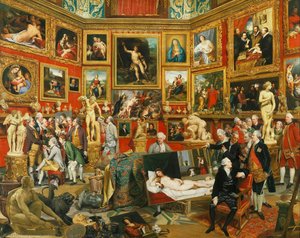
- Tribuna de la Uffizi (1772-1778): Tal vez su obra más famosa, una representación meticulosamente detallada de la Galería Uffizi en Florencia.
- Dr William Hunter Enseñando Anatomía en la Academia Real (1779): Una fascinante representación de la educación médica e investigación científica.
- Jorge III (1771): Un retrato regio que muestra el poder y la elegancia del Rey.
- El Partido de Pollos del Coronel Mordaunt (1784-1786): Una representación vibrante de la vida colonial en la India, capturando un evento cultural único.
Años en la India y Vida Tardía
Desde 1783 hasta 1789, Zoffany residió en la India, donde pintó retratos de figuras prominentes como Warren Hastings y Asaf-ud-Daula. Sus experiencias allí influyeron en su estilo artístico y tema. Una historia notable de este período involucra un naufragio frente a las islas Andamanitas, donde los supervivientes recurrieron a medidas extremas para sobrevivir.
Influencias y Legado
La obra de Zoffany refleja influencias tanto de la precisión alemana como del arte italiano. Se vio influenciado por artistas como Agostino Masucci y se inspiró en la tradición barroca. Su estilo, a su vez, influyó a los contemporáneos y a los artistas posteriores interesados en el retrato y el comentario social. Puenteó tradiciones artísticas e hizo un impacto duradero en el arte del siglo XVIII.
Significado Histórico
Las pinturas de Johann Zoffany proporcionan valiosas perspectivas sobre las costumbres sociales, la vida intelectual y los valores culturales de su tiempo. Sus “conversaciones” ofrecen retratos íntimos de individuos destacados y su mundo, mientras que sus representaciones de la India contribuyen a nuestra comprensión de la historia colonial. Sigue siendo una figura significativa en la historia del arte, celebrado por su habilidad técnica, observaciones perspicaces y visión artística única.

Johann Zoffany
1733 - 1810 , Alemania
Datos clave
- Artistic Movement Or Style: Neoclassicismo
- Artists Who Influenced This Artist:
- Agostino Masucci
- Martin Speer
- Date Of Birth: 1733
- Full Name: Johann Zoffany
- Nationality: Alemania
- Notable Artworks:
- Tribuna de la Uffizi
- Dr William Hunter Enseñando Anatomía en la Academia Real
- Jorge III
- El Partido de Pollos del Coronel Mordaunt
- Place Of Birth: Frankfurt, Alemania
Artículos relacionados

Johann Zoffany: Capturing Georgian Society with Brushstrokes of Cosmopolitan Flair
Explore the captivating world of Johann Zoffany, master portraitist of Georgian society. Discover his unique 'conversation pieces,' imperial commissions & lasting legacy. A guide for discerning collectors.

David Cox the Elder: Landscape, Light & the Romantic Vision of Rural England
Explore the captivating landscapes of David Cox the Elder, a pivotal figure in British Romanticism. Discover his masterful watercolour techniques, enduring legacy & find timeless art for your home at TopImpressionists.

Gerard David: Bridging Late Medieval Tradition with Early Renaissance Humanism
Explore the captivating world of Gerard David, a pivotal figure bridging late medieval artistry with the Early Renaissance. Discover his innovative techniques, religious masterpieces, and enduring legacy – a must-read for discerning art collectors.

Jacques-Louis David: Neoclassical Ideals & Revolutionary Witness
Explore the life & art of Jacques-Louis David, leading Neoclassical painter of the French Revolution. Discover iconic works like 'The Death of Marat' and his lasting impact on art history. Expert analysis & high-quality reproductions at TopImpressionists.

Thomas Rowlandson: Satire, Society & the Art of Caricature in Georgian England
Explore the witty world of Thomas Rowlandson, master Georgian caricaturist! Discover his satirical prints & insightful social commentary on 18th-century England. Learn about his life, techniques, and enduring influence.
Explore obras de arte organizadas por temas, estilos y características.