

Se muestra: · Con su marco:
 Ver en contexto
 Enviar
 Compartir
 Detalles
 Guía
Guía

 Descargar
 Similares
 Radiografía
 Presentación de diapositivas
 Preguntas y respuestas
 Estadísticas

€ 240
Reproducción al óleo hecha a mano
Óleo sobre lienzo pintado a mano en el tamaño y marco de su elección, realizado por encargo por nuestros artistas. ( Cambiar a impresiones Cambiar a imagen digital)
Tamaño
·Tamaño estándar
a medida
CM
INCH
Elija entre nuestros tamaños predefinidos que respetan las proporciones originales de la obra.
Cargando tamaños...

ancho
altura
Indique el ancho y el alto que necesite para adaptarse a su marco o pared. Al tratarse de una obra pintada a mano, si requiere un tamaño con una proporción distinta, el artista puede pintar un poco más alrededor de la imagen o recortarla ligeramente; usted elige. Le enviaremos una maqueta digital para su aprobación antes de comenzar la pintura. La imagen que se muestra en esta página no refleja el resultado real; solo la maqueta lo hace.
 Leer más información
Finalizar
·
Blanco €1

Bordes difuminados €1

Continuación de imagen €1

P118B €10

P118H €10

P118W €10

P438Z €10

P508JH €12

P508YH €12

P805H €10

P805Z €10

P919BZ €10

P919G €10

P919XJ €10

P959ZH €10

P968JZ €12

W106C €8

W218G €10

W218JH €8

W218Y €10

W307PJ €10

W316G €10

W316PJ €8

W316Y €10

W398PJ €8

W4111J €10

W500HY €15

W500JH €15

W692G €12

W849H €8

W940BG €15

W953PJ €8

H24-GOLD €30

H24-SILVER €30

H36-GOLD €45

H36-SILVER €45
Se envía en un tubo protector, listo para que lo enmarque su profesional de confianza.
Servicios adicionales
opcional¿Qué incluyen los extras?
Ejemplos de lo que se puede cambiar: Reemplazar el rostro con la foto del cliente; Añadir una mascota (por ejemplo, cambiar un gato por un perro); Incluir un mensaje oculto en el fondo; Cambiar el paisaje o los elementos del fondo.
Tras realizar el pedido, el equipo de TopImpressionists.com enviará un correo electrónico al cliente para solicitar instrucciones y proporcionar una vista previa del boceto
Tras realizar el pedido, el equipo de TopImpressionists.com enviará un correo electrónico al cliente para solicitar instrucciones y proporcionar una vista previa del boceto
Envío a todo el mundo () en 3-4 semanas en lugar de las 5 semanas estándar. (5 noviembre). Sin comprometer la calidad.
Barniz protector
Cartela
Detalles de la placa de bronce grabada
This elegant plaque features the artist's name and the title of the artwork, finely engraved for a timeless presentation.
It is made from bronze with a refined, elegant finish. The text is precisely laser-engraved for a sharp and permanent result. Measuring 9x2 cm, the plaque is compact yet easy to read. It's built to be durable and scratch-resistant, offering a professional, museum-quality look. Mounting is simple thanks to the included adhesive backing.
Detalles de la placa de acrílico transparente
The plaque includes essential engraved details such as the artist's name, the title of the artwork, the date it was created, the type of media used-like oil on canvas or watercolor-a brief description of the piece, and a QR code that links to the complete artwork information.
It is crafted from clear acrylic, offering a sleek, modern appearance. The text is UV-engraved in black to ensure strong visual contrast. With a size of 10x15 cm, it ensures optimal readability. It comes equipped with two metal hooks for secure wall mounting. The plaque is designed to be weather-resistant, making it suitable for various environments, and it includes interactive features that work seamlessly with smartphone scanning.
Detalles de la placa de acrílico negro
This elegant plaque includes engraved information such as the artist's name, the title of the artwork, the date it was created, the type of media used (like oil on canvas or watercolor), a short description of the artwork, and a QR code for quick access to more information.
The plaque itself is made from refined black acrylic with a premium finish. The text is laser-engraved in white for high contrast and readability. Its size is 10x15 cm, designed to be easy to read. It comes with two metal hooks for professional mounting. The design is sleek and fits any interior style. It is also weather-resistant and durable, with built-in digital integration for mobile compatibility.
La opción de vidrio solo está disponible en tamaños inferiores a 110 cm.
 La opción de vidrio solo está disponible en tamaños inferiores a 110 cm.
- Envío exprés gratuito a todo el mundo
- Lienzo de lino de alta calidad
- Seguro de envío total
- Garantía de reembolso de aranceles aduaneros
- Garantía de fidelidad cromática exacta
- Política de devolución de 100 días (solo por defectos)
- Garantía de devolución del 100% del dinero
- Descuento por cantidad


Descripción del objeto
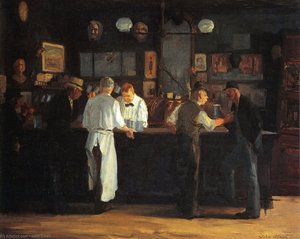
Descubre McSorley’s Bar de John Sloan, óleo de 1912 sobre la vida urbana en NYC. Disponible ahora como impresión de edición limitada.
Biografía del artista
¿Quién fue John Sloan? Descubre este pintor clave de la Escuela Ashcan y el Realismo Estadounidense. Admira sus escenas urbanas evocadoras y su compromiso con la representación de la vida cotidiana.
Sobre la obra
Un vistazo a la crudeza y el encanto de Chelsea
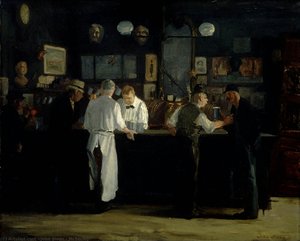
“McSorley’s Bar”, pintada por John French Sloan en 1912, no es simplemente la representación de una taberna neoyorquina; es una instantánea meticulosamente observada de una era: el amanecer del movimiento Ashcan School y la floreciente conciencia social de la América de principios del siglo XX. La pintura captura un momento específico dentro de McSorley’s Old Ale House, una institución de Chelsea que permanece notablemente inalterada en la actualidad, ofreciendo un vínculo tangible con el pasado. Sloan no estaba interesado en romantizar la vida urbana; por el contrario, la presentó con una honestidad inquebrantable, revelando los dramas silenciosos y las interacciones cotidianas que se desarrollaban en este establecimiento de clase trabajadora.

(Fuente de la imagen: Wikimedia Commons)
La Escuela Ashcan y una visión realista
La obra de Sloan está inextricablemente ligada a la Escuela Ashcan, un grupo de artistas estadounidenses que rechazaron los retratos idealizados favorecidos por las tradiciones del arte académico. En su lugar, se centraron en representar las realidades de la vida urbana: la pobreza, el trabajo y las experiencias, a menudo ignoradas, de la gente común. La meticulosa atención al detalle de Sloan —las superficies desgastadas de las mesas, el parpadeo de la luz de gas, las expresiones en los rostros de los clientes— es el sello distintivo de este movimiento. No buscaba grandes narrativas; su objetivo era capturar la esencia de un lugar y un tiempo específicos a través de una observación cuidadosa y una ejecución magistral.
La composición de la pintura es deliberadamente sobria, pero poderosamente evocadora. Sloan emplea una paleta de colores apagados —predominantemente marrones, grises y ocres— para crear una sensación de realismo y atmósfera. La iluminación es dramática, proyectando sombras alargadas que enfatizan la profundidad y la textura de la escena. Se puede apreciar cómo utiliza pinceladas sueltas para transmitir movimiento y energía, capturando las conversaciones animadas y las interacciones casuales entre los hombres en la barra.
Simbolismo en los detalles
Más allá de su representación inmediata de una escena de bar, “McSorley’s Bar” es rica en detalles simbólicos. Los numerosos relojes en la pared no son meramente decorativos; representan el paso implacable del tiempo y las presiones de la vida urbana. El mobiliario desgastado y la decoración sencilla hablan de la existencia precaria de muchos de los clientes. Incluso la disposición de las botellas y los vasos sugiere una sensación de familiaridad y rutina. La inclusión de dos libros en el fondo insinúa un deseo de búsquedas intelectuales en medio del ajetreo cotidiano, sugiriendo que este bar era más que un simple lugar para beber; era también un punto de encuentro para aquellos que buscaban respiro y conversación.
Un retrato atemporal de Chelsea
“McSorley’s Bar” sigue siendo notablemente relevante hoy en día. Es un recordatorio conmovedor del espíritu perdurable de la ciudad de Nueva York, sus barrios vibrantes y las personas que le han dado forma. La pintura ofrece una mirada a una era pasada, invitándonos a reflexionar sobre las complejidades de la vida urbana y la importancia de preservar nuestro patrimonio cultural. Las reproducciones de esta obra icónica continúan resonando tanto en coleccionistas como en diseñadores de interiores, ofreciendo un toque de auténtica historia neoyorquina y brillantez artística a cualquier espacio.
Preguntas y respuestas
¿Quién es el artista detrás de "McSorley"?
"McSorley" se atribuye a John French Sloan.
¿Qué atmósfera aporta "McSorley" de John French Sloan a un espacio interior?
Con su atmósfera Serenidad, se sugiere "McSorley" para Salón principal.
¿Cómo puedo descargar la imagen de "McSorley" de John French Sloan?
Hay una descarga disponible para "McSorley": la página de Descargar imagen digital de la obra ofrece descarga de una imagen digital en alta resolución.
Datos rápidos y cuestionario de arte
Sobre John French Sloan

John French Sloan
1871 - 1951, Estados Unidos
Biografía del artista
Early Life and Artistic Awakening
John French Sloan, born August 2, 1871, in Lock Haven, Pennsylvania, emerged from humble beginnings that profoundly shaped his artistic vision. His childhood was marked by a familial need for support; his father’s struggles with mental health necessitated young John taking on responsibilities beyond his years. This early exposure to the realities of working-class life—a world often overlooked by the established art circles—would become a defining characteristic of his oeuvre. He moved with his family to Philadelphia, where he honed his skills initially not through formal academic training, but as an assistant cashier at Porter and Coates, a bookstore brimming with prints and illustrations. This environment proved formative; it allowed him to study masters like Dürer and Rembrandt, fostering a deep appreciation for draftsmanship and etching techniques. It was here, amidst the commerce of printed images, that Sloan began creating his own art, quietly developing a style rooted in observation and meticulous detail. His early work wasn’t born from privilege or leisure, but from necessity and a keen eye for the world around him—a foundation upon which he would build a remarkable career.The Ashcan School and Urban Realism
Sloan's trajectory shifted dramatically with his encounter with Robert Henri, a charismatic painter who championed artistic independence and a commitment to portraying everyday life. This connection led Sloan to the heart of what became known as the Ashcan School—a group of artists dedicated to depicting the gritty realities of turn-of-the-century New York City. Alongside William Glackens, George Luks, Everett Shinn, and others, Sloan rejected the idealized landscapes and portraits favored by many of their contemporaries, instead turning their attention to the bustling streets, crowded tenements, and vibrant social life of the city’s poorer neighborhoods. His work became a visual chronicle of this often-ignored world—capturing scenes from McSorley's Bar to women drying their hair on rooftops. Sloan wasn’t merely documenting; he was imbuing these scenes with a sense of empathy and dignity, elevating the lives of ordinary people onto the canvas. He possessed an uncanny ability to capture the *essence* of neighborhood life, the subtle gestures and fleeting moments that revealed the character of a place and its inhabitants. This commitment to realism wasn’t simply aesthetic; it was also informed by his socialist leanings, though he always maintained a distinction between his art and his political beliefs.Style and Influences
Sloan's artistic style is characterized by a distinctive blend of influences. While rooted in realism, his work wasn’t devoid of stylistic nuance. He employed dark, rich hues—often emphasizing the contrast between light and shadow—to create a sense of drama and atmosphere. His compositions were carefully constructed, often utilizing strong diagonals to draw the viewer's eye into the scene. The influence of etching is evident in his precise linework and attention to detail, even in his paintings. Beyond Henri, Sloan drew inspiration from European masters like Edgar Degas and Honoré Daumier, admiring their ability to capture movement and social commentary. However, he forged a uniquely American voice, one that resonated with the energy and dynamism of New York City. His work wasn’t about grand narratives or historical events; it was about the small moments, the everyday experiences that constituted the fabric of urban life. He found beauty in the mundane, transforming ordinary scenes into compelling works of art. Wake of the Ferry, for example, exemplifies his ability to imbue a seemingly simple scene with emotional depth and symbolic resonance.Legacy and Lasting Impact
John French Sloan’s legacy extends far beyond his contributions to the Ashcan School. He was a prolific artist who worked in various mediums—painting, etching, lithography, drawing—and consistently explored themes of urban life, social justice, and human connection. His commitment to portraying the realities of working-class America paved the way for future generations of artists who sought to challenge conventional artistic norms and engage with social issues. He was a dedicated teacher, sharing his knowledge and passion with countless students throughout his career. Even as artistic tastes evolved, Sloan remained true to his vision, continuing to paint scenes that reflected his deep connection to New York City and its people. His work continues to resonate today, offering a poignant glimpse into a bygone era and reminding us of the enduring power of art to illuminate the human condition. His paintings are not merely historical documents; they are timeless portraits of life, love, and loss. Sloan’s influence can be seen in the works of subsequent realist painters and continues to inspire artists who seek to find beauty and meaning in the everyday world.Datos rápidos sobre John French Sloan
- Artistic Movement Or Style: Ashcan School, Realism
- Artists Or Movements Influenced By This Artist: ['Future generations']
- Artists Who Influenced This Artist: ['Robert Henri']
- Date Of Birth: August 2, 1871
- Full Name: John French Sloan
- Nationality: American
- Notable Artworks:
- Wake of the Ferry
- McSorley’s Bar
- Place Of Birth: Lock Haven, USA
Explore obras de arte organizadas por temas, estilos y características.


John French Sloan
McSorley
() ·
Con su marco: · Pintado a mano al óleo sobre lienzo
Total