

Shown: · With its frame:
 Ver en contexto
 Enviar
 Compartir
 Detalles
 Guía
Guía

 Descargar
 Similares
 Radiografía
 Presentación de diapositivas
 Q&A
Q&A Estadísticas


€ 239
Reproducción al óleo hecha a mano
Óleo sobre lienzo pintado a mano en el tamaño y marco de su elección, realizado por encargo por nuestros artistas. ( Cambiar a impresiones Cambiar a imagen digital)
Size
·Tamaño estándar
a medida
CM
INCH
Elija entre nuestros tamaños predefinidos que respetan las proporciones originales de la obra.
Loading sizes...

ancho
altura
Indique el ancho y el alto que necesite para adaptarse a su marco o pared. Al tratarse de una obra pintada a mano, si requiere un tamaño con una proporción distinta, el artista puede pintar un poco más alrededor de la imagen o recortarla ligeramente; usted elige. Le enviaremos una maqueta digital para su aprobación antes de comenzar la pintura. La imagen que se muestra en esta página no refleja el resultado real; solo la maqueta lo hace.
 Leer más información
Finish
·
White €1

Blurside €1

Extended €1

P118B €10

P118H €10

P118W €10

P438Z €10

P508JH €12

P508YH €12

P805H €10

P805Z €10

P919BZ €10

P919G €10

P919XJ €10

P959ZH €10

P968JZ €12

W106C €8

W218G €10

W218JH €8

W218Y €10

W307PJ €10

W316G €10

W316PJ €8

W316Y €10

W398PJ €8

W4111J €10

W500HY €15

W500JH €15

W692G €12

W849H €8

W940BG €15

W953PJ €8

H24-GOLD €30

H24-SILVER €30

H36-GOLD €45

H36-SILVER €45
Shipped in a protective tube, ready for your own framer.
Above 105 cm the frame is shipped as a kit for a professional framer — read the details.
Extras
optionalWhat do the extras include?
Examples of what can be changed: Replace face with customer photo; Add pet (e.g., replace cat with dog); Include hidden message in background; Change background landscape or elements.
After order, TopImpressionists.com team will email client for instructions and provide a mockup preview
After order, TopImpressionists.com team will email client for instructions and provide a mockup preview
Envío a todo el mundo () en 3-4 semanas en lugar de las 5 semanas estándar. (2 noviembre). Sin comprometer la calidad.
Barniz protector
Cartela
Detalles de la placa de bronce grabada
This elegant plaque features the artist's name and the title of the artwork, finely engraved for a timeless presentation.
It is made from bronze with a refined, elegant finish. The text is precisely laser-engraved for a sharp and permanent result. Measuring 9x2 cm, the plaque is compact yet easy to read. It's built to be durable and scratch-resistant, offering a professional, museum-quality look. Mounting is simple thanks to the included adhesive backing.
Detalles de la placa de acrílico transparente
The plaque includes essential engraved details such as the artist's name, the title of the artwork, the date it was created, the type of media used-like oil on canvas or watercolor-a brief description of the piece, and a QR code that links to the complete artwork information.
It is crafted from clear acrylic, offering a sleek, modern appearance. The text is UV-engraved in black to ensure strong visual contrast. With a size of 10x15 cm, it ensures optimal readability. It comes equipped with two metal hooks for secure wall mounting. The plaque is designed to be weather-resistant, making it suitable for various environments, and it includes interactive features that work seamlessly with smartphone scanning.
Detalles de la placa de acrílico negro
This elegant plaque includes engraved information such as the artist's name, the title of the artwork, the date it was created, the type of media used (like oil on canvas or watercolor), a short description of the artwork, and a QR code for quick access to more information.
The plaque itself is made from refined black acrylic with a premium finish. The text is laser-engraved in white for high contrast and readability. Its size is 10x15 cm, designed to be easy to read. It comes with two metal hooks for professional mounting. The design is sleek and fits any interior style. It is also weather-resistant and durable, with built-in digital integration for mobile compatibility.
La opción de vidrio solo está disponible en tamaños inferiores a 110 cm.
 La opción de vidrio solo está disponible en tamaños inferiores a 110 cm.
- Envío exprés gratuito a todo el mundo
- Lienzo de lino de alta calidad
- Seguro de envío total
- Garantía de reembolso de aranceles aduaneros
- Garantía de fidelidad cromática exacta
- Política de devolución de 100 días (solo por defectos)
- Garantía de devolución del 100% del dinero
- Descuento por cantidad


Descripción del objeto
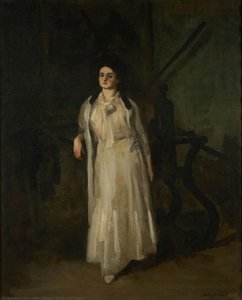
Explora Stein and Press (1906) de John Sloan, un retrato realista de NYC con luces dramáticas. Descubre esta obra maestra del Ashcan School.
Biografía del artista
¿Quién fue John Sloan? Descubre este pintor clave de la Escuela Ashcan y el Realismo Estadounidense. Admira sus escenas urbanas evocadoras y su compromiso con la representación de la vida cotidiana.
About the painting
Stein and Press: Un Retrato de la Melancolía Urbana
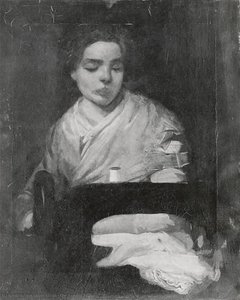
La obra “Stein and Press” (1906) de John French Sloan se erige como una piedra angular del realismo de la Escuela Ashcan, un movimiento dedicado a retratar las crudas realidades de la vida urbana estadounidense con una honestidad inquebrantable. Más que una simple representación de una mujer sentada en una habitación tenuemente iluminada, la pintura es una exploración de la soledad, la introspección y el dolor silencioso inherente a la existencia cotidiana. El uso magistral del claroscuro por parte de Sloan —esos contrastes dramáticos entre la luz y la sombra— establece de inmediato una atmósfera de profunda seriedad. La pintura se centra en una única figura femenina, plasmada con un detalle meticuloso sobre un fondo de tonos marrones y grises apagados que amplifican su aislamiento. Su postura, sutilmente girada lejos del espectador, fomenta una sensación de intimidad al mismo tiempo que transmite vulnerabilidad. Las pinceladas de Sloan son visibles, superponiendo texturas para crear una superficie impresionista que captura no solo la forma, sino también la atmósfera. El atuendo de la mujer —un vestido oscuro que cae sobre una silla— se suma a la paleta sombría y refuerza esa sensación de contemplación silenciosa. La técnica de Sloan tiene sus raíces en los métodos tradicionales de la pintura al óleo, priorizando la gradación tonal y el difuminado para lograr una profundidad y luminosidad notables. Emplea con destreza el tramado y el achurado para definir las facciones del rostro y los pliegues de los ropajes, demostrando un compromiso inquebrantable con el dibujo, sello distintivo de su enfoque artístico. La composición misma contribuye significativamente a la resonancia emocional de la obra; la perspectiva achatada disminuye sutilmente la grandeza del entorno, enfatizando el estado interno del sujeto por encima de su contexto externo. La Escuela Ashcan, surgida en la ciudad de Nueva York durante la Era Progresista, reaccionó contra las convenciones del arte académico y defendió una representación más veraz de la vida urbana, retratando a menudo la pobreza, las dificultades y las comunidades marginadas. La obra de Sloan se alinea con este espíritu, reflejando las preocupaciones sociales prevalentes en la época mientras explora temas universales de la emoción humana. “Stein and Press” no es meramente un retrato; es una meditación sobre las complejidades de la experiencia interior dentro de los confines de un espacio ordinario, un recordatorio atemporal de la belleza que se encuentra en la reflexión tranquila y de la melancolía omnipresente que acompaña a la soledad.- Artista: John French Sloan
- Año de creación: 1906
- Técnica: Óleo sobre lienzo
- Estilo: Realismo de la Escuela Ashcan
- Ubicación: Colección privada
Resonancia Simbólica e Influencia Artística
El uso deliberado de colores apagados por parte de Sloan —principalmente marrones, grises y ocres— funciona como una poderosa metáfora visual de la melancolía y la introspección. La mirada esquiva de la mujer simboliza el retiro del mundo, invitando a los espectadores a contemplar sus pensamientos y sentimientos más íntimos. Además, las elecciones estilísticas de Sloan —particularmente sus pinceladas texturizadas y su iluminación en claroscuro— impactaron profundamente a las generaciones posteriores de artistas, consolidándolo como una figura fundamental del modernismo estadounidense. Su dedicación inquebrantable al retrato de la experiencia humana auténtica continúa inspirando tanto a pintores como a diseñadores contemporáneos.Preguntas y respuestas
¿Para qué estancia se recomienda "Stein and Press" de John French Sloan?
El espacio recomendado para "Stein and Press" de John French Sloan es un Salón principal. Por supuesto, esta sugerencia puede adaptarse a su decoración.
¿En qué año se creó "Stein and Press"?
"Stein and Press" de John French Sloan fue creado en 1906.
¿Se puede descargar la imagen de "Stein and Press"?
Hay una descarga disponible para "Stein and Press": la página de Descargar imagen digital de la obra ofrece descarga de una imagen digital en alta resolución.
Quick facts and art quiz
About John French Sloan

John French Sloan
1871 - 1951, Estados Unidos
Biografía del artista
Early Life and Artistic Awakening
John French Sloan, born August 2, 1871, in Lock Haven, Pennsylvania, emerged from humble beginnings that profoundly shaped his artistic vision. His childhood was marked by a familial need for support; his father’s struggles with mental health necessitated young John taking on responsibilities beyond his years. This early exposure to the realities of working-class life—a world often overlooked by the established art circles—would become a defining characteristic of his oeuvre. He moved with his family to Philadelphia, where he honed his skills initially not through formal academic training, but as an assistant cashier at Porter and Coates, a bookstore brimming with prints and illustrations. This environment proved formative; it allowed him to study masters like Dürer and Rembrandt, fostering a deep appreciation for draftsmanship and etching techniques. It was here, amidst the commerce of printed images, that Sloan began creating his own art, quietly developing a style rooted in observation and meticulous detail. His early work wasn’t born from privilege or leisure, but from necessity and a keen eye for the world around him—a foundation upon which he would build a remarkable career.The Ashcan School and Urban Realism
Sloan's trajectory shifted dramatically with his encounter with Robert Henri, a charismatic painter who championed artistic independence and a commitment to portraying everyday life. This connection led Sloan to the heart of what became known as the Ashcan School—a group of artists dedicated to depicting the gritty realities of turn-of-the-century New York City. Alongside William Glackens, George Luks, Everett Shinn, and others, Sloan rejected the idealized landscapes and portraits favored by many of their contemporaries, instead turning their attention to the bustling streets, crowded tenements, and vibrant social life of the city’s poorer neighborhoods. His work became a visual chronicle of this often-ignored world—capturing scenes from McSorley's Bar to women drying their hair on rooftops. Sloan wasn’t merely documenting; he was imbuing these scenes with a sense of empathy and dignity, elevating the lives of ordinary people onto the canvas. He possessed an uncanny ability to capture the *essence* of neighborhood life, the subtle gestures and fleeting moments that revealed the character of a place and its inhabitants. This commitment to realism wasn’t simply aesthetic; it was also informed by his socialist leanings, though he always maintained a distinction between his art and his political beliefs.Style and Influences
Sloan's artistic style is characterized by a distinctive blend of influences. While rooted in realism, his work wasn’t devoid of stylistic nuance. He employed dark, rich hues—often emphasizing the contrast between light and shadow—to create a sense of drama and atmosphere. His compositions were carefully constructed, often utilizing strong diagonals to draw the viewer's eye into the scene. The influence of etching is evident in his precise linework and attention to detail, even in his paintings. Beyond Henri, Sloan drew inspiration from European masters like Edgar Degas and Honoré Daumier, admiring their ability to capture movement and social commentary. However, he forged a uniquely American voice, one that resonated with the energy and dynamism of New York City. His work wasn’t about grand narratives or historical events; it was about the small moments, the everyday experiences that constituted the fabric of urban life. He found beauty in the mundane, transforming ordinary scenes into compelling works of art. Wake of the Ferry, for example, exemplifies his ability to imbue a seemingly simple scene with emotional depth and symbolic resonance.Legacy and Lasting Impact
John French Sloan’s legacy extends far beyond his contributions to the Ashcan School. He was a prolific artist who worked in various mediums—painting, etching, lithography, drawing—and consistently explored themes of urban life, social justice, and human connection. His commitment to portraying the realities of working-class America paved the way for future generations of artists who sought to challenge conventional artistic norms and engage with social issues. He was a dedicated teacher, sharing his knowledge and passion with countless students throughout his career. Even as artistic tastes evolved, Sloan remained true to his vision, continuing to paint scenes that reflected his deep connection to New York City and its people. His work continues to resonate today, offering a poignant glimpse into a bygone era and reminding us of the enduring power of art to illuminate the human condition. His paintings are not merely historical documents; they are timeless portraits of life, love, and loss. Sloan’s influence can be seen in the works of subsequent realist painters and continues to inspire artists who seek to find beauty and meaning in the everyday world.Quick facts about John French Sloan
- Artistic Movement Or Style: Ashcan School, Realism
- Artists Or Movements Influenced By This Artist: ['Future generations']
- Artists Who Influenced This Artist: ['Robert Henri']
- Date Of Birth: August 2, 1871
- Full Name: John French Sloan
- Nationality: American
- Notable Artworks:
- Wake of the Ferry
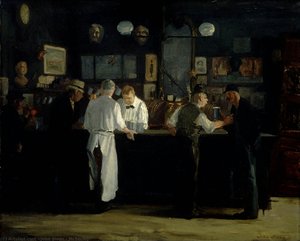
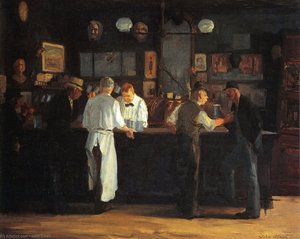
- McSorley’s Bar
- Place Of Birth: Lock Haven, USA
Explore obras de arte organizadas por temas, estilos y características.


John French Sloan
Stein and Press
() ·
With its frame: · Hand-painted in oil on linen
Total