


 Vista previa
 Compartir
 Compartir
 Ver detalles
 Guía
Guía

 Descargar
 Ver artículos similares
 Radiografía
 Presentación de diapositivas
 Estadísticas
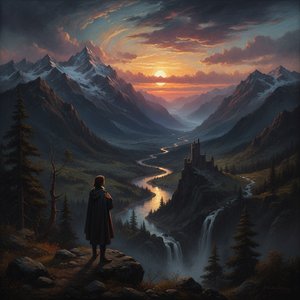
Caerphilly Castle
 Romanticism
 110.0 x 148.0 cm
Admire John William Schofield’s ‘Caerphilly Castle,’ a stunning Romantic landscape painting. Explore its atmospheric realism & serene beauty – oil on canvas, 110x148cm.
Explore the evocative landscapes of John William Schofield – an American Impressionist painter renowned for his Pennsylvania & Cornish scenes. Discover his masterful use of light & color.
 Leer más
Giclée / Impresión de arte
Impresiones giclée o en lienzo de calidad de museo con producción rápida y opciones de acabado flexibles. ( Encargar reproducción pintada a mano Ver versión en imagen digital)




































Estándar
personalizado
CM
INCH
Elija entre nuestros tamaños predefinidos que respetan las proporciones originales de la obra.
Loading sizes...

ancho
altura
Puede introducir sus propias dimensiones para adaptarse a un marco o espacio específico. Si el tamaño seleccionado no coincide con las proporciones de la imagen original, recortaremos la obra de arte o extenderemos la imagen con un borde con efecto espejo o de color sólido. Se enviará una maqueta digital para su aprobación antes de que comience la producción.
Tenga en cuenta que la vista previa en pantalla no refleja el recorte o la extensión real. Solo la maqueta mostrará con precisión la composición final.
Aunque existen tamaños personalizados, recomendamos seleccionar una dimensión de la lista predefinida para preservar las proporciones originales.
Envío a todo el mundo () en 2 semanas en lugar de las 4/5 semanas estándar. (27 septiembre)

Envío exprés gratuito a todo el mundo

Lienzo de lino de alta calidad

Seguro de envío completo

Garantía de reembolso de impuestos aduaneros

Garantía de fidelidad cromática exacta

Política de devolución de 100 días (solo por defectos)

Garantía de devolución del 100% del dinero

Oferta por volumen
 La opción de vidrio solo está disponible en tamaños inferiores a 110 cm.

Caerphilly Castle
Giclée / Impresión de arte
Tamaño de la reproducción
-


Precio total
$ 69
Biografía del artista
The Ethereal Vision of John William Schofield
In the quiet, mist-drenched landscapes of the American Impressionist movement, few names evoke as much atmospheric tenderness as John William Schofield. A master of light and a poet of the natural world, Schofield possessed a rare ability to translate the fleeting sensations of a passing cloud or the subtle shift of seasonal warmth onto canvas. His life’s work serves as a bridge between the structured traditions of his American upbringing and the luminous, experimental spirit of European Impressionism. Born in Philadelphia, his artistic soul was forged in the heart of Pennsylvania, yet it wandered far across the Atlantic, seeking the elusive magic found only in the interplay of light and shadow.
Schofield’s journey into the realm of fine art began with rigorous formal training, a foundation that provided him with the technical prowess to later embrace more fluid, impressionistic techniques. His early studies at the Pratt Institute and his time at the Pennsylvania Academy of the Fine Arts instilled in him a deep respect for form and composition. However, it was his exposure to the broader European landscape that truly ignited his creative fire. Traveling through France and absorbing the revolutionary aesthetics of masters like Claude Monet and Jean-François Millet, Schofield learned to look beyond mere representation. He began to see the world not as a collection of static objects, but as a vibrant, breathing tapestry of color and atmosphere.
A Tale of Two Landscapes: Pennsylvania and Cornwall
The heart of Schofield’s oeuvre lies in his profound connection to two distinct yet equally evocative geographies: the rugged, serene countryside of Pennsylvania and the dramatic, salt-sprayed coasts of Cornwall. In his depictions of the American landscape, particularly within the Wissahickon Valley, Bucks County, and the Pocono Mountains, he pioneered a distinctive tonalist approach. These works are characterized by a soft, muted palette that captures the quiet dignity of the seasons—the heavy, silent weight of winter snow and the hazy, golden stillness of summer afternoons. His paintings do not merely document scenery; they invite the viewer into a state of deep contemplation, mirroring the tranquility he found within the American wilderness.
This pursuit of light took an even more dramatic turn during his time in England. Drawn to the Cornish coastline, Schofield found himself captivated by a different kind of luminosity—one that was sharper, more mercurial, and deeply influenced by the sea. The misty hillsides and rugged cliffs of Cornwall provided him with a new vocabulary of texture and movement. In these canvases, his brushwork often became more energetic, capturing the ethereal quality of light as it breaks through coastal fog or dances upon the surface of the Atlantic. This duality—the grounded, soulful landscapes of his home and the luminous, maritime inspirations of Europe—defines the breadth of his artistic legacy.
Legacy and Artistic Significance
Beyond the mere beauty of his subjects, Schofield’s significance lies in his role as a pivotal figure within American Impressionism. He was part of a generation of artists who successfully synthesized European innovation with an American sensibility, creating a body of work that felt both globally relevant and intimately local. His ability to master the tonalist style—using subtle gradations of color to create mood and depth—allowed him to capture the "soul" of a place rather than just its appearance.
Today, the works of John William Schofield continue to resonate with those who seek beauty in the quiet moments of nature. His achievements are marked by:
- Mastery of Atmosphere: The seamless integration of light, mist, and shadow to evoke specific emotional responses.
- Tonalist Innovation: A sophisticated use of muted hues that brought a sense of peace and permanence to transient landscapes.
- Cultural Synthesis: The successful blending of American landscape traditions with the experimental techniques of French Impressionism.
As we look upon his canvases, we see more than just paint on cloth; we witness a lifelong devotion to the ephemeral beauty of our world, preserved forever in the soft glow of his brushstrokes.

Datos clave
- Artistic Movement Or Style: Impressionism
- Artists Who Influenced This Artist: ['Walter Elmer Schofield']
- Date Of Birth: Living
- Full Name: John William Schofield
- Nationality: American
- Notable Artworks: ['Caerphilly Castle']
- Place Of Birth: Pennsylvania, USA
Artículos relacionados

Capturing the Soul: The Emotional Magic and Sublime Grandeur of Romantic Landscape Painting
Explore the profound emotional depth of Romantic landscape painting. Discover how masters like Friedrich and Turner captured the sublime through light, shadow, and nature's power in this expert art history retrospective for discerning collectors.
Capturing the Soul: The Emotional Majesty and Sublime Power of Romantic Landscape Painting
Explore the profound emotional depth of Romantic landscape painting. Discover how masters like Turner and Friedrich captured the sublime power of nature through intuition and imagination in this expert art history retrospective.