


 Vista previa
 Compartir
 Compartir
 Ver detalles
 Guía
Guía

 Descargar
 Ver artículos similares
 Radiografía
 Presentación de diapositivas
 Estadísticas
CORNELIE, MERE DE GRACQUES


Experience the timeless beauty of Joseph Suvée's 'Cornelia, Mother of the Gracchi.' This Neoclassical masterpiece captures Roman family life with exquisite detail and serene elegance.
 Leer más
Joseph-Benoît Suvée (1743-1807) fue un pintor flamenco de la era neoclásica. Conocido por escenas históricas y mitológicas, sus obras como 'Cornelia, Madre de los Gracos' ejemplifican el arte académico de los siglos XVIII y XIX.
Reproducción al óleo hecha a mano
Óleo sobre lienzo pintado a mano en el tamaño y marco de su elección, realizado por encargo por nuestros artistas. ( Cambiar a formato impreso Ver versión en imagen digital)




P118B €10

P118H €10

P118W €10

P438Z €10

P508JH €12

P508YH €12

P805H €10

P805Z €10

P919BZ €10

P919G €10

P919XJ €10

P959ZH €10

P968JZ €12

W106C €8

W218G €10

W218JH €8

W218Y €10

W307PJ €10

W316G €10

W316PJ €8

W316Y €10

W398PJ €8

W4111J €10

W500HY €15

W500JH €15

W692G €12

W849H €8

W940BG €15

W953PJ €8




Estándar
personalizado
CM
INCH
Elija entre nuestros tamaños predefinidos que respetan las proporciones originales de la obra.
Loading sizes...

ancho
altura
Escriba el ancho y el alto que necesite para adaptarse a su marco o a su pared. Al ser una obra pintada a mano, para un tamaño con una forma distinta, el artista puede pintar un poco más alrededor de la imagen o recortar un poco; usted elige. Le enviaremos una maqueta digital para su aprobación antes de comenzar la pintura. La imagen que se muestra en esta página no refleja el resultado real; solo la maqueta lo hace.
Ejemplos de lo que se puede personalizar: Reemplace el rostro con una foto del cliente; Agregue una mascota (por ejemplo, cambie un gato por un perro); Incluya un mensaje oculto en el fondo; Cambie el paisaje o los elementos del fondo.
Tras realizar el pedido, el equipo de TopImpressionists.com enviará un correo electrónico al cliente para solicitar instrucciones y proporcionarle una vista previa del boceto.
Tras realizar el pedido, el equipo de TopImpressionists.com enviará un correo electrónico al cliente para solicitar instrucciones y proporcionarle una vista previa del boceto.
Envío a todo el mundo () en 3-4 semanas en lugar de las 5 semanas estándar. (24 octubre). Sin comprometer la calidad.

Envío exprés gratuito a todo el mundo

Lienzo de lino de alta calidad

Seguro de envío completo

Garantía de reembolso de impuestos aduaneros

Garantía de fidelidad cromática exacta

Política de devolución de 100 días (solo por defectos)

Garantía de devolución del 100% del dinero

Oferta por volumen
 La opción de vidrio solo está disponible en tamaños inferiores a 110 cm.

CORNELIE, MERE DE GRACQUES
Técnica de reproducción
Tamaño de la reproducción
-


Precio total
€ 411
Cornelia, Mother of the Gracchi – A Neoclassical Portrait of Roman Dignity
The painting “Cornelia, Mother of the Gracchi,” attributed to Joseph-Benoît Suvée, is more than just a portrait; it’s a carefully constructed tableau vivant, a window into the idealized world of late 18th-century Neoclassicism. Executed around 1795, this work captures a pivotal moment – Cornelia, the formidable mother of the celebrated Roman brothers Tiberius and Gaius Gracchus, imparting wisdom and guidance to her children. The scene unfolds within a meticulously rendered interior, reminiscent of a Roman villa or atrium, subtly hinting at both classical grandeur and domestic intimacy. Suvée’s masterful handling of light, color, and composition elevates this depiction beyond simple representation, imbuing it with an enduring sense of dignity, maternal love, and the weight of Roman history.Composition and Style – Echoes of Antiquity
Suvée’s approach is firmly rooted in the Neoclassical movement, a reaction against the excesses of the Rococo style. The composition adheres to strict principles of symmetry and balance, mirroring the order and rationality prized by the classical world. A central grouping dominates the foreground: Cornelia, seated with an air of serene authority, faces her two sons. Their postures are attentive, suggesting a receptive audience to her words. Architectural elements – arches, columns, and statues – frame the scene, creating a sense of depth and reinforcing the connection between the domestic interior and the broader Roman landscape. The painting’s overall effect is one of controlled elegance, reflecting the movement's emphasis on clarity, restraint, and idealized forms. The influence of artists like Nicolas Poussin and Claude Lorrain, masters of historical and mythological scenes, is readily apparent in Suvée’s careful attention to perspective and his ability to evoke a sense of timelessness.Technique – The Brushstroke as a Language
Suvée's technical skill is evident in the meticulous detail with which he renders every element of the scene. He employs a smooth, polished technique, characteristic of oil painting on canvas, achieved through careful blending and layering of colors. Note the subtle variations in brushstrokes – the rougher texture applied to the stone walls contrasts sharply with the smoother surfaces of the figures’ clothing and faces. This textural contrast not only adds visual interest but also contributes to the sense of depth and realism within the composition. The use of light is particularly noteworthy, creating a diffused illumination that highlights key features while casting subtle shadows, adding volume and dimension to the forms. The artist's ability to capture the nuances of fabric – the folds of Cornelia’s gown, the texture of her children’s clothing – speaks volumes about his observational skills and technical mastery.Symbolism and Historical Context – A Mother’s Legacy
“Cornelia, Mother of the Gracchi” is not merely a portrait; it's a carefully orchestrated symbol of Roman virtue and maternal authority. Cornelia’s pose—seated with her hands resting gracefully on her lap—evokes images of ancient Roman matrons, revered for their piety, wisdom, and dedication to family. The presence of the statues in the background further reinforces this connection to antiquity, suggesting that Cornelia embodies a lineage of noble women who have shaped the course of Roman history. The Gracchi brothers themselves were figures of immense historical significance – reformers who challenged the established order and ultimately met violent ends. By depicting Cornelia as their devoted mother, Suvée subtly elevates her status, portraying her as a guardian of Roman values and a source of strength for her sons. The painting was created during the tumultuous years of the French Revolution, when ideals of republicanism and civic virtue were being fiercely debated. Cornelia’s image resonated with those seeking to reclaim the legacy of classical Rome as a model for a just and equitable society.Emotional Impact – A Portrait of Enduring Strength
Despite its historical context, “Cornelia, Mother of the Gracchi” transcends mere representation to evoke a profound sense of emotional resonance. The painting’s serene atmosphere, combined with Cornelia's dignified expression, conveys an enduring message of maternal love, wisdom, and resilience. The scene suggests a quiet moment of connection between mother and children—a testament to the power of familial bonds. It is a portrait that invites contemplation on themes of legacy, virtue, and the enduring influence of individuals who shape the course of history. The painting’s timeless quality ensures its continued appeal as a powerful symbol of maternal strength and Roman ideals.Preguntas y respuestas
¿Qué espacio se sugiere para "CORNELIE, MERE DE GRACQUES" de Joseph Benoit Suvée?
El espacio recomendado para "CORNELIE, MERE DE GRACQUES" de Joseph Benoit Suvée es un Living Room. Por supuesto, esta sugerencia puede adaptarse a su interiorismo.
¿Para qué se recomienda una reproducción de "CORNELIE, MERE DE GRACQUES" de Joseph Benoit Suvée?
El uso recomendado de una impresión de "CORNELIE, MERE DE GRACQUES" es Statement.
¿Cómo se construye la composición cromática de "CORNELIE, MERE DE GRACQUES" de Joseph Benoit Suvée?
La composición cromática de "CORNELIE, MERE DE GRACQUES" de Joseph Benoit Suvée combina un contraste Bold con una armonía Strong Color Unity.
Biografía del artista
Fra Galgario: Un Maestro Veneciano del Rococó
Giuseppe Vittore Ghislandi, más conocido como Fra’ Galgario (1655-1743), fue una figura fundamental en el vibrante panorama artístico de la Bérgamo del siglo XVIII. Su vida y su trayectoria representan una fascinante confluencia de influencias: desde las tradiciones establecidas de la pintura veneciana hasta el floreciente estilo Rococó que recorría Europa, todo ello filtrado a través de su perspectiva única como fraile y retratista dedicado. Nacido en el seno de una familia impregnada de herencia artística, específicamente dentro del ámbito de la quadratura (la pintura ilusionística de techos), la formación temprana de Fra’ Galgario sentó las bases de una carrera que, en última instancia, lo distinguiría como un maestro capaz de capturar la elegancia y la intimidad de la forma humana. Sus años formativos transcurrieron principalmente en Bérgamo, bajo la tutela de Giacomo Cotta y Bartolomeo Bianchi, absorbiendo las técnicas y la estética de la comunidad artística local. Sin embargo, su decisión de unirse a la Orden de los Mínimos en Venecia marcó un cambio significativo, sumergiéndolo en un entorno contemplativo al tiempo que le proporcionaba acceso a uno de los centros artísticos más dinámicos de Europa. Esta existencia dual —una vida religiosa puntuada por aspiraciones artísticas— moldeó su enfoque de la pintura, dotando a su obra de una dignidad serena y un aprecio por las sutilezas de la interacción humana. El periodo comprendido entre 1675 y 1688 lo vio trabajando en el taller de Sebastiano Bombelli, un renombrado pintor veneciano conocido por sus composiciones dramáticas y su magistral uso de la luz y la sombra. Esta asociación resultó inestimable, exponiendo a Galgario a las últimas tendencias y técnicas que circulaban en el mundo del arte veneciano. El estilo de Galgario se caracteriza por un equilibrio notable entre la contención clásica y la exuberancia del Rococó. Combinó con destreza elementos de la Escuela Veneciana —particularmente su énfasis en paletas de colores ricos y una observación detallada— con las tendencias más lúdicas y decorativas del movimiento Razón. Sus retratos, en particular, son notables por su profundidad psicológica y su capacidad para transmitir una sensación de contemplación silenciosa. Obras como Lodovico Rota (conservada en el Museo de Bellas Artes de Budapest) demuestran esto a la perfección, mostrando un complejo juego entre la elegancia formal y la emoción íntima. La composición es grandiosa y aristocrática, reflejando el estatus del sujeto; sin embargo, el uso de la luz y la sombra por parte de Galgario crea una sensación de cercanía, atrayendo al espectador hacia la escena. Del mismo modo, El letrero de la barbería (ubicado en la Accademia Carrara de Bérgamo) revela su interés por capturar la vida cotidiana con un ojo agudo para el detalle y una sutil conciencia de las tendencias contemporáneas, una clara influencia de Salomon Adler, quien trabajaba en Venecia en aquella época.La influencia de Nicolas Lancret y más allá
Aunque Fra’ Galgario operó dentro de una tradición veneciana distintiva, estuvo indudablemente influenciado por corrientes artísticas europeas más amplias. Nicolas Lancret (1690-1743), un pintor francés contemporáneo conocido por sus fêtes galantes —escenas de ocio aristocrático y romance—, ejemplifica esta influencia. El énfasis de Lancret en la alegría, los trajes elegantes y los escenarios idílicos resonó con el propio enfoque de Galgario hacia el retrato. No obstante, la obra de Galgario retiene una cierta solemnidad y mesura que la distingue del estilo más abiertamente frívolo de Lancret. La cuidadosa atención al detalle, los sutiles matices de la expresión y el sentido subyaciente de dignidad en los retratos de Galgario reflejan su crianza monástica y su profundo aprecio por el carácter humano. Además, la obra de Galgario demuestra una comprensión sofisticada de la historia del arte. La grandeza de Lodovico Rota evoca las obras de Giovanni Battista Moroni, mientras que la complejidad espacial de Marchese Giuseppe Maria Rota and Capitano Brinzago revela un conocimiento de las innovaciones de maestros venecianos como Claude Lorrain y Nicolas Poussin. Esta capacidad para sintetizar diversas influencias en un estilo cohesivo y original es el sello distintivo del logro artístico de Galgario.Nicolai Abildgaard: Un viaje paralelo
La historia de Fra’ Galgario comparte paralelos intrigantes con la de Nicolai Abildgaard (1743-1809), un pintor neoclásico danés que, al igual que Galgario, viajó a Roma en busca de la excelencia artística. Ambos artistas buscaron inspiración en las tradiciones clásicas de la antigüedad y emplearon una iluminación y composición dramáticas para transmitir emociones poderosas. El enfoque de Abildgaard en los temas históricos y su meticulosa atención al detalle reflejaban el propio enfoque de Galgario hacia el retrato, resaltando un compromiso compartido por capturar la esencia de la experiencia humana a través de una técnica magistral. Mientras que Abildgaard se convirtió finalmente en pintor real en Dinamarca, conocido por sus grandes escenas históricas, Galgario permaneció arraigado en las tradiciones de Bérgamo, produciendo un cuerpo de obra que continúa cautivando a los espectadores con su belleza tranquila y su profunda perspicacia psicológica.Legado y trascendencia histórica
El legado de Fra’ Galgario reside no solo en la calidad de sus obras individuales, sino también en su contribución al desarrollo artístico de Bérgamo durante el siglo XVIII. Ayudó a establecer la ciudad como un centro para el retrato, atrayendo a mecenas adinerados y fomentando una vibrante comunidad artística. Sus pinturas ofrecen valiosas perspectivas sobre la vida social y cultural del periodo, proporcionando un vistazo al mundo de las familias aristocráticas y las instituciones religiosas. A pesar de su fama relativamente modesta durante su vida, la obra de Fra’ Galgario ha sido cada vez más reconocida en años recientes por su mérito artístico y su importancia histórica. Sus retratos se erigen como testimonios del poder perdurable de la conexión humana y de la belleza atemporal del estilo Rococó.
Joseph Benoit Suvée
1743 - 1807 , Bélgica
Datos clave
- Artistic Movement Or Style: Neoclásico, Pintura histórica
- Artists Or Movements Influenced By This Artist: ['Real Academia Danesa']
- Artists Who Influenced This Artist:
- Mandelberg
- Wiedewelt
- Claude Lorrain
- Nicolas Poussin
- Date Of Birth: 11 de septiembre de 1743
- Date Of Death: 4 de junio de 1809
- Full Name: Nicolai Abraham Abildgaard
- Nationality: Danés
- Notable Artworks:
- Friso de Christiansborg
- Salón de Fredensborg
- Escalera de Levetzau
- Place Of Birth: Copenhague, Dinamarca
Artículos relacionados

The Elegance of Neoclassicism: Rediscovering Order, Balance, and Timeless Beauty in Fine Art
Explore the timeless elegance of Neoclassicism. Discover how order, balance, and classical ideals shaped art history through masterful sculptures and paintings, offering inspiration for collectors seeking sophisticated, enduring beauty in fine art.

The Elegance of Neoclassicism: Rediscovering Order, Logic, and Timeless Beauty in Art History
Explore the profound elegance of Neoclassicism. Discover how the Enlightenment era replaced Rococo excess with the timeless beauty, order, and logic of Greco-Roman antiquity through masterfully rendered art and enduring classical ideals.
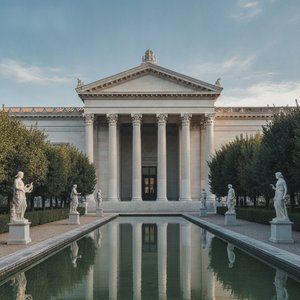
Neoclassicism Unveiled: Discovering the Timeless Elegance and Rational Order of Classical Art
Unveil the timeless elegance of Neoclassicism. Journey through an era defined by reason, order, and the revival of Greco-Roman ideals. Our expert exploration offers a sophisticated look at the transition from Rococo excess to classical precision for the true art enthusiast.
Explore obras de arte organizadas por temas, estilos y características.


