


 Vista previa
 Compartir
 Compartir
 Ver detalles
 Guía
Guía

 Descargar
 Ver artículos similares
 Radiografía
 Presentación de diapositivas
 Estadísticas
Flowers
 Pastel
- Symbolism
 1800
1800- 19th Century
 50.0 x 64.0 cm
 Fondo de Arte Lituano
A dreamy bouquet of fading roses captured in a delicate Secession-style pastel by Polish Symbolist Kazimierz Stabrowski evokes a sense of beautiful transience that invites you to bring this timeless elegance into your home.
 Leer más
Descubre Kazimir Zabrowski (1869-1929), pintor polaco reconocido por paisajes simbolistas y escenas románticas. Director de la Academia de Bellas Artes de Varsovia y fundador de la Sociedad Teosófica en Polonia.
Giclée / Impresión de arte
Impresiones giclée o en lienzo de calidad de museo con producción rápida y opciones de acabado flexibles. ( Encargar reproducción pintada a mano Ver versión en imagen digital)




P118B €10

P118H €10

P118W €10

P438Z €10

P508JH €12

P508YH €12

P805H €10

P805Z €10

P919BZ €10

P919G €10

P919XJ €10

P959ZH €10

P968JZ €12

W106C €8

W218G €10

W218JH €8

W218Y €10

W307PJ €10

W316G €10

W316PJ €8

W316Y €10

W398PJ €8

W4111J €10

W500HY €15

W500JH €15

W692G €12

W849H €8

W940BG €15

W953PJ €8




Estándar
personalizado
CM
INCH
Elija entre nuestros tamaños predefinidos que respetan las proporciones originales de la obra.
Loading sizes...

ancho
altura
Introduzca el ancho y el alto que necesite para adaptarse a su marco o pared. Una impresión solo puede recortarse, nunca hacerse más grande que la imagen original, por lo que un tamaño con una forma distinta perderá parte de la obra. Le enviaremos una maqueta digital para su aprobación antes de realizar cualquier impresión. La imagen que se muestra en esta página no refleja el recorte real; solo la maqueta lo hace.
Envío a todo el mundo () en 2 semanas en lugar de las 4/5 semanas estándar. (21 octubre)

Envío exprés gratuito a todo el mundo

Lienzo de lino de alta calidad

Seguro de envío completo

Garantía de reembolso de impuestos aduaneros

Garantía de fidelidad cromática exacta

Política de devolución de 100 días (solo por defectos)

Garantía de devolución del 100% del dinero

Oferta por volumen
 La opción de vidrio solo está disponible en tamaños inferiores a 110 cm.

Flowers
Giclée / Impresión de arte
Tamaño de la reproducción
-


Precio total
€ 60
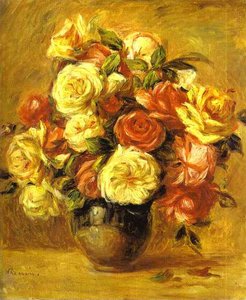
The painting depicts a bouquet of leaning rose petals. The contrast of red and florid flowers, green foliage and the neutral grey background form an impression of a stable composition. The outlines of the leaves and petals, which are painted in a Secession-like style. The graceful leaning of the plant and creative lines establish a vivid decorative tone. The top of the bouquet is adorned with roses in blossom. The flowers look strong, are large, bright, and fully open. As they lean down, they turn pale, wither, and disappear. The lowest leaning flowers look as if they are dissolving. The painter used this pastel method to create a sense of ephemerality: to convey the fragile state of the material world and the feeling of transience, which typically characterises the works of symbolists.
Preguntas y respuestas
¿A qué se debe la situación de los derechos de autor de "Flowers" de Kazimierz Stabrowski?
El estado de los derechos de autor de "Flowers" - en el dominio público: sus derechos de autor han expirado - se deriva del fallecimiento del artista en 1929.
¿Qué uso y espacio se recomiendan para "Flowers" de Kazimierz Stabrowski?
El uso de (Softness) y el espacio (Bedroom) son las dos recomendaciones registradas para "Flowers" de Kazimierz Stabrowski.
¿A qué etapa de la evolución de Kazimierz Stabrowski pertenece "Flowers"?
Dentro de la trayectoria de Kazimierz Stabrowski, "Flowers" pertenece al Mature Period. Esta etapa permite compararla con otras obras del artista.
Obras relacionadas




Biografía del artista
Kazimierz Stabrowski (1869-1929): A Dreamer of Symbolism
Kazimierz Stabrowski, a luminary of Polish art and philosophy, was born in Kruglany near Nowogródek, Belarus, on November 21, 1869. His familial roots lay deep within the Polish landed gentry (*ziemiaństwo*), shaping his worldview and fostering an appreciation for tradition alongside intellectual curiosity. From a young age, Stabrowski demonstrated exceptional artistic talent, propelling him toward intensive studies at Białystok’s Real School before embarking on a formative journey to St Petersburg's Imperial Academy of Arts in 1887. There, under the tutelage of Pavel Chistyakov and later Ilya Repin, he honed his skills and absorbed the stylistic nuances of Russian academic painting—a crucial step in establishing his artistic identity.Artistic Style and Notable Works
Stabrowski’s oeuvre is instantly recognizable for its ethereal beauty and profound symbolic depth. He eschewed mere representation, opting instead to distill emotion and spiritual contemplation into meticulously crafted landscapes and portraits. His magnum opus, *The Snow Maiden* (1891), exemplifies this distinctive approach—a haunting tableau imbued with melancholic grace and capturing the essence of folklore and myth. The painting’s delicate pastel hues and evocative composition continue to resonate with audiences today, cementing Stabrowski's place as a pioneer of Symbolist art in Poland. Beyond *The Snow Maiden*, Stabrowski produced numerous other masterpieces, including *Rome. Fontana Dei Cavalli Marini* (1896), which showcased his mastery of monumental scale and dramatic lighting—a testament to his ambition and artistic vision.Founding the Theosophical Society in Poland
Stabrowski’s artistic pursuits were inextricably linked to his intellectual passions, particularly his fascination with Eastern mysticism and occultism. Recognizing the burgeoning interest in these esoteric traditions within Polish society, he spearheaded the establishment of the first lodges of the Theosophical Society in Poland in 1897—a bold initiative that cemented his reputation as a visionary thinker and social reformer. This endeavor reflected Stabrowski’s belief in the interconnectedness of art and spirituality, arguing that creative expression could illuminate hidden truths and foster profound personal transformation. He served as Secretary of the Warsaw Theosophical Society until 1908, actively promoting its principles and engaging in scholarly debates concerning metaphysical concepts.Academic Career and Artistic Legacy
Stabrowski’s dedication to artistic education profoundly impacted the trajectory of Polish art history. He became director of the Academy of Fine Arts in Warsaw from 1904 until 1909, nurturing a new generation of artists—including Mikalojus Konstantinas Čiurlionis—and shaping the aesthetic sensibilities of his time. His influence extended beyond pedagogical endeavors; he served as a juror at prestigious exhibitions and championed innovative artistic approaches. Stabrowski’s paintings were celebrated internationally, earning acclaim for their technical brilliance and expressive power. Pieces like *Vision I–III* (Sketches for Annunciation) exemplify his ability to convey complex emotions through subtle visual cues—a hallmark of his distinctive style. His legacy continues to inspire artists and scholars alike, ensuring that Kazimierz Stabrowski’s contribution to Polish art remains eternally cherished.Selected Works
- Snow Maiden (1891): Lithuanian Art Fund, Vilnius
- Rome. Fontana Dei Cavalli Marini: Private Collection
- White Night in Petersburg: Musée d’Orsay

Kazimierz Stabrowski
1869 - 1929 , Bielorrusia
Datos clave
- Artistic Movement Or Style: Symbolism
- Artists Who Influenced This Artist:
- Gustav Klimt
- Jean Sibelius
- Date Of Birth: November 21, 1869
- Date Of Death: June 10, 1929
- Full Name: Kazimierz Stabrowski
- Nationality: Polish
- Notable Artworks:
- Snow Maiden
- Trees
- Place Of Birth: Kruplyany, Belarus
Artículos relacionados

The Elegance of Rococo: A Journey Through Pastel Dreams and Ornate Splendor
Embark on an elegant journey through the Rococo era. Discover the delicate beauty of pastel masterpieces, the intricate artistry of 18th-century French masters, and how this era of ornate splendor continues to inspire timeless luxury in fine art collecting.

Soft Light & Velvet Touch: The Ethereal Magic of Pastel Artistry in Impressionist Masterpieces
Discover the ethereal beauty of pastel art through an Impressionist lens. Explore how masters like Monet and Renoir captured light and velvet textures, and learn to curate a collection of luminous, museum-quality masterpieces for your home.
The Soft Magic of Chalk: Capturing Light, Texture, and the Ethereal Soul of Impressionist Masterpieces
Discover the ethereal beauty of pastel and chalk art. Explore how Impressionist masters like Van Gogh and Degas captured light and texture to create timeless, soulful masterpieces for the discerning collector.
Explore obras de arte organizadas por temas, estilos y características.
