
 Ver en contexto
 Enviar
 Compartir
 Detalles
 Guía
Guía

 Descargar
 Similares
 Radiografía
 Presentación de diapositivas
 Q&A
Q&A Estadísticas
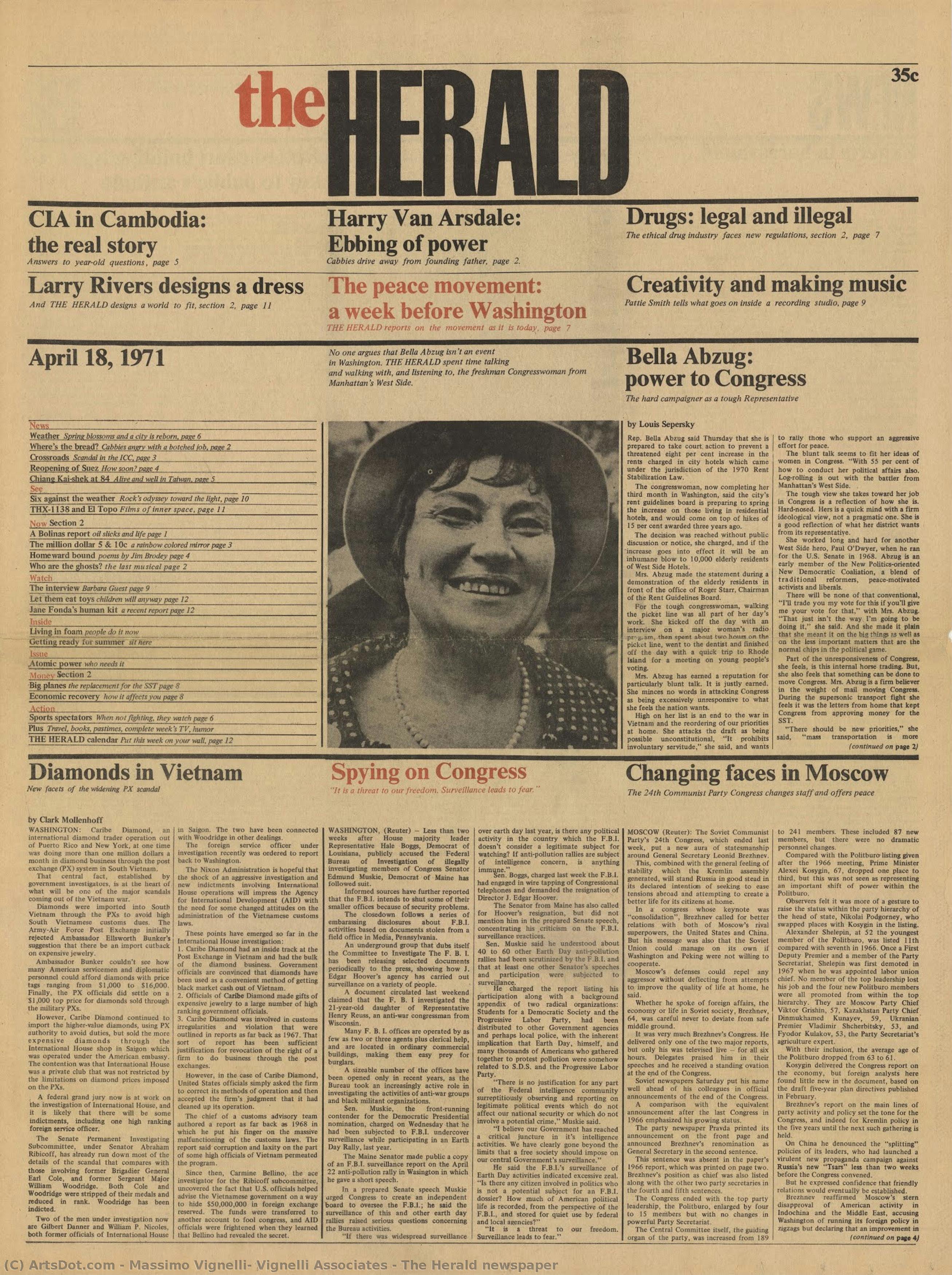
The Herald newspaper

- 43.0 x 57.0 cm


Experience the modernist grid design of The Herald newspaper by Massimo Vignelli (1971), showcasing vintage graphic communication art; discover this iconic piece today.
 Ver más
Meta Description: Massimo Vignelli (1931-2014): Ícono del diseño italiano reconocido por diseños gráficos minimalistas, incluyendo el mapa de Nueva York y la identidad corporativa. ¡Descubre su legado!
Obtenga un archivo listo para imprimir que supera con creces la vista previa web. Cada imagen digital que vendemos proviene de un maestro de alta resolución de nuestro archivo —generalmente de entre 5.000 y 15.000 píxeles de ancho— para que pueda realizar impresiones de gran formato, recortar con precisión o reproducir detalles minuciosos con total confianza.
Ningún archivo sale de nuestro estudio sin ser intervenido. Un experto digital coteja los colores con la pintura original y los corrige si es necesario, para luego mejorar la claridad y el detalle mediante herramientas de retoque profesional —siempre manteniendo la fidelidad a la pincelada y al estilo del artista. El resultado es una imagen que evoca la esencia de la pintura, no un escaneo con filtros.
Aprobación previa al finalizar: nuestro experto le enviará la imagen por correo electrónico en un plazo de 72 horas para su revisión. ¿No está satisfecho? Puede solicitar mejoras o correcciones, o pedir un reembolso si la calidad no cumple con sus expectativas.
Esta es la calidad en la que confían editoriales, estudios de diseño, galerías e imprentas.
Imagen Digital
Descarga un archivo de alta resolución para exhibición personal, impresión y proyectos creativos. ( Cambiar a impresiones Comprar pintura hecha a mano)
Incluido en cada pedido de imágenes digitales
Entrega digital experta, garantizada.
Al elegir TopImpressionists.com, no solo está adquiriendo una imagen; está recibiendo una obra de arte digital mejorada profesionalmente, elaborada con precisión y respaldada por una garantía de satisfacción. Esto es todo lo que incluye su pedido, automáticamente:

Entrega rápida por email
Recibirá su archivo de imagen digital en alta resolución por correo electrónico en un plazo de 72 horas tras realizar su pedido, listo para su uso inmediato.

Archivo digital optimizado por IA
Su obra de arte se optimiza profesionalmente mediante herramientas avanzadas de IA y edición manual, garantizando el máximo detalle, claridad y precisión cromática.

Reenvío gratuito de por vida
¿Has borrado o perdido tu archivo por error? No te preocupes: te lo volveremos a enviar en cualquier momento, sin coste adicional.

Sin gastos de importación, siempre
Disfrute de su obra de arte al instante sin aduanas, aranceles ni gastos de envío; las descargas digitales siempre están libres de impuestos.

Garantía de fidelidad de color
Garantizamos que su imagen digital refleje los colores originales con la mayor fidelidad posible, mediante el uso de herramientas profesionales y gestión del color.

Garantía de satisfacción de 100 días
Si no está satisfecho con su imagen digital, la revisaremos o le reembolsaremos el 100% en un plazo de 100 días, sin preguntas.

100% Garantía de devolución de dinero
¿No está satisfecho? Obtenga un reembolso completo dentro de los 100 días posteriores a la recepción de su archivo digital, sin necesidad de explicaciones.

Descuentos por pedidos grandes
Compra 3 imágenes, ahorra 10% - Compra 5, ahorra 15% - Compra 10+, ahorra 20%. Ideal para proyectos creativos, galerías y agencias.
The Grid of Modern Communication: Vignelli's The Herald
To encounter this piece is to step directly into the vibrant, structured chaos of mid-century New York journalism. This reproduction of The Herald newspaper from April 1971, conceived by Massimo Vignelli and his associates, is far more than mere ephemera; it is a meticulously designed artifact of visual communication history. It captures a moment when design principles—simplicity, functionality, and rigorous structure—were being aggressively applied to the seemingly unruly medium of print journalism. The very act of presenting this newspaper front page transforms what might be considered disposable media into a profound study in modernist graphic discipline.
A Masterclass in Structured Design
Vignelli’s genius, always rooted in an almost architectural understanding of space, is on full display here. The description notes the structure: a rigid grid of six columns and sixteen modules per column. This underlying skeleton dictates every element—the placement of headlines like "Diamonds in Vietnam," the accompanying portrait of the smiling woman, and the smaller articles detailing everything from spying congress to changing leaves in Moscow. Vignelli’s commitment to using a single typeface, Times Roman, across various weights and sizes, speaks volumes about his belief in universal legibility. It is a powerful testament to the idea that restraint—the disciplined use of negative space and consistent typography—can generate an overwhelming sense of order and sophistication.
Historical Resonance and Materiality
The year 1971 places this work within a fascinating cultural nexus, post-war modernism grappling with the burgeoning media landscape. While the paper itself ultimately folded due to distribution issues, its surviving design remains potent. For the collector or designer, understanding this context is key. This piece speaks to an era obsessed with efficiency and clarity in information transfer. When considering a reproduction for your space, you are not just acquiring art; you are curating a dialogue about how we consume knowledge—a conversation between the fleeting headline and the enduring power of good design.
Symbolism of the Grid
The grid itself functions as the primary symbolic element. In an age where digital information often feels overwhelming, this physical manifestation of order offers a visual anchor. It symbolizes control, but not oppressive control; rather, it suggests that even complex narratives—the confluence of international events and local interest—can be organized into digestible, beautiful patterns. The interplay between the large, arresting photograph and the tightly packed textual modules creates a dynamic tension, mirroring the very energy of a bustling city like New York in that era.
Bringing Modernist Precision Home
For interior design or gallery display, this piece offers an unparalleled opportunity to inject intellectual rigor into a space. It pairs beautifully with minimalist furniture, mid-century modern accents, or any setting that appreciates the clean lines of 20th-century industrial aesthetics. Owning this reproduction is an homage to Massimo Vignelli’s lifelong dedication to elevating the mundane—the daily newspaper—into something enduringly beautiful and intellectually stimulating.
Preguntas y respuestas
¿A qué estilo pertenece "The Herald newspaper"?
El movimiento asociado con "The Herald newspaper" de Massimo Vignelli, Vignelli Associates es Modernism. Esta clasificación sitúa la obra entre artistas y obras relacionadas.
¿Para qué uso se recomienda una impresión de "The Herald newspaper"?
Se recomienda utilizar una impresión de "The Herald newspaper" para Statement.
¿Qué proporciones tiene "The Herald newspaper" de Massimo Vignelli, Vignelli Associates y cuáles son sus dimensiones?
El formato de "The Herald newspaper" es Portrait y la obra original mide 43 x 57 cm. Ambos datos son útiles al planificar una reproducción.
Biografía del artista
Vida temprana y carrera
Massimo Vignelli, un renombrado diseñador italiano, nació el 10 de enero de 1931 en Milán. Estudió arquitectura en el Politecnico di Milano y posteriormente en la Università Iuav di Venezia. A la edad de 16 años, se unió al estudio de los hermanos Castiglioni, que diseñaban en una amplia variedad de áreas.Trabajos y contribuciones notables
El estilo de Massimo Vignelli enfatizaba la simplicidad, utilizando formas geométricas básicas y una gama limitada de tipos de letra. Algunos de sus trabajos más notables incluyen:- Vajilla Heller Rainbow, un proyecto de diseño para un juego de vajilla apilable que mostraba su enfoque minimalista.
- Tredicesima Triennale di Milano, un diseño de cartel que reflejaba su uso de colores audaces y formas geométricas.
- Knoll Design (portada), un diseño de portada que demostraba su capacidad para crear imágenes impactantes para marcas reconocidas.
Colaboraciones y asociaciones
Massimo Vignelli cofundó Vignelli Associates con su esposa, Lella Vignelli, en 1971. Esta asociación condujo a la creación de numerosos diseños icónicos, incluido el sistema de señalización del metro de Nueva York.Legado e impacto
La influencia de Massimo Vignelli en el diseño italiano es innegable. Su trabajo ha aparecido en varios museos, incluyendo el Vignelli Center para Estudios de Diseño en Rochester, Estados Unidos. Sus diseños continúan inspirando a nuevas generaciones de diseñadores y artistas. Su enfoque minimalista y su compromiso con la claridad han dejado una huella duradera en el mundo del diseño gráfico e industrial.Obras seleccionadas disponibles en TopImpressionists.com
- Vajilla Heller Rainbow (vista frontal)
- Tredicesima Triennale di Milano (rojo sobre rosa)
- Knoll Design (portada)
Referencias

Massimo Vignelli, Vignelli Associates
1931 - 2014 , Italia
Breves datos
- Fecha De Fallecimiento: 27 de mayo de 2014
- Fecha De Nacimiento: 10 de enero de 1931
- Lugar De Nacimiento: Milán, Italia
- Movimiento Artístico: Minimalismo, Modernismo
- Nacionalidad: Italiana
- Nombre Completo: Massimo Vignelli
- Obras Notables:
- Heller Rainbow Dinnerware
- Triennale di Milano
- Knoll Design (cover)
- Liberty Liberté