


 Ver en contexto
 Enviar
 Compartir
 Detalles
 Guía
Guía

 Descargar
 Similares
 Radiografía
 Presentación de diapositivas
 Q&A
Q&A Estadísticas
Bust Selfportrait in Paiting Overall


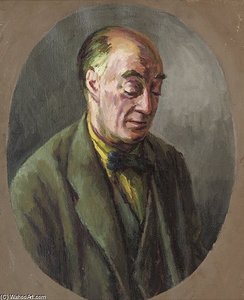
This artwork showcases Max Liebermann's self-portrait in 1922, executed in oil on canvas. It exemplifies Impressionism’s focus on capturing fleeting moments of light and color, featuring a contemplative gaze and attire reflecting the artist's era.
 Ver más
Descubre a Max Liebermann (1847-1935), pintor impresionista alemán clave. Sus obras capturan la vida moderna, retratos y vistas de jardín con un estilo único.
Giclée / Impresión de arte
Impresiones giclée o en lienzo de calidad de museo con producción rápida y opciones de acabado flexibles. ( Comprar pintura hecha a mano Cambiar a imagen digital)




P118B €10

P118H €10

P118W €10

P438Z €10

P508JH €12

P508YH €12

P805H €10

P805Z €10

P919BZ €10

P919G €10

P919XJ €10

P959ZH €10

P968JZ €12

W106C €8

W218G €10

W218JH €8

W218Y €10

W307PJ €10

W316G €10

W316PJ €8

W316Y €10

W398PJ €8

W4111J €10

W500HY €15

W500JH €15

W692G €12

W849H €8

W940BG €15

W953PJ €8




Tamaño estándar
a medida
CM
INCH
Elija entre nuestros tamaños predefinidos que respetan las proporciones originales de la obra.
Loading sizes...

ancho
altura
Introduzca el ancho y el alto que necesite para adaptarse a su marco o pared. Una impresión solo puede recortarse, nunca hacerse más grande que la imagen original, por lo que un tamaño con una forma distinta perderá parte de la obra. Le enviaremos una maqueta digital para su aprobación antes de realizar cualquier impresión. La imagen que se muestra en esta página no refleja el recorte real; solo la maqueta lo hace.
Envío a todo el mundo () en 2 semanas en lugar de las 4/5 semanas estándar. (29 octubre)

Envío exprés gratuito a todo el mundo

Lienzo de lino de alta calidad

Seguro de envío total

Garantía de reembolso de aranceles aduaneros

Garantía de fidelidad cromática exacta

Política de devolución de 100 días (solo por defectos)

Garantía de devolución del 100% del dinero

Descuento por cantidad
 La opción de vidrio solo está disponible en tamaños inferiores a 110 cm.

Bust Selfportrait in Paiting Overall
Giclée / Impresión de arte
Dimensiones de la reproducción
-


Precio total final
€ 61
A Gaze Into the Self: Max Liebermann's Bust Selfportrait
To stand before this selfportrait is to encounter not merely a likeness, but a carefully considered meditation on identity itself. Painted in 1922 by Max Liebermann, this bust portrait captures the artist at a moment of profound introspection. The subject gazes out from the canvas with an undeniable seriousness, his mustache and beard lending him an air of intellectual gravitas. Every element—from the precise knot of his bow tie to the thoughtful set of his glasses—contributes to a persona that is both intimately familiar and strikingly composed. It speaks volumes about the artist's self-perception during this pivotal time in his life, offering us a direct line into the mind of a master.
Technique and Tonal Drama
Liebermann’s handling of paint here showcases his mastery of tonal contrast. The deliberate use of a black and white color scheme is not a limitation, but rather a powerful artistic choice that heightens the drama and focuses all attention squarely on the nuances of the sitter's expression. Observe how the light seems to sculpt the planes of his face, giving dimension to the subtle contours around his eyes and mouth. The technique employed suggests an Impressionist foundation—a sensitivity to fleeting moments—but channeled through a more formal, almost psychological portraiture lens. This stark palette strips away the distractions of color, leaving only the essential architecture of character.
Historical Echoes in Berlin
Created in 1922, this work emerges from a period when Germany was navigating immense social and artistic upheaval. Liebermann, an artist deeply connected to the vibrant cultural pulse of Berlin, captured a moment that feels both timeless and acutely contemporary. While his earlier works celebrated everyday life with Impressionistic joy, this selfportrait suggests a more internalized dialogue—a necessary turning inward amidst the roaring changes of the early 20th century. It is a testament to an artist who remained keenly observant, even when looking at himself.
Symbolism and Emotional Resonance
The act of painting a selfportrait has always been fraught with symbolic weight; it is both documentation and declaration. Here, the direct address to the viewer creates an immediate, almost confrontational intimacy. The seriousness in his eyes invites us to question: what is being observed? Is it the artist, or the enduring spirit that survives the passage of time? For collectors and those seeking art for a sophisticated interior space, this piece offers depth. It doesn't merely decorate; it prompts conversation, encouraging contemplation on self-image, intellect, and the weight of experience.
Bringing Liebermann Home
Owning a reproduction of "Bust Selfportrait in Paiting" allows one to integrate a piece of this rich artistic dialogue into your own sanctuary. The dramatic contrast inherent in the original composition translates beautifully into any setting, providing a focal point that is both intellectually stimulating and visually arresting. It serves as a sophisticated anchor for a room, echoing the thoughtful elegance of early 20th-century European portraiture while maintaining a modern, stark power.
Preguntas y respuestas
¿Qué sensación transmiten los colores de "Bust Selfportrait in Paiting Overall" de Max Liebermann?
La paleta Earthy de "Bust Selfportrait in Paiting Overall" de Max Liebermann armoniza con su tono emocional Reflective. El color es una de las formas en que una obra transmite sentimiento.
¿Cómo se combinan la técnica y el movimiento en "Bust Selfportrait in Paiting Overall"?
En "Bust Selfportrait in Paiting Overall", la técnica de Oil On Canvas se funde con el movimiento Impressionism.
¿Quién es el autor de "Bust Selfportrait in Paiting Overall" y a qué movimiento pertenece?
Max Liebermann creó "Bust Selfportrait in Paiting Overall" dentro del movimiento Impressionism.
Obras relacionadas



Biografía del artista
Primeros años y educación
- Nacimiento: Berlín, Alemania (1847)
- Fallecimiento: 1935
Carrera artística e influencias
- Impresionismo: Liebermann se convirtió en un destacado defensor del Impresionismo en Alemania, capturando momentos fugaces de la vida moderna con un enfoque en la luz y el color.
- Influencias: Su estilo estuvo notablemente influenciado por Édouard Manet, evidente en su espíritu y enfoque pictórico.
- Motivos: Frecuentemente representaba escenas de la burguesía y aspectos de su jardín cerca del lago Wannsee.
- Retratista: Liebermann ganó reconocimiento como un renombrado retratista, creando más de 200 retratos encargados, incluyendo los de Albert Einstein y Paul von Hindenburg.
Obras destacadas y logros
- "El niño Jesús de doce años en el templo": Una obra temprana que generó debate debido a su representación de un niño Jesús con rasgos semíticos.
- Elección a la Academia Prusiana de las Artes: Un reconocimiento significativo de su mérito artístico y contribución.
- Liderazgo de la Secesión de Berlín (1899-1911): Lideró esta destacada formación vanguardista en Alemania, desafiando las normas artísticas tradicionales.
Vida posterior y significado histórico
- Renuncia a la Academia Prusiana: En 1933, renunció tras la decisión de la academia de excluir a los artistas judíos.
- Fallecimiento y legado: Falleció en Berlín en 1935, dejando atrás una importante obra que continúa siendo celebrada por su estilo impresionista y su retrato perspicaz de la sociedad alemana.

Max Liebermann
1847 - 1935 , Alemania
Datos clave
- Artistas Influenciados: ['Lovis Corinth']
- Artistas Que Influyeron: ['Édouard Manet']
- Fecha De Fallecimiento: 8 de febrero de 1935
- Fecha De Nacimiento: 20 de julio de 1847
- Lugar De Nacimiento: Berlín, Alemania
- Movimiento Artístico: Impresionismo
- Nacionalidad: Alemán
- Nombre Completo: Max Liebermann
- Obras Notables:
- El niño Jesús en el templo
- Granja holandesa
- Retrato del Dr. Max Linde
Artículos relacionados

Impresionismo: 10 Obras Maestras que Capturan la Luz y el Momento
Descubre 10 obras maestras del impresionismo de Monet, Renoir y Degas. Explora la luz, el color y las historias detrás de estos icónicos cuadros. Reproducciones de arte en TopImpressionists.com para decorar tu hogar con estilo.

Reflecting the Self: A History of Portraiture & Psychological Insight
Explore the fascinating history of self-portraiture from Renaissance masters like Dürer & Rembrandt to modern interpretations. Discover the psychological insights and artistic techniques behind these iconic works. Expert analysis for art enthusiasts.

Expresionismo Alemán: 10 Obras Maestras que Transformaron el Arte | TopImpressionists
Descubre las 10 obras maestras del Expresionismo Alemán: Kirchner, Munch y más. Explora la historia, técnica y emoción detrás de estos lienzos icónicos. Reproducciones de arte de museo en TopImpressionists.com. ¡Inspira tu hogar con arte!
Max Ernst: Las 25 Obras Maestras del Surrealismo para Decorar tu Hogar con Arte
Descubre las 25 obras maestras de Max Ernst, el rey del surrealismo. Explora su arte onírico, técnicas innovadoras y simbolismo profundo. Reproducciones de alta calidad para decorar tu hogar con estilo en TopImpressionists.com

Paul Cézanne: Las 25 Obras Maestras que Definieron el Arte Moderno | TopImpressionists
Descubre las 25 obras maestras de Paul Cézanne que revolucionaron el arte moderno. Explora su técnica, inspiración y significado en paisajes, bodegones y retratos. Reproducciones de alta calidad para decorar tu hogar con arte inolvidable. ¡Explora la colección completa en TopImpressionists.com!
Explore obras de arte organizadas por temas, estilos y características.


