


 Vista previa
 Compartir
 Compartir
 Ver detalles
 Guía
Guía

 Descargar
 Ver artículos similares
 Radiografía
 Presentación de diapositivas
 Estadísticas
Slag Heap


Experience 'Slag Heap' by Maximilien Luce – a vibrant Post-Impressionist painting of a French village at night. Explore its rich details and artistic style on canvas or print.
 Leer más
Descubre a Maximilien Luce (1858-1941), maestro neoimpresionista y puntillista francés. Explora sus vibrantes escenas parisinas y paisajes en museos como el Musée d'Orsay.
Giclée / Impresión de arte
Impresiones giclée o en lienzo de calidad de museo con producción rápida y opciones de acabado flexibles. ( Encargar reproducción pintada a mano Ver versión en imagen digital)




P118B €10

P118H €10

P118W €10

P438Z €10

P508JH €12

P508YH €12

P805H €10

P805Z €10

P919BZ €10

P919G €10

P919XJ €10

P959ZH €10

P968JZ €12

W106C €8

W218G €10

W218JH €8

W218Y €10

W307PJ €10

W316G €10

W316PJ €8

W316Y €10

W398PJ €8

W4111J €10

W500HY €15

W500JH €15

W692G €12

W849H €8

W940BG €15

W953PJ €8




Estándar
personalizado
CM
INCH
Elija entre nuestros tamaños predefinidos que respetan las proporciones originales de la obra.
Loading sizes...

ancho
altura
Introduzca el ancho y el alto que necesite para adaptarse a su marco o pared. Una impresión solo puede recortarse, nunca hacerse más grande que la imagen original, por lo que un tamaño con una forma distinta perderá parte de la obra. Le enviaremos una maqueta digital para su aprobación antes de realizar cualquier impresión. La imagen que se muestra en esta página no refleja el recorte real; solo la maqueta lo hace.
Envío a todo el mundo () en 2 semanas en lugar de las 4/5 semanas estándar. (21 octubre)

Envío exprés gratuito a todo el mundo

Lienzo de lino de alta calidad

Seguro de envío completo

Garantía de reembolso de impuestos aduaneros

Garantía de fidelidad cromática exacta

Política de devolución de 100 días (solo por defectos)

Garantía de devolución del 100% del dinero

Oferta por volumen
 La opción de vidrio solo está disponible en tamaños inferiores a 110 cm.

Slag Heap
Giclée / Impresión de arte
Tamaño de la reproducción
-


Precio total
€ 60
A Nocturne in Blue and Green: Exploring Luce's "Slag Heap"
To gaze upon Maximilien Luce’s Slag Heap is to be enveloped by the profound, hushed beauty of a French night. This painting, executed in 1896, transcends a mere depiction of a village; it captures a moment suspended between the day's activity and the deep quietude of midnight. The scene unfolds on a gentle hillside, where the architecture of a small community nestles beneath a luminous, watchful moon. Luce masterfully uses the interplay of light and shadow to give life to every cobblestone and every shadowed eaves. It is an invitation to pause, to breathe in the cool, damp air that seems to emanate from the canvas itself.
The Brushwork of Post-Impressionism
Luce’s technique here is a vibrant testament to his commitment to capturing feeling as much as form. While rooted in the observable world—the clustered houses, the distant church steeple, the lush green landscape—the painting vibrates with the energy characteristic of Post-Impressionism. One notices the bold, deliberate brushstrokes; they do not merely describe the surface but seem to articulate the very texture of the night air and the weight of the silence. The artist employs a rich palette dominated by various shades of blue and deep green, colors that work in concert to create an atmosphere both serene and deeply evocative. This handling of color suggests an emotional resonance beneath the picturesque facade.
Life Amidst the Stillness: Symbolism and Movement
What elevates Slag Heap beyond a simple landscape is the subtle infusion of life into its nocturnal repose. In the foreground, two horses stand as silent sentinels, their presence injecting an element of grounded movement against the otherwise tranquil backdrop. They suggest journeys undertaken or perhaps merely resting after the day's toil. The village itself, with its visible structures and towering steeple, speaks to enduring human settlement—a pocket of civilization illuminated by celestial grace. Symbolically, the moon shining so brightly above the clustered homes can be interpreted as a beacon of constancy, guiding the inhabitants through the mysteries of the night.
Bringing the Night Home: Decorating with Art
For those seeking to infuse their living space or study with the romanticism and depth of late 19th-century Parisian life, this piece offers unparalleled ambiance. The cool tones of the blues and greens in Slag Heap pair exquisitely with natural wood finishes, velvet furnishings, or even modern minimalist palettes that crave a touch of historical narrative. Owning a reproduction allows one to bring the quiet drama of Luce’s vision into your personal sanctuary. It is an artwork that rewards close inspection, revealing new depths of color and texture every time the light shifts across it.
Preguntas y respuestas
¿Qué color destaca más en "Slag Heap"?
El Cobalt Violet (#88a4bb) es el color predominante de "Slag Heap" de Maximilien Luce.
¿Permite los derechos de autor de "Slag Heap" de Maximilien Luce realizar reproducciones?
"Slag Heap" de Maximilien Luce, conservada en Musée d’Ixelles, es en el dominio público: sus derechos de autor han expirado. Este estado determina si se pueden realizar reproducciones de la imagen.
¿De qué está hecho "Slag Heap"?
Maximilien Luce utilizó la técnica de Oil On Canvas para "Slag Heap". La técnica define la naturaleza material de la obra original.
Obras relacionadas


Biografía del artista
**Primeros años y formación**
Maximilien-Jules-Constant Luce, un prolífico artista neoimpresionista francés, nació el 13 de marzo de 1858 en París. Sus padres, de modestos recursos, fueron Charles-Désiré Luce (1823–1888), empleado ferroviario, y Louise-Joséphine Dunas (1822–1878). La familia residía en Montparnasse, un distrito obrero de París.**Evolución Artística**
El viaje artístico de Luce comenzó como aprendiz de grabador en madera, Henri Théophile Hildebrand (1824–1897) en 1872. Posteriormente, se centró en la pintura, primero como impresionista, luego como puntillista y finalmente regresando al impresionismo. Esta evolución es evidente en sus obras, como "Las Tuileries en París" (puntillismo) y "El Sena en Andelys" (puntillismo), que demuestran su dominio del color y la luz.**Obras Notables y Exposiciones**
- “En la orilla del Sena en Poissy” (1895), una radiante pintura puntillista, fue elogiada por un crítico del New York Times como "una celebración lírica de la naturaleza".
- Luce expuso en cada muestra de Les Indépendants desde 1887 hasta su muerte en 1941, incluyendo una retrospectiva de treinta años celebrada en 1926.
- Fue elegido vicepresidente de la Société des Artistes Indépendants en 1909 y presidente en 1935.
**Legado y Colecciones de Museos**
Las obras de Luce se pueden encontrar en diversas colecciones de museos, incluyendo el Musée d'Orsay, que alberga una impresionante colección de maestros impresionistas y postimpresionistas. Descubra las obras maestras del museo de Francia.- Explore la técnica puntillista de Luce en su pintura, “Las orillas del Sena” (puntillismo), que muestra su estilo único. Pintura de 'Maximilien Luce' | Maximilien Luce: Las orillas del Sena (puntillismo)
- Aprenda más sobre la evolución artística de Luce y sus contribuciones al movimiento neoimpresionista. Maximilien Luce - Wikipedia
- Descubra más obras maestras con TopImpressionists.com, que proporciona reproducciones de alta calidad de las obras de Luce, incluyendo “El Pont-Neuf, París” (puntillismo). Pintura de 'Maximilien Luce' | Maximilien Luce: El Pont-Neuf, París (puntillismo)
**Influencia e Importancia Histórica**
Maximilien Luce se destacó por su capacidad para combinar la precisión científica del puntillismo con una sensibilidad impresionista. Su obra refleja un profundo amor por el paisaje parisino y la vida cotidiana, capturando momentos de luz y color con una técnica distintiva. Aunque a menudo eclipsado por figuras más prominentes del neoimpresionismo como Seurat y Signac, Luce desarrolló su propio estilo único, caracterizado por pinceladas más libres y una paleta vibrante. Su compromiso con Les Indépendants lo convirtió en un defensor de la libertad artística y contribuyó al desarrollo del arte moderno en Francia. Su legado reside en su habilidad para traducir la belleza efímera del mundo que le rodeaba en obras de arte atemporales, ofreciendo una visión personal e íntima de la vida urbana y rural a finales del siglo XIX y principios del XX.
Maximilien Luce
1858 - 1941 , Francia
Datos clave
- Estilo Artístico: Neoimpresionismo, Puntillismo
- Fecha De Muerte: 1941
- Fecha De Nacimiento: 13 de marzo de 1858
- Lugar De Nacimiento: París, Francia
- Nacionalidad: Francesa
- Nombre Completo: Maximilien Luce
- Obras Notables:
- El Sena en Poissy
- Los Tuileries en París
- El Sena en Andelys
- Le Pont-Neuf, París
Artículos relacionados
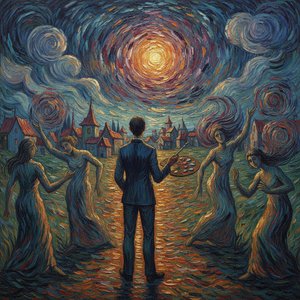
Beyond the Light: Capturing Emotion Through the Expressive Soul of Post-Impressionism
Explore the profound emotional depth of Post-Impressionism. Discover how masters like Van Gogh and Cézanne moved beyond light to capture raw feeling through color and texture. A journey into art history for the true connoisseur.

Beyond the Light: Discovering the Soul and Emotional Depth of Post-Impressionism
Embark on a cultural journey through Post-Impressionism. Discover the profound emotional depth of masters like Van Gogh and Cézanne, exploring how they moved beyond light to capture the very soul of human experience through vibrant color and symbolic form.
Explore obras de arte organizadas por temas, estilos y características.


