


 Ver en contexto
 Enviar
 Compartir
 Detalles
 Guía
Guía

 Descargar
 Similares
 Radiografía
 Presentación de diapositivas
 Estadísticas
Krishna (Spring in Kulu)


Experience the serene spirituality of Krishna by Nicholas Roerich, featuring bold colors and flattened planes characteristic of Symbolism; discover this masterpiece today.
 Ver más
Explora el arte cautivador de Nicolás Roerich (1874-1947): Simbolismo, paisajes himalayos y pinturas místicas. Diseños para los Ballets Russes y defensor de la preservación cultural.
Giclée / Impresión de arte
Impresiones giclée o en lienzo de calidad de museo con producción rápida y opciones de acabado flexibles. ( Comprar pintura hecha a mano Cambiar a imagen digital)




P118B €10

P118H €10

P118W €10

P438Z €10

P508JH €12

P508YH €12

P805H €10

P805Z €10

P919BZ €10

P919G €10

P919XJ €10

P959ZH €10

P968JZ €12

W106C €8

W218G €10

W218JH €8

W218Y €10

W307PJ €10

W316G €10

W316PJ €8

W316Y €10

W398PJ €8

W4111J €10

W500HY €15

W500JH €15

W692G €12

W849H €8

W940BG €15

W953PJ €8




Tamaño estándar
a medida
CM
INCH
Elija entre nuestros tamaños predefinidos que respetan las proporciones originales de la obra.
Loading sizes...

ancho
altura
Introduzca el ancho y el alto que necesite para adaptarse a su marco o pared. Una impresión solo puede recortarse, nunca hacerse más grande que la imagen original, por lo que un tamaño con una forma distinta perderá parte de la obra. Le enviaremos una maqueta digital para su aprobación antes de realizar cualquier impresión. La imagen que se muestra en esta página no refleja el recorte real; solo la maqueta lo hace.
Envío a todo el mundo () en 2 semanas en lugar de las 4/5 semanas estándar. (28 octubre)

Envío exprés gratuito a todo el mundo

Lienzo de lino de alta calidad

Seguro de envío total

Garantía de reembolso de aranceles aduaneros

Garantía de fidelidad cromática exacta

Política de devolución de 100 días (solo por defectos)

Garantía de devolución del 100% del dinero

Descuento por cantidad
 La opción de vidrio solo está disponible en tamaños inferiores a 110 cm.

Krishna (Spring in Kulu)
Giclée / Impresión de arte
Dimensiones de la reproducción
-


Precio total final
€ 61
A Vision of Serenity: Exploring Roerich's Krishna
To gaze upon this depiction of Krishna (Spring in Kulu) is to step across the threshold into a realm where spirituality meets breathtaking natural grandeur. Nicholas Roerich, the polymath whose life spanned art, archaeology, and profound philosophical inquiry, captured here not just a scene, but an entire state of being—one of tranquil contemplation amidst the vibrant awakening of spring. The composition immediately draws the eye to the central figure, Krishna, seated in deep meditation beneath the delicate canopy of blossoming trees. This is more than a portrait; it is an invocation of peace, rendered with the unmistakable, visionary hand of an artist deeply attuned to the universal spirit.
The Language of Form and Color
Roerich’s technique here speaks volumes about his unique artistic vocabulary. One observes a masterful employment of bold outlines that define every peak, every leaf, and every fold of drapery, lending the entire scene a stylized, almost sacred geometry. The color palette is nothing short of breathtaking: the intense, vibrant blues of the sky and distant mountains provide a cool, majestic counterpoint to the warm, earthy tones anchoring the foreground. These contrasting planes of color—the deep azure against the soft pinks and whites of the blossoms—are not merely decorative; they are structural elements that build depth through layering rather than strict perspective. The overall effect is one of luminous clarity, as if bathed in an eternal, diffused sunlight.
Symbolism Woven into the Landscape
The symbolism within this work is rich and multilayered, inviting endless contemplation. The blossoming trees are a quintessential celebration of renewal, marking the triumphant return of life after winter's slumber. Krishna himself embodies the ultimate stillness amidst the flux of existence; his meditative posture suggests an inner wisdom that transcends the magnificent backdrop of snow-capped peaks. These mountains, towering and eternal, serve as a powerful metaphor for the enduring nature of spirit against the fleeting cycles of earthly life. The entire tableau whispers of enlightenment—the quiet realization found at the intersection of profound nature and divine presence.
A Touch of Primitivism and Universal Artistry
Stylistically, this piece resonates with elements of Symbolism and a beautiful, almost primal directness that characterizes Roerich’s finest work. The flattened perspective and simplified forms eschew academic realism in favor of emotional truth. This deliberate choice elevates the artwork from mere depiction to pure evocation. For the collector or designer seeking an object imbued with deep meaning, this reproduction offers not just aesthetic beauty for a wall, but a focal point for meditation within any space. It is art that speaks directly to the soul, promising a moment of profound quietude whenever it is viewed.
Preguntas y respuestas
¿A qué etapa de la trayectoria de Nicolás Roerich pertenece "Krishna (Spring in Kulu)"?
"Krishna (Spring in Kulu)" representa el Mature Period de Nicolás Roerich.
¿Existe una guía para "Krishna (Spring in Kulu)" de Nicolás Roerich?
La guía de "Krishna (Spring in Kulu)" es la página Ficha informativa de la obra: una ficha imprimible que presenta la pieza con su pie de foto, línea de crédito y tabla de datos (artista, fechas, técnica, tamaño original, colección).
¿Es "Krishna (Spring in Kulu)" de Nicolás Roerich de dominio público y por qué?
"Krishna (Spring in Kulu)" de Nicolás Roerich es de en el dominio público: sus derechos de autor han expirado. La vigencia de los derechos de autor se cuenta a partir del fallecimiento del artista, que tuvo lugar en 1947.
Biografía del artista
Nicholas Roerich: Vida, Arte y Legado
Primeros Años y Educación
- Nikolai Konstantinovich Roerich nació el 9 de octubre de 1874 en San Petersburgo, Rusia.
- Su padre, un notario alemán del Báltico, y su madre, una mujer rusa, fomentaron una temprana apreciación por las artes en él.
- Roerich estudió tanto derecho como arte simultáneamente, matriculándose en la Universidad de San Petersburgo y la Academia Imperial de Artes en 1893.
- Recibió el título de “Artista” en 1897 y un título de abogado al año siguiente.
Deseos Artísticos e Influencias
- El desarrollo artístico de Roerich fue significativamente influenciado por el Simbolismo Ruso, un movimiento que enfatizaba la espiritualidad y la profundidad emocional.
- Se involucró con la sociedad “Arte del Mundo” de Serguéi Diáguilev, eventualmente convirtiéndose en su presidente desde 1910 hasta 1916.
- Su trabajo temprano mostró una fascinación por la arqueología y el diseño teatral, lo que llevó a colaboraciones en producciones para los Ballets Russes.
- También se vio influenciado por apócrifos y escrituras secretistas medievales como el Libro de la Paloma.
Colaboración con los Ballets Russes
- Los diseños de Roerich para los Ballets Russes fueron muy elogiados, particularmente su trabajo en Príncipe Igor de Alexander Borodin (1909) e El Ritual de la Primavera de Igor Stravinsky (1913).
- Sus diseños escénicos combinaban la investigación histórica con el arte imaginativo, creando producciones visualmente impresionantes.
- Esta colaboración lo estableció como una figura destacada en el diseño teatral a principios del siglo XX.
Desarrollo Artístico y Temas
- Las pinturas de Roerich evolucionaron para incorporar temas cada vez más místicos y espirituales, reflejando su creciente interés en la Teosofía y las religiones orientales.
- Su serie Estudios Arquitectónicos (1904–1905) demostró su destreza arquitectónica y su compromiso con la preservación del patrimonio cultural.
- Motivos recurrentes en su obra incluyen paisajes majestuosos, ciudades antiguas y figuras religiosas como San Panteleimon y Kuan Yin.
- A menudo representaba el Himalaya, una región que tenía un profundo significado espiritual para él.
Logros y Reconocimientos Principales
- Roerich fue un defensor dedicado de la protección del arte y la arquitectura durante los tiempos de guerra.
- Sus esfuerzos llevaron a la creación del Pacto Roerich (1935), un tratado internacional para la preservación de objetos culturales, lo que le valió múltiples nominaciones al Premio Nobel de la Paz.
- Viajó extensamente por Asia Central, realizando investigaciones arqueológicas y documentando culturas antiguas.
- Su obra se exhibe en importantes colecciones museísticas en todo el mundo, incluida la Galería de Pinturas Estatal de Astrakhan.
Significado Histórico y Legado
- El impacto de Nicholas Roerich en el arte y la cultura rusos es inmensurable.
- Puenteó la brecha entre la expresión artística y la exploración espiritual, influyendo a generaciones de artistas e intelectuales.
- Su compromiso con la preservación cultural sigue siendo relevante hoy en día, destacando la importancia de proteger nuestro patrimonio compartido.
- El legado de Roerich se extiende más allá de sus pinturas; es recordado como un artista visionario, erudito y humanitario.

Nicolás Roerich
1874 - 1947 , Rusia
Datos clave
- Artistas Que Influyeron:
- León Tolstói
- Arjip Kuindzhi
- Fecha De Muerte: 13 de diciembre de 1947
- Fecha De Nacimiento: 9 de octubre de 1874
- Influenciado A Artistas: ['Artistas e intelectuales']
- Lugar De Nacimiento: San Petersburgo, Rusia
- Movimiento Artístico: Simbolismo Ruso
- Nacionalidad: Ruso
- Nombre Completo: Nicolás Roerich
- Obras Notables:
- Camino al Kailas 4
- Monte de cinco tesoros
- Puente de Gloria
- Lago de las Nagas
- Tempe-jal-tzen-baykin
Artículos relacionados

Nicholas Roerich: Mysticism, Mountains & the Search for Ageless Wisdom in Art
Explore the captivating art of Nicholas Roerich – a visionary painter whose Himalayan landscapes blend spiritual mysticism with cultural preservation. Discover his legacy & symbolism.

Las 10 Obras Maestras del Azul Pizarra: Arte, Historia y Decoración
Descubre las 10 pinturas más famosas dominadas por el azul pizarra. Explora la historia, técnica y belleza de Monet, Van Gogh y otros maestros. Encuentra reproducciones de arte exclusivas para decorar tu hogar en .

Paisajes Románticos: 10 Obras Maestras que Definieron un Movimiento Artístico
Descubre los 10 paisajes románticos más influyentes de artistas como Caspar David Friedrich y Turner. Explora la belleza, el simbolismo y las técnicas del movimiento romántico. Reproducciones de arte exclusivas en TopImpressionists.com.

Evocations of Place: A Historical Journey Through Landscape Art
Explore the rich history of landscape art with TopImpressionists. Discover renowned artists, movements like Impressionism & Romanticism, and expert guidance for collecting timeless pieces. Find your perfect serene escape today!
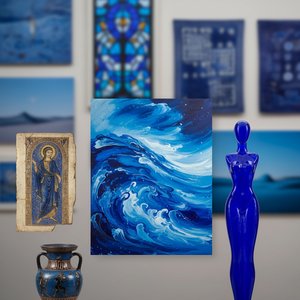
The Allure of Azure: Exploring the Symbolic & Aesthetic Depths of Blue in Art History
Explore the rich history of blue in art! Discover its symbolism, from ancient pigments to modern masterpieces by Kandinsky & Seurat. Uncover the psychological impact and cultural meanings behind this captivating hue.
Explore obras de arte organizadas por temas, estilos y características.


